What it means to own instead of rent your community audience
TL;DR
- Renting your audience means a platform can change the rules that govern your reach and monetization before you can even respond.
- Owning your audience means keeping the member relationship and data in places you control, including contact records and payments.
- The safest growth model uses social platforms for discovery while moving your most engaged people into an owned community.
On the night of May 6, 2026, Instagram ran a platform-wide sweep that erased millions of bot, spam, and inactive accounts inside a single six-hour window. The biggest names took the biggest hits: Cristiano Ronaldo shed 9.19 million followers, Kim Kardashian 7.24 million, and Kylie Jenner 7.20 million. Instagram's own account lost more than any of them, 15.2 million. It wasn't only celebrities. Small and mid-sized creators absorbed the same sweep at a smaller scale, waking up with their counts off 2 to 5 percent and no warning beforehand.
Meta framed it as routine housekeeping: only inactive accounts were removed, and real engagement was untouched. That distinction didn't matter to the person staring at a smaller number that morning. A follower count is what creators use to price sponsorships, pitch brand deals, and prove the business is growing. The decision still got made without input from the people it affected, and without a way to undo it.
If your business depends on a feed you don't control, that dependency shapes what you build on top of it. The followers are real. The relationship belongs to the platform.
What renting your audience actually costs
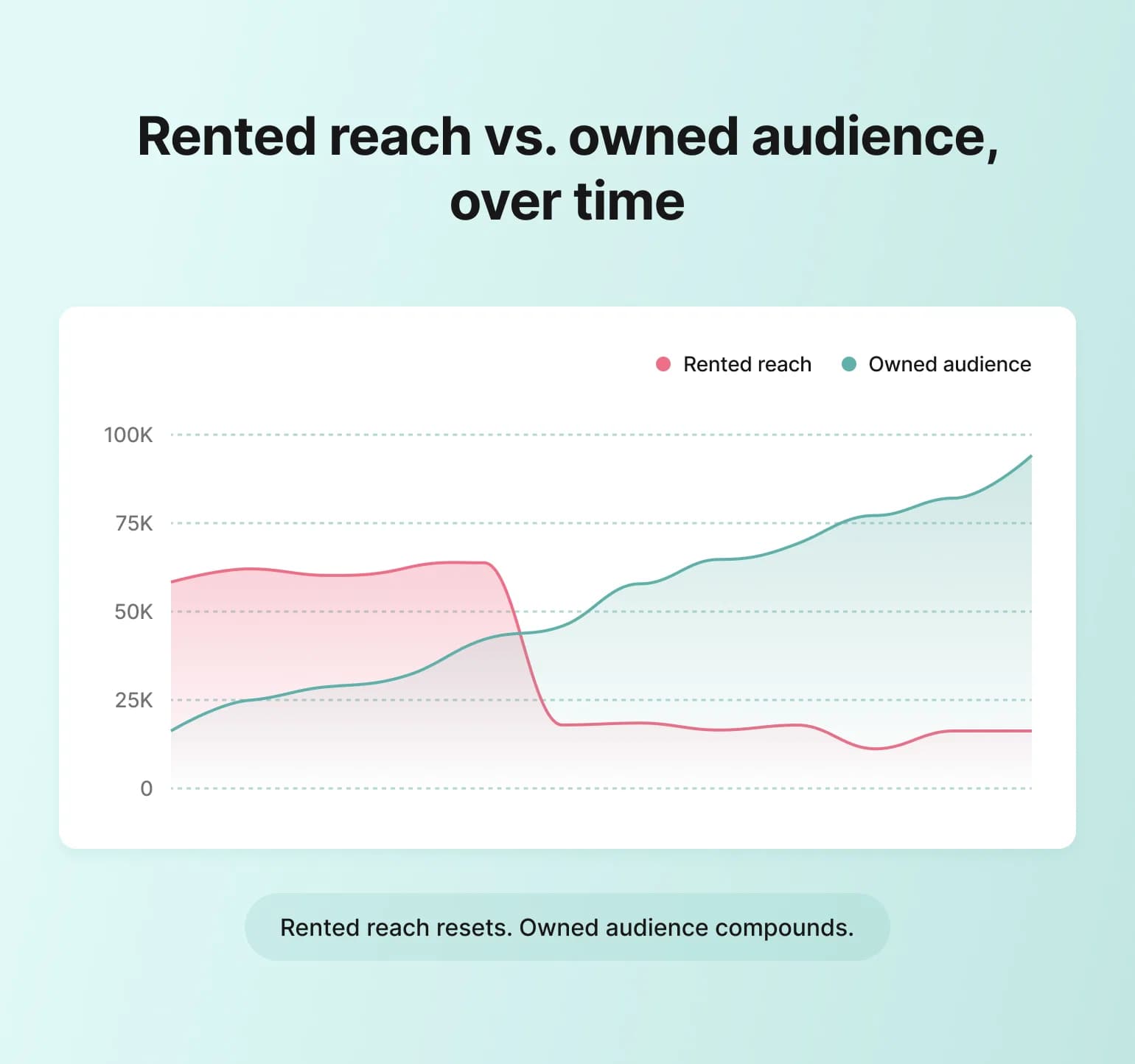
That purge is what renting your audience looks like in its most dramatic form. Reach is a clear example of the more everyday version. Facebook's average organic reach was 16% back in 2012; by 2025 it had fallen to 1–2%. Instagram and LinkedIn show the same trajectory, just compressed into a shorter timeframe. The pattern repeats on every algorithmic feed, and the mechanism behind it is simple: reach is the thing platforms sell. If your followers already saw everything you posted for free, there'd be nothing left for an advertiser to buy.
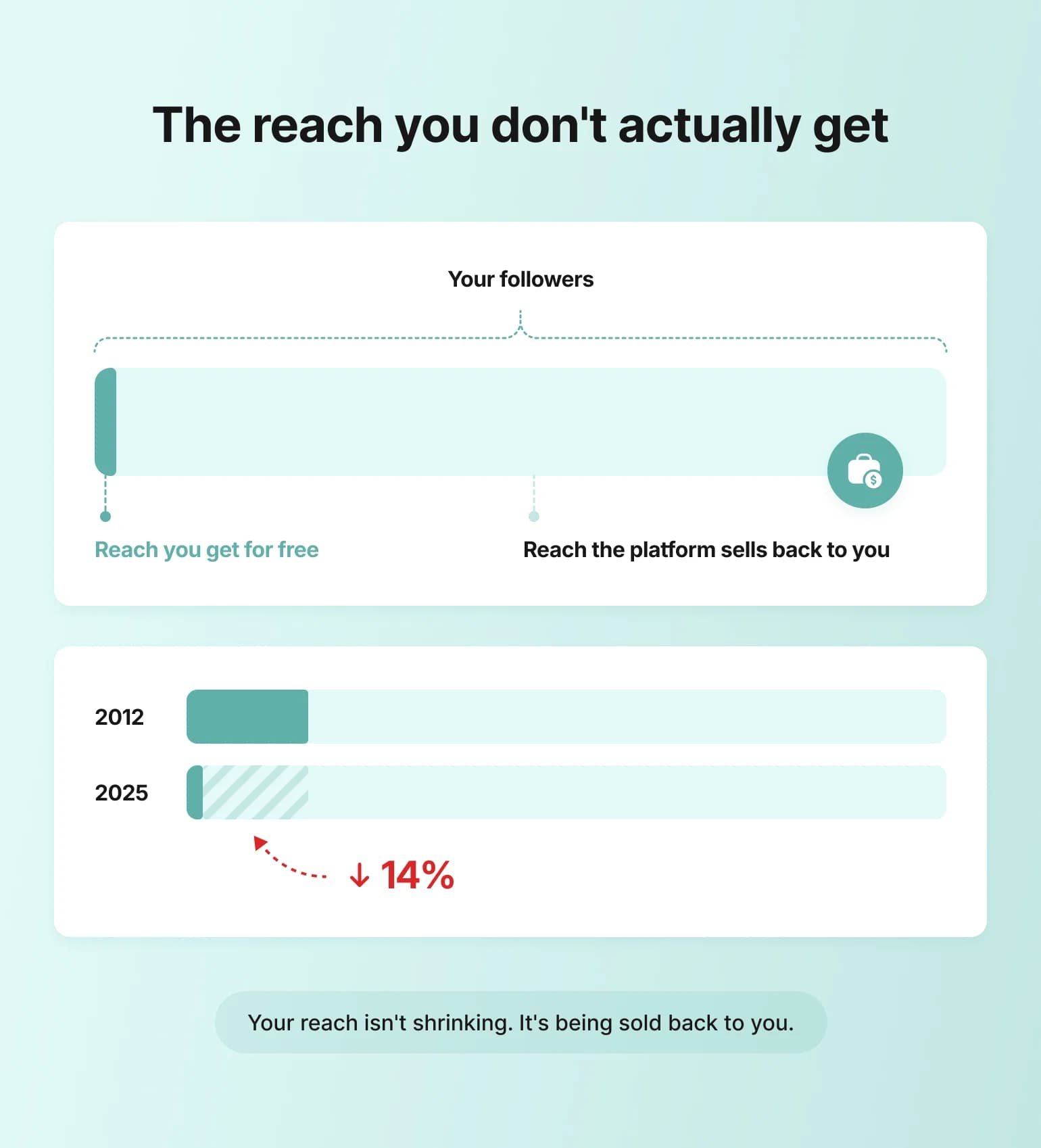
So the platform limits how many of your own followers see each post for free. Say you have 10,000 followers: without paying, a new post might land in front of only a few hundred of them. If you want the rest to see it, you pay to boost it. That paid reach is the ad inventory: the platform is selling you access to the audience you already built. Then there's the money. When you monetize through the platform itself—subscriptions, tips, ad revenue share—the platform sets the split, the payout schedule, and the eligibility rules. You find out about changes the same way everyone else does: a policy page update and an email.
Reach and revenue are the costs you can put a number on. The third one shows up in how people actually behave once they're on the platform. Facebook and Instagram are where people scroll while waiting for the kettle to boil. That's fine for discovery, but it's a hard place to run something serious. A feed isn't built for the kind of participation a real community needs. People scroll past, react, and move on, because that's what the format rewards. A dedicated space changes the terms: members show up on purpose, to a place that isn't wedged between memes and someone's cousin's wedding photos, and they engage differently because of it.
Five signs you're relying too much on a platform you don't control
Here's a true story for you: Fifty410 is a telehealth GLP-1 weight loss clinic. Its patient community started as a private Facebook group where people on their weight loss journey could share wins, ask questions, and find encouragement between provider visits. It exploded from about 2,000 to more than 25,000 members in a couple of months. Then the platform started working against them: keyword filters flagged clinical language, posts got taken down, and in a regulated health niche, one policy interpretation could wipe the whole thing out overnight.
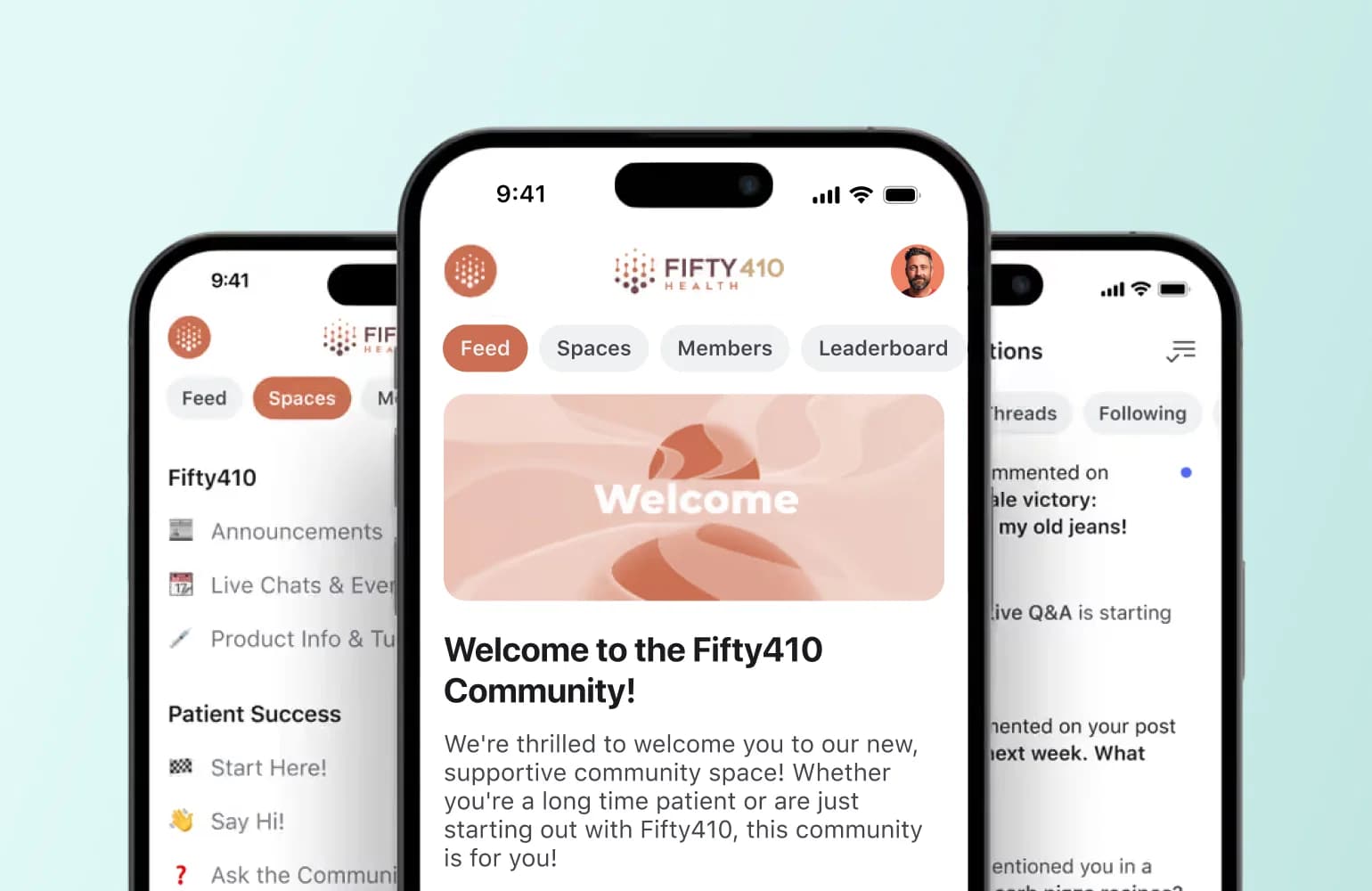
The team decided they couldn't keep the community on rented ground, so they moved to Circle and launched a fully branded mobile app with structured spaces for each stage of patient care, gated areas for active patients, and an in-app video hub for clinical education and success stories. More than 40,000 members migrated into the branded app, and more than 80% of engagement now happens on mobile, in a space they actually control.
Fifty410 caught the problem because it hit them hard and fast. To avoid the same problem, check these five warning signs:
- Your reach stops growing. When your following grows but the number of people who actually see each post stays flat or drops, the platform has quietly raised the price of reaching your own audience.
- You can't contact your audience off-platform. Count how many of your people you could email today; if the answer is zero, every relationship you have is at risk.
- One platform carries revenue you can't afford to lose. When a single channel funds payroll or core operations, you need to expand or build a second revenue channel you control.
- Your entire stack is discovery platforms. When every place you publish is an algorithmic feed, you can't reliably reach the same person twice; at least one audience home needs to be a channel where members chose you and you can reach them on demand.
- A single policy change can scatter your community. Fifty410 shows how one moderation call can disrupt an entire group overnight; an owned home makes that exposure manageable.
If three or more of these describe your business, make audience ownership a near-term project.
What owning your audience looks like in practice
A private, branded home does more than just look nicer. It changes who commits, how they behave once they're in, and what you can reasonably charge.
Think about your stack in two buckets:
- Discovery platforms (TikTok, Instagram, YouTube, LinkedIn, X) are rented by design, algorithmic on purpose, and built to introduce strangers to your content.
- Relationship platforms (email,private communities, SMS) are places you can reach the same person tomorrow.
Discovery platforms only earn their keep when they feed relationship platforms. If a follower discovers you on Reels and stays there, they're the platform's asset. If that same follower ends up on your email list or inside your community, they're yours.
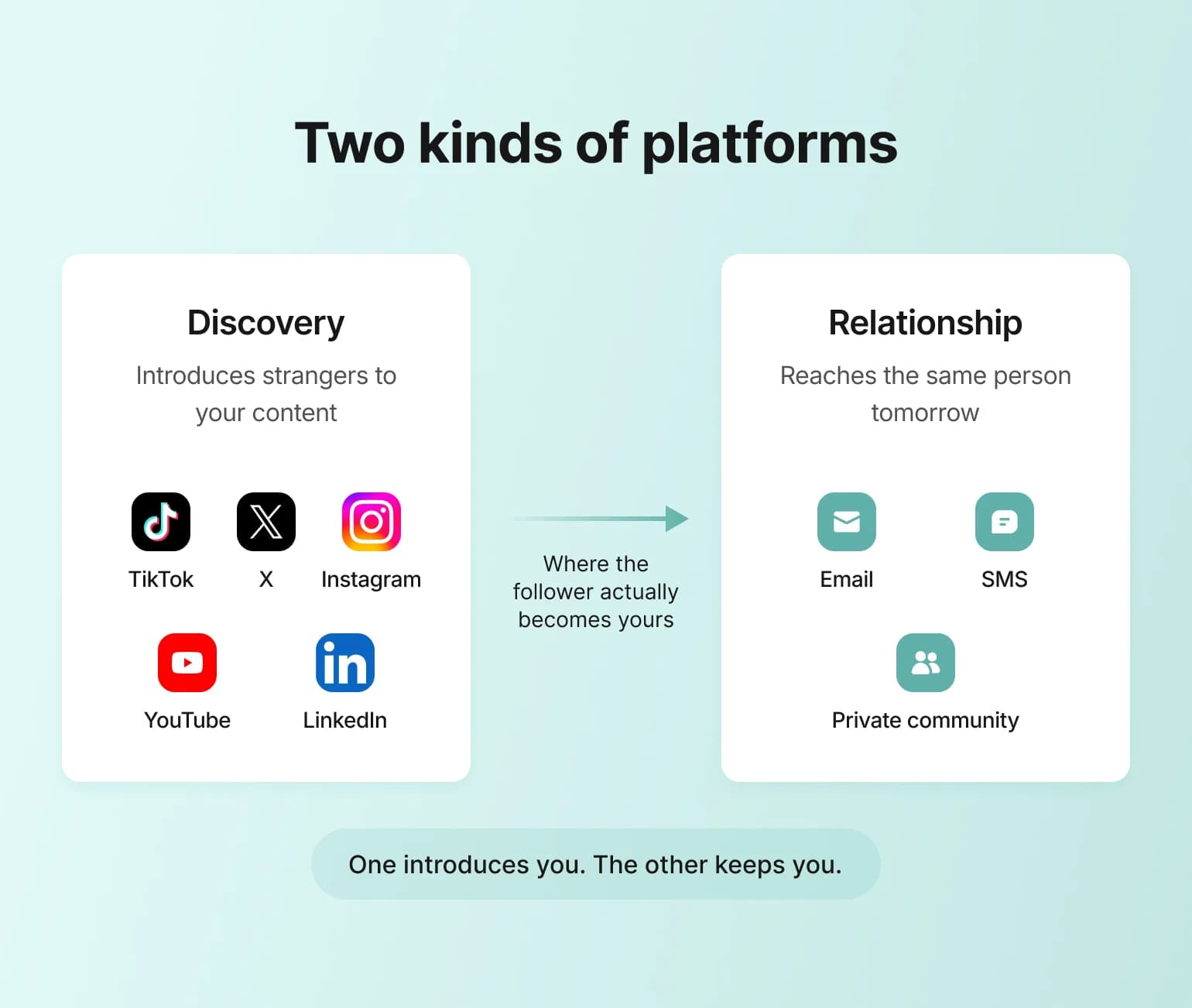
Owning your audience isn't a mindset shift. It's a concrete setup, and it usually looks like this:
- You have their email address. Not a follower relationship, an actual contact record you can write to on a Tuesday afternoon without asking a platform for permission.
- You control the checkout. When a member pays you, the money goes to your account, on your terms, at a price you set. Access turns on when payment clears and off when it lapses, without you chasing anyone across five tools.
- You can see who's engaged and who's fading. Same system, same member record, same view of what they've bought and what they've clicked. Nothing lives in a separate dashboard that nobody logs into.
- The experience carries your brand, not someone else's. Your logo, your colors, your name in the app store if it comes to that. Members show up somewhere that feels like yours, because it is.
- The content compounds. Threads from 18 months ago are still searchable. A workshop you ran in March is still driving signups in October. Nothing gets buried by an algorithm.
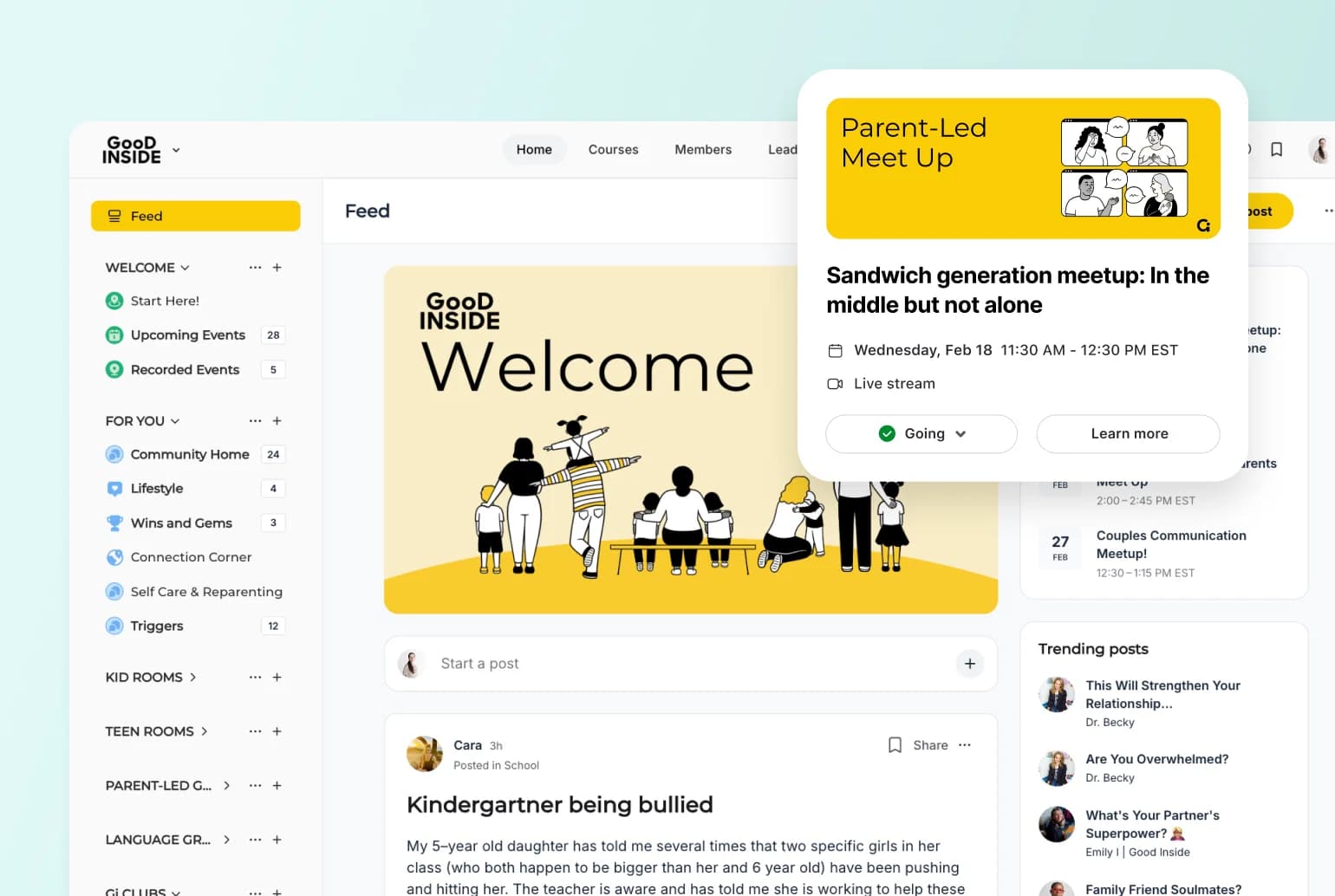
Take Dr. Becky's parenting membership, Good Inside. The community used to live across Instagram, Facebook, and email: public spaces where vulnerability felt unsafe and where the intimate workshop conversations vanished the moment the Zoom call ended. As the business shifted from one-off courses to an ongoing membership, that setup stopped working. Parents needed somewhere private to talk about sensitive stuff, and the team needed a home where every workshop, thread, and event added to the same searchable body of knowledge instead of disappearing into a feed.
They moved everything onto Circle. Today, 100,000+ parents joined, spread across 140 countries, monthly active users sit at 47%, and the team ran 500+ events in 2025 with 41% live attendance. Membership grew 176% year over year. Same audience, same content, different foundation, and none of it depends on a platform that could reprice or restrict them tomorrow.
The "I don't have time to set this up" objection is fair, and it's also the most solvable part of the whole thing. Circle AI can scaffold the entire structure for you: spaces for discussions, events, and courses, access groups for free vs. paying members, paywalls with tiered pricing, cover images and branding. You describe what you're building in plain language ("a mindfulness community with a premium cohort and an alumni tier"), it proposes a plan, you approve it, and the community gets built. Nothing ships without your approval, and everything it builds, you can edit afterwards.
Once that structure exists, you can invite people into it without giving up the channels where they discovered you.

Just describe it. Circle builds it.
How to move your most engaged people without abandoning where they found you
Most migration questions start with one concern: will members follow? Some people won't, and that's survivable. The ones who move are the ones who wanted more than a feed, and they're the ones to design the business around. Use this sequence:
- Invite your most engaged people first. Start with the members who already comment and reply to your DMs. They seed conversations so the community never feels empty on day one, and their feedback shapes the structure before you open the doors wider.
- Offer depth the feed can't hold. Post the 60-second workout on Instagram; keep the full 30-day program with modifications and nutrition guides for members. Use public content to tease the deeper value and keep the full experience for members.
- Keep publishing where they found you. Social can stay your discovery engine. Give every post a path to a place you own: a lead magnet link in your bio, or a keyword to comment for a free resource tied directly to the content.
- Make the first week count. Migrated members decide fast whether the new home is worth another login. A deliberate community onboarding sequence, with a clear first action and a fast first win, is what turns a signup into a habit.
The same sequence applies whether you're on a discovery platform or a rented community space: move the people who already engage before you worry about everyone else.
Turning followers into revenue you control
You don't need a million followers to build a real business out of an owned community. A committed base paying you directly can add up faster than most creators expect. If you're starting from zero paid members, the path to your first 100 members runs through the engaged-first migration above.
Creators often leave money behind by underpricing. What a community can charge depends on the outcome it produces for members, and studying community pricing strategies before you launch beats anchoring yourself low. Whatever you charge, the recurring revenue model is the point: income you can predict before the month begins, instead of a launch treadmill.
Monetizing on your terms also depends on reaching the right people at the right time. When your email list and your community live in one system, member behavior in one can trigger messages from the other: a space post, a course completion, or a paywall unlock can put someone into a targeted sequence. Email Hub runs those broadcasts and sequences, and every email drives back into the community you own.
Build on ground you own
Rented land can be repriced or repossessed without your vote. Owned land compounds: every subscriber, member, and renewal is a relationship you can reach directly, on a schedule you set. Keep the feed for discovery, and make sure every post points somewhere you control. Circle gives you the other side of that equation, with your community, events, email, and payments under your brand, so growing and monetizing your members stops depending on someone else's roadmap.
Own it. Don't rent it.
Owning vs. renting your audience FAQ
What does it mean to own your audience?
You own your audience when you hold the direct member relationship yourself, keep contact and payment details, and can see how members engage. That happens in places no third party mediates, like an email list or a private membership community, rather than on an algorithmic feed.
Should I stop posting on social media once I have an owned community?
No. Social platforms can remain useful discovery engines, especially at the top of the funnel. Post to be found, thenconvert that attention into places you control.
How big does my audience need to be before starting an owned community?
You can start before you have a follower count large enough to impress a sponsor. A committed base at a fair monthly price can already become a real business.
How many of my followers will actually move?
There's no standardized benchmark, so don't plan on everyone moving. The people most likely to move are usually the ones already engaged with you, and they're the ones who build the business. AfterGood Inside moved its members off Instagram and Facebook onto ground it controlled, membership grew 176% year over year.
Is an email list or a community the better owned channel?
They solve different halves of the same problem. Email guarantees reach; a community builds the engagement and connection that keep members paying over time. The strongest setups run both from the same member data so each strengthens the other.
Can I use AI to set up my owned community faster?
Yes.Circle AI can scaffold your spaces, access groups, paywalls, and branding from a plain-language description of what you're building, then propose a plan for you to approve before anything ships. It's a way to compress the setup work; it doesn't replace the judgment calls about what you want the community to feel like or who it's for.
Community Content Marketer
Arina is Circle’s community content marketer, sharing insights on community growth, GTM strategy, and storytelling for solopreneurs.