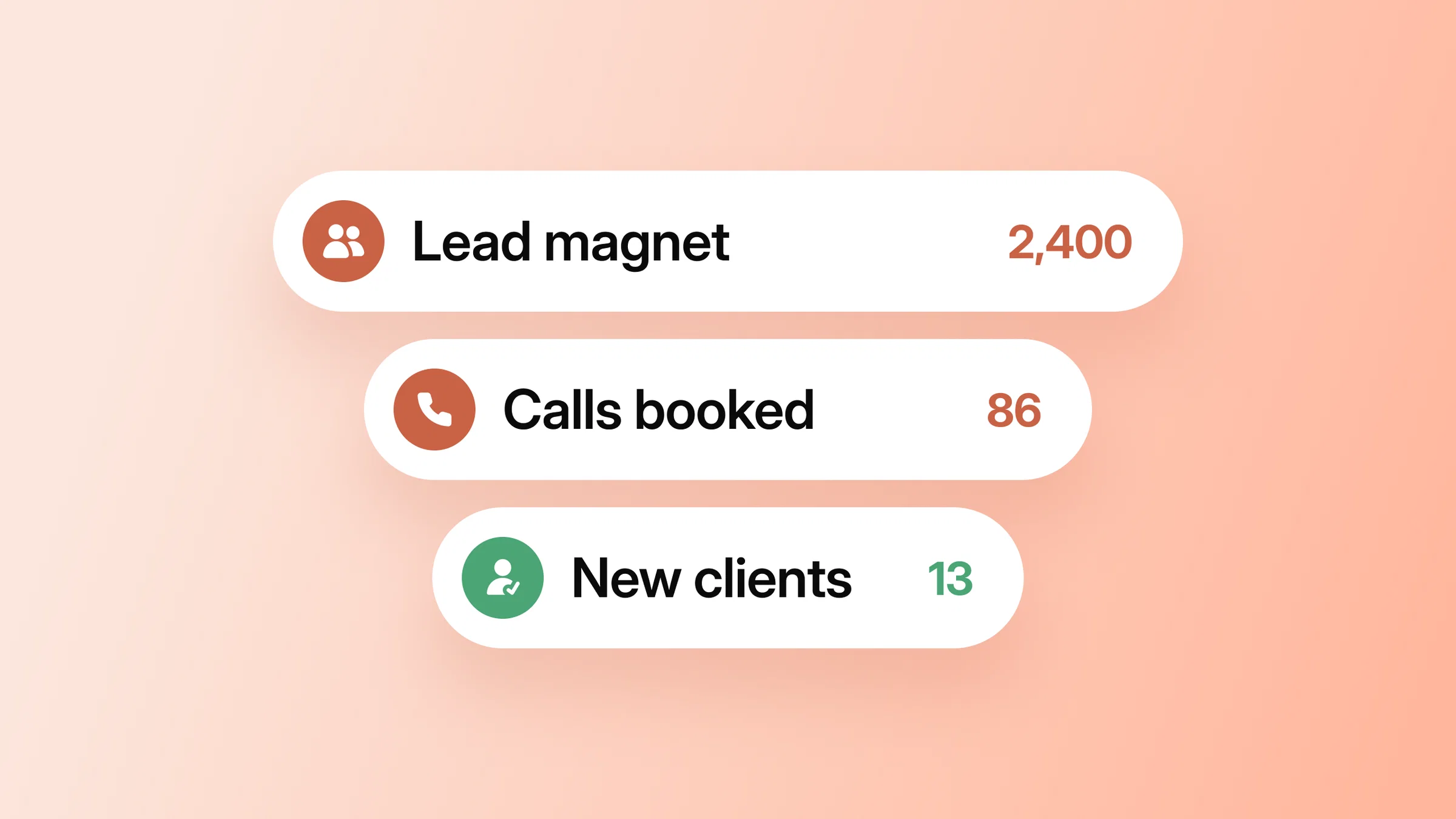
TL;DR
- Recurring revenue creates a predictable, compounding income base that keeps building on what you've already earned each month.
- Community is the retention engine that makes recurring revenue work, because members stay for the people, not just the content.
- The best community founders use one-time launches to complement recurring revenue by adding upside on top of their baseline.
Members only
One issue, five minutes, every Tuesday. Read by +14,200 creators.
You crushed your last one-time launch. The payday hit, the Stripe notifications lit up, and by the following Monday, you were already thinking about the next one. Almost every course creator, coach, and educator knows this rhythm. A big revenue spike, followed by the work of planning the next campaign to keep income flowing.
There's nothing wrong with that rhythm. One-time product launches are powerful. But when you pair them with recurring revenue as a foundation, every launch becomes a bonus instead of the only thing you depend on to keep the lights on.
What is recurring revenue?
Unlike project- or launch-based work, recurring revenue is ongoing income you earn by providing continued access to something valuable, like memberships, paid communities, exclusive content, ongoing group programs, subscriptions, and retainers. Members pay monthly or annually, and what you earn this month rolls into next month as long as they stay. It is steady earnings that keep flowing as long as members stay.
The defining trait is continuity. The customer isn't buying a single outcome and leaving; they're paying for access, relationships, and progress that accumulates rather than resets. For the creator, that continuity replicates the stability of a typical 9-to-5 paycheck, making it far easier to budget both personally and in the business.
The same core offering can often live on either side of this line: a cohort can be sold as a one-time seat or as a benefit of an annual membership; coaching can be a one-off package or a monthly retainer; and a course can be a standalone purchase or included in a community. The model you pick for each offer shapes how the revenue behaves.
Most creators start without recurring revenue and add it later, usually once they realize how much of their year is spent rebuilding income from scratch between campaigns. It's also the shift that moves you from freelancer or consultant into running a real business, one with forecasts, growth goals, and a baseline you can plan around.
The benefits of recurring revenue
Recurring revenue has three compounding benefits that stack as your membership grows: predictable income, compounding growth, and the freedom to run your business on your own terms. Together, they're the reason individuals who start out as solo creators and then build growth flywheels around memberships keep growing.
It gives you a predictable revenue stream
A stable monthly baseline changes how you run your business. When you know meaningful revenue is arriving next month from existing members, you can hire help, invest in better content, and plan ahead instead of scrambling a few weeks before a launch deadline.
Take Bonnie Christine's Flourish membership, which started at $5/month and now earns seven figures from 17,000+ surface pattern designers.
For the first nine years, she did everything herself, earning about $9/hour and refusing to delegate even the smallest tasks. The recurring income from her membership is what finally gave her the room to make her first hire, hand off work that wasn't in her zone of genius, and scale into the $25M business she runs today with a team of 12+.
Recurring revenue compounds instead of resetting
Every new member adds to what you already have instead of replacing revenue you just lost. A course launch that brings in 100 buyers gives you one revenue event. A membership that adds 100 members gives you 12 months of recurring payments (if you have monthly or annual plans), layered on top of everyone who joined before them.
Josh Hall's Web Designer Pro community generates $327k in annual recurring revenue from a relatively small member base (250-300), and without a massive audience, a launch team, or a dedicated operator. The math works because every member who stays increases the total. That compounding effect only holds when members stick around, which is why community is the retention engine behind every membership business that actually works.
You buy yourself freedom
When next month's baseline is already in place, you can step back and think about the bigger picture of your business, or even take a vacation, without worrying about it. You can turn down bad-fit clients without pressure on cash flow. You can say no to a collaboration that doesn't align because you're not dependent on the next revenue spike.
Story School runs exactly this model. Lower-priced paid challenges convert participants into annual memberships. The challenge brings people in, and the membership keeps them paying. That's real freedom for the founder. Making decisions because you want to, and you believe in them, not because you need to hit a number this quarter.
What are one-time sales?
Recurring revenue is only half the picture. To see why smart creators run both, it helps to look at the other side of the equation.
One-time sales are transactions where a customer pays once for a specific outcome, and the billing relationship ends there. A cohort seat, a self-paced course purchase, a workshop ticket, a coaching package, or a digital download all fit this pattern. You deliver the outcome, the engagement wraps, and the next sale starts a new transaction.
The defining trait is the concentrated event. Each sale is self-contained, which means revenue arrives in bigger, more focused chunks rather than steady monthly drips. That makes one-time sales great for cash injections, big pushes, and creating decision moments for your audience.
How one-time sales complement recurring revenue
Recurring revenue is the anchor, but one-time sales bring something to the table that memberships can't replicate on their own: concentrated revenue bumps, urgency, and the ability to reach new audiences and reactivate old ones.
Layered on top of a recurring base, one-time sales stop being the thing that has to perform and become the thing that adds upside.
One-time sales create revenue spikes
A well-run one-time offer brings in a large sum in a short window. That kind of cash injection can fund new hires, better content, platform investments, or bigger bets you'd be cautious about making on monthly revenue alone.
Felippe Nardi's Inside the Show highlights this approach successfully. His business runs on concentrated, make-or-break one-week launch events (with no replays after) to bring in new members and engage existing ones— that create impactful revenue spikes.
He used the cash and momentum from those launches to invest in bigger bets, like building a fully branded app in under two weeks to drive engagement during event week. Felippe saw a 2x increase in engagement during new launches.
Pairing one-time sales with that recurring base changes the dynamic. The sale still delivers concentrated revenue, and now it's building on top of a predictable floor rather than carrying the whole quarter on its own.
They bring in new audiences and reactivate old ones
Every one-time offer is a reason to show up in public again. Fresh content (perhaps with a new or expanding angle), new sales pages, affiliate partnerships, and ad campaigns all generate attention that the steady-state creator doesn't produce on its own.
Some of those new buyers convert once, and a meaningful share of them convert into members afterward—which means every one-time sale you run grows the recurring base underneath it.
These offers create urgency that memberships don't
Deadlines, cohort start dates, and limited-seat offers move people off the fence in a way that's hard to manufacture inside an always-open membership.
Running a one-time sale alongside your recurring offer gives you a reason to reach out, create a decision moment, and pull people into your world—some as one-time buyers, some as new members.
Why smart creators use both recurring revenue and one-time sales
Tiago Forte made $3M in two years by running both models side by side: self-paced courses, a premium membership, cohort experiences, and in-person events.
The combination is more resilient than either one alone. Recurring revenue carries the baseline from month to month, one-time sales add concentrated revenue and new audiences on top, and neither has to perform on its own for the business to work. A softer one-time sale launch week doesn't decide your month, and a quiet stretch between launches doesn't stall the business.
With Circle, you can run both sides on one platform.
- Public events, digital products, landing pages, and email automations run the launches and capture non-members as contacts in the process.
- Subscription groups, space gating, and tiered paywalls keep recurring revenue moving without manual work.
- Both sides share the same member data, so the person who attended a free event last quarter is the same person you nurture toward paid membership today.
The combination is what makes the layered model work, but it only pays off once you have a recurring base underneath your launches to build on.
How you can build a recurring revenue business
Building a recurring revenue base is about getting a few core pieces right and letting them compound. Five things make the difference between a membership that quietly fades and one that pays you every month: a clear transformation, pricing that reflects the value, a warm-audience launch, strong early momentum, and systems that support retention over time.
1. Start with the transformation, not the content
Get sharp on the outcome. What specific change are members paying for? Who are they? Where will they be once they've moved through your system? Most failed memberships try to serve everyone with a mountain of content.
The ones that work pick one audience, one transformation, and build the smallest system possible that delivers it.
2. Set a price that respects the work
Most creators undercharge. The math of recurring revenue doesn't require thousands of customers. It requires the right price and ongoing value—either through you or your members (usually, both). A smaller member base, priced to reflect the transformation, can match or beat what a larger base would earn at a bargain rate.
You don't (necessarily) need to scale into a massive community. You need pricing that respects what the work is actually worth to the people paying for it.
How you position the offer matters more than the exact number. A community-led membership, a coaching-heavy program, and a niche expert community each sit at very different points on the spectrum, and the price should track the depth of access and the outcome members are paying for. A great way to sanity-check your pricing is to think through what members would have had to do to get the same outcome without you and the community.
Circle's free Community ROI calculator uses real data from top Circle communities, and factors in average churn rates, growth trends, and conversion rates, to help you figure out what a price point can actually earn you, so you're testing pricing against facts rather than guesses.
3. Launch to your warmest audience first
Your first members should come from people who already trust you. Past course buyers, email subscribers, coaching clients and long-time followers. Warm audience first, public marketing second. A founding-member offer, like a locked-in lower price or a lifetime discount on the first annual plan, rewards people who take the bet early.
One way to do that is with a free section of your community where prospects can spend time before you launch to them. Circle keeps the relationship in your hands from day one, so no one can randomly ban your members, delete your community, or throttle your reach with an algorithm.
4. Win the first 30 days
Early momentum decides whether a member pays a second time. This is where most memberships quietly lose people. They join, don't know what to do, stop logging in and cancel. Your job is to make real progress before that drop-off happens (and ideally before the next billing cycle.)
Three things help you build momentum:
- A clear first action the moment they sign up (join a specific Space, introduce yourself, complete one lesson).
- At least one live touchpoint early on (a live event, a group coaching call, or a cohort kickoff).
- And a response to anything they ask, which is where an AI Agent trained on your content earns its place. It handles welcome DMs and FAQ responses around the clock, so early members never feel ignored.
After securing that initial engagement, the next phase is moving from a high-touch effort to automated systems that compound.
5. Layer in the systems that compound
Once your first cohort of members is active, the next step is to build systems that run without you.
Here are three ways you can automate engagement with Circle:
- Email Hub helps you activate powerful retention strategies: renewal reminders, reactivation sequences, and behavior-triggered emails all fire from the same system your community runs on.
- The shared AI Inbox logs every DM member sends to your AI Agents, giving you a running feed of what members actually need or get stuck on. Use that to guide your community roadmap rather than guessing.
- Tier structures and gamification come later, once you've seen clear gaps at different price points (or within different types of members) and understand which behaviors drive retention. Rushing either one before your baseline is solid usually just adds complexity without any benefits to your revenue.
Top up your recurring revenue with one-time sales
With a stable recurring base, you're ready to start layering one-time sales on top. The pressure is off; each one-time offer becomes a bonus rather than something the month depends on. Look back at what your members already ask for, what past buyers responded to, and where natural upgrade moments exist inside your community.
Tim Slade's eLearning Designer's Academy is a great example: what started as a single online course in 2020 has grown into a thriving 11,000+ member academy with cohort-based programs, private team workshops, and a vibrant learning experience layered on top of the core membership.
Those signals point to the one-time offers most likely to land: a cohort, a workshop, a premium intensive, or a public-facing launch. Pick the one that fits your audience and run it on top of the base you've already built.
Build the business that pays you every month
The gap between one-time sales and creators with a recurring base underneath isn't talent, audience size, or marketing sophistication. It's how the business is built. Add a recurring revenue layer, and every one-time sale you run from that point forward builds on top of what's already there.
Dave Gerhardt built Exit Five into a multi-million dollar B2B community on Circle. In his words, "Circle made it possible for one person with an idea to build a real business around community. That's the future."
You need a platform to power your vision. Circle keeps community, courses, events, payments, email marketing, and website in one place. AI Agents and Workflows handle the admin work so you can focus on the human relationships members actually pay for.
Ready to build a business that pays you every month? Start your 14-day free trial of Circle now.
FAQs about one-off sales vs. recurring revenue
Is recurring revenue always better than one-time sales?
They serve different purposes. One-time sales generate fast cash injections that can fund big leaps forward—and can be a great way to get started as a creator. Recurring revenue builds a predictable baseline that compounds month over month. The strongest creator businesses run both, using recurring revenue as the foundation and layering one-time offers on top.
How do one-time sales fit into a recurring revenue business?
They sit on top of it. Your membership carries the baseline income month after month, and launches, cohorts, and premium offers become compounding upside rather than the sole source of revenue. That way, no single campaign determines whether the month works, and every launch grows the recurring base underneath it.
What's the safest way to add monthly revenue to a launch business?
Layer the recurring offer onto your current business instead of replacing everything at once. Keep existing revenue streams running while you gradually build the recurring base beneath them. Start with your warmest audience, prove the model with a small founding cohort, then scale once retention and onboarding are working. Another common pattern is to offer a premium community to people who've already bought your products, then expand it into an entry point for different membership tiers, with one-time products layered in.
The complete community platform
Circle is the complete community platform designed for creators and businesses who want powerful simplicity. You shouldn't have to choose between all-in-one and best-in-class. With Circle, you get both – plus AI to help you grow faster and work smarter.