
How Good Inside creates psychological safety for 100,000+ parents with Circle


Overview
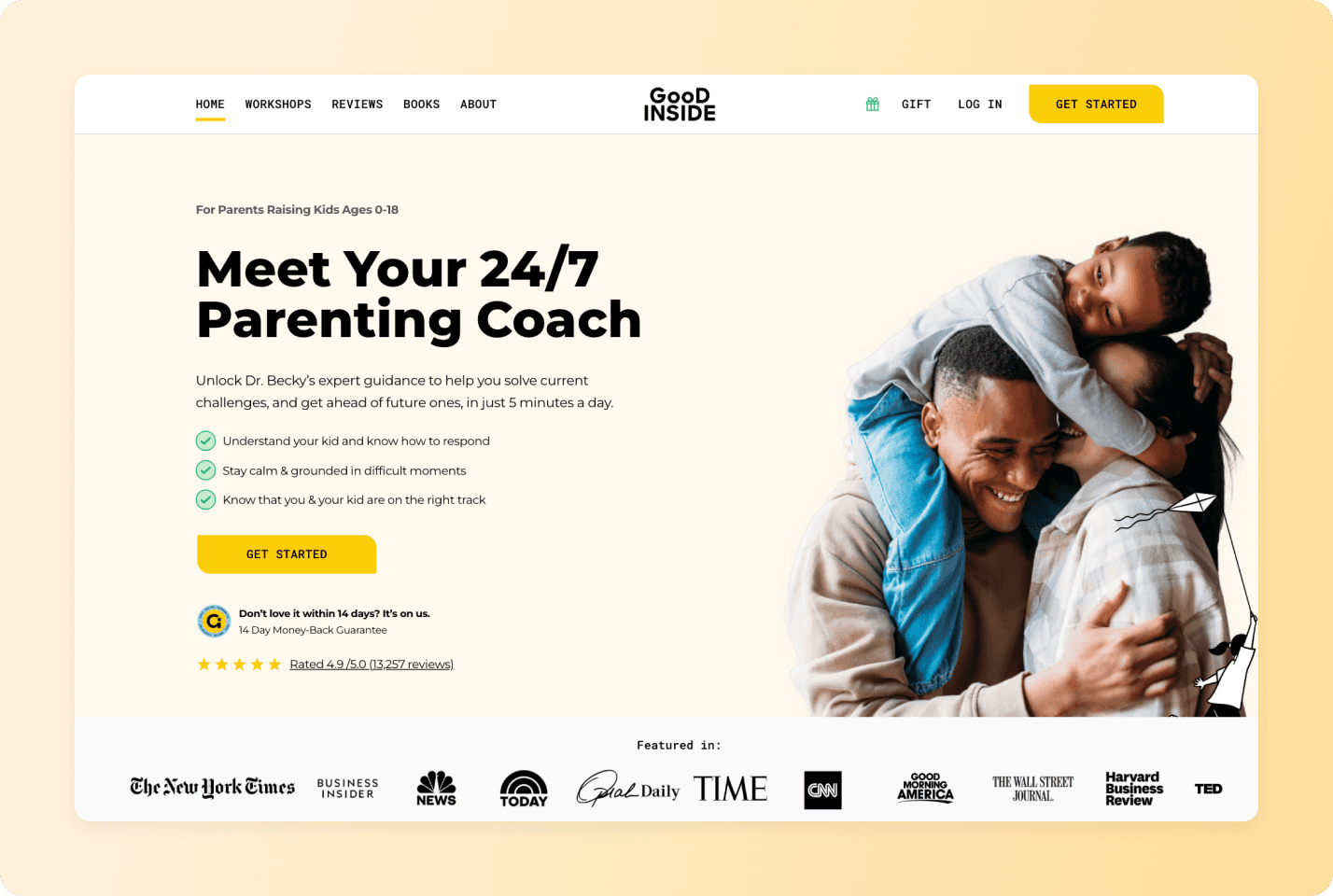
When Roxanne Schwartz joined Good Inside as the first community manager during COVID, parents were desperate for support — and showing up across Instagram, Facebook, and email. But as engagement grew, it became clear these platforms weren’t designed for the kind of depth, safety, and ongoing connection parents needed.
As the company evolved from selling individual courses to building an ongoing parenting membership, they needed a centralized, trusted platform for vulnerable conversations at scale. Circle became that foundation, with structured spaces, automated moderation, and real-time support that now help more than 100,000 parents connect, learn, and feel less alone.
"Circle isn't just where our community lives — it's where our product comes to life. It's really the heartbeat of our membership." — Roxanne Schwartz, Voice of Customer at Good Inside
Before
The one thing parents needed most: a place to connect
Roxanne Schwartz joined Good Inside as the company's first community manager, building spaces for parents and learning what they needed most. Her background in community shaped her path to product management and now Voice of Customer, where she focuses on community products informed by real parent needs.
When Good Inside launched, they offered individual courses — standalone workshops on topics like food battles, listening, and defiance. But the team quickly realized this model missed something fundamental about parenting.
"We started to realize that information alone wasn’t driving transformation. Parenting isn’t finite — it’s ongoing, emotional, and constantly changing. Parents didn’t just need answers. They needed support while they were in it."
As Good Inside shifted toward a comprehensive membership model — spanning a content library, podcast, book, chatbot, and community — one thing became clear: parents needed more than just information. They needed connection.
During COVID, that need intensified. "We had so many parents looking for support and guidance," Roxanne recalls. "We had a community on Instagram. We had a community on Facebook. We had a community, frankly, through email." These scattered touchpoints couldn't deliver the depth of support parents desperately needed.
Challenge
Scattered tools meant scattered support
The problem wasn't just logistical — it was emotional. Parents navigating sensitive challenges need to feel safe enough to be vulnerable.
"When there are communities and conversations happening and they're in a more public space, parents are less likely to be vulnerable. And parents need to feel safe to feel supported."
Live workshops sparked rich conversations in Zoom chat, but those insights disappeared the moment each session ended. Instagram and Facebook offered reach, but lacked privacy and psychological safety. Email couldn't facilitate real-time, peer-to-peer support.
This gap mattered because vulnerability is essential to the parenting journey. "One of the biggest things that we hear from parents is they feel alone in the process," Roxanne says. "When you're going through a challenge with your kid or with yourself, you might feel like you're the only one in the world that has experienced that."
Without a centralized, private space where parents could safely share, connect, and get support from peers and Good Inside coaches in real time, the company couldn't fully deliver on its core promise: helping parents feel less alone.
Solution
Building safety and structure with Circle's tools
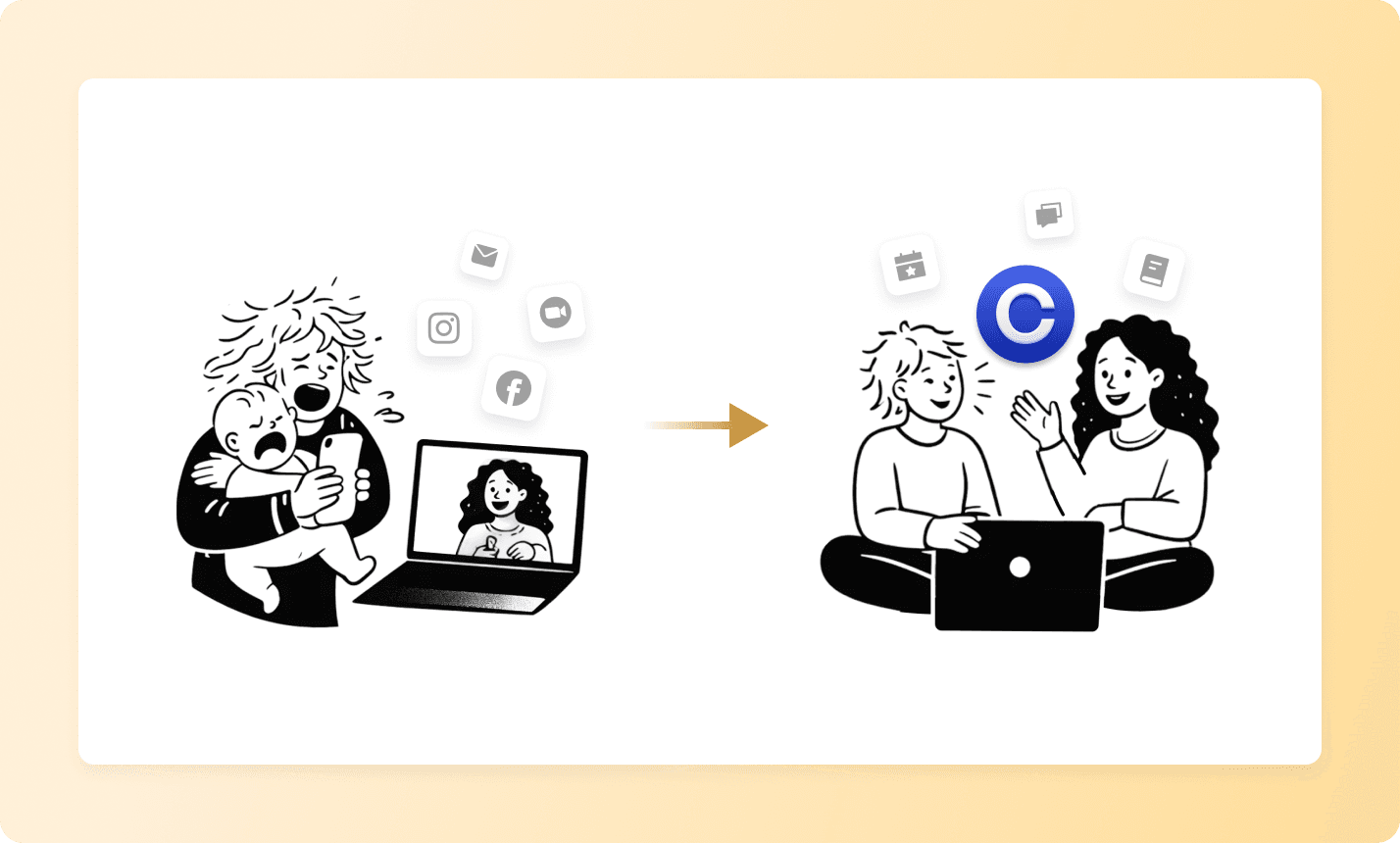
Circle offered Good Inside a way to unify their scattered community under one roof. Events were a critical starting point.
"One of the biggest draws to Circle was the events component. Having all of the events work native to the platform was game-changing for us."
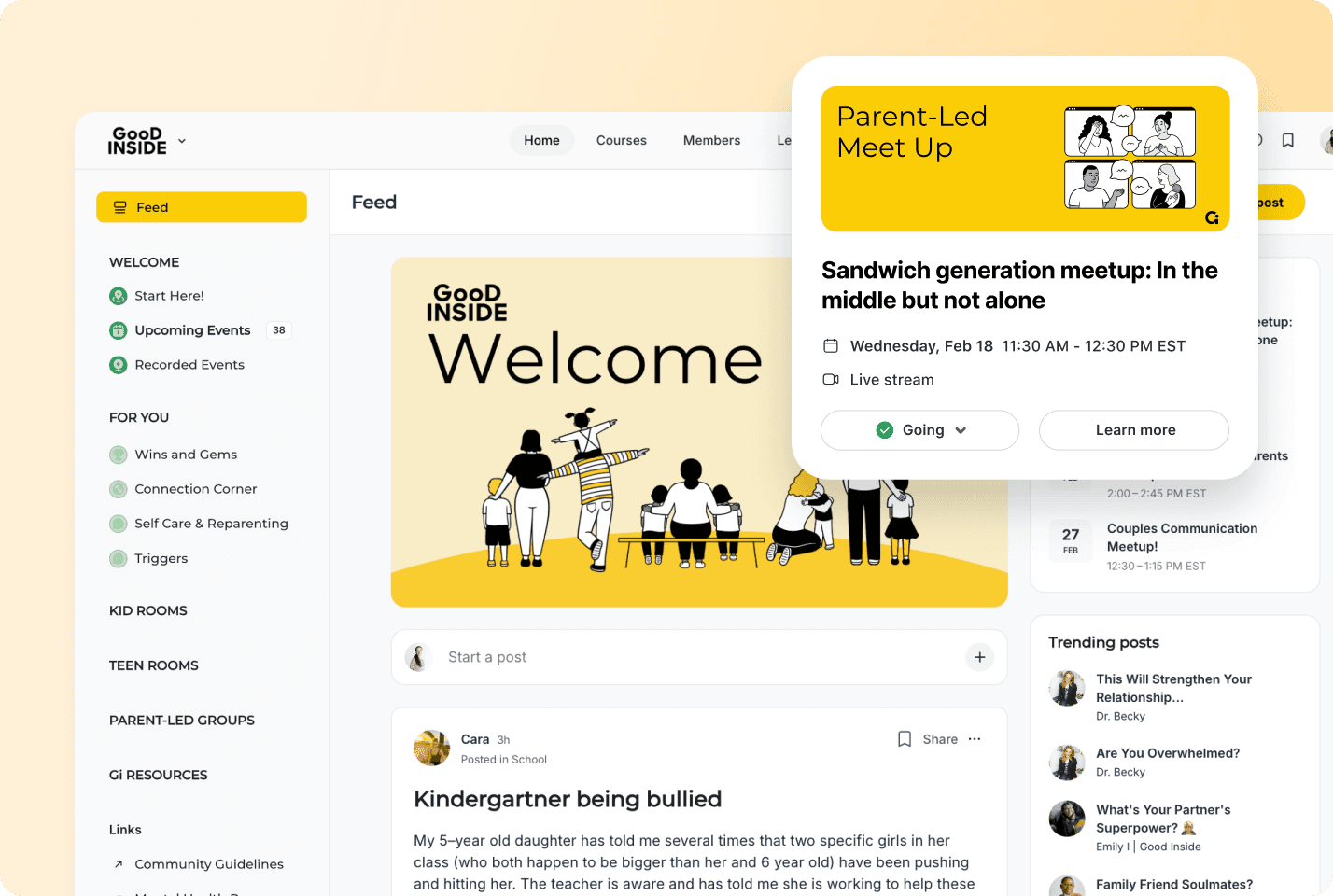
Good Inside hosts Dr. Becky's live workshops alongside smaller, more intimate support sessions led by coaches. Circle's automated RSVPs and follow-up workflows meant the team could focus on the experience rather than logistics.
The real transformation came from Circle's approach to safety. Good Inside uses Circle's moderation tools extensively, including automated flagging and immediate communication back to members. "This has saved our team so much time — just using those automations and really building out that safety toolbox," Roxanne explains.
The team structured their Circle community with spaces for different parenting challenges and cohorts. As the community grew to over 100,000 members, they continuously evolved these spaces. Circle's flexibility made it possible to support parents across every stage of their journey—from pregnancy to parenting teens—while also accommodating identity-based, parent-led groups for military families, homeschoolers, dads, queer parents, and single parents.
Onboarding was equally intentional. New members are guided through their first days with automated touchpoints designed to quickly create connection. It begins with a “holding hope” post — a moment where parents share what they’re going through and receive immediate support — helping transform a new member into an active participant within days.
Transformation
When parents feel safe, engagement (and retention) follow
The results proved the power of combining safety, structure, and community.
"One of our strongest retention signals happens inside our Circle community. When a parent comments in their first week, they stay longer, they engage more, and they see better outcomes."
Live event attendance became another powerful retention driver. Circle's native events integration removed all friction between invitation, attendance, and follow-up.
The impact shows in how parents experience the community itself. Members who arrive expecting to face their parenting challenges alone quickly discover they're not.
"The most surprising thing I’ve learned is how quickly that feeling of ‘I’m the only one struggling with this’ disappears when someone enters the community.”
Good Inside has seen parents form lasting friendships through the community, with some even meeting in person after connecting online. For the Good Inside team, Circle's analytics made it possible to understand and optimize engagement at scale. "Community is the best place to go when content or product is looking for information," Roxanne says. "Community is really that real time feedback."
Parent-led groups have flourished, with power users volunteering to create and moderate spaces for shared identities and experiences. "Circle makes it really easy to identify power users," Roxanne notes. "And those power users end up becoming leaders in our community."
Looking ahead, Good Inside plans to expand its audience from expecting parents through parents of teens. Circle's structure will support this growth while maintaining the psychological safety that makes the community effective.
"While most parents join Good Inside for content, they stay for the community — where learning becomes real, relational, and sustained. Circle is at the center of that experience."