Personal branding for entrepreneurs: inside Chris Donnelly's $5M cohort program
TL;DR:
- Chris Donnelly's Creator Accelerator (TCA) now runs cohorts of 100 to 200 people, four times a year, and he says it can make $5 million to $10 million a year with about four people running it. It started as ten founders paying $5,000 each for a program he built live, week by week, on Circle.
- The story matters more than any single tactic. He built a LinkedIn personal brand by teaching for free, saw coaching demand outrun his hours, sold a small cohort before building a curriculum, and only then scaled.
- This article follows that story in order, then looks at how the program runs today: the funnel, the weekly delivery, and why he now sells by application and sales call.
Chris Donnelly's first cohort had no curriculum, no recordings, and no proof it would work. He posted a note to his LinkedIn following saying he would train ten founders on personal brand for their businesses, priced it at $5,000, and ten people signed up before he had made a single lesson.
Today the Creator Accelerator fills 100 to 200 seats per cohort, and Donnelly says the business can make between $5 million and $10 million a year. It's a story about personal branding for entrepreneurs turned into an insanely profitable business. He walked through it at Circle's Build Summit, and the order of events is the real lesson: every step came after the one before it had shown that people would pay. If you are new to the format, start with what a cohort program is, then come back.
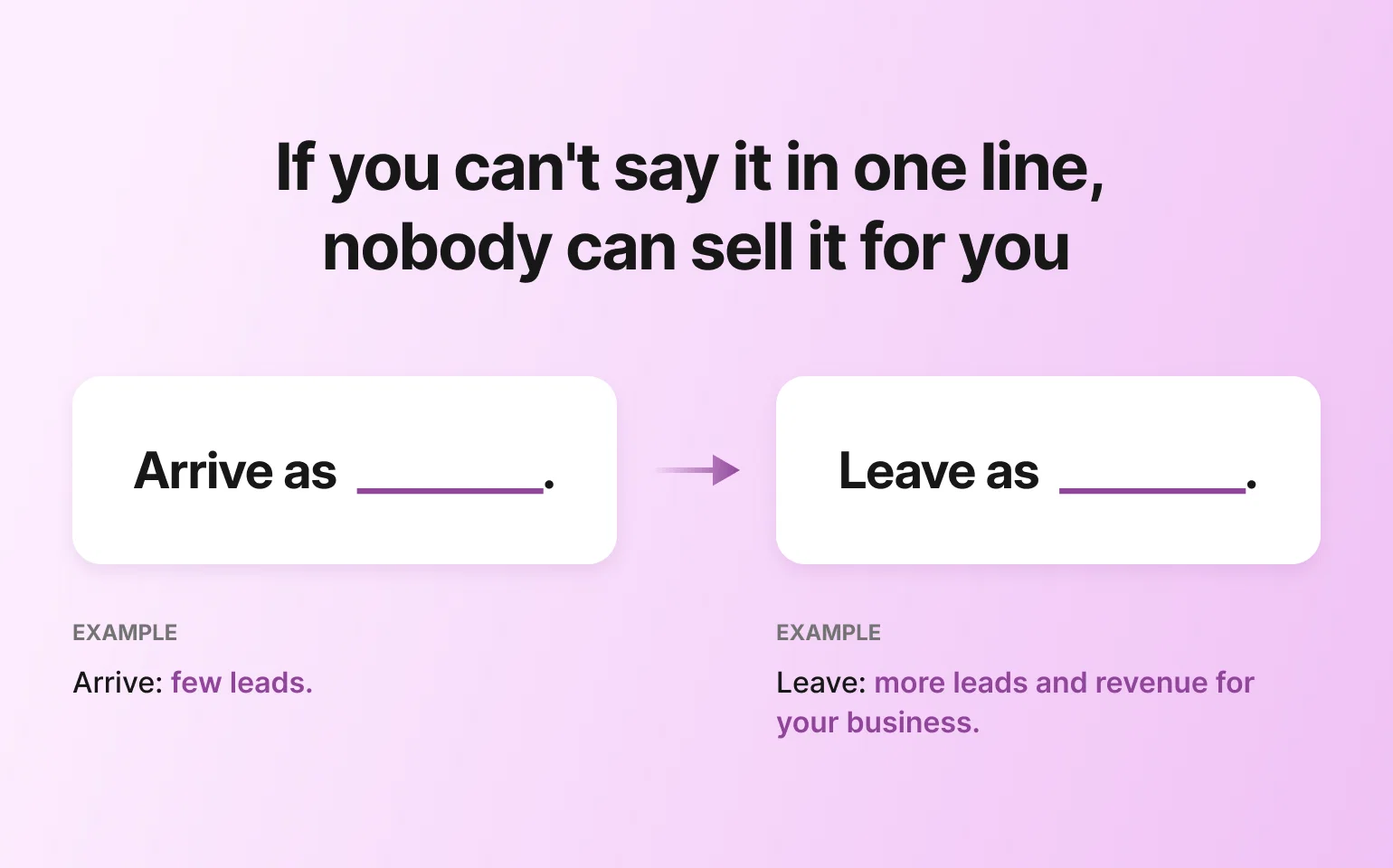
"You need to be able to say to someone, you are going to arrive in this state and you are going to leave in this state."
LinkedIn personal branding before he had a product: how Donnelly built his audience
Donnelly has been building companies for 15 to 16 years. He was a founder at 21, working 80 hours a week and making no money, and he was still in that spot at 25. He sold that company for $25 million at 29, then built Lottie, a health tech business his brother still runs as CEO. When he stepped back to take time off, he got bored, and he noticed something about his earlier companies: about 75% of the customers of his first two businesses had come from LinkedIn, when his own following was somewhere between 5,000 and 10,000, or less.
So he started posting every day. He did not teach personal branding at first. He taught founders how to scale their businesses, because that was what he knew. The early results were thin, but over about a year the account went from almost zero followers to 350,000, which he calls the fastest-growing LinkedIn account in the world. His rule for every post was that the reader should finish it knowing more than when they started, and he kept selfies and lifestyle content out of the feed on purpose. His version of personal branding for entrepreneurs is not about becoming an influencer. He says the brand is about helping other people get what they want, and that is what he teaches.

Get stories like this in your inbox.
Demand showed up as coaching requests
Founders kept asking how he had built the account, so he put a coaching slot on his website for $500. The four slots sold out immediately. He opened ten more, and those sold out too. He raised the price to $1,000 an hour, then $2,000, and kept selling out. He was in Guatemala with his wife at the time, staying in hostels and hotels, with demand running ahead of what he could supply.
That left two options: grow a team, or raise prices. He kept raising prices, and then started to wonder whether this would work better as a group (see group coaching for how that format works). He had never heard the word cohort used that way. He had seen Ali Abdaal run a YouTube academy and someone else run a copywriting cohort, and he asked himself whether he could train people at the same time.
Cohort zero: ten people, $5,000, and no curriculum
He put out a note to his following: he would take ten founders and teach them personal brand for their own businesses. Not to become influencers, he said, but to grow their businesses. The price was $5,000 for five weeks (he later recalls it running about six). Ten people signed up, and he had nothing built. In effect, he had presold a program he had not yet made.
"It was me building live on Circle, me doing Zoom calls, and I effectively trained people in exactly what I had done over the last year."
Each week, Donnelly and Josh Sanders picked a topic, filmed the lesson, put the recording into Circle, and asked members for feedback. The program took shape as they went. It made $50,000, and Donnelly is candid about the cost: he calls the first cohort a disaster in organization, and says he spent all his hours answering long questions inside Circle.
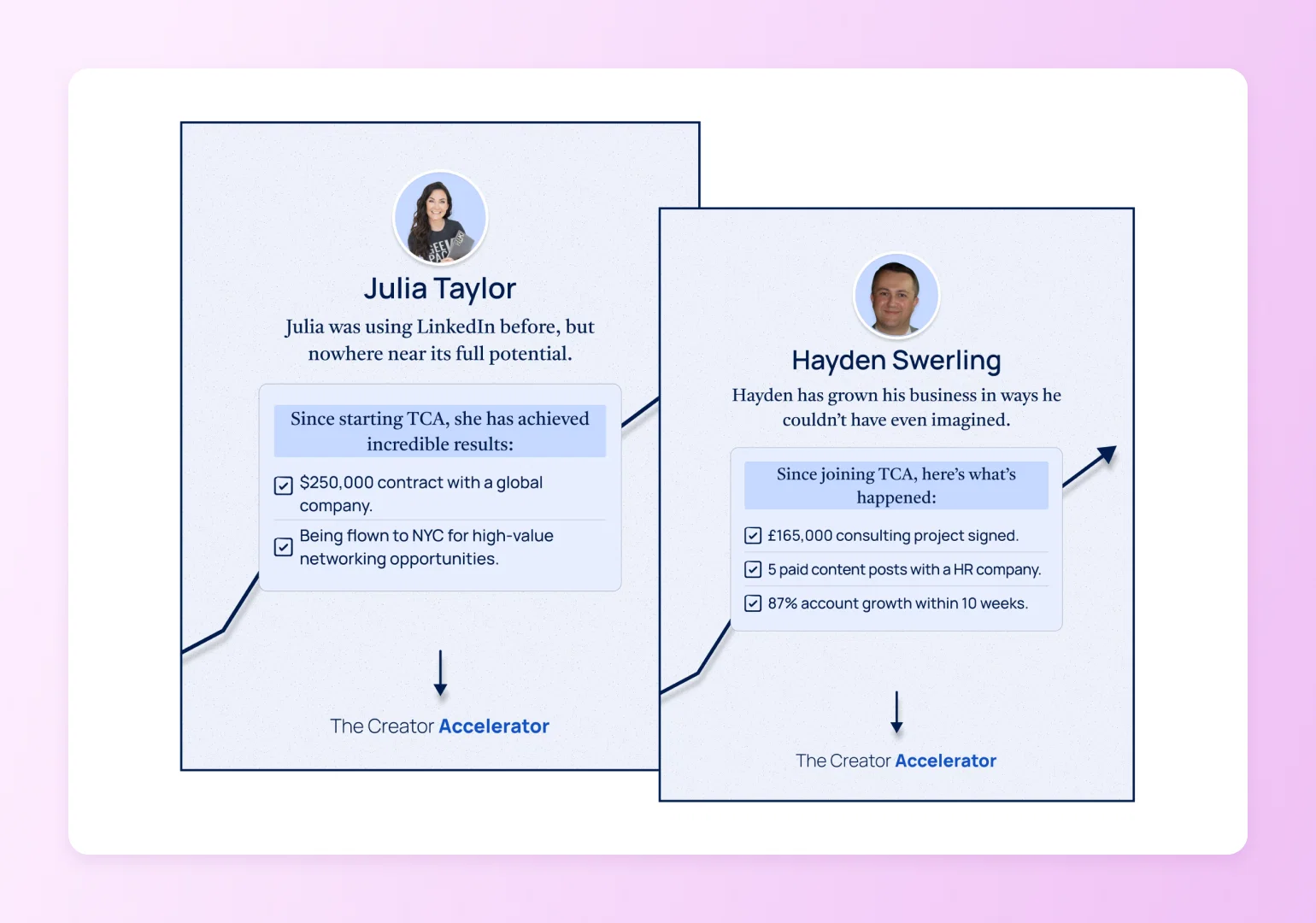
The results were strong, though. Seven of the ten became public case studies. The other three were happy to take private calls but did not want to be case studies, because they planned to become LinkedIn coaches themselves. Donnelly says some of the group went on to become well-known names on LinkedIn.
The relaunch that turned a test into a business
With those results in hand, he relaunched. He put the outcomes from seven of the ten people in front of his audience and opened up to 100 seats at $5,000. The first week and a half sold 57.
He credits the small test for that. It taught his team how the business model worked, how Circle worked, how to make the program feel exclusive, and how to make the transformation clear. As he put it:
"We didn't think off the bat we could do 100 people."
Cohort one followed. He describes it as about 100 people at $6,500, signed up in about three weeks, with two people on the team. The Circle team helped him set up the flow from payment through onboarding, introduction, and signposting.
From ten people to a few hundred a year
The easiest way to see how far it has come is to compare the first version with the current one. Almost everything in the right-hand column was added after the left-hand column proved people would pay.
| Cohort zero | The TCA today | |
|---|---|---|
| Price | $5,000 per person | $6,500 per person |
| Size | 10 people | 100 to 200 people per cohort, four cohorts a year |
| Length | Announced as five weeks (he recalls it running about six) | 10 weeks |
| Content | None built in advance. Filmed and added to Circle each week | Pre-recorded modules released week by week, plus live calls, in-person clinics, and Q&As |
| Team | Donnelly and Josh Sanders, building each week | About four people |
| How people join | A note to his LinkedIn following | An application and a sales call |
He has raised the price slowly over the years as he has added value to the program. The team has stayed small. Donnelly says about four people run the TCA, and at the start it was essentially him and Josh, with a little help in the background.
How the TCA runs today
How people find it and get ready to buy
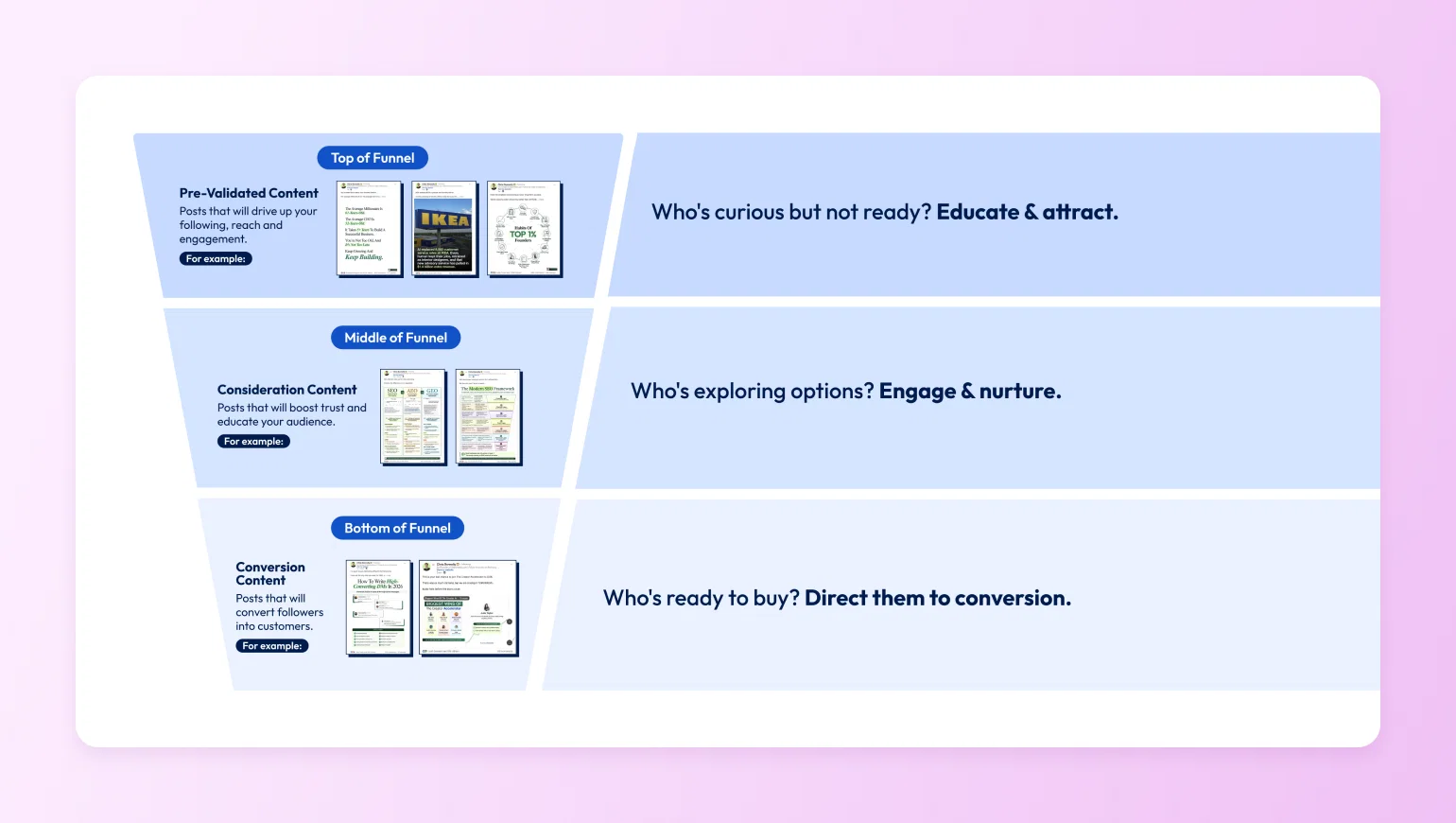
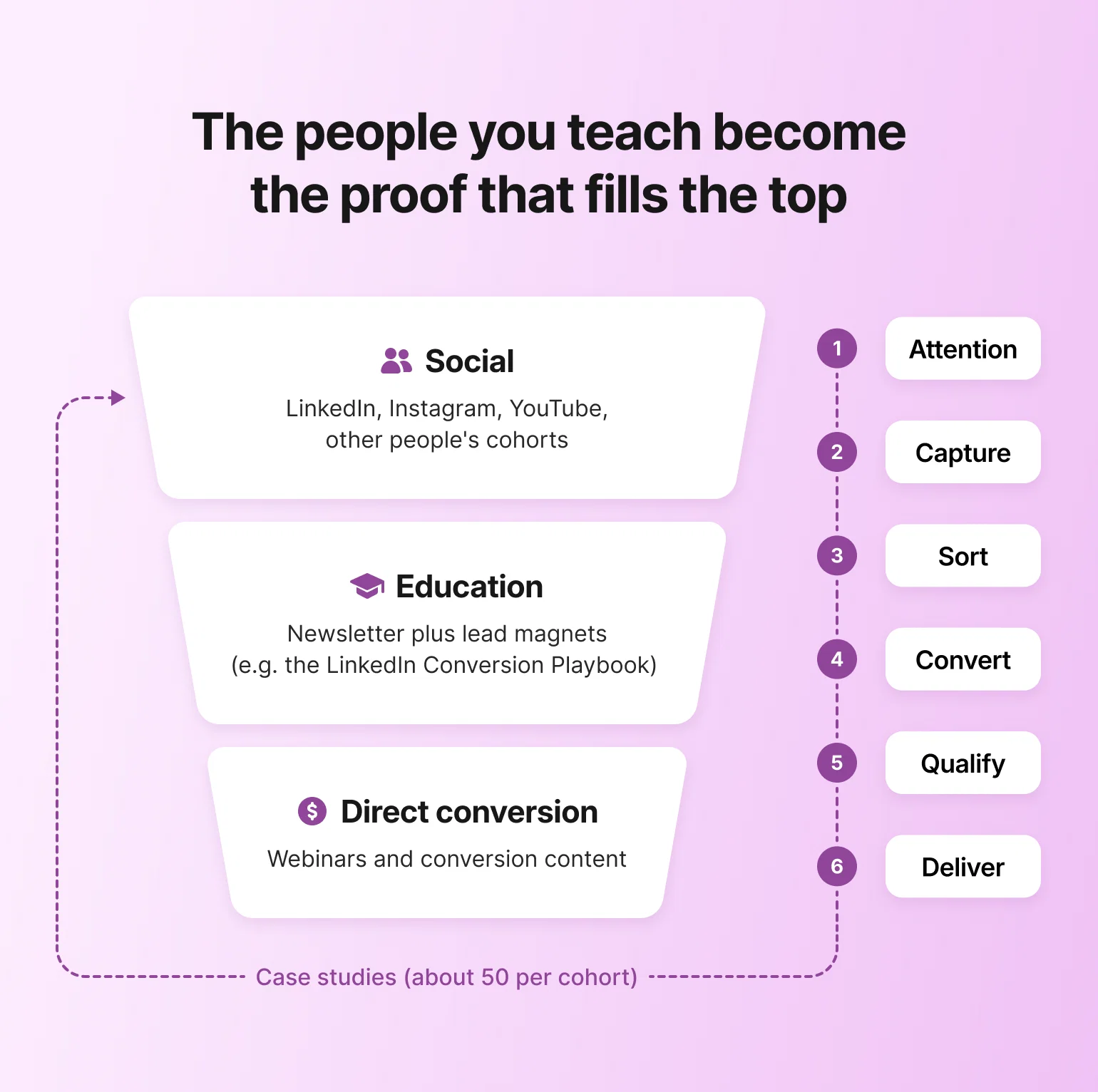
Donnelly describes the funnel in three layers (for a closer look at funnels like this, see sales funnel for coaches). Social media sits at the top, educational content in the middle, and direct conversion content and webinars at the bottom. Almost everything feeds from the top: LinkedIn, Instagram, YouTube, and taking part in other people's cohorts.
The step in between is moving people off the platform. For Donnelly, that is his newsletter, which he sends every Sunday and puts at somewhere between 300,000 and 400,000 subscribers. People join mostly through lead magnets such as the LinkedIn Conversion Playbook, which he says has been downloaded about 10,000 times. His reasoning is simple: 99% of people are not ready to buy today, and if you leave everything to social media, you wait for them to find another post at the right moment. An email list keeps you in front of them. For more on why, see owning vs. renting your audience. When he launched Searchable, a separate business, his first 100 customers came from the newsletter.
He also sorts people. New subscribers answer a few questions so his team can tell who is ready to buy and who is just starting, and each group gets different messages. At $6,500, he says, some people will think it is too expensive, and that is fine. They may need an education process first.
Donnelly's funnel, step by step
Put it together and you get one funnel. The three layers above are Donnelly's own framing; the table adds the stages around them.
| Stage | What Donnelly did | What happened |
|---|---|---|
| 1. Attention | Posted on LinkedIn every day, teaching founders, starting from almost zero followers | 350,000 followers in about a year, by his account |
| 2. Capture | Moved people to his newsletter with lead magnets such as the LinkedIn Conversion Playbook | About 10,000 downloads of that playbook; a newsletter he puts at 300,000 to 400,000 |
| 3. Sort | Asked new subscribers a few questions to see where each person was | Different messages for people ready to buy and people just starting |
| 4. Convert | Used webinars and direct conversion content | Cohort zero, then a relaunch that sold 57 seats in a week and a half |
| 5. Qualify | Replaced checkout with an application and a sales call as demand grew | "I would expect this to be more money" |
| 6. Deliver | Ran a 10-week cohort in Circle with paced content, guests, and coaches who are TCA graduates | About 50 new public case studies per cohort, which go back into marketing |
The case studies from each cohort go back into the top of the funnel, which is why Donnelly calls them the core promise.
The promise and the price
Everything rests on one line: where members start and where they end up. For the TCA, the transformation is getting more leads and revenue for your business. Follower growth and confidence are real, he says, but they are by-products. If you cannot state the outcome in one line, he argues, the person buying has no chance of explaining it to anyone else.
That clarity is also how he separates free content from paid.
"I give away everything I know for free on the front end, and I teach implementation, and I help people implement on the back end."
Members describe week one as drinking from a fire hose, he says, because the program is intense implementation, not content. His price also fits a specific buyer. The TCA avatar sits toward the top end of the entrepreneurial path: you need the money, the time, and the dedication. His audience is much broader than that, and he suggests that anyone earlier on the path can keep following him in the meantime. For anyone starting out, his advice is one audience, one avatar, and one platform before expanding.
How he keeps people engaged for 10 weeks
Donnelly is deliberate about pacing. He releases the content slowly, so members have to do the work in order. People ask to skip ahead to weeks five through ten, and he says no. He spaces out the guest experts too, so the strongest names do not all land in the first few weeks. He mentions Sahil Bloom and Eric Partaker as the kind of guests he schedules across the run.
Each week combines pre-recorded modules with live calls, in-person clinics with coaching, and Q&As. The coaches are all TCA graduates, which he sees as continuous proof that the program works. He pays attention to usage data too: who is commenting, who is asking questions, who is replying, and who only watches. That shows him who is struggling so his team can reach out early, and it shows who is flying so they can celebrate wins.
The community carries a lot of weight. Dedicated channels host different kinds of conversation, including one where members share the best content they find. Donnelly says he knows of many businesses founded by people who met inside the TCA.
How Donnelly runs the TCA inside Circle
Donnelly says he has used Circle for more than two years across several businesses, and that his Searchable team spends most of its time in a Circle community, where it also collected early product feedback. For the TCA, here is what he described:
- The program lives in Circle. Pre-recorded lessons sit alongside live calls and clinics, with content released week by week.
- Onboarding is automated. Once someone pays, they are added with the introduction content and module one in place. See workflows for how this kind of setup works.
- The call schedule is clear and connects to members' calendars, so learning is easy to fit in.
- Spaces host different kinds of conversation, and members can learn by video, text, podcast, or by feeding the material into AI.
- Usage data shows who needs help. See analytics.
Onboard every member automatically.
Why he moved to an application and a sales call
You can no longer buy a seat in the TCA online. You apply, and you get on a sales call. Donnelly says the change came because demand is high and he wants quality to stay high, so the call became a way to qualify buyers.
The most common thing he hears on those calls is the feeling he wants to create:
"I would expect this to be more money."
He wants every member to feel they would have paid more for it. The same goes for smaller products, and he is blunt about the opposite: a lead magnet that promises a lot and delivers filler kills credibility and trust faster than anything. The pitch itself stacks what members receive: weekly modules, in-person clinics with coaching, Q&As and sessions he leads, GPTs his team uses every day, a Chris Coach trained on his webinars, and the Digital Business Blueprint lessons. That is also why the $6,500 price feels worth it from the first week.
It didn't start as a system
It would be easy to read this as a clean sequence. Donnelly pushes back on that. People think this happens overnight, he says, but it is hard graft. His own timeline backs him up: years of 80-hour weeks before the sale at 29, and a year of daily posting before the audience took off.
He applies the same view to members. In the first ten weeks, he says, people go through real strain as they find out how much harder this is than they thought. When they leave, they know how to do it and how hard it is. There is no point doing easy things, he says, because everyone else can do them. Getting good at something hard is the moat.
What to take from Donnelly's story
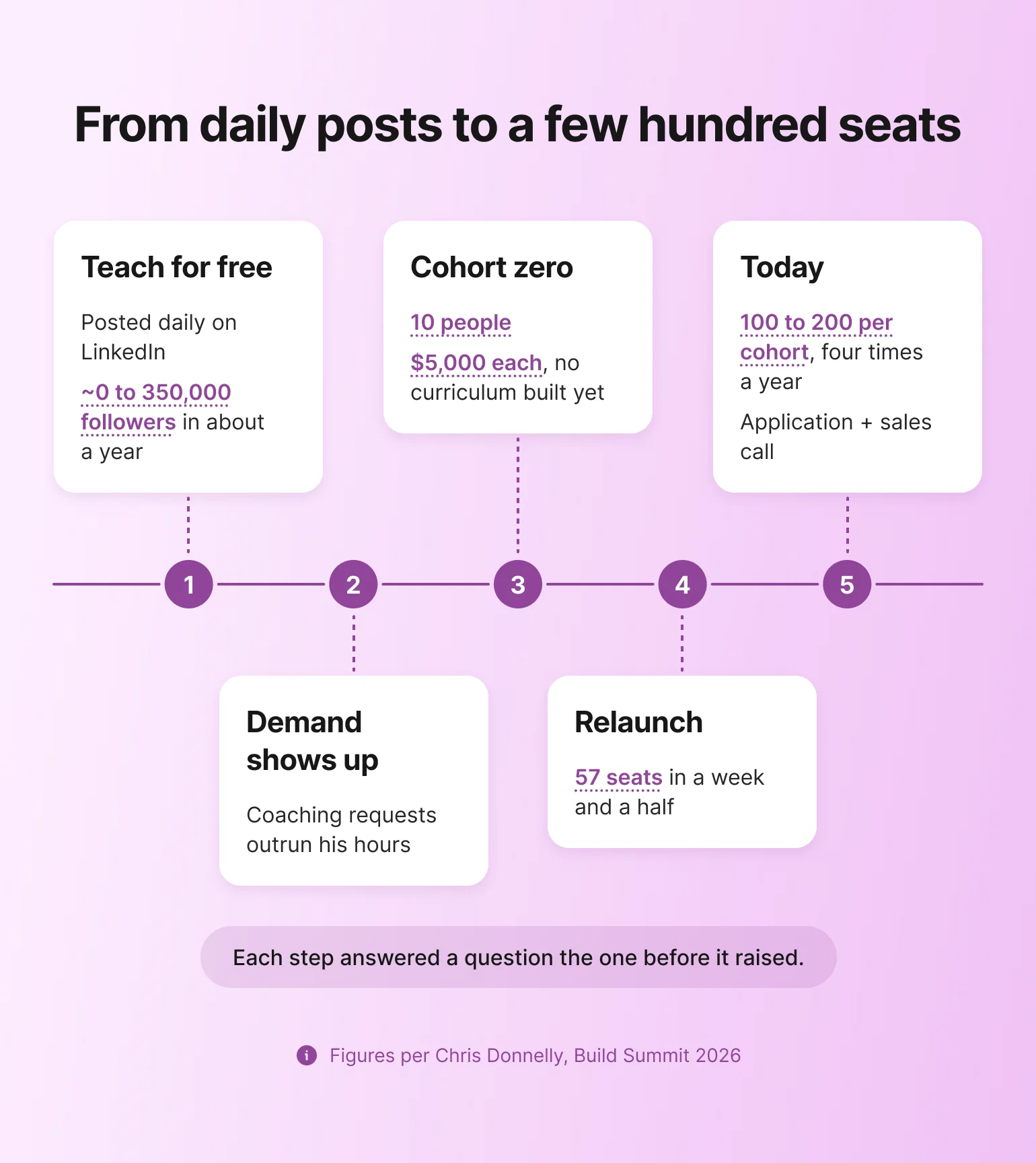
Read in order, his story is a sequence you can borrow without copying the numbers. He taught for free until an audience formed. He noticed when demand ran ahead of his hours. He sold a small group a program he had not yet built, and let their results become the proof. Only then did he scale, raise the price, and move to an application. Each step answered a question the previous step raised.
If you are building a cohort or a paid community, the practical version is to start smaller than feels respectable. Find ten people who want the same outcome, state it in one line, and build the program a week ahead of them in a space where lessons, calls, and member activity sit together. The case studies you collect are what let you open more seats. If you are working out what the small version of your own offer should be, see building a core offer. For another creator who built momentum before a product, see Jessi Jean's launch story. For the full how-to, see how to build a personal brand.
The five-question check before you open enrollment
These questions are our distillation of the session, not a slide from Donnelly. If you can't answer one, that is the part to work on before you sell a seat.
| Question | What to ask yourself |
|---|---|
| Transformation | Can you finish this sentence in one line: they arrive as ___ and leave as ___? |
| Demand | Is anyone already paying for this help one to one, or asking you for it? Is demand outrunning your hours? |
| Proof | Do you have results from a small group, or a plan to collect them? Donnelly had seven case studies from ten people. |
| Pacing | Will content, calls, and guests be spread across the full run, so people do the work? |
| Price feeling | When members finish, will they say they would have paid more? |
Start with your cohort zero.
FAQ
How does personal branding for entrepreneurs grow a business?
Donnelly's version was to post every day, teach founders something useful, and keep the feed about helping the reader instead of showing off. The account went from almost zero to 350,000 followers in about a year, and coaching demand followed. He started with an audience, so his session does not show a small-audience version. His advice for early-stage creators is to pick one audience, one avatar, and one platform before expanding.
How do you presell a course?
Donnelly put out a note to his LinkedIn following offering ten founders a program, priced at $5,000, before he had built a curriculum. Ten people signed up, and he built the program week by week while they went through it. The results from that group became the case studies he used to open more seats.
How much should I charge for a first program?
Donnelly charged $5,000 per person for cohort zero, with ten people. He later raised the price to $6,500 as the program added value, and kept raising it while demand outran supply. His price fits a specific buyer with the money, time, and dedication for a premium program, so treat his numbers as a signal about fit, not a figure to copy. For help setting your own, see how to price an online course.
How many people should be in a first group?
Ten, in Donnelly's case. He says he did not think at first that he could do 100 people. The small group gave him seven case studies, and the relaunch opened up to 100 seats on the strength of them. Today the TCA runs 100 to 200 people per cohort.
Should a program be live or pre-recorded?
Both, according to Donnelly. He thinks many builders go wrong by choosing only one. Pre-recorded material carries the lessons, and live calls, clinics, and Q&As drive engagement. He releases the recorded content week by week so members do the work in order.
How long should a program run?
There is no fixed answer. Donnelly says it could be six weeks, ten weeks, or whatever suits the group. What matters more is that it is a group of like-minded people who want the same transformation. The TCA runs 10 weeks, and he notes that keeping people engaged that long is hard, which is why he spaces out guest speakers.
Is a cohort the right format for my business?
It fits when a group of people want the same transformation. That is Donnelly's reason for choosing it over one-to-one coaching, which sold out but capped what he could serve. The group also becomes an asset: members share the best content they find, and many businesses were founded by people who met in the TCA. For more on the format, see cohort-based courses.
Community Content Marketer
Arina is Circle’s community content marketer, sharing insights on community growth, GTM strategy, and storytelling for solopreneurs.