TL;DR
- Growth starts with specificity. Name the one person you're posting for, and everything from your profile to your posts gets sharper.
- The creators who grow win on two things: Reels that earn attention from strangers, and DMs that turn that attention into contacts they can reach directly.
- The smartest creators treat Instagram as the top of a funnel, not the destination.
You've got a decent following on Instagram. People comment, a few Reels pop off, the occasional DM asks how to work with you. But every time the algorithm shifts —seemingly out of the blue — your reach drops and you have no idea why. Or, like one of our fitness influencer designers, Lina Bo, experienced, thousands of fake bots follow you and dilute your impression and follow rates. The result? You're posting more and getting less. And you can't shake the feeling that you're renting an audience you don't own.
That feeling is correct. Instagram reach can feel harder to sustain as more creators compete for attention with every single day. Growing on Instagram in 2026 means getting specific on who you're for, testing what earns cold-audience attention before you commit to it, and moving the people who find you into a place where the relationship is yours. This guide covers how to sharpen your positioning and turn the followers you earn into an audience you own.
Get specific about the one person you're trying to reach
Before you touch the algorithm, name your reader. Not a category like "newsletter writers" or "people who want to be better managers" but one real person who recognizes themselves in your caption. Here's what that looks like depending on who you serve:
- If you're a coach: the manager promoted six months ago who still freezes every time they have to give someone hard feedback. A Reel like "the exact sentence I'd open a tough feedback conversation with" lands because it names the moment they dread.
- If you're an educator: the in-house marketer who keeps getting handed Figma files and is tired of guessing what the designer meant. A post breaking down "5 Figma terms your designer wishes you knew" speaks straight to the friction they hit every week.
- If you're a creator: the solo newsletter writer with 1,200 subscribers who's ready to launch paid but doesn't know if that's enough. A Reel like "how many subscribers you need before charging" answers the exact question keeping them up at night.
Specificity is what makes a Reel stop the scroll and what makes a follower feel like you're reading their mind. It compounds, too: Rival IQ's industry benchmark report shows engagement rates swing widely by niche, and that smaller, tightly-focused accounts consistently out-engage big broad ones. A specific audience cares more, saving and sharing at a higher rate, and those are the signals that push your work to strangers.
Mila Clarke's Glucose Guide is a good example of how narrow works: by serving one clearly defined audience, people managing diabetes, she's built a following of 165,000+ across her channels rather than chasing a general wellness crowd.
Fix your profile before you post anything else
A good Reel gets a stranger to tap your profile; what they see in the next three seconds decides whether they follow. So, your profile has one job: make it obvious who you're for, fast enough that nobody has to guess.
Start with your name field, the bolded text under your profile picture. It's a valuable searchable field on Instagram, and if it only contains your name, you're harder to find for anyone who doesn't already know you. Use the formula [Your Name] | [Primary Keyword]: "Sarah | Vegan Recipe Creator" or "Mike | Business Coach." To find the right keyword, type your topic into Instagram's search bar and note the autocomplete suggestions. Those phrases can help you see how people describe what they're looking for. That makes this field part of your broader discoverability and your in-app identity.
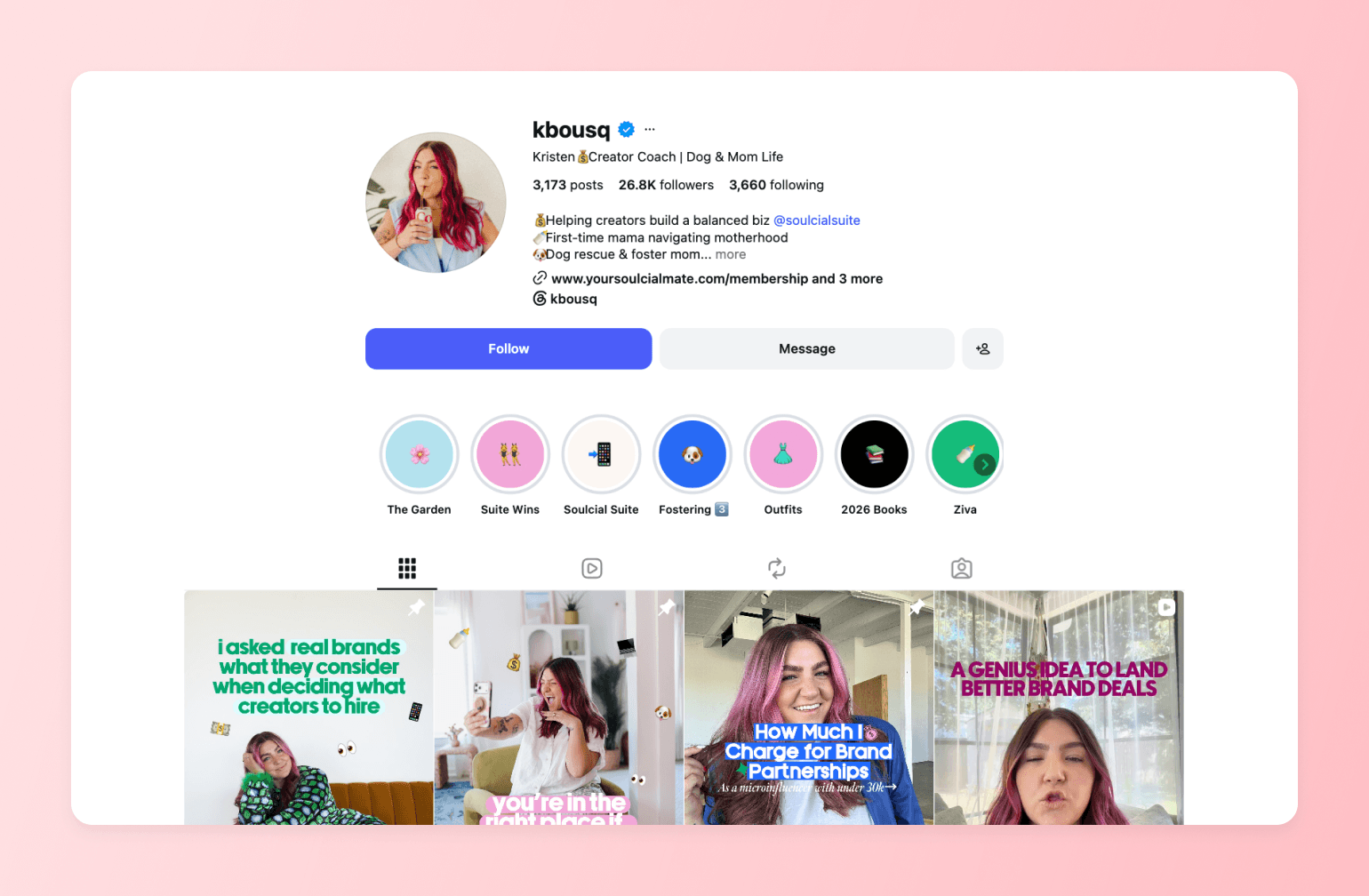
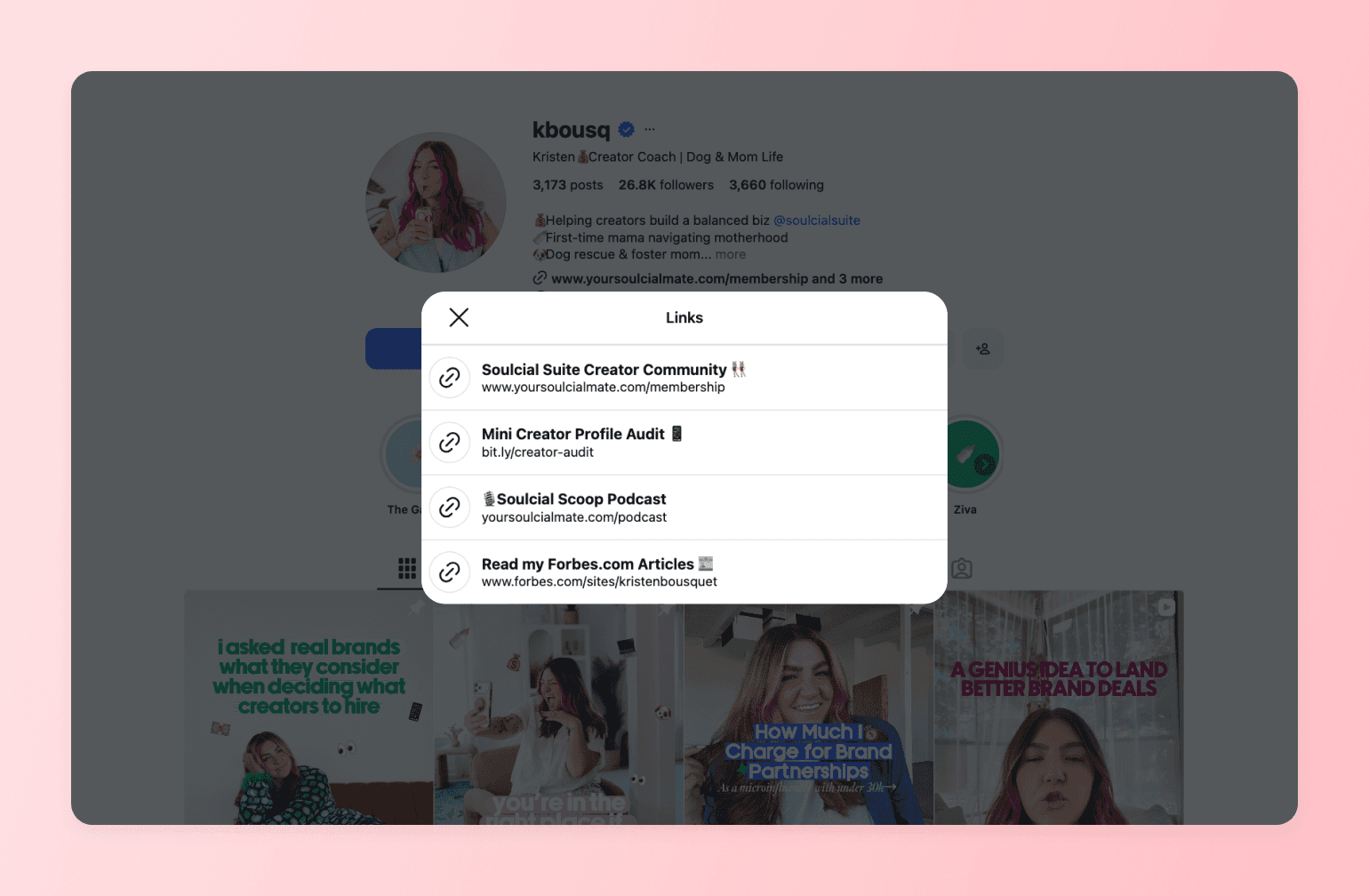
Your bio is where a visit turns into intent. Say who you help and what outcome they get, add your proof or unique method, and end with one clear call to action. Then pin your strongest posts so a newcomer's first impression backs up that promise. If the bio says "business coach" but the pinned posts are about travel, Instagram gets confused about what you cover, and so does the person deciding whether to follow.
Market insight: This past year, Google made public Instagram profiles indexable — which means your Instagram content is now a legitimate traffic and discovery channel. If you have a public Business or Creator account, content can surface directly in Google search results, including public posts, Reels, carousels, captions, alt text, and geo tags.
On top of that, Google launched Search profiles for creators — a single, customizable page that pulls together your social accounts, websites, content, and links so people can find and follow you across the web. Translation: you don't need a massive brand to own the top of a search page.
Build a Reels strategy that reaches strangers
Reach in 2026 comes down to two signals the algorithm trusts: whether people pass your Reel along, and whether they stay to the end. Get both right and Instagram keeps showing your work to people who don't follow you yet.
Design Reels for shares, saves, and retention
Instagram spells it out: sharing matters. A Reel people pass along travels further than one that only collects likes So design Reels for shares and saves. A like is a reflex, but a share means someone thought of a specific friend mid-scroll and a save means someone wants this back when they need it, so both push your reach further than a heart tap ever will. Before you publish, ask whether anyone would send this to a friend or keep it for later. If the answer is neither, the hook isn't doing its job yet.
Retention is the second signal. A Reel that people finish and replay tells the algorithm you held a stranger's attention, while one that loses them in three seconds tells it the opposite. Your opening line, opening shot, and opening promise do most of that work.
In fact, watch time, shares, and likes are the signals that matter most for reach, with watch time at the top, which is why a Reel that holds attention to the end beats one that just collects taps.
Test content with Trial Reels before it touches your grid
Trial Reels are Instagram's testing lane. You publish a Reel that only non-followers see, it doesn't sit on your grid, and about 24 hours later Instagram shows you how it ranked against your other trials. If it lands, you push it to your followers. If it bombs, your audience never knew it existed.
That's what makes them useful for the content you're not sure about: the hook you're second-guessing, the topic that's adjacent to your niche, the format you've never tried. Run those as trials, not as main-feed gambles. The rule that keeps testing honest is one variable per Reel. Change the hook, or the length, or the opening visual. If you change three things and one version wins, you've learned nothing about why.
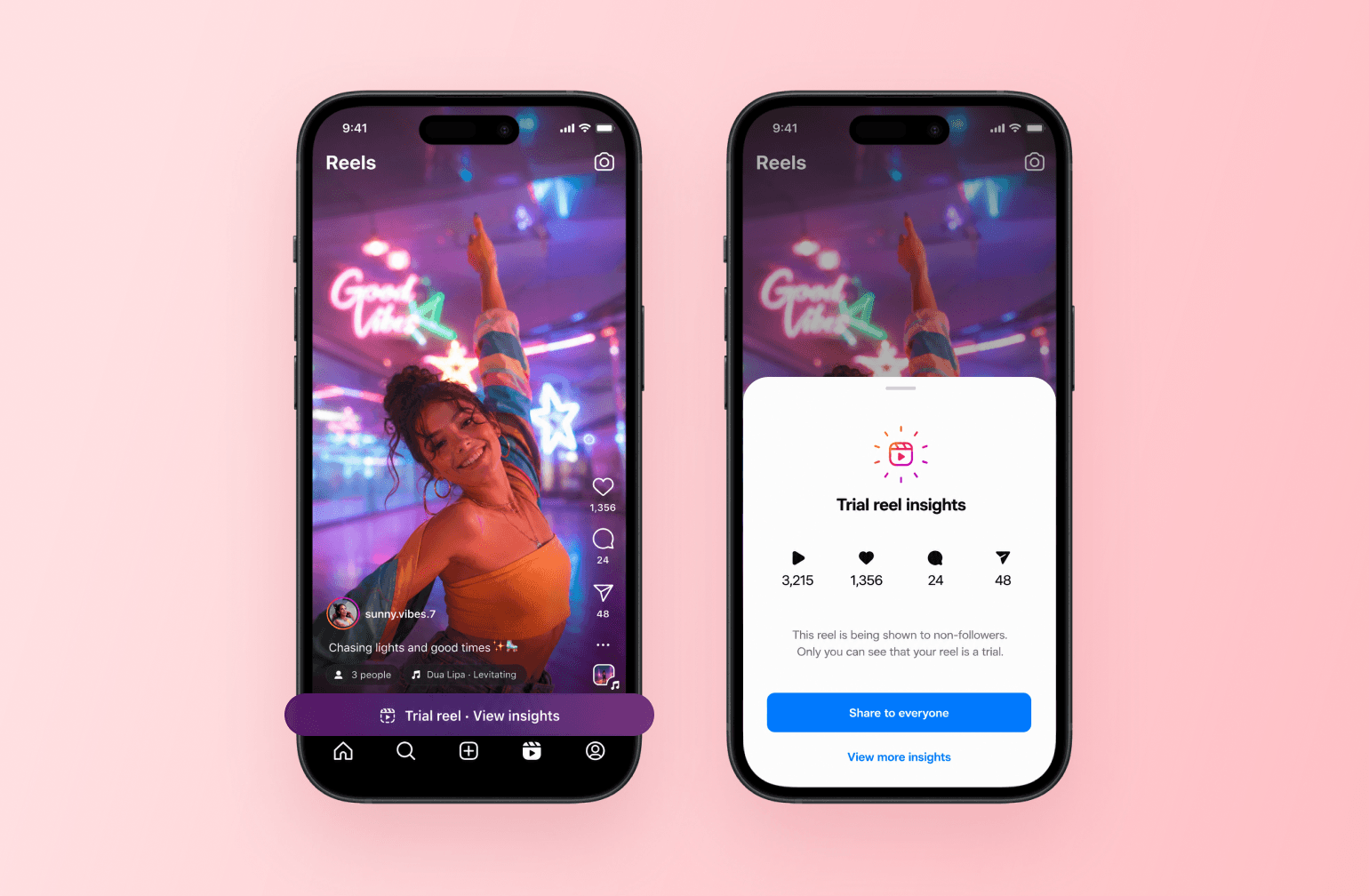
Compare Trial Reels only to other Trial Reels. They get less reach than your regular Reels by design, since they skip the engagement boost your followers usually give a new post. Judge them against each other and you'll see which hooks earn cold-audience attention. Judge them against your main feed and you'll throw out experiments that were working. Batch a handful in one sitting, schedule them, and promote only the winners.
This moves the needle. Instagram has reported that after trying trial reels, 40% of creators started posting reels more often, and of those who did, 80% saw more reach from non-followers.
For a full breakdown of which metrics actually move the needle, Kristen Bousquet's engagement playbook is worth bookmarking.
Write captions for how your followers search
Front-load the words your buyer types into search. The first line of your caption is the window people see before they tap "more," so the topic has to be unmistakable there. "3 breakfast recipes you can make in under 10 minutes" beats "Good morning everyone, hope you're having a great day."
Hashtags aren't the plan anymore. Treat them as light classification signals. Three to five niche-specific tags is plenty (does anyone remember the days of hashtag-stuffing?). Put your effort into a caption that people and the platform can both read clearly. Stuffing keywords makes the writing worse for humans and less useful for discovery, so the goal is one sentence that does both jobs at once.
Don't repost: the originality penalty is real
Instagram's originality policy now treats repeat reposting as a recommendation risk, including for photos and carousels. Accounts that keep posting content they didn't create can lose recommendations to non-followers entirely, which is most of your discoverable reach gone.
Post unoriginal content often enough (Instagram's stated line is roughly ten or more times in a 30-day window) and your posts can stop reaching non-followers altogether.
The shortcuts don't save you. Slapping a caption on someone else's clip, adding a border, dropping a watermark, adding subtitles, or changing the speed doesn't count as original. Reworking your own ideas is fine and encouraged. If you want to share other creators' work, leave the credit visible and share it in ways that point back to them, not through your own feed as a growth tactic.
The shift already shows up in the numbers: Instagram says about 75% of what it recommendsin the U.S. now comes from posts its algorithm considers original, so recycled content is fighting for an ever-smaller slice of discovery.
Set a posting rhythm you can actually keep
For most creator businesses, three strong feed posts a week beat seven rushed ones. Posting daily tends to lower the quality of each post without a matching gain in reach, and it's harder to sustain alongside the work your customers pay for. Pick a cadence you can hold for months, not one you'll abandon by week four.
How Glo Atanmo does it: The travel creator and coach behind The Life Leap limits herself to three filming days max per week — and structures the rest around creativity, not content. Sundays are for coaching calls. Tuesdays are for private clients, podcast interviews, and group coaching. Thursdays are overflow. The other four days — Monday, Wednesday, Friday, Saturday — are protected for spaciousness, ideation, researching, watching content, and cataloging ideas into collections to create later. She's been posting on Instagram for 13 years. The schedule isn't luck; it's how she's sustained it.
Build the week around batching. Record a handful of Trial Reels in one sitting, schedule them, and let the testing pipeline run in the background while you spend your time on coaching, writing, or client work. Use Stories to stay visible between posts without turning every day into a shoot day. That's the rhythm: a few strong feed posts, regular Stories, and a steady stream of trials feeding the next batch of winners.
Move the right followers into a conversation you can have again
The feed is rented space. Every reply, every comment, every DM is filtered through systems you don't control, and the moment Instagram (or Facebook, or any Meta company) changes the rules, your reach to your own audience can drop without warning. Email and owned communities are the path back to the people who asked to hear from you. If you don't have that pipe yet, learning to start a newsletter is the simplest first step. Your job is to get them off the feed before the feed decides for you.
The cleanest way to do that is a comment-to-DM funnel. Add a one-line CTA to your caption ("comment GUIDE for the free template"), and when someone comments the keyword, an automated DM delivers the lead magnet and asks for their email. The email lands in your CRM tagged by which magnet they wanted, so your follow-up is segmented before you've written a single word. Here's an example from Circle customer & partner, Ali Abdaal.
These flows convert better than passive bio links because they catch people at the exact moment intent is highest: while they're still watching. Speed is the whole point: Harvard Business Review research found that businesses replying to an online lead within an hour were about seven times likelier to have a real conversation with that person than those who waited even an hour longer. An automated DM lands in seconds, while a bio link waits for a click that may never come.
One non-negotiable: run all of it on Meta's official API. A comment-to-DM tool like ManyChat connects to your Instagram Business or Creator account through that API and fires the automated DM the moment someone comments your keyword, which keeps you inside Instagram's messaging rules and limits. Browser-based bots that simulate taps or blast DMs are the fastest way to get your account restricted or killed. Pick a tool built on the official API and stay inside the lines—or risk getting banned.
Why owned audiences compound
Instagram is where people find you. Circle's 2026 data shows 67% of creators say new members discover their community through social apps, and that's exactly the job social should do: discovery happens on social. But discovery is only the first step. The relationship comes after, and your reach, your follower list, and your ability to message your own audience are all filtered by systems you don't own. One algorithm shift or one suspension, and the audience you spent years building can go quiet overnight.
Dr. Becky's Good Inside is the version of this story most worth copying. She built one of the largest parenting audiences on Instagram, then moved the relationship into a private community on Circle. Public feeds are great for awareness; they're not great for parents who want to talk about hard things. Today, Good Inside is home to 100,000+ parents across 140 countries, with 176% year-over-year member growth in 2025 and 500+ events run inside the community last year.
The discovery still happens on social. The trust, the workshops, the serious conversations between parents and facilitators alike, and the recurring revenue live somewhere her audience can always be reached — a platform she owns, that can't be throttled by an algorithm shift or deleted by someone else's moderation queue.
What Circle is built to do is exactly that: turn the followers you earn in public into members you can reach, teach, and bill from one place. Growing on Instagram in 2026 starts with specificity and improves through testing. The growth becomes a business when you convert the people who find you into a relationship no algorithm can throttle.

Subscribe to Members Only
Instagram growth FAQ
How often should I post on Instagram in 2026?
For many creator businesses, aim for a few strong feed posts a week plus regular Stories to stay top of mind. Daily feed posting can drag quality down and raise burnout without a proportional reach gain.
Are hashtags still worth using?
Yes, but use them as light classification signals while putting your effort into front-loaded keyword-rich captions.
What are Trial Reels and who can use them?
Trial Reels help you test Reels with people beyond your usual audience before deciding whether to share them more broadly. If your account has access, use them to test hooks, topics, and formats without turning every experiment into a main-feed commitment.
Is comment-to-DM automation against Instagram's rules?
Comment-to-DM automation can stay within Instagram's rules when it runs on Meta's official API and respects Instagram's current messaging rules and limits. Unofficial browser bots and mass-DMing are what put accounts at risk.
Why convert Instagram followers into an owned audience?
Because feed reach is filtered by systems you don't control, while email and owned communities give you a direct path back to people who asked to hear from you. An owned space is where the relationship and the revenue stay yours.
Community Content Marketer
Arina is Circle’s community content marketer, sharing insights on community growth, GTM strategy, and storytelling for solopreneurs.
