How to launch an online course like Jessi Jean (the launch-to-movement playbook)
TL;DR:
- Jessi Jean reports taking a $297 course to $7.5 million in revenue in 10 weeks, with no ad spend and no team beyond an assistant and a business coach.
- She says the product wasn't the main driver. The difference was building a movement (people participate) instead of a launch (people buy).
- This playbook breaks her approach into six plays you can run on your own course or digital product, plus a four-question check to run before you open the cart.
Jessi Jean thought her Stripe account was broken.
When she opened the doors to round two of her YAP Challenge, the page did $1 million in revenue in 70 minutes. "I hollered at my husband," she told the Build Summit audience. "I'm like, 'You got to come in here and see this.'"
The session title promised $7 million. By the time she took the stage, the number on her live Stripe screenshot was $7.5 million in 10 weeks, from 25,457 purchases of a $297 product, with $0 spent on ads. In April, the month before launch, she had made about $7,500.
She ran it as a team of one. In her words, it was "me, it is my Circle dashboard and an assistant, and my business coach," a coach she'd worked with years earlier and brought back once round one started taking off.
Here's the part worth stealing. Jean didn't credit a clever funnel. She credited a distinction:
"I think that a successful launch is a launch where people buy. A movement gets people to participate."
This playbook turns her session into steps you can run. One caveat up front: Jean says none of this was a plan. "I am reverse engineering what I think worked and trying to give you the keys of what I think worked." Treat it as a pattern to test, not a guarantee.
Watch Jessi's talk on YouTube:
Launch vs. movement: what's the difference?
A launch is a sales event. People see an offer, buy it, and consume it alone. A movement is a world people want to step into. They buy, do something visible, and bring other people in.
| Launch | Movement | |
|---|---|---|
| Goal | People buy | People participate |
| Customer experience | Private, consumed alone | Public, visible to others |
| Who does the marketing | You | You, and then your customers |
| What builds hype | Announcing the date | Showing the gap |
| What happens after the cart closes | Quiet | Momentum you can compound |
Jean's own definition: "I think a movement is when you create a world that people want to buy into and want to step into."
The six plays
Jean's session boils down to six repeatable plays. Run them in order the first time, then revisit whichever one is weakest.
Play 1: Build the audience and trust before you build the product
Jean started posting on a brand-new account in November 2025. She rotated through four or five topics: furniture flips, oversharing her finances, content tips, communication tips. Her only goal was to figure out how to make money online. She turned down brand deals for months because her audience was new and she didn't want to start pitching before they knew her.
She launched the YAP Challenge on May 17 without any of it built. "I did not have a single part of the challenge built before I sold it," she said. "I built the audience and a whole lot of trust before I built a product, and that served me well." She did have a game plan for where the challenge was headed.
How to run it:
- Post a wide range of topics. "You don't have to guess what people want if you listen."
- Start your email list now. Jean's advice is to do it on day one, and to do it even if you have millions of followers. "Your email list is one of the biggest assets to building your business and selling and launching and pitching your products."
- Be direct about what you're doing. Jean told her audience from the start that she was posting to make money for her family. She says the directness is part of why people trust her.
- Validate before you build. "We spend a lot of time building something we think people are going to buy, and then we go look for people to buy it, and that can be a huge waste of time."
- Build live with your first cohort. When feedback on a live call showed a topic needed more depth, she built a whole day around it. She says the challenge turned out better for being built live.
Trust also comes from how you communicate, not just what you say. Jean, who started out in sports broadcasting, says nervous, high-in-the-throat delivery can break trust even when you're trustworthy. Her own on-camera work is a big part of why the YAP Challenge exists.
💡A note on Jean's starting point: she had been building an online business for over 10 years, first as a fitness coach and then through seven years of running a binge and emotional eating recovery program. She had a list-building and tech backend already in her head. "Zero experience" this was not, and it's worth being honest with yourself about what you're starting with.
If you're still deciding what to teach, our guide to creating an online course walks through choosing a topic, validating the idea, and outlining your content, and our list of profitable online course ideas can help you pick one. For a method to test demand before you build, see how to build a core offer, and for the pre-launch phase specifically, how to get your first 100 paying members.
Play 2: Find the "too obvious" idea, then spin it until it stops working
The post that started everything was a February 21 video called "How to YAP on Camera Like a Pro." It hit 1.5 million views and 81,000 likes across Instagram and TikTok. The advice was basic. The first tip was not to open a video with "hey guys," because nobody scrolls social media surrounded by a crowd. You're talking to one person, and that gives a video what Jean calls the FaceTime effect.
"What I think is obvious, what I think isn't really that big of a deal, is actually really important and powerful to people who don't know it yet," she said.
Four days later, she posted a spin-off, set up a waitlist, and turned on a DM automation to capture the attention. She'd already had a small waitlist for a beginner's content course, but the YAP post changed her mind about the angle. "How to YAP on camera" was the language people responded to, so she built the waitlist around it.
How to run it:
- Find your outlier. Look for the post that does disproportionately well compared with the rest.
- Spin it from every angle. Jean's rule: when a post does disproportionately well, keep spinning it until it stops working, and take it from every possible angle you can think of.
- Capture the attention right away. A waitlist plus a DM automation on the spin-off turned views into an email list.
- Pay attention to the language people respond to. Jean built the whole product around the phrase from the post that worked. (Our content repurposing playbook shows how to turn one winning video into a week of posts.)
- Read your comments, your DMs, and your competitors' comments. Everybody's comment sections are public, so you can see what an audience is asking and where it's confused.
- Let your best posts shape the product. Jean says every post that hit a nerve became a section of the challenge.
If on-camera confidence is part of your own content, our on-camera confidence playbook goes deeper on the skill itself.
Play 3: Create desire by showing the gap, not by announcing the date
"Repeatedly telling someone that something's coming is not how you do it," Jean said. "Hey, I got this thing. I got this thing. It's coming." That doesn't build excitement.
What she did instead was show the gap. Her posts contrasted how she used to speak on camera (nervous, up in her throat, "very try hard") with how she communicates now, paired with the opportunities that shift had opened. "Desire comes from you showing them the gap between where they are and where they want to be," she said. "Desire is the wanting, and anticipation is the waiting."
She had no client testimonials when she launched round one. "I was the testimonial." Her own account growth and before-and-afters were the proof.
She also spent time educating people on the problem itself. Some people weren't aware that being uncomfortable on camera was holding them back, so she talked about the opportunities that open up when you can communicate, and what stays closed when you can't.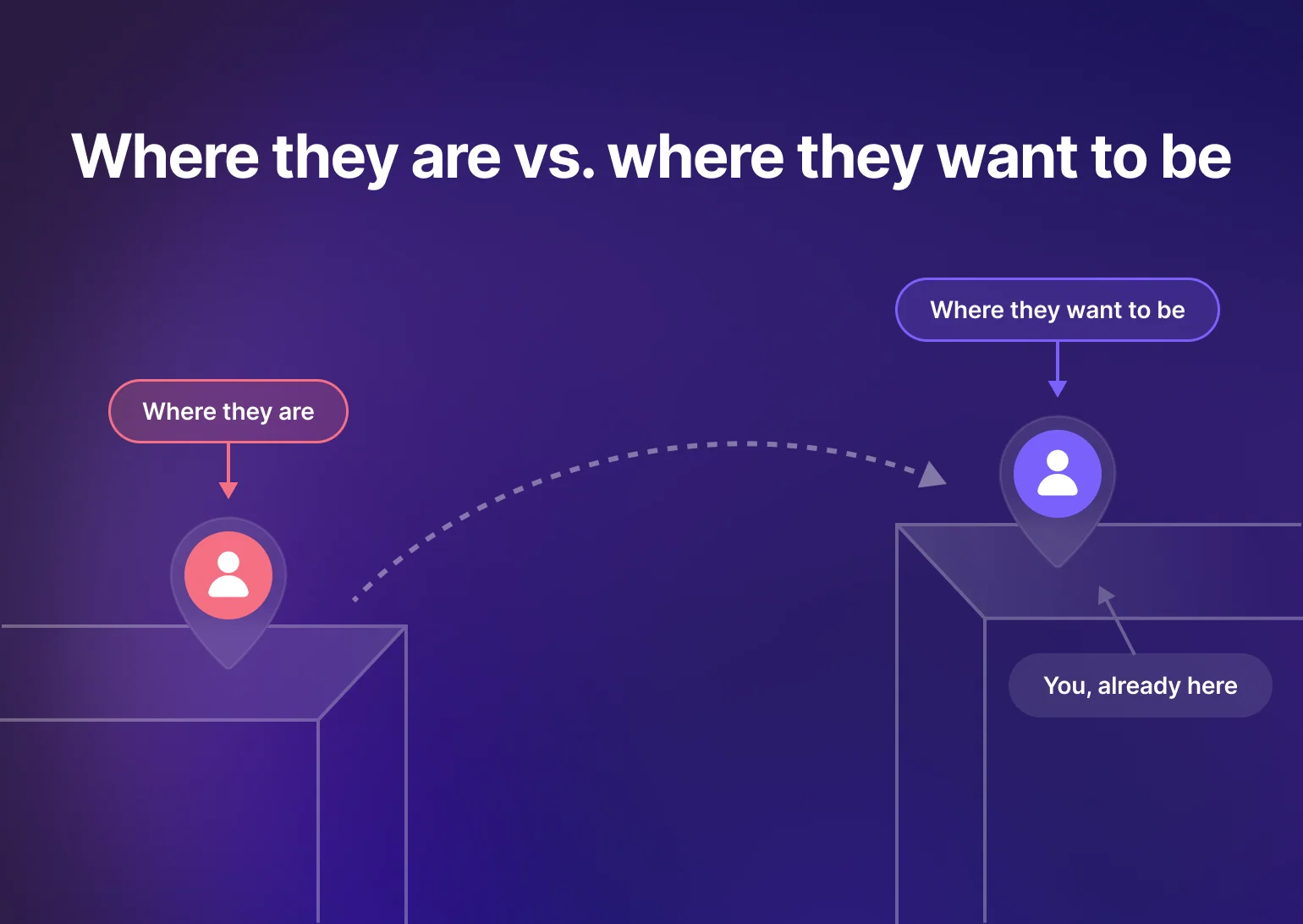
How to run it:
- Name the problem your audience already feels, and explain the cost of leaving it unsolved.
- Show your own before and after. Use your real starting point and what changed.
- Show what the change opened up for you, so the gap feels worth closing.
- Warm up your list. Jean's warning: a lot of people pour everything into the product, go quiet on their audience, and then "come out of nowhere" with a pitch. The response is "Eh."
Play 4: Build a world people want to step into
A big part of why the YAP Challenge felt different from other content courses is that Jean built a whole world around it.
Jean made a promise to herself at the start of the year to follow what sounded fun over what seemed strategic. She decided to show up on social media the way she shows up with her friends. Everything was intentional:
- Language: everyone in the community was "homies," and the daily assignment was the "drop and dare," not the "daily lesson."
- Sound: hip-hop, rap, and R&B over her carousel posts and Instagram stories, not corporate music.
- Look: a bucket hat, not button-ups.
- Rituals: a daily post and the #JJYAPChallenge hashtag.
- Tone: "bold, sort of unhinged," and "Let's learn the art of a damn good YAP," not "let's learn how to communicate like a pro."
Her reasoning: "Be the way you are with your friends, and you're going to attract people like your friends." She points to Harley-Davidson as a brand that built a world people want to be part of. And she says buyers told her the challenge felt different from any other content course they'd done.
How to run it:
- Decide the feeling before you decide the features. What should it feel like to be in this?
- Give it its own language and rituals. Nicknames, daily formats, a shared hashtag.
- Let your branding match the feeling. Jean carried the same energy into the course site and inside Circle.
- Look at competitors and ask how you can be different. "How can I be so different that this feels completely different and it stands out?"
Play 5: Design the product so participation is visible
The YAP Challenge is a 40-day posting challenge. Buyers posted daily content using what Jean was teaching, which means visibility was part of the product from day one.
What she didn't plan was how far it would spread. As she launched, people asked how they'd stay connected and suggested a hashtag. Some people had already used #YAPChallenge, so it became #JJYAPChallenge. Her first launch had about 4,500 buyers and did about $1.3 million. Over 4,000 of them were posting daily under that hashtag.
"What ended up happening that I did not plan was the product became the marketing," Jean said. "This is marketing I could not have paid for, nor did I plan." The waitlist exploded.
Her framing: "Invisible, they buy, they consume alone, nobody knows you're the only one selling it. Visible, they buy, they do something, other people see it, and they sell for you."
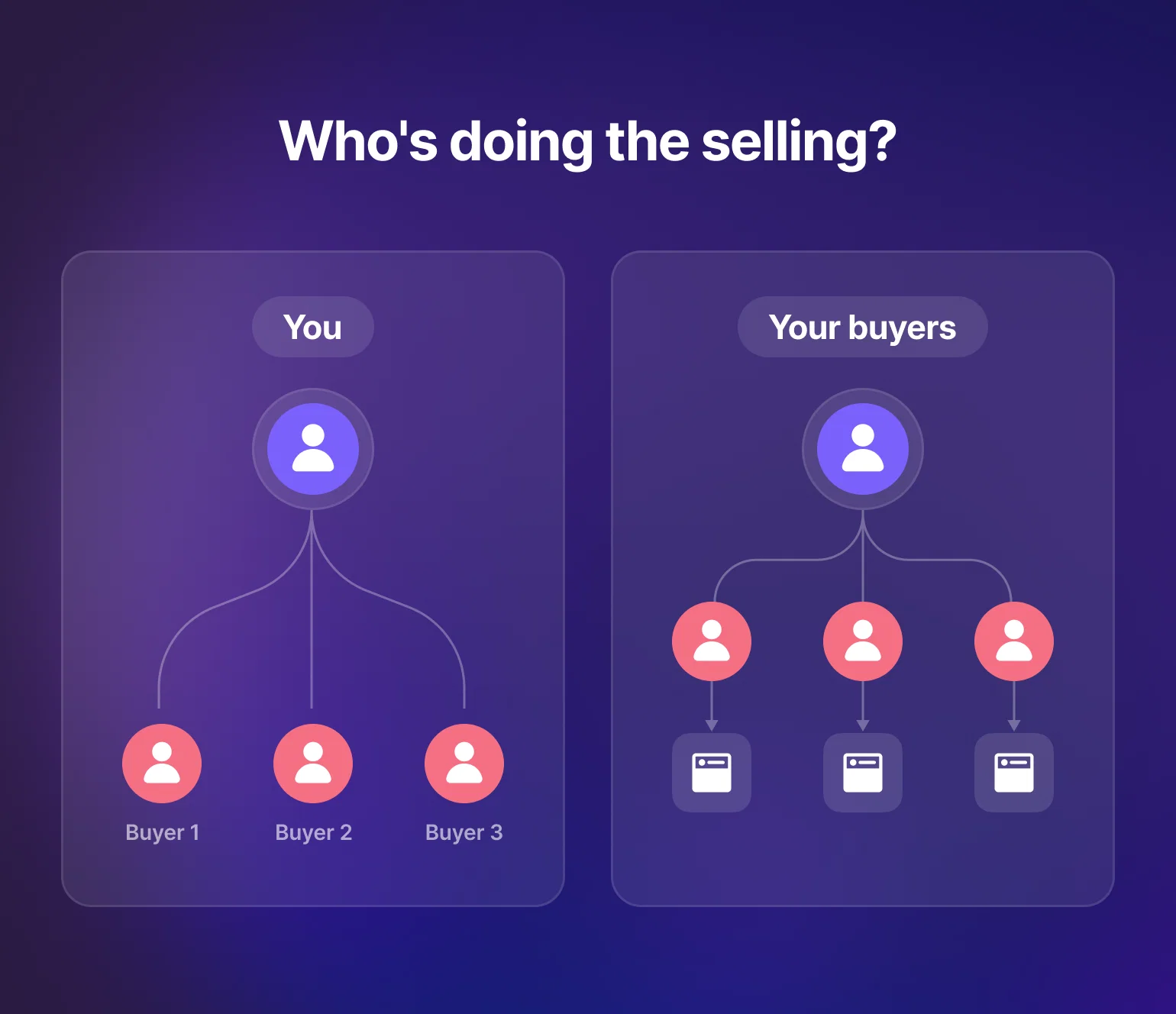
How to run it: ask whether your customer's experience can be seen by anyone else. It won't fit every business. Jean's options:
- A cohort structure, so people move through the experience together
- A hashtag on social media
- A community or group chat where progress gets shared
- A shared deadline that gives everyone the same finish line
- Before-and-afters and client wins you can post publicly as social proof
The test for any of these is the same: after someone buys, do they do something that other people can see?
Play 6: Compound the momentum, then undersell and over-deliver
Once the trust was there, Jean went into pitch mode, and she says to do it unapologetically. In June, before round two, she posted 25 to 30 Instagram stories a day on some days. She ran a question box, teased what was inside the challenge, and reposted buyers who tagged her. She told her audience directly: "Hey, heads up, I am going hard on pitching. I'm in the middle of a launch." She pitched across email, Instagram, TikTok, stories, and DM automations, with clear calls to action and urgency.
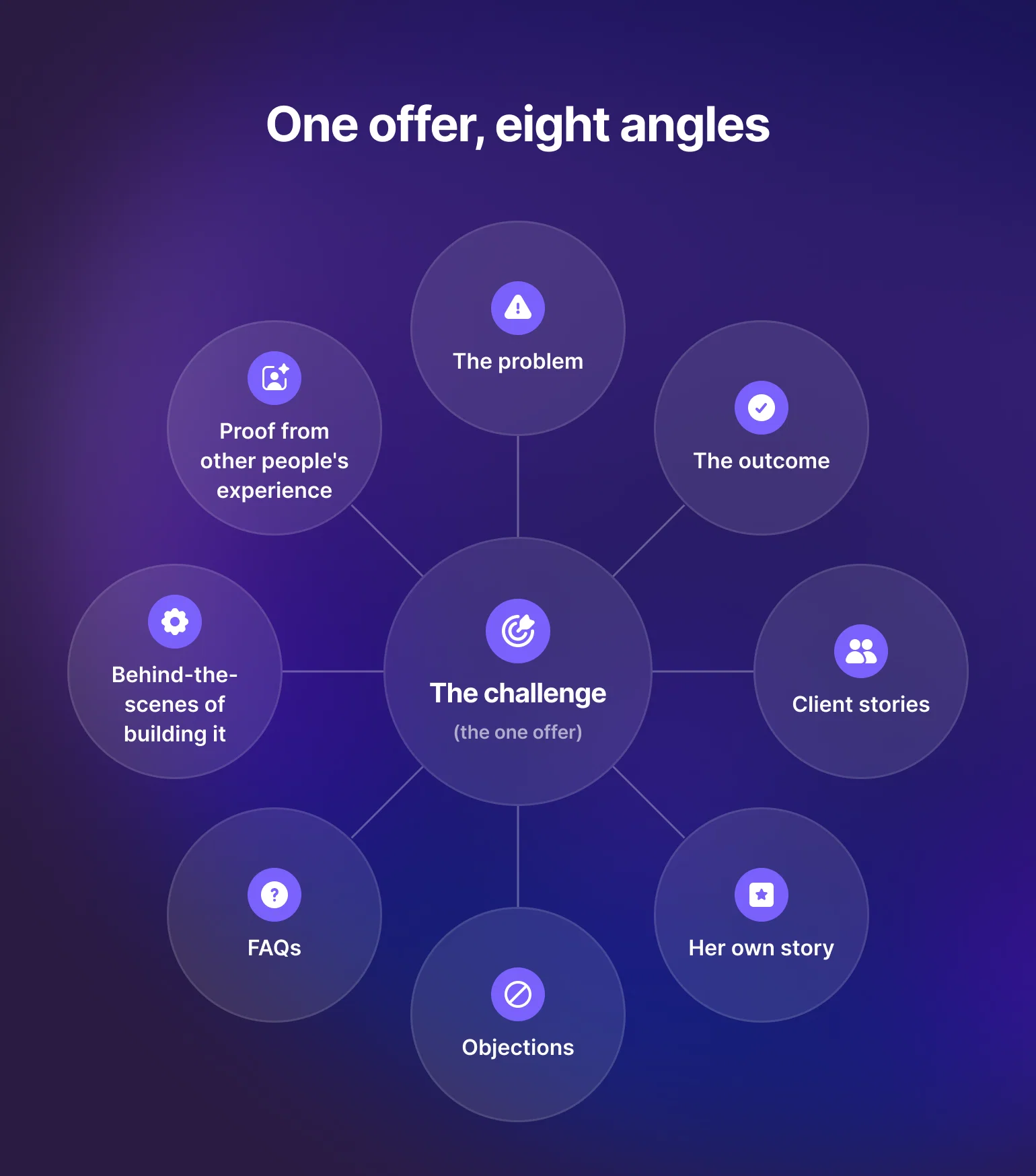
She says that doesn't mean saying the same thing over and over. Her content rotated through the problem, the outcome, client stories, her own story, objections, FAQs, behind-the-scenes of building it, and proof of other people's experience. All of it pointed back to the challenge.
"There are seasons that your content goes in. Some seasons are for pitching and some are just for audience engagement. When you're in the middle of the launch, it's pitch time." And: "If you don't talk about it, if you don't create the momentum, if you don't compound the momentum, who's going to do it? People are going to borrow your excitement, and so you have to bring it."
Round two opened before round one even finished. Jean's reasons: the challenge was getting attention on social media and in news outlets (she was invited onto News Nation), and "virality on social media lasts two seconds, and then the internet moves on." Her takeaway: "Sometimes the next move is more of what's already working. Don't change what's already working." Round two did over $5.5 million.
The other half is delivery. At $297, buyers told her that a single day of the challenge was worth the cost of admission. "Launch, a lot of people launch, they make money, and then they under-deliver and disappear, and then they have to start from scratch." Her recommendation runs the other way: "Instead, my recommendation would be to undersell. Don't oversell your thing. Launch, create an epic experience, outcare the competition, over-deliver, make sure people get results, and then they're going to naturally sell for you." She adds: "The bar is on the floor when it comes to business."
How to run it:
- Tell your audience when you're in launch mode, then pitch on every channel you own.
- Rotate the angle, keep the destination. Problem, outcome, stories, objections, FAQs, behind-the-scenes, proof.
- When something is working, do more of it. Open the next round while the attention is still there.
- Promise less than you deliver. Make sure a single day or lesson is worth the price.
Jean's launch, start to finish
The plays above are the principles. This section shows how they fit together in Jean's actual launch: where she ran it, how the funnel moved, and what happened when.
How Jean ran it inside Circle
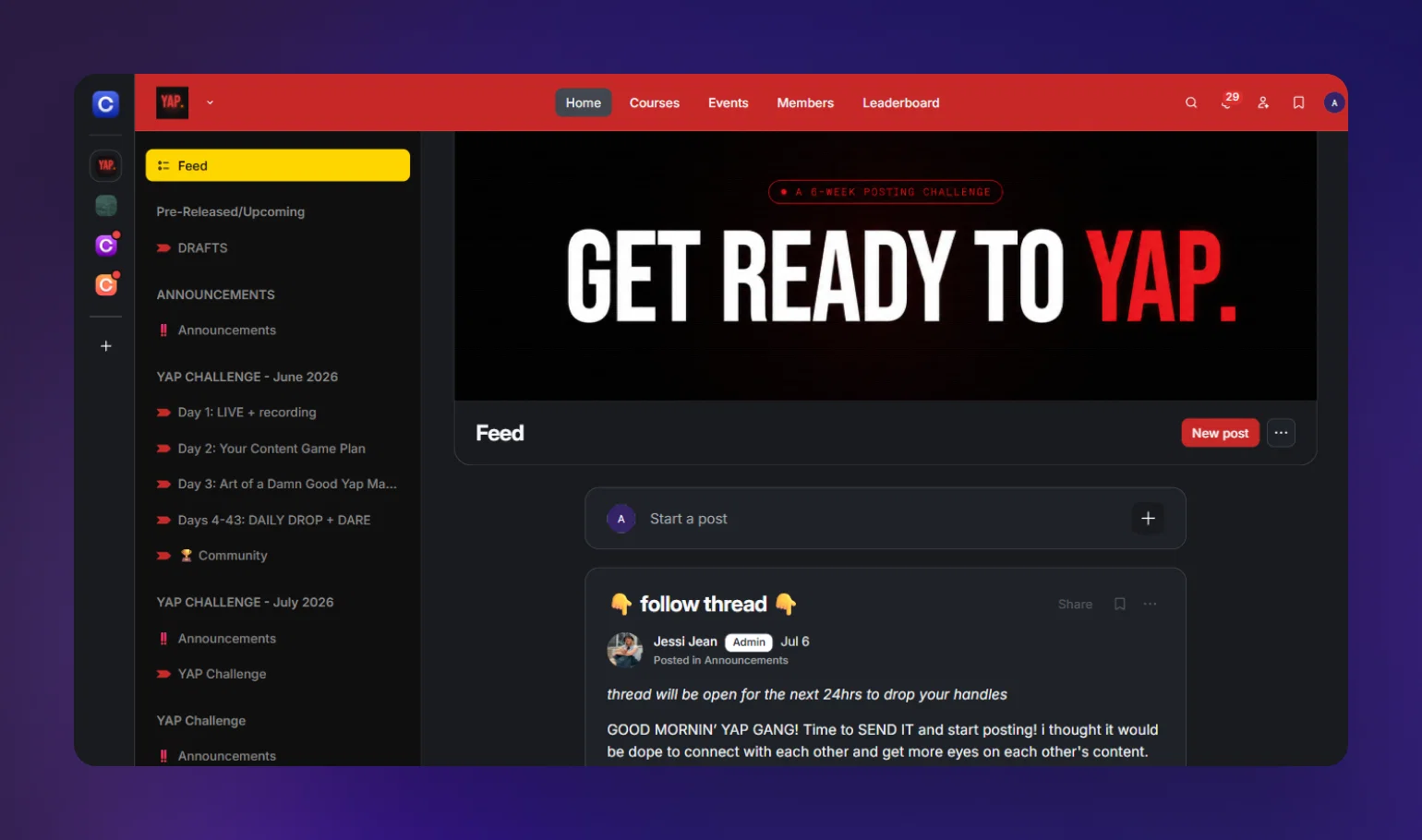
Jean's binge eating program had been hosted on Circle for years, so she built the YAP Challenge there too. From her session:
- The space was branded to match her energy, so members entered the same world as the sales page.
- The challenge unfolded as a daily video with text underneath in a course, sometimes a PDF or workbook (day two had a workbook), plus a bonuses section.
- There was also a feed where members could post, like a group discussion feed.
- As a team of one with an assistant, she turned off many of the community features because she couldn't manage 25,000 people. Use what fits the size of your team.

Make it feel like yours.
Jean's challenge funnel, step by step
This sequence is what people in marketing call a challenge funnel: attention, a waitlist, a time-boxed challenge people do together, and a next round. Jean didn't plan it as one. Her version used an email list, DM automations, and a branded Circle space. If you'd rather run a challenge on its own, our guide to running a community challenge covers the format.
| Stage | What Jean did | What happened |
|---|---|---|
| 1. Attention | Posted a content-tips video, "How to YAP on Camera Like a Pro," on February 21 | 1.5 million views and 81,000 likes |
| 2. Capture | Posted a spin-off four days later with a waitlist and a DM automation | The waitlist "started to grow like crazy" |
| 3. Warm-up | Showed before-and-afters and talked about the problem and the gap | Demand built before she sold anything |
| 4. Sell | Sold the 40-day, $297 challenge on May 17, before it was built | About 4,500 buyers and about $1.3 million in round one |
| 5. Participate | Buyers posted daily with #JJYAPChallenge | Over 4,000 people posting daily, in public |
| 6. Re-open | Pitched hard through June as the waitlist exploded, then closed doors again at the end of June | Round two did over $5.5 million, for 25,457 purchases overall |
The difference between a funnel and a movement is in stages 5 and 6. Participation is what refilled the waitlist for the next round.
The sequence, in order
Jean is clear she didn't plan this order going in. Looking back, this is what happened:
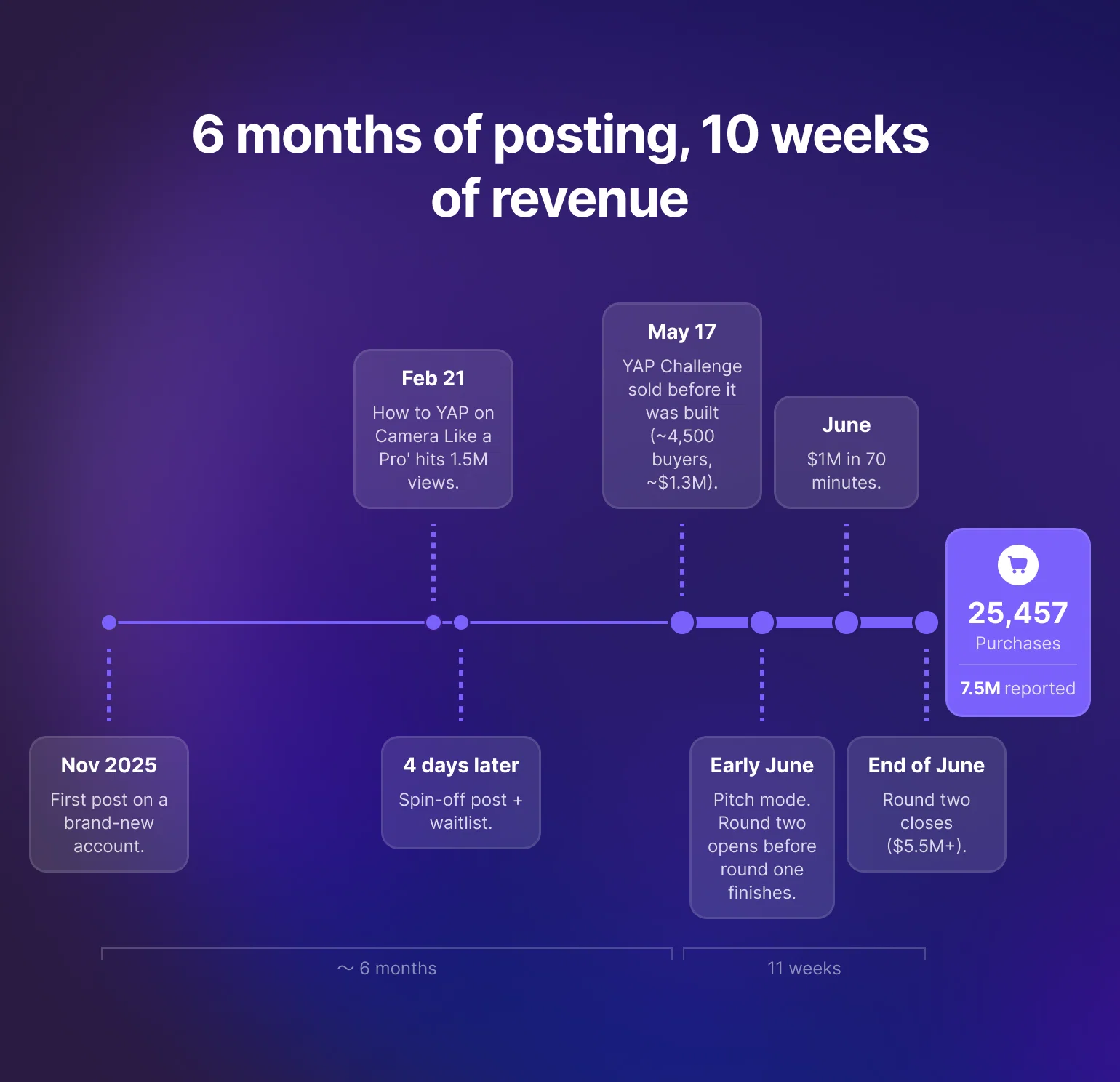
- November 2025: she starts posting on a brand-new account, rotating furniture flips, money talk, and content tips.
- January to April: traction builds, and she makes $7,000 to $9,000 a month from affiliate links and a small furniture-flipping e-book.
- February 21: the "How to YAP on Camera Like a Pro" video takes off (1.5 million views).
- Four days later: a spin-off post brings a waitlist and a DM automation. The waitlist grows "like crazy."
- May 17: she sells the YAP Challenge, a 40-day posting challenge, before it's built. Round one has about 4,500 buyers and does about $1.3 million. She builds it live.
- Hashtag and participation: buyers suggest #JJYAPChallenge, and over 4,000 of them post daily with it. The waitlist explodes.
- June: she goes into pitch mode, and opens round two before round one finishes. Doors open, and the page does $1 million in 70 minutes.
- End of June: round two closes after doing over $5.5 million.
- Result: 25,457 purchases at $297, a reported $7.5 million in 10 weeks, with no ad spend.
The four-question check to run before you open the cart
Jean condensed her reverse-engineered framework into four questions. "Screenshot this slide."
| Question | What to ask yourself |
|---|---|
| Anticipation | Why will people care before they can even buy? Don't just announce it. Show them the gap between where they are and where they want to be. |
| Participation | What will customers actually do, not just consume? Is there a community or something that builds energy? |
| Identity | What will make people feel like they're part of something? What shareability can you build into the product for free marketing? |
| Momentum | If this works, are you prepared to double down? Jean wasn't, and says the last 10 weeks were chaotic. |
If you can't answer one of them, that's the play to work on before launch day.
It wasn't an overnight anything
It would be easy to read this as a four-month success story. Jean pushes back on that. "I'm not an overnight success. I was building another social media presence for years and years." She had built her earlier business to a few million dollars, then let go of a career people respected to start over at 35.
She's open about what came before: business failures, lawsuits, and debt. What kept her going was a belief that "the people who I looked up to have failed more times than I've even tried." Her rule: "If you stay in the game, most people quit. And so I'm like, if I just commit to staying in the game longer than everybody else, I'll just outlast everybody."
Her advice for anyone afraid to start again is to give yourself permission to let go of an identity that no longer serves you. "My 90-year-old self would rather I tried my entire life and continued to fail than get to the end of the road and be like, oh, at one point I just gave up because I couldn't handle the embarrassment." She describes building online as throwing a bunch of darts. The YAP Challenge was a bullseye, and she didn't know it would be.
What this means for your launch: the six plays above are what she did on top of years of reps. Expect misses along the way, and keep going.
Common mistakes to avoid
- Announcing instead of showing. Repeating "it's coming" doesn't build anticipation. Show the gap instead.
- Going quiet before the pitch. Don't pour everything into the product and then appear out of nowhere.
- Overselling the transformation. It forces you to scramble to deliver. Undersell and over-deliver.
- Keeping the experience invisible. If buyers consume alone, nobody sees it and nobody sells for you.
- Building before validating. Sell the idea, watch for demand, and build with your first cohort.
- Being afraid to pitch. Your story views may drop during a launch. That's the season, not a problem.
- Treating this as an overnight win. Jean calls herself "not an overnight success." Expect a longer runway than the headline number suggests.
Turn your next launch into a movement
Jean's closing advice is the whole playbook in two lines: "Don't just sell something or build something that people will buy. Build something that people want in on." Start with the four questions above on your very next launch. Then deliver at a level that surprises your buyers, so that they become the marketing.
Build something people want to yap about.
FAQ
What's the difference between a launch and a movement?
A launch is successful when people buy. A movement gets people to participate, in a way others can see and join. Jean's claim is that participation is what turned a $297 course into a reported $7.5 million in 10 weeks.
Do I need to build the course before I sell it?
Not according to Jean. She sold the YAP Challenge before any of it was built, to verify demand first. She then built it live with the first cohort, adding and expanding lessons based on what people asked on calls. Our digital product launch guide covers pre-selling and other validation options.
How do I make my customers' experience visible?
Give them something to do that other people can see. The YAP Challenge was a daily posting challenge with a hashtag. Jean also suggests a cohort structure, a group chat, a shared deadline, or public before-and-afters and client wins.
Why run it as a cohort instead of leaving it on demand?
Jean says a doors-open, doors-closed cohort creates "collective momentum," hype, and real urgency: "If you don't buy now, you can't get in until whenever I decide to open it again." She says it's a strategy, not the only one. Her furniture-flipping e-book is always open. Julie Solomon's offer flywheel is a good look at pairing live launches with evergreen offers. Our guide to cohort-based courses goes deeper on the trade-offs.
What is a challenge funnel?
A challenge funnel takes people from attention to a waitlist to a time-boxed challenge they do together, and then to the next round. Jean's ran from a viral post to a waitlist to a $297, 40-day challenge to a public hashtag and a second round. The table above walks through each stage. For another example, see how Story School built a $100K low-ticket paid challenge.
Does this work for a challenge instead of a course?
Yes, and a challenge is what Jean sold. The YAP Challenge is a 40-day posting challenge, delivered as a daily video with text and homework underneath, and run as a cohort with doors open and doors closed. Because buyers post every day, participation is visible by design, so a hashtag, a shared deadline, and a cohort come built in. Play 5 covers how to use them.
How should I price my online course?
Jean's YAP Challenge cost $297 for 40 days, and her rule for the price was to make sure a single day or lesson is worth it. The right number for you depends on who you're selling to and what changes for them. Our guide to how to price an online course compares flat, tiered, cohort-based, and subscription pricing, and walks through a step-by-step process for choosing a price.
Can this work without a big audience?
Jean's own background matters here. She'd been building online for over 10 years, and she built trust with a new audience for about six months before launching. What she says you can do is build the audience and trust before you build the product, and let your content tell you what to teach.
Was it a fluke?
Jean says she gets asked this all the time. Her answer: the email list is still building and people are still asking about round three, so she thinks what she shared is still working. She also says the order she did these things in wasn't a plan going in. It's the plan now, and worth testing on a small launch.
Community Content Marketer
Arina is Circle’s community content marketer, sharing insights on community growth, GTM strategy, and storytelling for solopreneurs.

