9 proven ways to make money on Instagram in 2026
TL;DR
- Instagram gives you real ways to earn right now (brand deals, Subscriptions, tips) and they're a great place to get your first income going.
- The income you can actually count on comes from what you own and sell yourself: digital products, courses, coaching, and memberships.
- Creators who last don't pick one; they run a few streams at once and move their most engaged followers somewhere they control, so no algorithm change can touch the income.
In spring 2025, Ashton Hall went viral for a wildly over-the-top morning routine: the pre-4 a.m. wake-up, the workout, the face-dunk in a bowl of ice water. The clips racked up tens of millions of views and pushed his following toward 25 million across Instagram and TikTok. That's Instagram doing exactly what it's great at: putting someone in front of a massive, engaged audience fast. Hall took that launchpad and built on it. His real money, Forbes reports, comes from his online diet and fitness courses, with annual plans starting at $3,300.
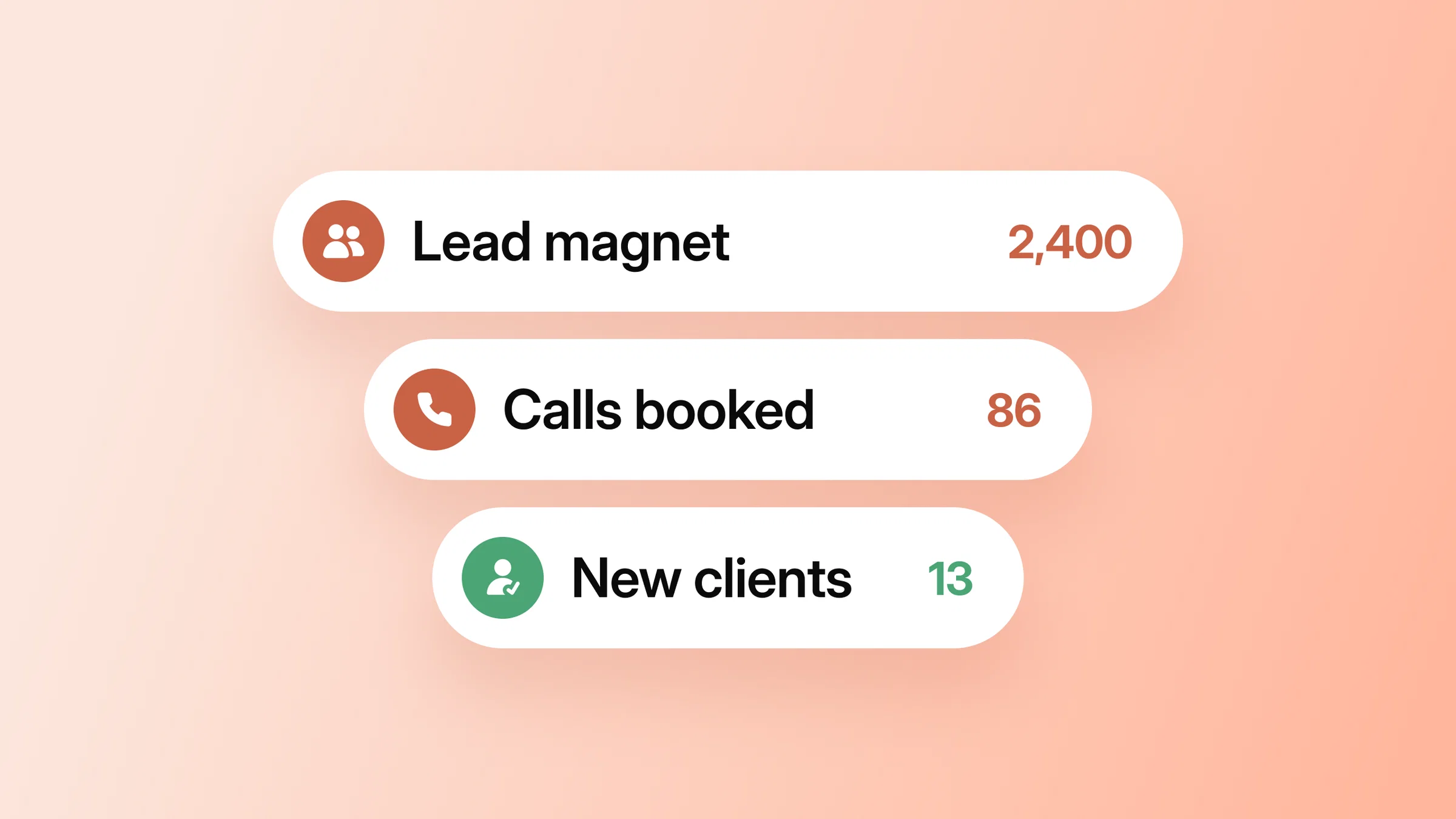
That's the pattern behind most creators who make real money on Instagram: the platform is where people find you and where you start to make some money, and then the lasting income comes from what you build next. The nine streams below run roughly in that order, from quick platform payouts to the owned offers worth building toward.
What Instagram creators actually earn in 2026
Instagram doesn't pay a flat per-view rate the way YouTube does. Your income comes from three different places: what Instagram pays you directly (tips, Subscriptions, and a small cut of Reels activity), what brands pay you to post, and what you sell that's fully your own (digital products, courses, coaching, and memberships). The mix looks completely different at 10,000 followers than at 500,000. Rough directional ranges most creators land in:
| Tier | Follower range | Typical monthly income | Where it comes from |
|---|---|---|---|
| Nano | 1K–10K | $200–$1,500/month | Small brand deals, affiliate links, maybe a first digital product — most built-in tools aren't unlocked yet |
| Micro | 10K–100K | $1,000–$8,000/month | Steadier brand deals, plus Subscriptions or a first paid membership once those unlock at 10K |
| Mid-tier | 100K–500K | $5,000–$30,000/month | Bigger offers: larger brand deals, courses, coaching, or a paid community |
| Macro and up | 500K+ | $15,000/month to seven figures | Splits into two camps: high-ticket brand deals and licensing on-platform, or owned offers sold off-platform |
Read these as rough starting points, not promises. Where you actually land has less to do with your follower count than with the mix of streams you build, which is exactly what the rest of this guide walks through.
1. Brand deals still pay best, if your engagement rate earns them
Brand fees swing on your niche, the format, your engagement rate, and the usage rights the brand wants. 2026 industry data lands on these ballpark ranges:
| Tier | Follower range | Typical rate per Reel | Notes |
|---|---|---|---|
| Nano | 1K–10K | $75–$500 | Often paired with product gifting at the lower end |
| Micro | 10K–100K | $300–$3,000 | Top of range reserved for finance, health, and B2B niches |
| Mid-tier | 100K–500K | $2,500–$15,000 | Rate cards and structured deliverables typical at this tier |
| Macro | 500K–2M | $15,000–$75,000+ | Agents and management fees in the mix |
The spread inside each band is huge, and a few things move you up it. Reels usually pay more than a static post because that's where the attention is, and if the brand wants to run your content as an ad (that's "usage rights"), that's a separate line on top of the base fee. Here's the part most creators miss: a smaller account with a fired-up audience often out-earns a bigger one that gets crickets, because brands increasingly price on engagement, not follower count. So when you pitch, lead with your engagement rate.
2. Instagram Shopping turns your feed into a catalog, if you already have a product
If you sell products, Instagram Shopping lets you tag them directly in posts, Reels, and Stories. A follower taps the tag, sees the price, and gets sent to your store to buy. It's a price tag on content people are already looking at.
To turn it on, you'll need a business or creator account, a connected Meta commerce catalog (Shopify, WooCommerce, and BigCommerce all sync automatically), and account approval through Commerce Manager. Once you're set up, tagging works from the same share screen you already use: hit "Tag products," pick the items, publish. You can tag products in feed posts, Reels, Stories, and Lives, and reuse the same tags across formats.
Instagram is the shop window, not the store. Checkout, inventory, shipping, refunds, and support all still happen wherever you sell. Your job on Instagram is to tag consistently so every piece of content becomes a product page:
- Tag in the Reel that features the item.
- Tag in the Story that shows it in use.
- Tag in the carousel that breaks down how it's made.
The more surfaces tagged, the more chances a scroller becomes a buyer.
3. Reels affiliate tagging pays you commission, if the rollout has reached you
As of early 2026, you can tag affiliate products directly inside a Reel and earn commission when someone buys, no bio link required. Here's how it works. On the Reel share screen, hit "Add Products." From there, you can paste an affiliate URL from a program like Impact, Rakuten, Shopify Collabs, LTK, or ShopMy, or search a brand's handle to pull items from their commerce catalog. You can tag up to 30 products per Reel, and when a viewer taps through to the retailer and buys, the commission lands with you. Meta takes 0%; the full cut comes from the brand's program.
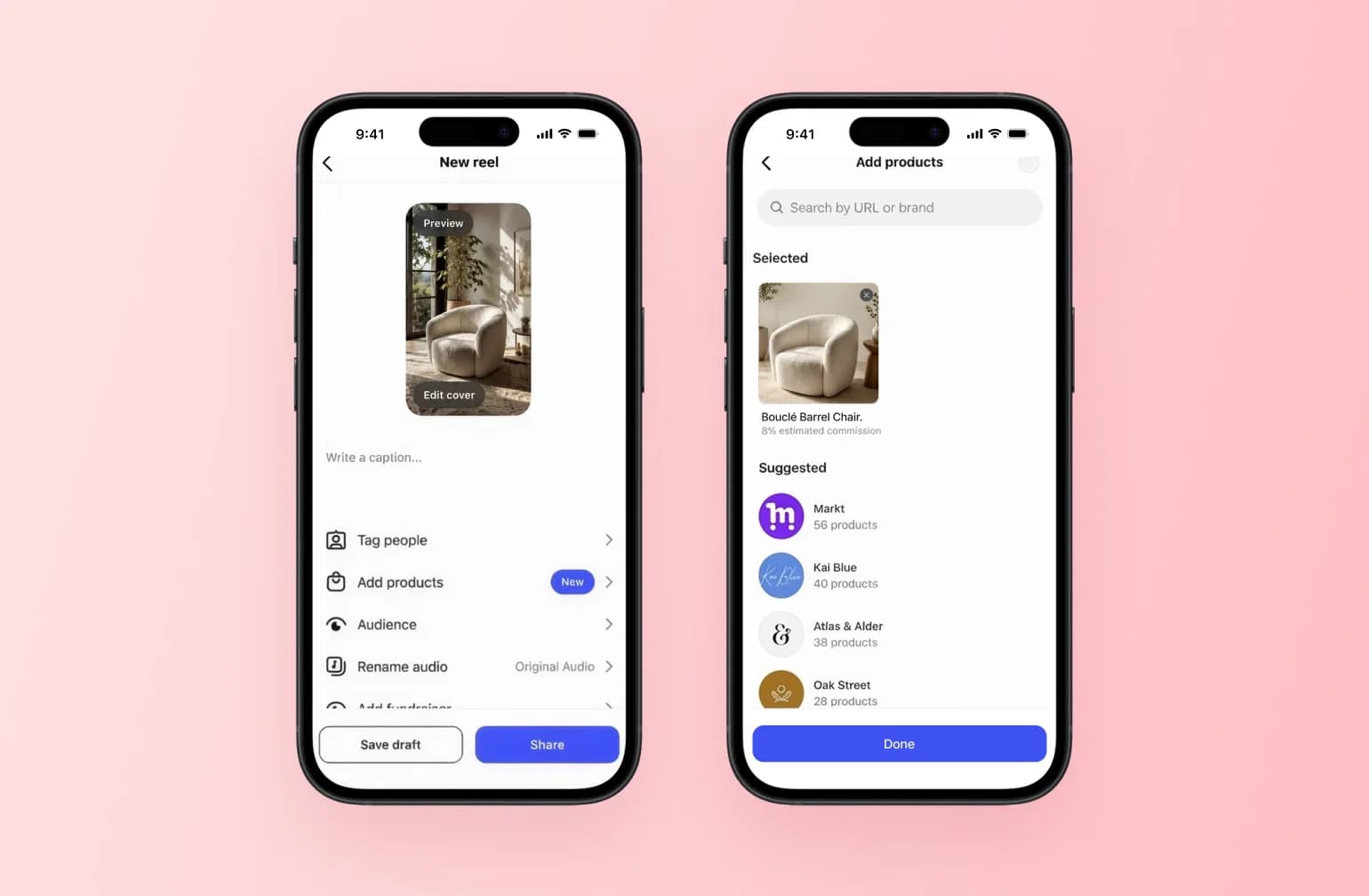
There are a couple of catches before you build a strategy on it. You need at least 1,000 followers and to be 18 or older, with an account in good standing, and the rollout has been phased: it started in the US, Brazil, India, Indonesia, and Thailand and has since expanded to more than 20 countries, so if you don't see the "Add Products" button on your share screen, it hasn't reached you yet. The product also has to sit in a verified Meta commerce catalog, which rules out most Amazon Associates links.
Commission rates come from the brand, not Instagram. As a rough guide, physical goods pay around 5–15%, subscription services 15–30% recurring, and digital products or courses 20–50%. Treat the money as bonus income, not the plan: Instagram ran a creator affiliate program once before and shut it down in 2022, only bringing this version back in 2026.
4. Subscriptions pay recurring revenue, but there's a ceiling on what you keep
Instagram Subscriptions ask you to pick from eight fixed price points: $0.99, $1.99, $2.99, $4.99, $9.99, $19.99, $49.99, or $99.99 per month. Most creators land at $2.99 to $9.99. You can't set a custom price, and price changes only apply to new subscribers.
Meta currently takes 0% of subscription revenue, but a cut still comes out depending on where the subscriber signs up:
- On iOS: Apple takes 30% in a subscriber's first year, dropping to 15% after they've paid for a full year.
- On Android: Google Play takes a flat 15% from day one.
- On the web: signups made outside the app skip the store fee entirely, leaving you close to 97–98% after payment processing.
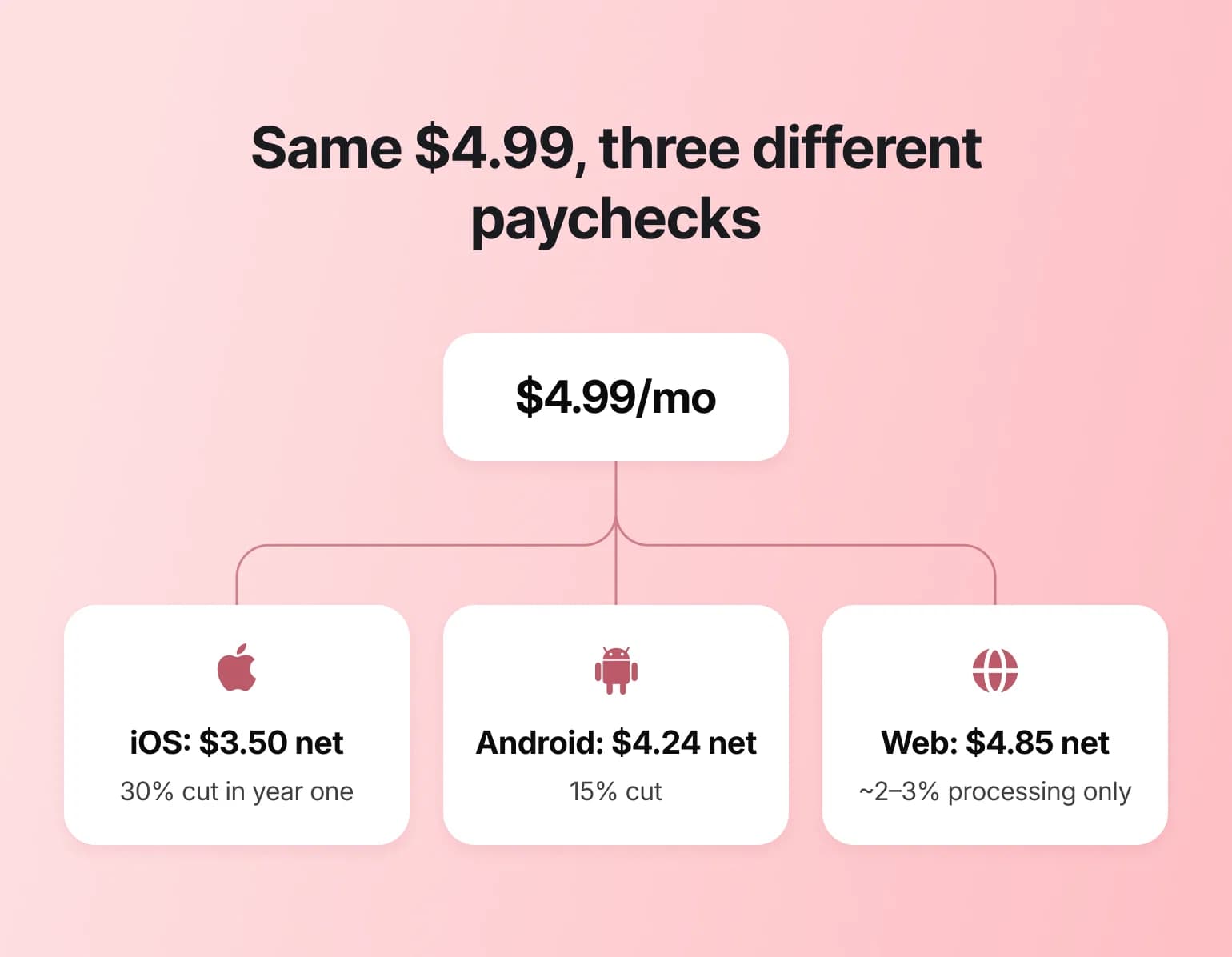
So on a $4.99 subscriber, you net around $3.50 in year one on iOS, closer to $4.24 on Android, or about $4.85 if they signed up on the web. Same subscriber, three different take-home amounts depending on where they paid.
You don't control the price ceiling, the perk formats, the fee structure, or the subscriber relationship itself, which lives inside Meta's app under Meta's terms. Subscriptions work well as a low-friction first paid offer, but badly as the foundation of a business.
5. Badges and Live gifting pay in small, unpredictable amounts
Badges and Gifts often get lumped together, but they're two separate products with different mechanics:
- Badges are a Live product. Eligible viewers tip you during a broadcast in $0.99, $1.99, or $4.99 increments, with per-viewer purchase caps set by Instagram.
- Gifts (Stars) are a Reels product. Eligible viewers send virtual gifts at $0.01 per Star on your Reels, and the count adds up over the life of the video.
Meta takes 0% of either, but app store fees still apply on mobile purchases, so what actually lands in your account is closer to 70% of the sticker value in year one.
Both are supplementary streams for most creators. A creator going Live twice a week with an engaged 10,000-follower audience typically sees $50–$500/month combined across Badges and Gifts, while creators with 100K+ and a strong Live ritual can push into the low thousands, particularly around Q&As and launches. If you already go Live or post Reels regularly, turn these on, collect the tips, and treat them as a nice surprise.
6. Digital products are the first dollar that doesn't need a brand's approval
Instagram is one of the best places to sell a digital product, because you've already got an audience watching your content for free. A single Reel that solves a problem can send hundreds of people to a $19 template or a $49 mini-guide, and unlike a brand deal, you don't need anyone's budget or Meta's approval to launch it. Most creators start small (templates, presets, mini-guides in the $9–$49 range) and move up to signature products (workshops, playbooks, toolkits) at $79–$297 once they know what their audience buys. Price around what the product actually does for someone, not the file size or how long it took to make.
The selling motion on Instagram is pretty simple, even if it looks like a lot of moving parts the first time you see it. In your Reel, you tell people to comment a specific word, something like "GUIDE", to get the freebie. That comment triggers an automated DM (there are tools built for exactly this) that sends them the free thing and asks for their email in exchange. Once you have that email, an email sequence does the actual selling, walking them from the freebie to the paid product over the next few days.
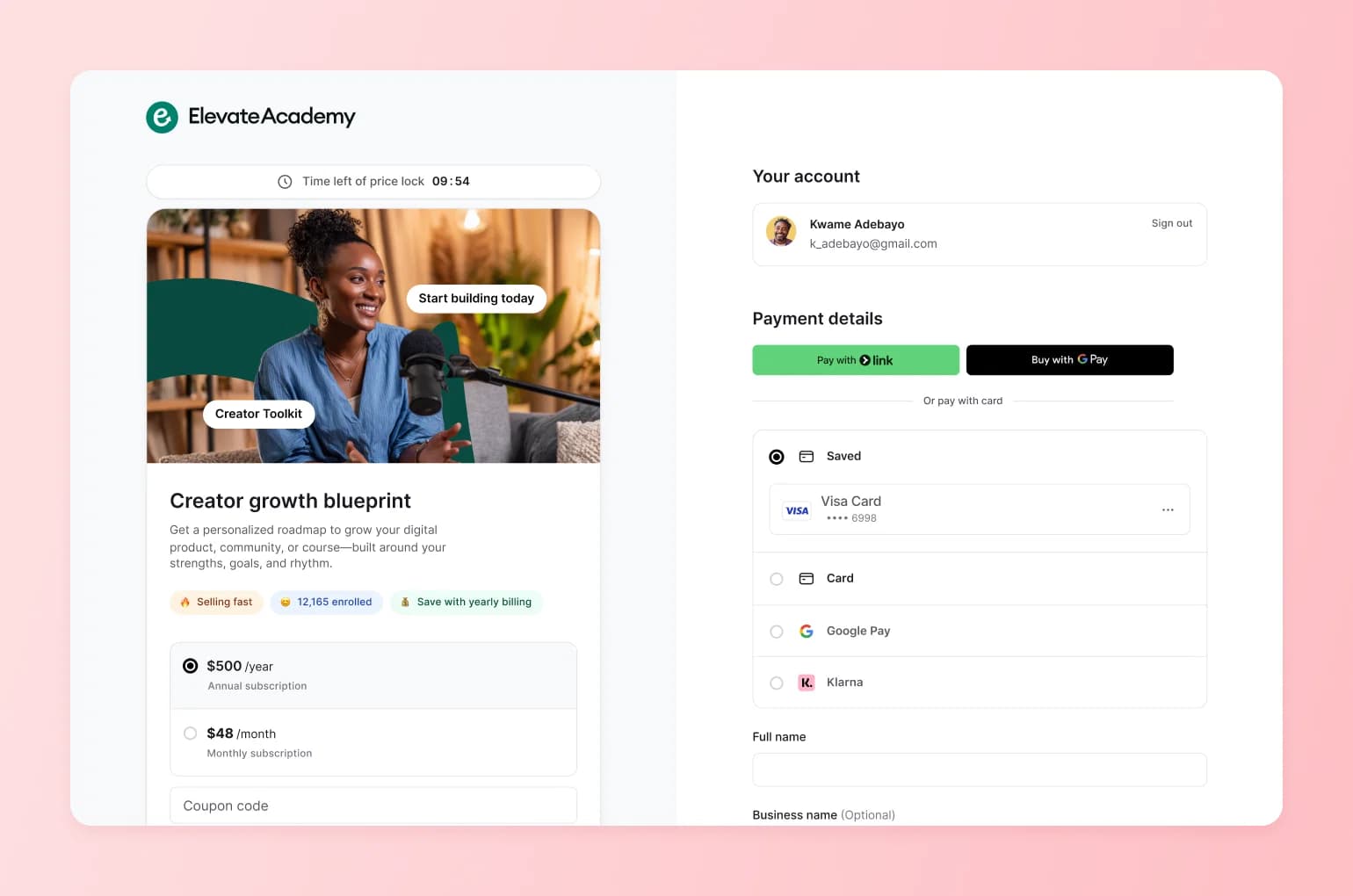
When you're ready to sell, run the purchase through your own branded checkout so the sale (and the buyer's email) lands somewhere you control, not somewhere Instagram can throttle. Circle's Payments handles branded checkout and payment status in one place, with access control built in. Our digital product planning guide walks through the launch itself.

Keep the sale, not just the follower.
7. Coaching pays the highest hourly rate of any stream on this list
Instagram is the closest thing coaches have to a free sales funnel: your posts build the authority, your DMs qualify the lead, and a discovery call closes it. That's why coaching pays such a high hourly rate off Instagram audiences. According to the 2025 ICF Global Coaching Study, a survey of more than 10,000 coaches worldwide, the average fee for a one-hour session is $234, and it climbs well past that for coaches with more experience and a business or executive clientele. At the high end, Harvard Business Review's survey of executive coaches found an average rate of about $500 an hour, with top coaches charging as much as $3,500. After admin, no-shows, follow-up, and unpaid work, the listed hourly rate is rarely the real one.
Seasoned Sales shows how fast a coaching offer can move when the delivery system is ready. Will deShazo had proven sales expertise and ideas in a doc, but still needed a website, platform, and community. He used Circle's Website Builder for his homepage and sales page, and ran the backend community as his service fulfillment home with three pricing tiers managed there. In the first two months, Seasoned Sales closed $15K and set a $600K year-one target.
8. Courses are where a link in bio stops being enough
Instagram is where you build the demand for a course, but it's not where you sell one. A single link in bio can't carry the sale: buyers need a landing page that lays out the promise, an email sequence that warms them up, a checkout, and somewhere to actually take the lessons after they pay. That's why courses stall for creators who try to run the whole thing off Instagram alone.
Before you build your first course, map how a follower who taps your bio link moves from purchase into lessons, support, accountability, and completion. Circle's Courses puts checkout and lessons behind one sales page, and because lessons live inside a community, students learn alongside each other instead of clicking through modules alone. Get your course pricing right before you launch; it's the decision that has the biggest impact on the whole funnel.
9. A paid membership turns followers into recurring income
A membership is usually the piece that pulls everything else on this list together. Instead of a one-time sale, you get recurring revenue you can predict before the month starts, from people who keep paying for access to you and to each other.
Yasir Khan built his from a standing start: a brand-new Instagram account, daily videos promoting a free course, and an email list he grew from 5,000 to 85,000 in the process. Two launches later — first at $27, then $49 — he'd signed 220+ paying members and crossed $140k in yearly revenue, all funneled through the community he owned. (He's since switched to a high-ticket coaching model, still on Circle.)
Members pay for structure, access, accountability, and each other. For benchmarks on tier design and price positioning, community pricing strategies is the deeper read.
Turn borrowed reach into revenue you own
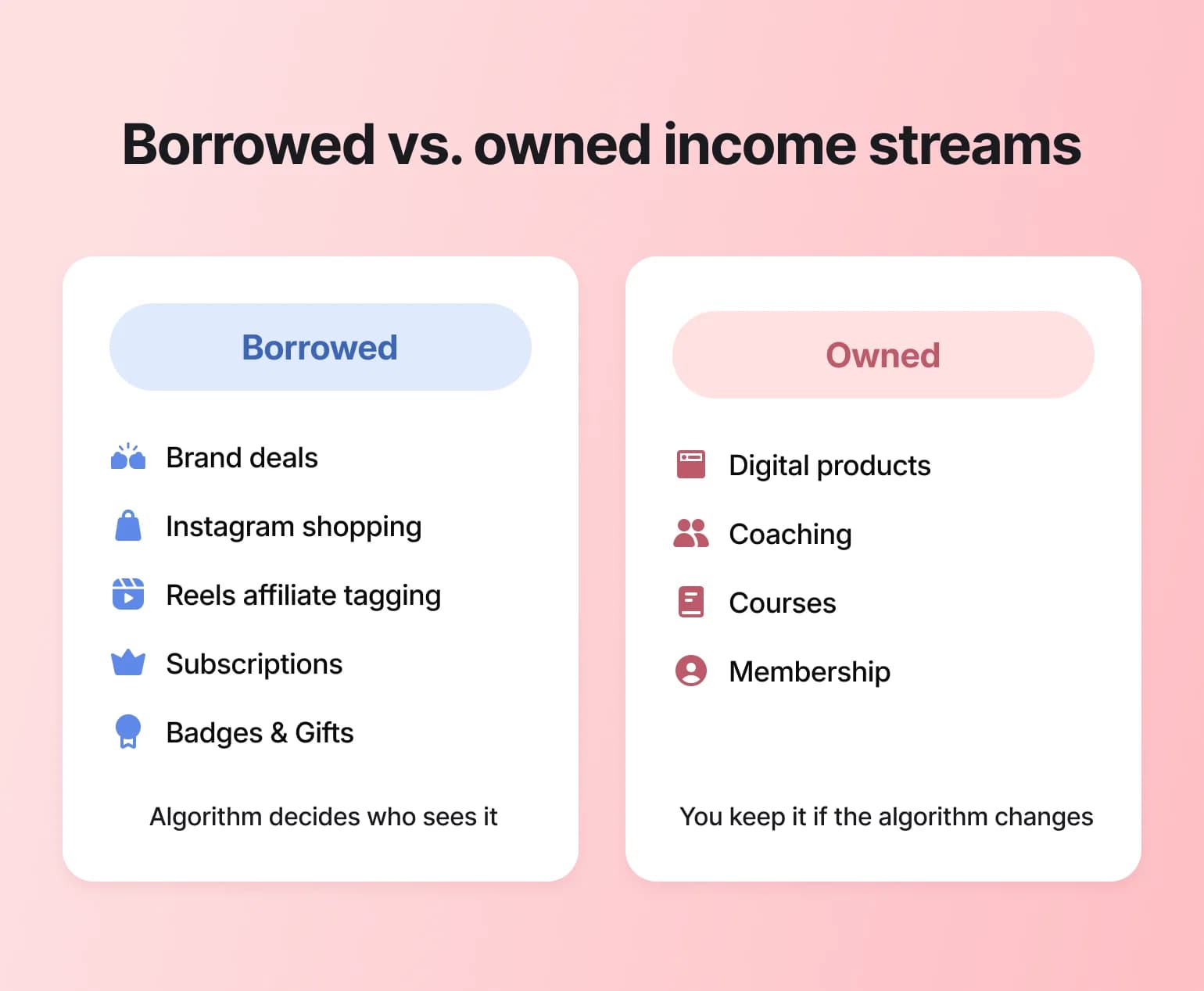
Instagram in 2026 is still one of the best free audience-building channels there is, but the reach it gives you is borrowed. The creators who turn it into a real business use that reach to build customer relationships they actually own. Every stream on this list gets stronger the moment it connects to an email list and a community with checkout behind it, because those are the assets a reach drop can't take from you.
That's where Circle comes in. Instead of duct-taping a checkout tool, a course platform, an email app, and a community together, Circle gives your Instagram creator community one branded home for your membership, courses, coaching, and payments. Less time wrangling software, more time with the members who pay you.
Turn followers into members.
Making money on Instagram FAQ
How many followers do you need to make money on Instagram?
Fewer than you think. Native tools like Gifts, Subscriptions, and Badges have eligibility requirements (Subscriptions and Badges typically require 10,000+ followers; Gifts start at 500), but brand deals, digital products, coaching, and memberships have no universal follower minimum. Nano creators can land brand deals precisely because their engagement rates often run higher than larger accounts.
How much do Instagram creators charge per sponsored post?
Rates vary widely by niche, format, engagement, usage rights, exclusivity, and turnaround time. As a rough guide: nano creators ($75–$500 per Reel), micro ($300–$3,000), mid-tier ($2,500–$15,000), macro ($15,000+). Reels typically carry a 20–50% premium over static posts. Finance, health, and B2B niches earn 1.5x to 4x lifestyle rates at the same follower count.
Is Instagram's affiliate program available again?
If your account has access, yes. Instagram's renewed creator affiliate commerce lets eligible creators tag products in Reels and earn commission in platform. Check your professional dashboard for commission details and eligibility.
How much does Instagram take from Subscriptions?
Meta takes 0% of subscription revenue. Apple and Google take roughly 30% on in-app purchases in year one, dropping to about 15% after each subscriber's first year. Web signups bypass the app store cut entirely and net you close to 97% after payment processing. That means your effective revenue depends on where the subscriber signs up and which of the eight fixed tiers ($0.99 to $99.99/month) you choose.
What's the most reliable way to make money on Instagram?
Income you own outright: digital products, courses, coaching, and paid memberships sold to your audience off-platform. Recurring revenue keeps arriving regardless of what the algorithm does to your reach, which is why owned offers are a safer foundation than platform payouts alone.
Community Content Marketer
Arina is Circle’s community content marketer, sharing insights on community growth, GTM strategy, and storytelling for solopreneurs.