How to show up in AI search — a guide for coaches, educators, and online communities
TL;DR:
- ChatGPT, Claude, and other AI tools are becoming a real discovery channel for your content — some people call this LLM SEO, others GEO or AEO — and they reward the same habits that already work for Google, just with a few twists.
- To get cited, structure posts with clear headers and lists, and lead with original insight (data, lessons learned, frameworks pulled from your experience or your audience's feedback) over generic advice.
- Keep a public-facing layer of your best thinking — a blog, pillar posts, FAQs — that AI can actually crawl, without opening up everything you've gated behind a paywall.
Reddit is the single most-cited domain across ChatGPT, Google AI Mode, Gemini, Perplexity, and AI Overviews — ahead of YouTube, LinkedIn, and Wikipedia, according to Search Engine Land, which analyzed 30 million cited sources.
Why? Because it's one of the last places online still full of real human conversation — not brand content.
Here's the reality of late 2026:
- AI-generated content is flooding the web. Half of new articles published online are now primarily AI-generated, per Graphite.
- Google searches increasingly end without a click. 68% of searches now end without one, per SparkToro — AI just answers the question right there on the results page, so people never make it to your site at all.
- This is what Amanda Natividad calls "zero-click marketing." She coined the term back in 2022 and turned it into a book with Rand Fishkin this year: a Reddit thread now gets the visit your landing page used to get.
Put those two trends together, and real, human conversation becomes one of the scarcest, most valuable things online — which is exactly why Reddit started gating its own this year, blocking most crawlers except Google's, once it realized exactly what it was sitting on.
You used to be able to just put up a website, write some blog posts, and call it a day, so for small and even mid-sized businesses, this shift can be genuinely hard to navigate. You don't have Reddit's scale, its backlinks, or its built-in audience — nor do you have a paid budget the size of Nike, the brand authority of Oprah, or the team of a corporation.
Thankfully, you don’t necessarily need those things in the age of zero-click (though budget, authority, and a team always help, if you have it).
If you're reading this, you're already sitting on the same raw material: real conversations, happening inside your community, every day. With AI making it trivial to spin up an app, a tool, a website, or an article, real human conversation may be the only moat left. As serial entrepreneur and My First Million co-host Sam Parr put it on a recent episode: "previously technology was a moat... that's not a moat anymore. And I think communities, networks, and marketplaces are still a really good moat."
So here's how to put that moat to work, from the person doing it at Circle.
Your community content is a goldmine. Here's how to use it.
I lead AEO and SEO at Circle — right now, I'm the only person working on this full-time outside our front-end engineers — and I've used exactly this playbook to get Circle's own content into hundreds of Google AI Overviews (though the playbook looks a little different for a bigger brand like ours than it does for smaller creators and educators, which is who I really want to see win).
We run this same playbook internally, just at company scale. This quarter, Circle has a cross-team "Chosen by AI" sprint underway — marketing and product working off one scorecard to be readable (if AI can't crawl it, it can't recommend it), be accurate (plan names, pricing, and feature claims need to match reality everywhere, because AI repeats whatever it finds most often), and be easy to choose (clear positioning and comparison pages so AI and agents can pick us with confidence).
When I thought about what would actually be useful for you here, I had two main questions to answer:
- How do you get found, recommended, and chosen by AI in front of your ideal members and clients?
- And what does that mean regarding what you reveal about your community and your business to LLMs?
- Once you're putting the right information out there, how do you turn that unique, proprietary community value into real business value?
(I've written before about communities as acquirable assets — this is the other half of that same value: before anyone can buy it, they have to find it.) All of these come down to showing up in AI search — which is exactly what the rest of this post walks through.
The test AI runs before it cites you
There's a simple way to think about all of this. AI models are, at their core, trying to answer two questions about your business: do real people vouch for you, and does what they're saying line up across the places they're saying it? A single glowing mention means much less than the same story showing up independently on Reddit, on a review site, and inside your own (public) community — that's the corroboration AI models are actually trained to look for.
Here's why that's worth your time: every one of those citations is a potential member, client, or student finding you the same way they'd find a Reddit thread — without ad spend, without a cold DM, without searching your name first. Just in the right place at the right time, for the ideal client.
Get listed on review platforms, and don't be a ghost on Reddit and Quora — both move AI citations more than people expect. SE Ranking analyzed 129,000 domains: businesses with no review-platform presence averaged just 1.8 ChatGPT citations, versus up to 6.3 for those listed on multiple platforms, and heavy Reddit/Quora mention volume saw citations jump to roughly 7.0.
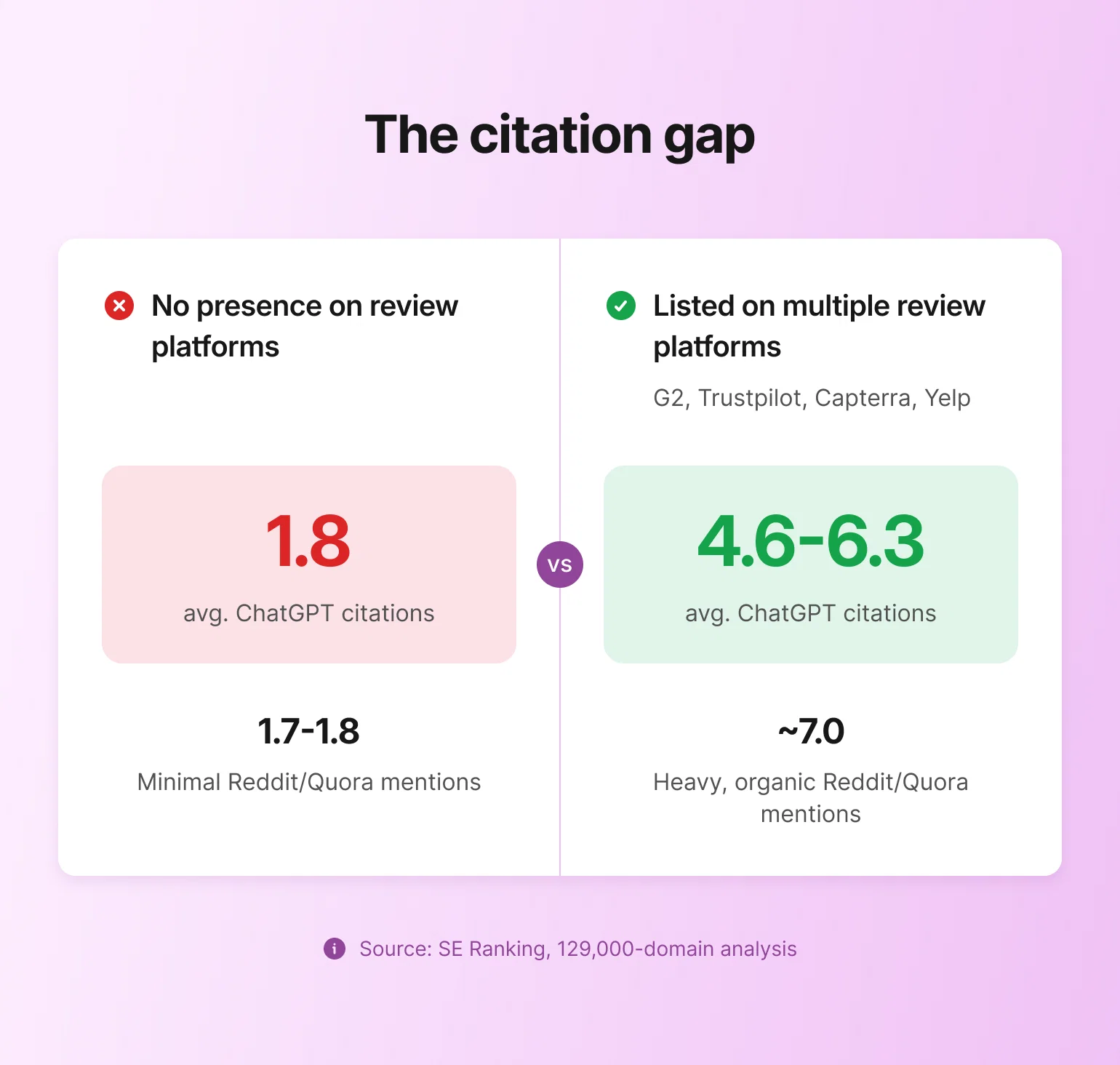
As the researchers put it, engaging on platforms like Quora and Reddit is "a way to build authority and earn trust from ChatGPT, similar to what larger domains achieve through backlinks and high traffic" — which matters most if you don't have those backlinks yet.
The four things that need to be true
- Your product actually has to be good. None of this works as a way to paper over a mediocre offering — AI models are picking up on real reviews, real Reddit threads, and real comparisons, not vibes.
- People need to be talking about it — accurately and favorably. This is the part most community builders already have covered without realizing it: every unprompted "this helped me" post in your space is exactly the kind of signal AI is trained to weigh.
- More people need to be talking about you than you talk about yourself. Owned content (your blog, your landing pages) proves you exist and gives AI something accurate to cite. But it's the earned mentions — reviews, Reddit threads, member testimonials, "have you tried X" recommendations — that convince AI, and humans, that you're actually worth citing.
- The story needs to hold up across platforms, not just in one place. AI models don't just count mentions, they cross-reference them. A claim that shows up the same way on Reddit, in a review, and inside your own community reads as corroborated. A claim that only exists in one place — especially if that place is your own website — reads as unverified.
If all four of those are true, you're already in a strong position. The tactics in the rest of this post are really about making sure AI can see and understand that reality, not about manufacturing something that isn't there.
One more reassurance: this isn't a game only big publishers can win. A focused community, niche blog, or small business site has a real shot at getting cited, because AI search engines actively pull from smaller, less-popular domains that would never break through in classic Google rankings. Researchers at Ruhr University Bochum and the Max Planck Institute found 53% of Google AI Overviews sources don't even appear in the traditional top 10 results for the same query, and 40% fall outside the top 100 entirely. Corroboration and structure matter more than sheer domain authority.
The playbook: how to structure what you publish so you actually get found
1. Decide what to reveal, and what to keep private
"Public" isn't just a toggle — what you reveal matters as much as whether you reveal it, especially if you want AI matching you with your ideal members or clients instead of just driving generic traffic. That means being specific about the things prospective members actually search for: your core outcomes and stats (how many members, what results, how fast), who you actually work best with (and who you don't), and what it costs. Vague positioning — "a community for creators," with no numbers and no specifics — gives AI nothing to match you against. Specific answers do.
You don't need (and shouldn't try) to open your entire community, course, or membership to the public. Instead:
- Create a public-facing layer of your expertise or offering: A blog with pages, resources space, or a handful of pillar posts that represent your thinking and the transformation you help people reach. LLMs can only cite what they can crawl.
- Keep the right things private: Live conversations, full courses, and cohort discussions stay gated — that's the value members are actually paying for. Reviews, FAQs, and digests or summaries of what's being discussed are what go public; the raw thread doesn't have to.
- Use summaries: Take the best insights from members or customers (with permission or anonymized) and turn them into public summaries, guides, or frameworks. This mirrors how we're approaching SEO internally: SEO-informed content built from community insight and first-party data.
- Tag and organize your posts cleanly: A well-structured knowledge base signals to LLMs that this is trustworthy and well-organized information, increasing the odds of citation.
- Check you're not accidentally blocking the crawlers you want: Cloudflare blocks AI Training and Agent bots by default on new domains before your robots.txt is even read. Check your CDN or security dashboard for an "AI bots" control (on Cloudflare, under Security → Configure AI bot policies) and make sure GPTBot, ClaudeBot, and PerplexityBot are allowed through. You can do this on Circle, too, through SEO settings.
A real example of this in action: Tim Slade, founder of The eLearning Designer's Academy (a 16,000-member community for instructional designers and eLearning developers), moved his entire blog — including several high-traffic posts — over to Circle alongside his courses, rather than keeping it on a separate site. That public-facing layer, sitting outside the gated community, helped his community's site reach the #1 ranking on Google for "eLearning communities" and #2 for "instructional design communities." The gated content (courses, cohort programs, member discussions) stayed private; the public layer is what search engines, and now LLMs, can actually crawl and cite.
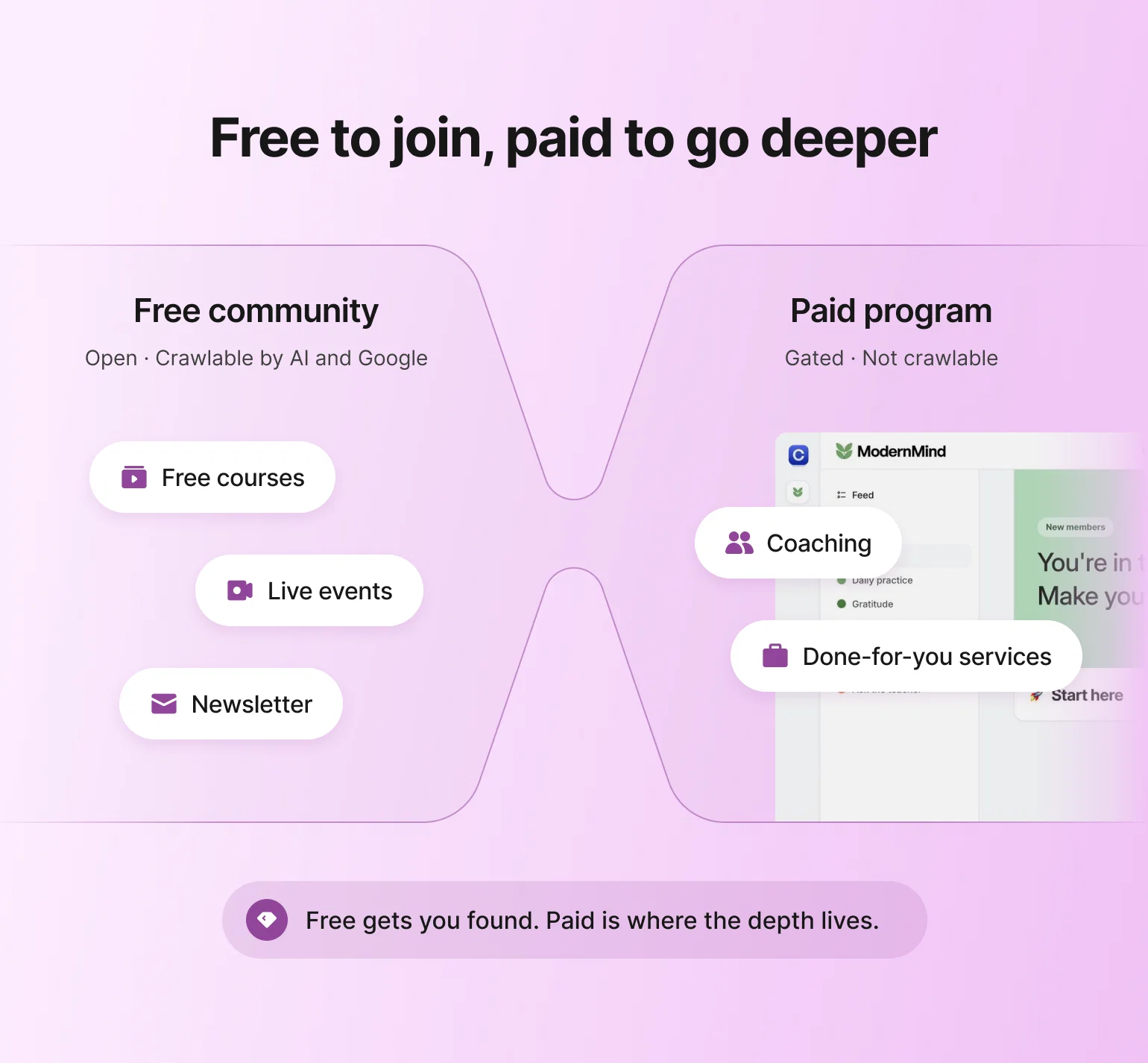
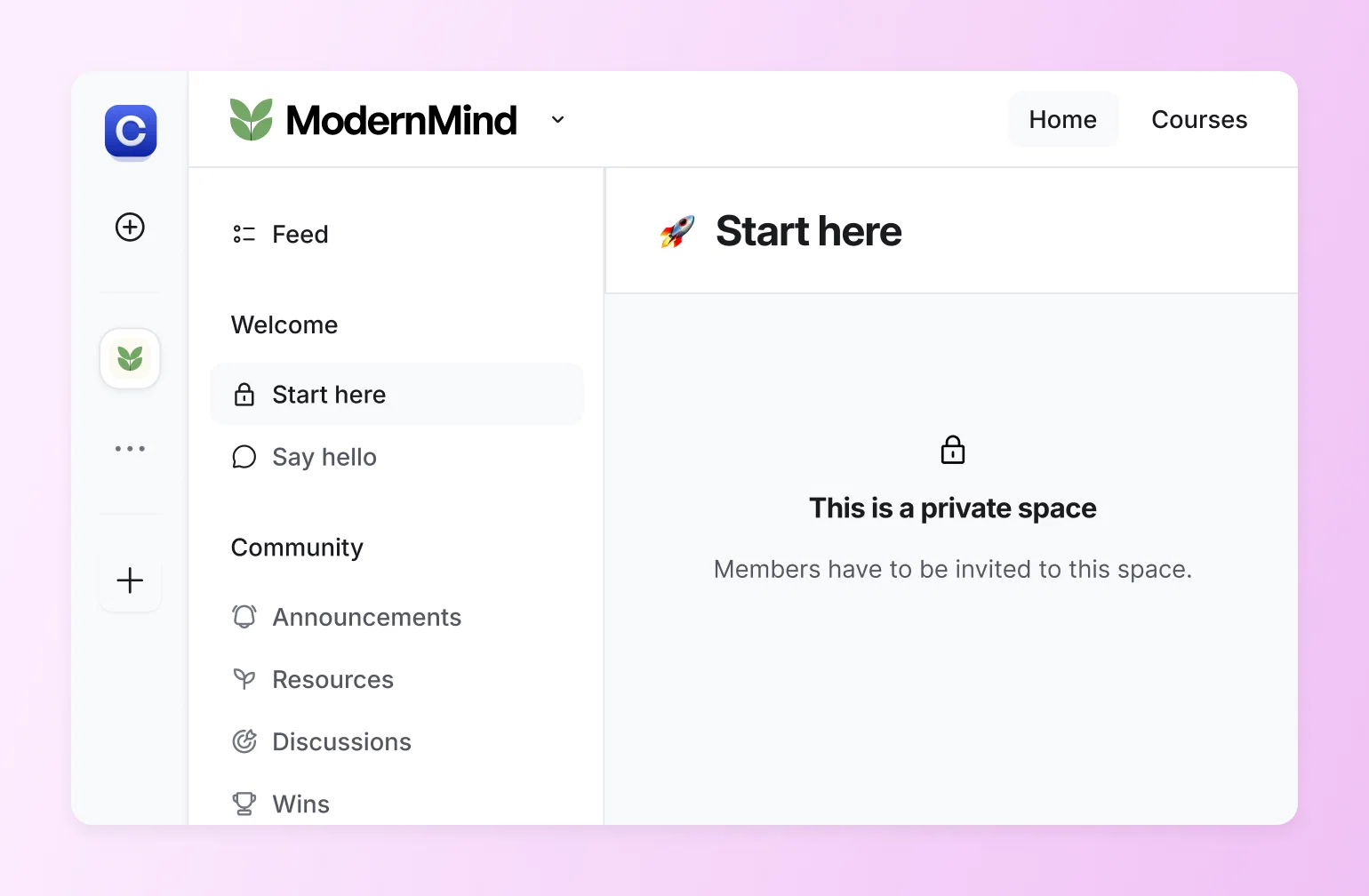
On Circle, access groups let you gate full courses and live conversations behind a paywall while keeping specific spaces — a reviews space, a FAQ, a digest or summary space — open to everyone, crawlers included.
Circle's SEO settings control what's actually indexable once you've made that call — sitewide indexing, robots.txt, canonical URLs, and per-page meta tags all live in one place. But none of it works if your community itself is set to private — Google won't bypass privacy rules, crawl a sitemap, or index a single Space or page behind a private gate.

Gate it. Don’t hide it.
2. Structure and format your content so LLMs can easily interpret it
Think of LLMs as very fast readers who love clarity. Two things matter here: how you format whatever you write, and what kind of content you choose to write in the first place.
How to write for LLMs:
- Clear headers: Break up long posts with H2s and H3s. It helps LLMs "parse" your ideas and match them to user questions. Clear writing is clear thinking — and LLMs love both.
- Lists over walls of text: Bullet it instead of burying it in a paragraph. Lists get surfaced far more often because they're easy for models to extract.
- One idea per post: If everything is blended into a massive thread, AI will probably ignore it. But if you separate concepts: "How to price your offer," "How to onboard members," "How to run weekly rituals," AI can categorize and reference each one more reliably.
- Short, clear definitions: LLMs love to open an answer with "X is…" If your community has crisp definitions of your frameworks, rituals, or methods, AI will typically pull those first.
- Write in your audience's own words, not yours: Peec found the average ChatGPT query roughly doubled in length in three months — from about 6 words to 12 — as people moved from keywords to specific situations. "I just hit 500 members and my Slack is falling apart" matches better than "community management tools."
Formats that often get cited:
- Step-by-step processes: If you explain things in a clean sequence: Do this, Then this, Watch out for this; LLMs can lift the whole thing directly and pop it right into those in-demand AI Overviews.
- FAQs: AirOps found pages whose headings closely match the query get cited 41% of the time, versus 29% for a weak match. Write each FAQ question exactly the way a member would type it into ChatGPT — "Why did my engagement drop after I added a paywall?" — not how you'd phrase it as a blog headline. Think about the sideline questions someone might have about a topic, too — AlsoAsked is my favorite tool for finding those.
- Original insights and POV: This is the big one. Google's own information gain patent describes scoring content on how much new information it adds beyond what's already out there — and the same logic shows up across AI answer engines. AI is de-prioritizing generic info and rewarding new, unique, sourced insight (aka "information gain"). This is where audience-driven content shines!
- Video — but only if the transcript earns it: YouTube is the second most-cited domain in AI search, per Peec; AI pulls from the video description and the auto-generated transcript, not the view count. If you're recording webinars, Lives, Show & Tells, or coworking sessions, open up a preview of the transcript — it's citable source text, not just captions.
- LinkedIn articles: LinkedIn ranks third in that same study, just behind YouTube — but it's the personal posts and articles doing the work, not brand-account announcements. A founder or community manager's honest take on something that actually happened reads the same way a Reddit thread does to an AI model: unscripted, first-person, and hard to fake.
TLDR: If you share unique data, insights, lessons learned, personal frameworks, or crowdsourced best practices from your audience… these get cited far more than surface-level content. And the messy, honest, audience-generated conversations already happening around your business — in a community, a comment section, a course cohort — are exactly the kind of content AI models are rewarding elsewhere. You're not starting from zero on authority — you're already sitting on it.
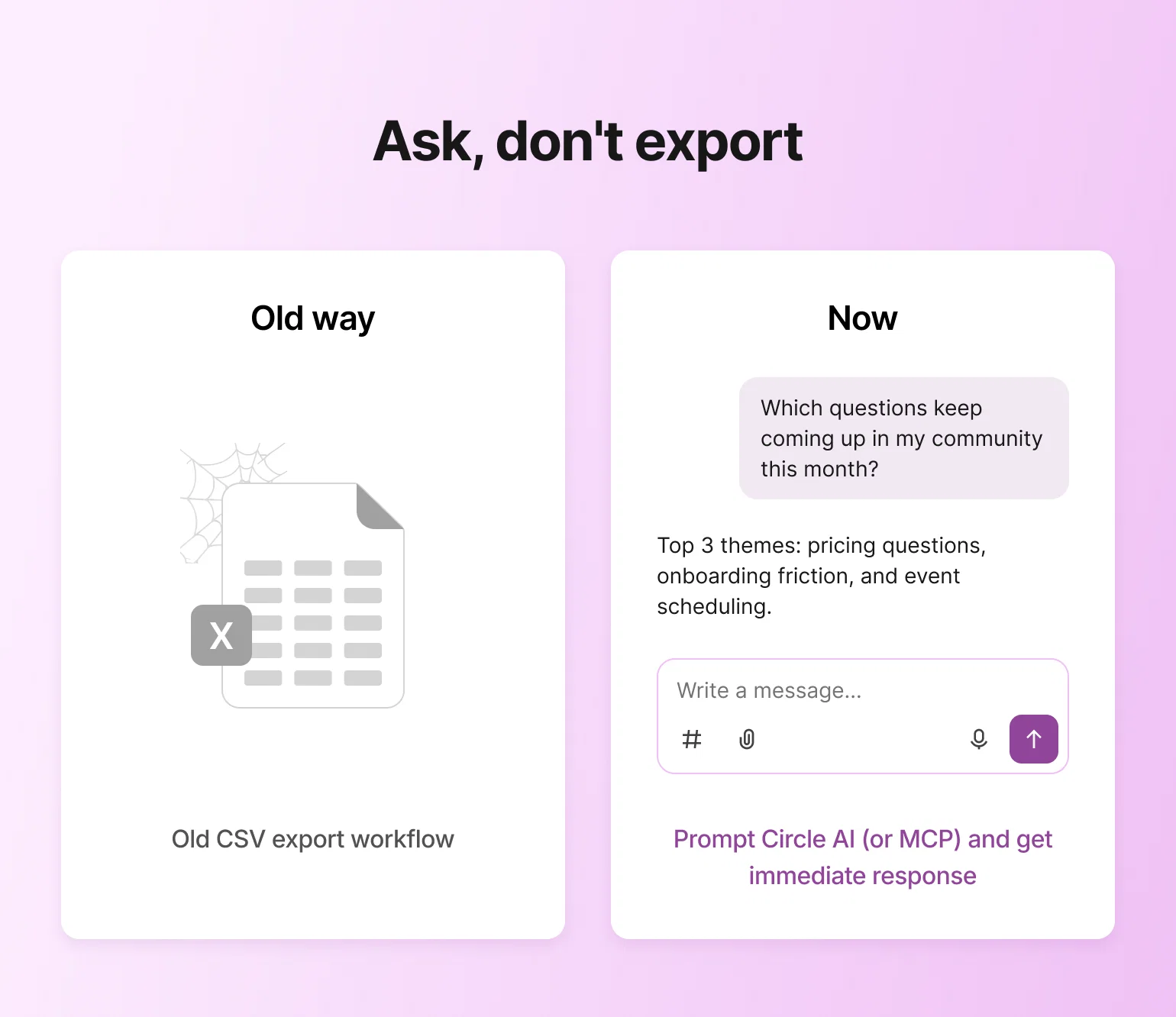
Circle AI's Data Explorer skill answers natural-language questions about your own community data — ask it what members ask most, or which threads are getting outsized engagement, and you've got a concrete shortlist of what's worth turning into a public post, FAQ, or pillar page. Post Creator and Content Calendar skills handle the actual drafting, scheduling, and cadence once you know what to write. Circle AI is available on all plans.
3. Own your niche to build real authority
Showing up isn't just about any single post — it's about whether AI can tell you consistently know what you're talking about, and whether anyone besides you backs that up.
If you want to be known for "career coaching for laid off engineers", "creator operations", or "data analysis for educators", reinforce that topic repeatedly across everything you publish — your posts, your FAQs, your videos, your LinkedIn commentary. Over time, AI models begin to associate your name with that topic, and that's when you start showing up more in responses related to it.
Tim Slade's Academy is a good illustration of this compounding effect: by consistently publishing content tied to eLearning design and instructional design, his community didn't just rank for one lucky keyword. It landed #1 for "eLearning communities" and #2 for "instructional design communities" — two related but distinct topics, both reinforced by years of focused, on-topic content. That's the same mechanism that drives LLM visibility: consistent topical focus, not one-off posts.
But owning the topic yourself only gets you halfway — LLMs also look for signals like: are other sites referencing you? Are people talking about you online? Do you have clear expert points of view? Is there data to back you up?
None of this is new, exactly — it's the same logic behind Google's own E-E-A-T guidelines (Experience, Expertise, Authoritativeness, Trustworthiness): does this source show real experience and expertise, and do other people treat it as trustworthy?
Omniscient Digital analyzed 23,000+ branded-query AI citations and found just 23% come from a brand's own website; the rest is earned media (editorial coverage, reviews, forums) and other companies' content talking about you. That's exactly why off-site discoverability is worth the effort — something Zero-Click Marketing emphasizes too: go to where your ideal people already hang out.
Tinuiti's Q1 2026 AI Citations Trends Report found AI citations attributed to social platforms climbing steadily from October 2025 through January 2026, driven mostly by Reddit. As marketing advisor Ricardo McCoy puts it in the article: "If you're not adding something useful to the conversation, people ignore it, so do AI tools."
If you want a shortcut, here's the roadmap:
- Pick 2-3 topics, tied to an actual business goal — not just what interests you. Want more 1:1 clients? Own something specific enough to self-select the right people, like "career coaching for laid off engineers." Want course sales? Own the mechanism you teach, like "systemizing client onboarding."
- Reinforce it everywhere you publish — posts, FAQs, videos, LinkedIn, all pointed at the same 2-3 topics.
- Get corroborated specifically on that topic, not just your name in general. Ask for reviews with keywords, on certain topics, and more.
- Back it with data — a stat, a result, a case study tied to that exact topic.
Here's the opportunity if you run a community, course, or membership: you don't need to hire an agency for this. You're already running the exact kind of authentic, peer-driven discussion AI models are built to reward — it's just happening inside your space instead of on Reddit. Treat your own audience with the same seriousness: surface real member or customer conversations publicly (with permission), instead of letting them disappear behind a login wall no AI crawler can reach.
Keep it fresh
Fresh content is weighted more heavily in AI rankings — the same SE Ranking research cited above found pages updated within the last three months averaged 6 citations, compared to 3.6 for outdated content.
In practice, that means revisiting your posts on a schedule, not just publishing once and moving on. If you're on a Business plan or above, Circle's AI content writer (in the post editor, triggered with a "/" command) makes this fast — pull up an old post and ask it to refresh the stats, update examples, or tighten the framing before you republish publicly.
You don't need to "game" LLMs. You just need to make it easy for them to understand what you know, what you're uniquely good at, and where your expertise lies. If your content is clear, structured, original, and organized, AI tools will naturally surface it, and your content will become part of the world's knowledge graph.
Circle Discover is a public directory of Circle communities, browsable by category — a standing, free listing that puts you in front of people (and crawlers) who aren't searching for your name yet. And if video is part of your authority play, Circle's live rooms come with the same auto-generated transcripts covered earlier in this post.
Turning visibility and authority into business value
Visibility by itself doesn't pay the bills — but it changes who's showing up at your door, and how ready they are to buy. A prospective member who finds you because ChatGPT recommended you by name, with your actual outcomes, audience, and pricing already laid out, arrives pre-qualified in a way a cold ad click never does. They already know roughly who you work with, what it costs, and what they'll get — the specifics you put in that public layer are doing the selling before you ever talk to them.
Platforms are starting to formalize this. In November 2026, OpenAI rolled out Businesses in ChatGPT — eligible companies can claim a verified profile that appears when they're mentioned in a ChatGPT answer, see how often they're surfaced, and even add an AI agent for customers to chat with. OpenAI is upfront that claiming a profile doesn't guarantee placement — you still have to earn the mention — but it's a sign that "being talked about" in AI tools is becoming a trackable, monetizable category, not just a side effect of good SEO.
That's the same mechanism behind the earned mentions, testimonials, and reviews covered throughout this post: they're not just citation bait for AI, they're the same social proof a prospective member would want to see anyway. Getting found by AI and converting that visibility into paying members or clients run through the same muscle — being specific, public, and corroborated. You're not running two different strategies; you're running one.
Worth actually tracking this rather than guessing: Circle's checkout conversion tracking connects your paywalls to Google Analytics 4 and Meta, with an attribution tab showing the revenue behind every checkout link — so you can see whether the traffic showing up because AI recommended you is the traffic that's actually converting.
How to personalize your AI search strategy
Not everyone needs to do all of this at once. Here's the single biggest move for three different starting points.
You're a creator with a big following, launching a product or course
Your biggest move is probably already sitting in your video archive. Video is the second most-cited format in AI search, so go back through your highest-traffic videos, clean up the auto-generated transcripts, and build that same review step into every new upload. Not only that, but turn those videos into blogs, emails, and community content, and you've got yourself a whole calendar. You're not starting from zero on an audience — you just need AI to actually be able to read what you've already built.
You're an industry expert building a community from scratch
You don't have a community's worth of content yet, but you likely already have the harder thing: corroboration. Speaking gigs, bylines, podcast guest spots — that's the "does your story hold up across platforms" test from earlier in this post, and most experts pass it without realizing it. The move is to make that authority legible to AI: post your actual POV on LinkedIn instead of resharing other people's content, and start a lightweight public FAQ answering the questions you already get in DMs. You don't need the community built to start getting cited.
You're a coach expanding into group coaching for your niche
You likely already have a private client community — the fastest move isn't a new content program, it's a new section. Carve out a small public "prospect" space inside what you've already built: a handful of outcomes, testimonials, or FAQs that live outside the paywall. That's the public-vs-private call from earlier in this post, applied to something you don't have to create from scratch — you're just deciding what a prospective member gets to see before they join, and giving AI something to crawl in the process.
If you don't have a lot of time, do the first thing well, and follow it up with the rest:
- Build one clear, public layer of your best content first. Tag it well, and keep your gated expertise gated.
- Then layer in structure, formatting, and authority signals — clear headers, original insight, and real reviews or mentions elsewhere.
- Finish by making sure it's actually discoverable — check you're not blocking AI crawlers, and claim the listings (Discover, review sites) that put you in front of people who aren't searching for you by name yet.
None of it works if there's nothing public for AI to find in the first place.
Sam Parr said it at the start of this piece: technology stopped being a moat a while ago. A community welcoming new members with perspective is the biggest moat around.
Your moat, made findable.
FAQs
What do GEO, AEO, LLM SEO, and AI search actually mean?
These terms get thrown around a lot, and honestly, even people who work in SEO don't fully agree on where one ends and the next begins. Here's the plain-language version:
- LLM (large language model): The AI itself — the technology behind ChatGPT, Claude, Gemini, and similar tools. It's what reads your content and decides how to talk about it.
- AI search: What happens when someone asks an LLM a question instead of typing it into Google — through ChatGPT, Perplexity, Google's AI Overviews, or similar.
- SEO (search engine optimization): Optimizing your content so it ranks well in traditional search engines like Google.
- GEO (generative engine optimization) and AEO (answer engine optimization): Two newer terms for close to the same idea — making your content easy for AI tools to understand, trust, and cite in their answers. Some people draw a fine line between them (AEO leaning toward directly answering questions, GEO leaning toward broader AI visibility); in practice, most marketers use the two interchangeably. You'll also see the whole practice called LLM SEO — same idea, different label.
You don't need to pick a side in the acronym debate. The behaviors that make content perform well across all of these — clear structure, original insight, a crawlable public layer — are the same ones this post walks through.
Is GEO, AEO, or LLM SEO replacing SEO?
No — think of it as an added layer, not a replacement. Google is still where most people search, and AI Overviews pull heavily from pages that already rank well organically. Most of what already works for SEO still works here. A few things shift, though:
| If you know SEO... | ...here's what also matters now |
|---|---|
| Backlinks build authority | Mentions and reviews (Reddit, Quora, G2) build it just as much — sometimes without a link at all |
| Keyword targeting | Conversational, full-sentence queries — matching your audience's own words matters as much as matching a keyword |
| Schema markup helps rich results | Mixed evidence so far — FAQPage schema shows no proven citation lift; don't build a strategy around it yet |
| Freshness is a minor ranking factor | Freshness has a much shorter half-life here — posts updated in the last 3 months get roughly double the citations |
| robots.txt controls crawling | Check separately for AI-bot blocking — some CDNs block AI crawlers by default, even when robots.txt allows them |
| Domain authority predicts rankings | Less predictive here — AI pulls heavily from smaller, lower-authority domains that never break Google's top 100 |
You're not choosing between the two — you're layering a handful of new habits on top of the ones that already work.
How do I know if AI is actually citing my community?
Ask ChatGPT or Claude questions in your niche and see whether your community, course, brand, or founder comes up. You can also watch for referral traffic from AI tools in your site analytics (it usually shows up as a distinct source, separate from Google or direct traffic), and keep an eye on branded search volume for your name over time — a lift there often means AI-driven discovery is working. If you're eligible for OpenAI's Businesses in ChatGPT program, its Business Hub dashboard will show you this directly: how often you're mentioned, and how many people view or click through from your profile.
Will structuring content for AI hurt my traditional SEO?
No. Clear headers, lists, FAQs, and original insight are core SEO fundamentals too. If anything, cleaning up your structure for AI will likely improve how you rank in regular search as well.
Do I need to submit my content anywhere for AI to find it?
No submission process exists the way there is for, say, a sitemap ping. AI models find content the same way search engines do: by crawling public, indexable pages. That's why keeping a public layer (a blog, pillar posts, an open resources space) matters — if a page is gated or unindexed, AI can't see it, let alone cite it.
Does this apply to Google's AI Overviews too, or just chatbots like ChatGPT and Claude?
Both. AI Overviews pull from Google's index, so classic SEO signals (backlinks, structure, authority) still matter there. Chat-based tools like ChatGPT and Claude draw from a mix of their own crawlers and, increasingly, live web results. Building one clear, well-structured public layer serves both.
Community Content Marketer
Arina is Circle’s community content marketer, sharing insights on community growth, GTM strategy, and storytelling for solopreneurs.