8 Mighty Networks alternatives for community builders ready to scale in 2026
Mighty Networks is a strong community platform—until you hit the extensibility ceiling.
At the start, it does a lot right. You can bring people together, host events, and sell courses. For many creators, it’s more than enough to get a community off the ground.
However, once you begin to think about your community as a core business, your needs start to change. You need better integrations, more control over how things work, and clearer pricing as you grow.
If you’ve found yourself working around the platform instead of building on it, you’re not alone.
In this guide, we’ll walk through the best Mighty Networks alternatives and help you find a setup that can actually scale with you.
Why community builders are looking for Mighty Networks alternatives
So why are users of Mighty Networks looking to switch? After doing some research, these appear to be the key reasons:
- Limited API and extensibility: One of the most common friction points is flexibility. While Mighty offers some integrations, building custom workflows or connecting your full tech stack isn’t always straightforward. If you’re trying to automate onboarding, sync data across tools, or create more advanced member experiences, you may find it isn’t the best option compared to other platforms on the market.
- Branded app pricing isn’t clear: Launching a fully branded app typically requires upgrading to Mighty Pro, where pricing isn’t publicly listed. That makes it harder to plan and budget as you scale.
- Transaction fees on every plan: Mighty Networks charges a 0.5% to 2% transaction fee on all plans, which is automatically deducted from your revenue (on top of Stripe’s typical ~2.5–5% processing fees). At smaller revenue levels, this may not feel significant. But as your community grows, these fees compound and become a meaningful ongoing cost tied directly to your success.
- Limited SEO and discoverability: Content inside your community isn’t always easy for search engines or AI tools to access. That means fewer opportunities to get discovered organically. If growth through search matters to you, this can be a real limitation.
How to choose the right Mighty Networks alternative
There’s no single “best” Mighty Networks alternative for everyone. The right platform depends on what you’re building, how you monetize, and how much complexity you’re ready to handle as you grow.
Here’s a quick way to think about it:
| Community type | What you need | Best platform type |
|---|---|---|
| Early-stage community | Simple setup, basic engagement | Lightweight community platforms |
| Coaching or cohort-based programs | Courses + discussion + accountability features | Community + course platforms |
| Course-first business | Funnels, email marketing, structured learning | All-in-one course platforms |
| Scalable community business | Automation, integrations, monetization, branding | Advanced community platforms |
| Enterprise or branded app focus | White-label apps, custom UX, control | White-label/community infrastructure platforms |
Once you know the type of community you want to build, you should also consider the following criteria:👇
- Extensibility: Can the platform integrate with your existing tools or support custom workflows?
- Branded apps and ownership: Do you control the experience, or are you tied to the platform’s branding?
- Transaction fees: How much are you giving up as your revenue grows?
- Course depth: If you offer education, does the platform support structured learning?
- Scalability: Will this still work when your community is 10x bigger?
💡 Pro tip: Don’t pick the tool that works today—choose one that can support your business 12 months from now!
8 Best Mighty Networks alternatives in 2026
Alright, so what are the best alternatives to Mighty Networks? Here’s a quick overview of your options side by side: ⬇️
| Platform | Best for | Key features | Starting price |
|---|---|---|---|
| Circle | Scalable community businesses | Community spaces, courses, events, workflows, gamification, API, branded apps | $89/month |
| Kajabi | Course-first businesses | Courses, funnels, email marketing | $143/month |
| Skool | Simple coaching communities | Community + classroom, simple UX | $7.50/month |
| Disciple | Branded mobile apps | White-label apps, community feeds, push notifications | $399/month |
| Heartbeat | Lightweight modern communities | Chat, events, simple community setup | $40/month |
| Bettermode | Embedded product communities | Website integration, forums, customization | $399/month |
| Discord | Free casual communities | Chat channels, voice, roles, integrations | Free |
| Hivebrite | Alumni & associations | Member directories, events, CRM features | Custom pricing |
1. Circle — best Mighty alternative for scalable community businesses
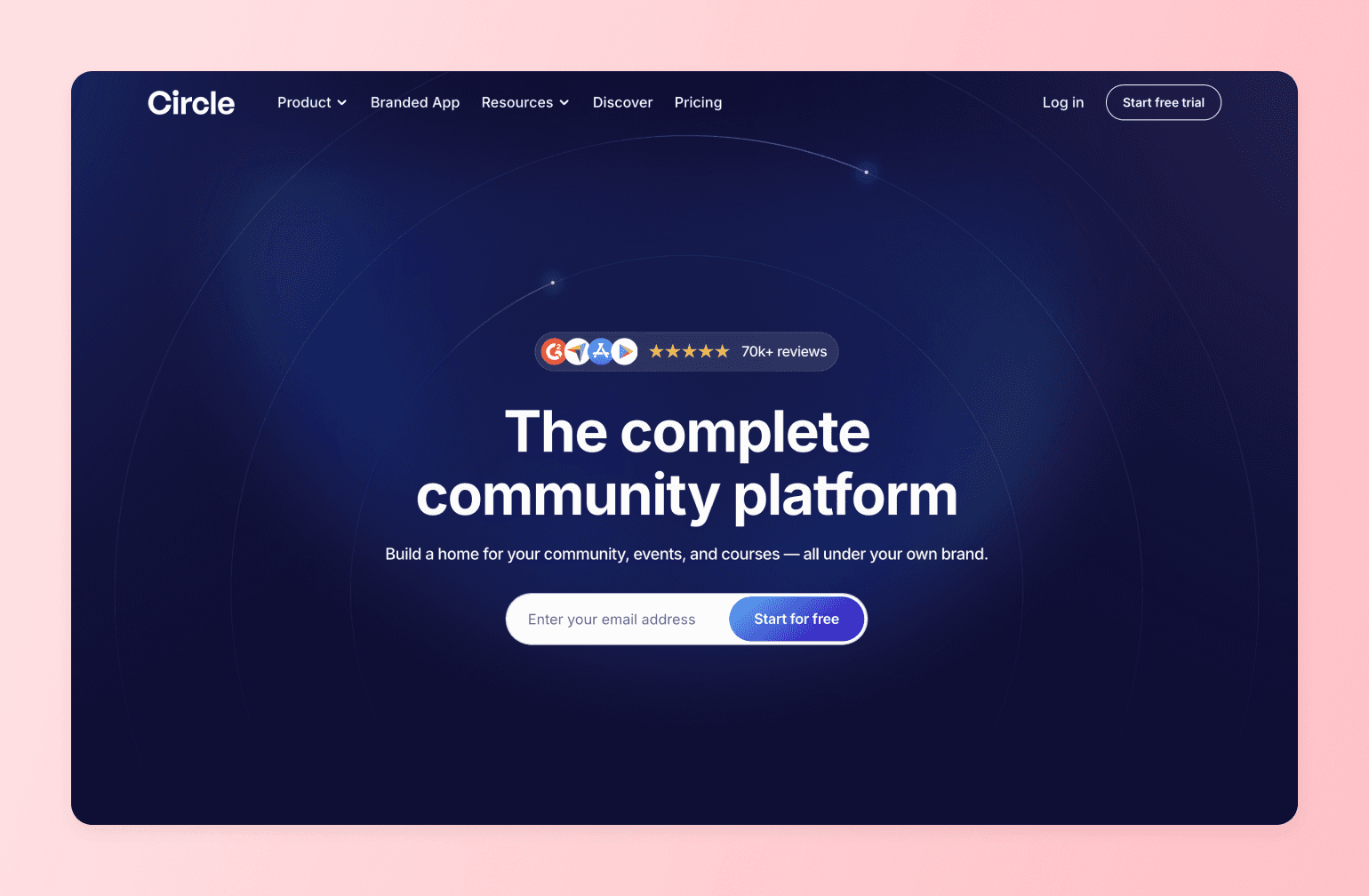
Circle is one of the most complete alternatives to Mighty Networks if you're building a serious community-led business. Like Mighty, it brings together community, courses, and events. But where it really stands out is in how everything connects and scales as your business grows.
With Mighty, you can get up and running quickly. But as your needs evolve, you’ll likely run into limitations around integrations, automation, and customization. Circle is built differently. Instead of patching things together with third-party tools, it gives you a unified system where your community, website, email marketing, and payments all work together out of the box.
Another key difference is product depth. Circle continues to ship new features at a rapid pace—from AI-powered workflows and automation to a full website builder—giving it an edge not only over Mighty but other community platforms out there.
Key features
- Branded community spaces that allow you to organize discussions, chats, events, and resources in a way that’s easy to navigate.
- Live events and streaming that enable you to host workshops, Q&As, and webinars directly inside your community.
- Built-in courses that let you create structured programs with modules, drip content, and cohorts.
- Flexible monetization tools that allow you to sell memberships, subscriptions, and courses.
- Built-in gamification that motivates members with points, levels, leaderboards, and automated rewards tied to real engagement.
- Native community website builder that lets you create fully connected pages, funnels, and member experiences without extra tools.
- AI-powered automation through agents and workflows that reduce manual work by handling onboarding, moderation, and engagement for you.
- Branded experience across web and mobile (via Circle Plus) that gives you full control over your community design, including white-label apps.
- Full-funnel analytics that help you track engagement, retention, and revenue.
- Integrations with third-party tools like Zapier, Google Analytics, and Typeform for seamless workflows.
Pricing
Circle plans start at $89/month, with a 14-day free trial available on all core plans.
Ideal for
Entrepreneurs and creators growing community-based businesses and looking for better ways to engage members, retain them, and generate revenue.
| Pros | Cons |
|---|---|
| All-in-one solution (courses + community + webpages + events + email + automations + payments). | The depth of features can be overwhelming at first—you can build almost anything, but it takes time to explore what’s possible. |
| Intuitive, clean interface that’s easy to customize to your brand. | May be more than needed for very simple, hobby-style communities. |
| Designed to scale with your business long-term. | |
| Strong support ecosystem with an active community and helpful resources. |
Users say
👍🏼 "Circle's UX for community members is simply the best. While other platforms like Kajabi may seem better for online learning, users will interact a lot more on Circle because it's the best interface. We have a branded app through Circle, and we love it. We closely considered Mighty Networks, but are very glad we went with Circle.” - Verified review from G2
🤔 “The pricing options make it difficult for those building a large organization that has a low ticket cost and not a high ticket price.” - Verified review from G2
Circle vs. Mighty: A quick comparison
| Feature | Circle | Mighty Networks |
|---|---|---|
| Website & funnels | Built-in website builder with landing pages and funnels. | Limited; often need external tools for full funnel setup. |
| Email marketing | Native email + automation tied to member behavior. | Basic email features, limited automation. |
| Automation & workflows | Advanced workflows with triggers, logic, and AI support. | Basic automations with limited flexibility. |
| Scalability | Built for long-term growth and complex setups. | Can feel limiting as your business expands. |
I’ve just switched over from using Mighty Networks to host my community, and it’s such a relief to be here in Circle—it’s so simple and clean! I’m trying to help reduce the noise, overwhelm, and distraction in people’s lives. So, how the platform looks and feels is really important to me.
👉 For a detailed breakdown, see how Circle and Mighty stack up.

20K+ digital businesses live on Circle
2. Kajabi — best Mighty Networks alternative for course-first businesses

Kajabi is a strong alternative to Mighty Networks if your business is centered around selling courses and programs rather than building a community-first experience. While Mighty focuses on engagement and interaction, Kajabi is built for funnels, conversions, and structured learning products. If your goal is to turn traffic into revenue through courses and coaching, Kajabi offers more depth on the marketing side
Key features
- Course and coaching program builder with structured lessons.
- Email marketing with automations and segmentation.
- Memberships and subscriptions.
Pricing
Starts at $143/month (billed annually). A 14-day trial available.
Ideal for
Creators and businesses focused on selling courses, coaching, and digital products with built-in marketing tools.
| Pros | Cons |
|---|---|
| Strong marketing and funnel capabilities. | Higher starting price than most tools on the market. |
| Structured product setup makes it easier to package and sell premium offers. | Less suited for member-to-member interaction or organic community engagement. |
| All-in-one system for courses. |
Users say
👍🏼 "Kajabi is a very comprehensive platform providing website design, customer database management, checkout, and email marketing facilities (and more), all in one place.” - Verified review from Trustpilot
🤔 “I started not liking Kajabi because they kept announcing new products that weren't great. They announced new things like a podcast feature and a community area, but they were very basic and not well-built. It seemed like they were trying to do a lot but weren't doing it well. They were things I wouldn't use because Kajabi was like halfway there, but didn't get it right.” - Verified review from G2
Kajabi vs. Circle: See how Kajabi stacks up.
3. Skool — best Mighty alternative for simplicity-focused coaches
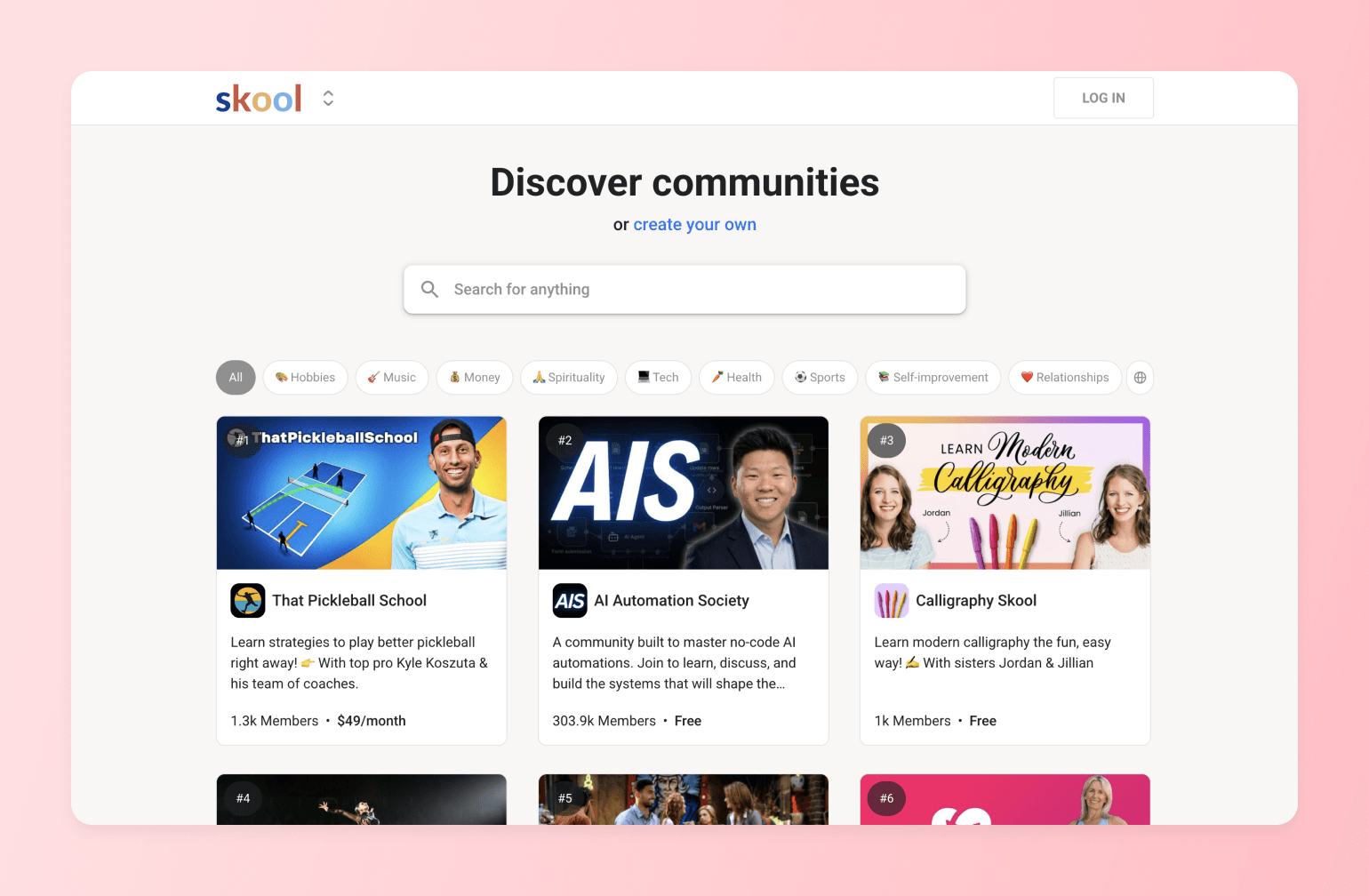
If you’re looking for a cheaper alternative to Mighty, you might want to consider Skool. Skool is built around simplicity. It combines community discussions, courses, and gamification in one place, without the extra layers or complexity. Compared to Mighty, it offers a more streamlined experience, but with fewer customization options and limited flexibility as you grow.
Key features
- Community discussions with posts, comments, and member interaction.
- Course hosting (“classroom”) with videos, resources, and progress tracking.
- Event calendar with scheduling and reminders.
Pricing
Starts at $7.50/month (Hobby plan) + 10% transaction fee, or $82/month + 2.9% transaction fee. Free trial available.
Ideal for
Coaches and creators who want a simple setup without dealing with complex tools or integrations.
| Pros | Cons |
|---|---|
| Simple and easy to use from day one. | Limited customization compared to Mighty Networks. |
| Minimal learning curve for both creators and members. | Fewer integrations and no real extensibility. |
| Good option if you’re early in your community-building journey. |
Skool vs. Circle: See how Skool stacks up.
4. Disciple — best Mighty alternative for white-label branded apps
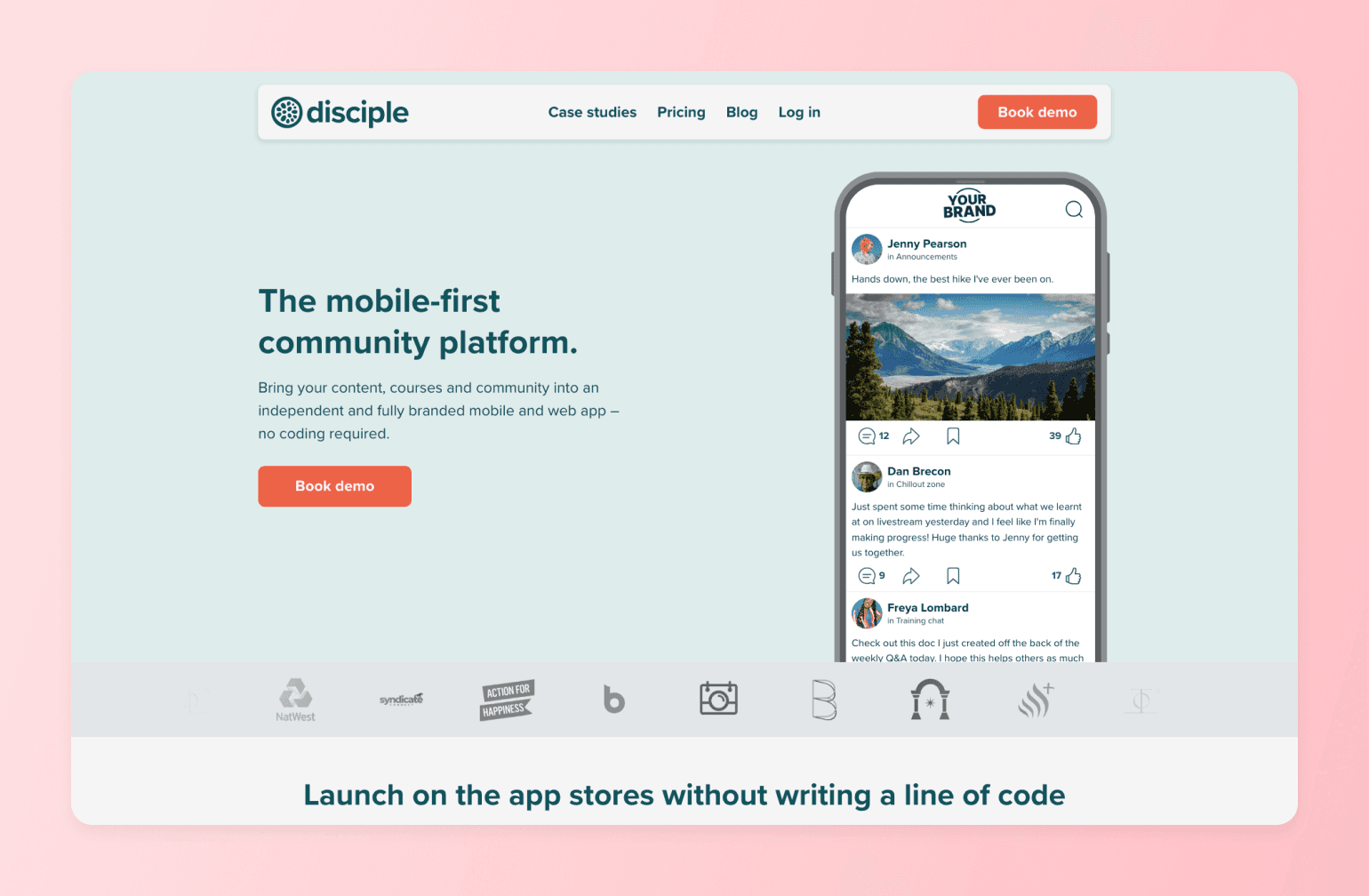
If having your own branded mobile app is a priority, Disciple is a solid option to consider. Unlike Mighty, which offers apps under its own ecosystem only if you upgrade to Mighty Pro, Disciple is built around giving you a fully white-labeled app from the start.
Key features
- Fully branded iOS and Android apps published under your name.
- Community feeds, groups, and member interactions.
- Courses, content libraries, and livestreaming.
- Customizable app layout and navigation.
Pricing
Starts at $399/month (billed annually).
Ideal for
Creators and solopreneurs who want a fully branded mobile app experience.
| Pros | Cons |
|---|---|
| True white-label mobile app with your brand in app stores. | Less flexible outside of the mobile app experience. |
| Designed for app-first community experiences. | On the expensive side. |
| Push notifications and engagement tools. |
Users say
👍🏼 "Disciple is the only tool I have found out there capable of making customers feel at home. The community we created on Disciple has embedded customers in the journey to creating the ultimate experience.” - Verified review from G2
🤔 “It's a little pricey in comparison to other platforms. However, it offers several features that other platforms lack, creating a unique experience.” - Verified review from Capterra
5. Heartbeat — best Mighty alternative for lightweight, modern communities
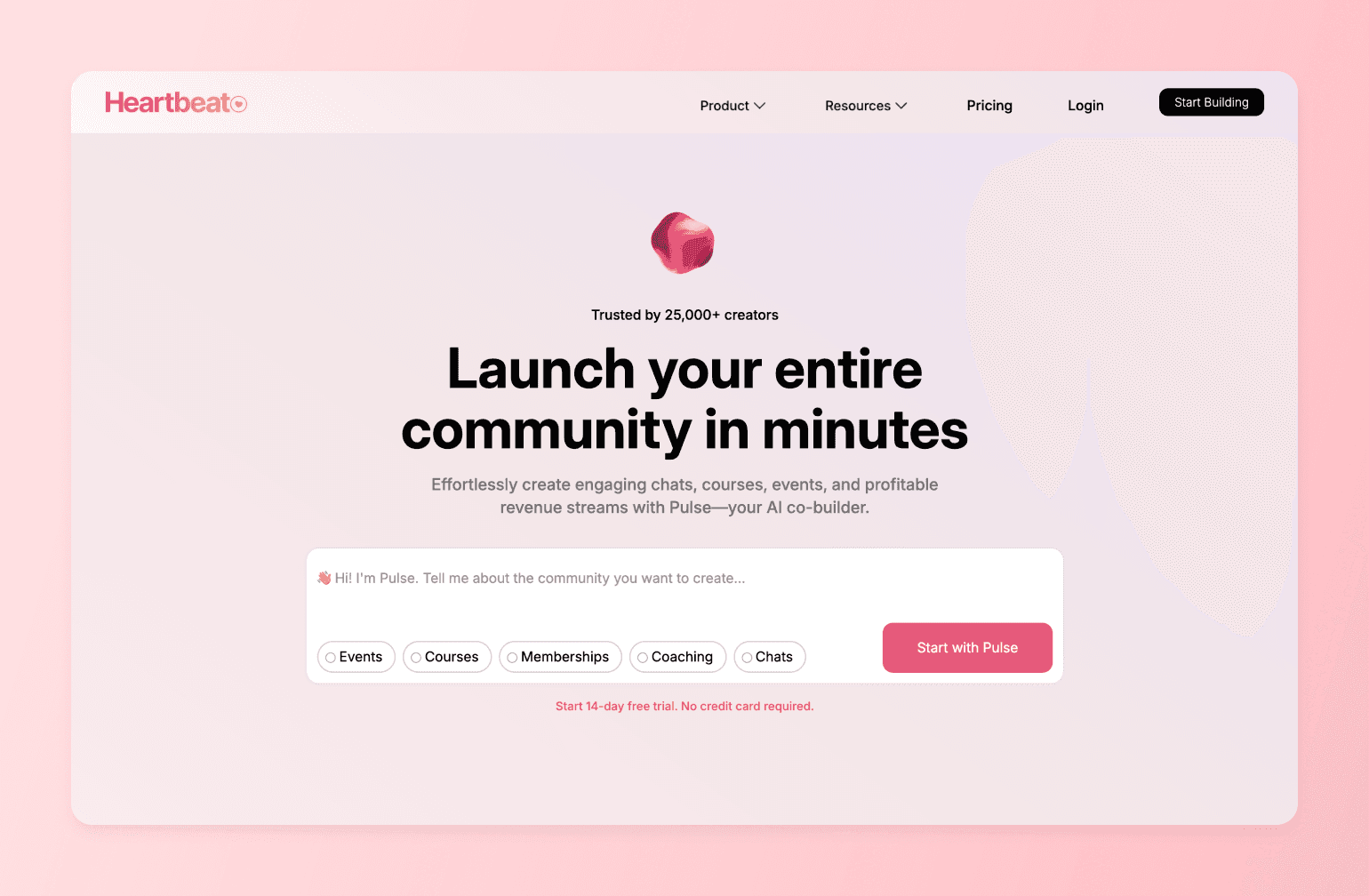
Another platform on our list is Heartbeat. Like Mighty Networks, it combines community, courses, and events in one place, but with a more modern interface and a stronger focus on automation. It’s designed to help you launch quickly and manage everything from one dashboard, without the heavier structure you might find in more established platforms.
Key features
- Community chats, channels, and discussion spaces.
- Courses with drip, cohort-based, and self-paced options.
- Events with ticketing, reminders, and live sessions.
- AI assistant (“Pulse”) to help set up and manage your community.
Pricing
Starts at $40/month (billed annually) + 5% transaction fee.
Ideal for
Creators and community builders who want a modern, flexible platform with built-in automation and faster setup.
| Pros | Cons |
|---|---|
| Clean, modern UX. | Transaction fees can become expensive as you scale. |
| Built-in automation and workflows reduce manual work. | Less depth in certain areas compared to more mature tools. |
| Quick setup with fewer moving parts. |
Users say
👍🏼 "Heartbeat has really evolved into an amazing platform. The team behind it are very responsive, and there are regular live workshops and ways to support Heartbeat community owners. The platform is really user-friendly, and I think the app is more intuitive than most other community platforms.” - Verified review from G2
🤔 “If you value your time or run a professional business—avoid Heartbeat. I spent over two weeks setting up a private community space for licensed professionals, paid for the platform, and still found out critical features either don’t work as promised or are intentionally buried behind misleading design.” - Verified review from G2
6. Bettermode — best Mighty alternative for brand communities
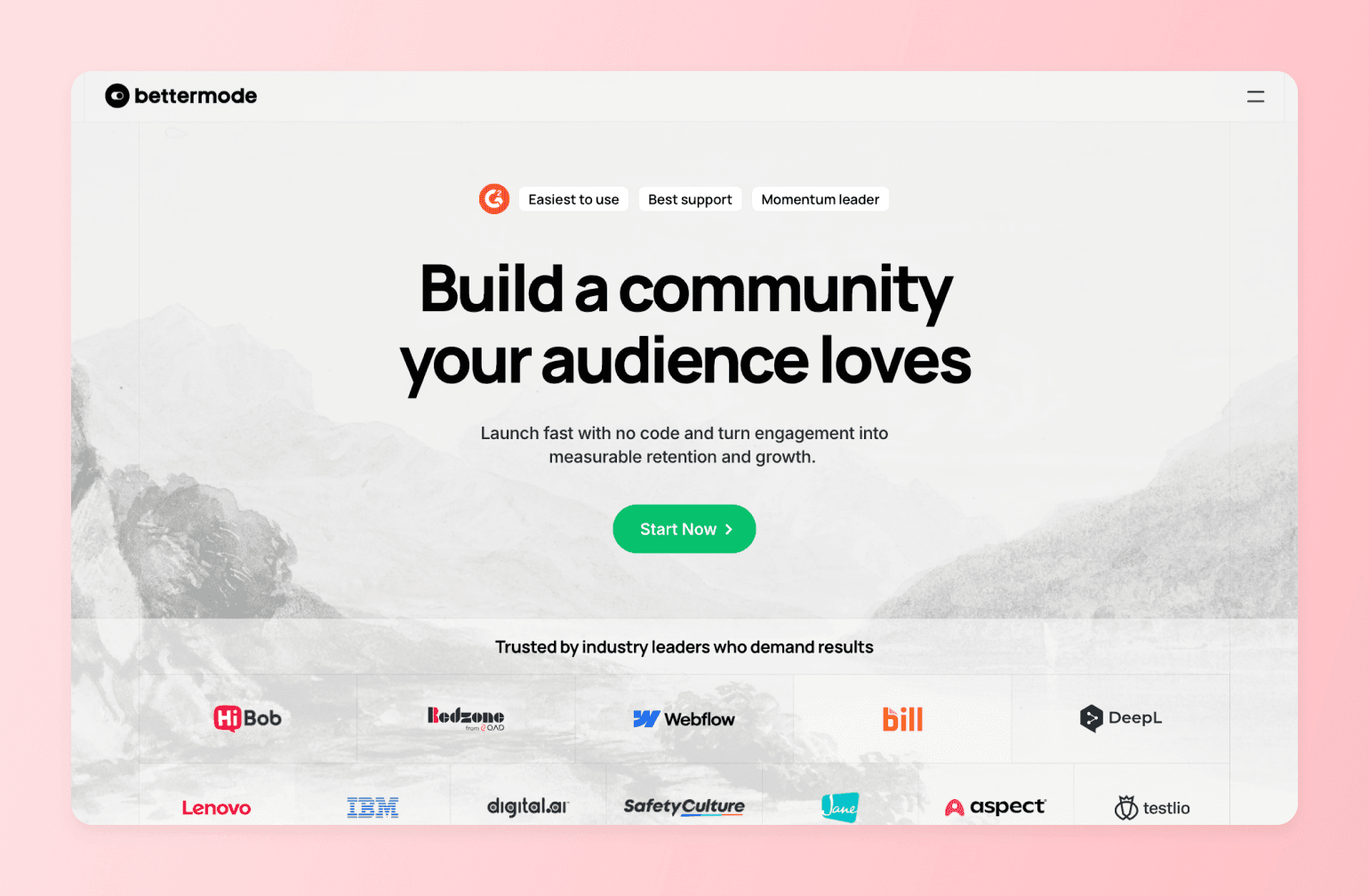
If you're looking to build a customer or brand community, Bettermode is a great option to consider. Like Mighty Networks, it offers discussions, events, and engagement tools, but it’s built more for product-led and support communities than creator businesses.
Key features
- Discussion forums, Q&A, events, and polls.
- Modular community builder with drag-and-drop customization.
- Embeddable widgets and integrations for websites and apps.
- Member profiles, directories, and reputation systems.
Pricing
Starts at $399/month (billed annually).
Ideal for
SaaS companies, product teams, and brands that want to embed a community into their product or customer experience.
| Pros | Cons |
|---|---|
| Highly customizable with flexible layouts and modules. | Not designed for creator monetization (courses, memberships). |
| Deep integrations with third-party tools and platforms. | Requires more setup and strategy to implement well. |
| Built for structured engagement like support, feedback, and ideation. |
Users say
👍🏼 "It's easy to set up and to maintain, anyone can get started without code. It took a while for me to understand the concept of building CMSs that are then applied to spaces/pages, but after I figured it out, it worked like a charm. Overall, there's minimal time spent on setting up the platform, so you can spend more time on creating content.” - Verified review from G2
🤔 “I wish there were a way to create an assignment for participants that they could complete privately, maybe even be graded. Polls would also be fun! A way to view the site's version history would be great for editing, as it would allow you to see what you had and get things back.” - Verified review from G2
7. Discord — best free Mighty alternative for casual communities
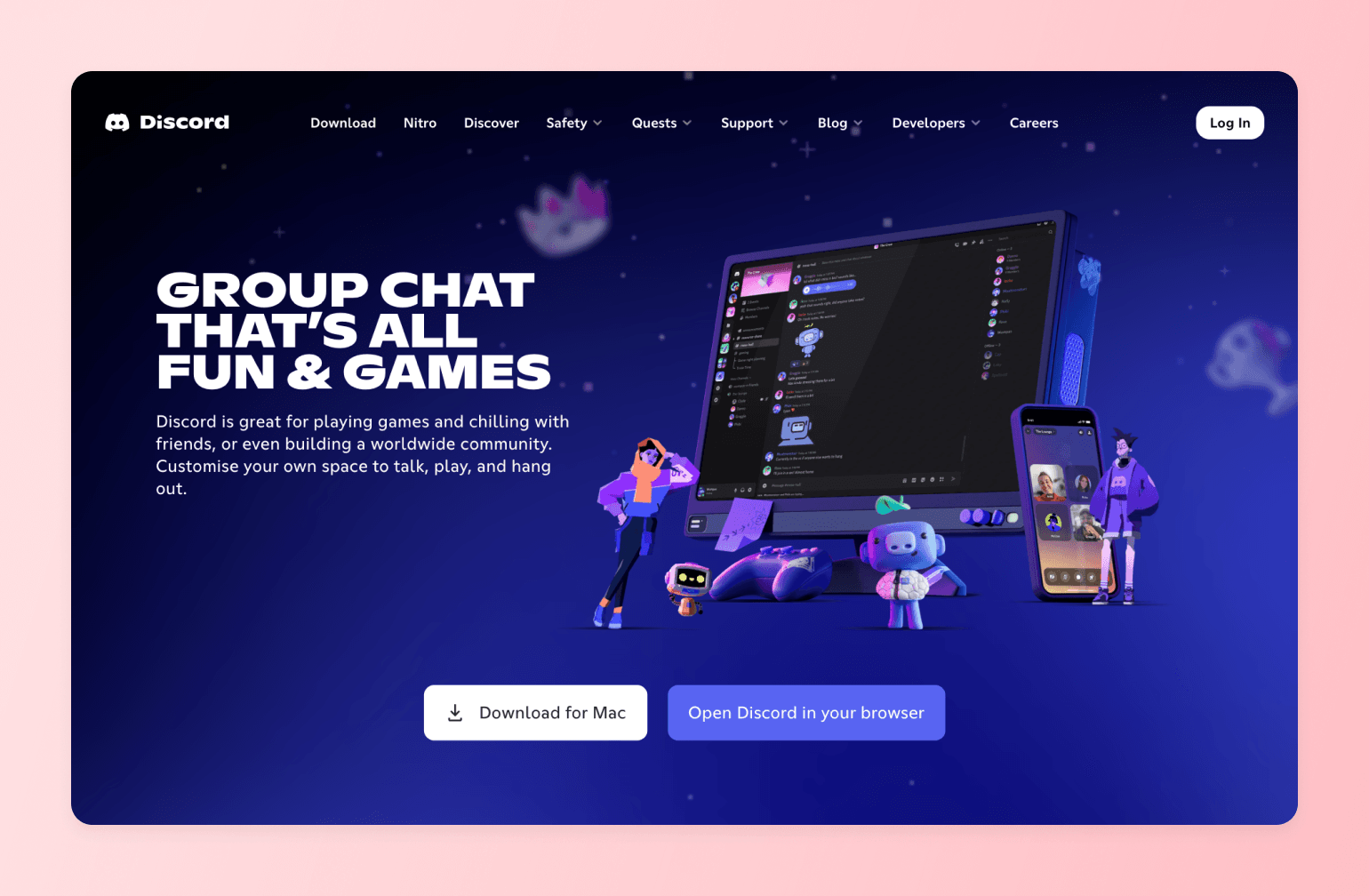
Tight on budget and finding Mighty Networks too expensive? Discord is the go-to free alternative. It’s built for real-time interaction, making it a great fit for casual communities and active conversations. But compared to Mighty, you won’t be able to build courses or monetize your community. It’s essentially a group chat app, so if you don’t need anything more advanced, it can still work well.
Key features
- Text and voice channels for real-time conversations.
- Roles and permissions for managing members.
- Voice rooms, video calls, and live streaming.
Pricing
Free to use, with optional upgrade to Nitro plan, which offers custom emojis, larger uploads, HD streaming, and profile customization.
Ideal for
Gaming, hobby, or interest-based communities.
| Pros | Cons |
|---|---|
| Excellent for real-time interaction with voice, chat, and live conversations. | No built-in monetization, courses, or structured content. |
| Flexible with bots and integrations. | Limited branding and customization. |
| Familiar platform for many users, especially younger or tech-savvy audiences. | Requires external tools to run a business. |
Users say
👍🏼 "I love the intuitive and user-friendly interface — it feels modern, fast, and responsive. Notifications, reactions, and channel management are all well-designed and make staying connected simple.” - Verified review from Capterra
🤔 “Unstable on mobile, bad customer service — you only get a bot response and the majority of the time it doesn't understand what you're talking about.” - Verified review from Trustpilot
🧐 Curious what else is out there? See our full breakdown of Discord alternatives.
8. Hivebrite — best Mighty alternative for alumni and association networks
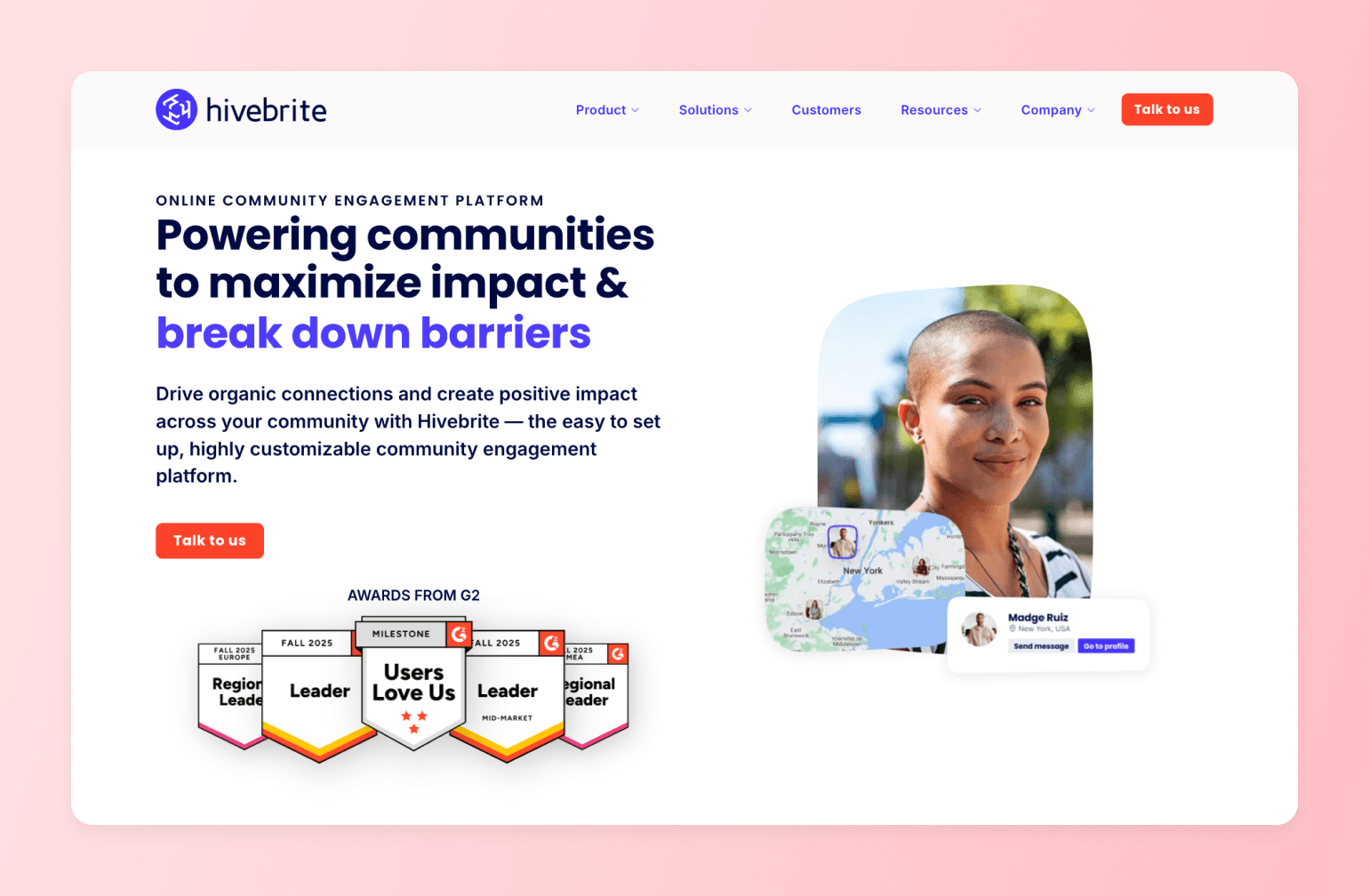
If you're building a more formal, organization-driven community, Hivebrite is a strong contender. It offers deeper customization, structured member management, and features like mentoring, fundraising, and sub-communities. That said, it’s less creator-focused and doesn’t feel as simple or fast to launch, especially if you're running courses or a community-led business.
Key features
- Highly customizable community hub with branded web and mobile app.
- Member directory, segmentation, and advanced permissions.
- Events, messaging, and content management.
Pricing
Custom pricing available upon request.
Ideal for
Associations, nonprofits, alumni networks, and enterprise communities.
| Pros | Cons |
|---|---|
| Deep customization for complex community structures. | Pricing isn’t transparent. |
| Built-in tools for mentoring, fundraising, and large-scale engagement. | Less suited for creators selling courses or digital products. |
| Strong member management and segmentation capabilities. | UI and experience can feel more “corporate” than community-first. |
💬 Users say
👍🏼 "Hivebrite offers powerful built-in modules that make it easy to create a highly functional community with advanced features. For an off-the-shelf solution, its level of customization is impressive and highly appealing.” - Verified review from G2
🤔 “It’s a powerful platform, but it can feel complex at first—the setup and customization take time, and some features require a learning curve to use effectively.” - Verified review from G2
Which Mighty Networks alternative is right for you?
Choosing the right platform comes down to what you’re optimizing for: simplicity, cost, or long-term growth. Most tools can get you started, but not all of them will scale with you.
- Want an all-in-one platform that scales with you into the future? → Circle
- Running a course-first business? → Kajabi
- Looking for something simple and affordable? → Skool
- Need a free, chat-based community? → Discord
- Building an enterprise or customer community? → Hivebrite/Bettermode
- Focused on mobile-first experiences? → Disciple/Heartbeat
If you’re already thinking beyond “just a community” and toward building a real business, Circle is designed to support that next stage, giving you the flexibility, integrations, and infrastructure to grow without hitting limits.
👉 Start your free 14-day trial and see what a truly scalable community platform feels like.
FAQs
What's better than Mighty Networks?
The right answer depends on what you're building. For scalable community businesses like coaches, course creators, and membership operators generating real revenue, Circle offers more infrastructure, including an open API, native automation, full-funnel analytics, and a built-in website builder that Mighty doesn't include.
For course-first businesses that need built-in email marketing and funnels, Kajabi is a strong choice. For coaches who want the simplest possible setup without much configuration, Skool is worth considering.
Mighty Networks works best for social-first communities where engagement through feeds and group chat is the main focus. But once you need more extensibility, reliable branded apps, or deeper course functionality, you may start to hit its limits.
Is Circle better than Mighty Networks?
For serious community businesses, yes. But the honest answer depends on your use case. Mighty Networks is a capable platform for community-first creators who don't need developer tools, advanced automation, or a full LMS.
Where Circle consistently outperforms it:
- API access and integrations (Mighty gates API access to the Scale plan at $179/month),
- Course depth,
- Native analytics,
- AI tooling, and
- Product velocity—30+ releases per quarter versus a slower, less transparent roadmap.
Both platforms are comparably priced and charge similar transaction fees, so the decision comes down to what you're actually getting for that investment. For a full side-by-side breakdown, see Circle vs. Mighty Networks.
How much does Mighty Networks really cost?
Mighty Networks isn't exactly cheap, especially once you move beyond their entry-level plan at $79/month. More advanced plans quickly jump to $179/month and $354/month, which you'll likely need as soon as you want more automation, integrations, or support.
On top of that, Mighty takes a cut of your revenue (0.5% to 2%) on every payment, plus standard payment processing fees. That might not seem like much early on, but it becomes noticeable as you scale.
And if you want things like a fully branded mobile app, you'll need Mighty Pro, which doesn't list pricing publicly, so it's harder to plan ahead.
Does Mighty Networks have an API?
Yes, but it's limited and not available on all plans. Mighty Networks offers an Admin API (currently in alpha), but you'll only get access to it on the Scale plan and above. If you're on the entry-level Launch plan, your main option is using Zapier for basic integrations.
Even with API access, it's not as flexible or mature as what you'd expect from more developer-friendly platforms. It's mainly designed for admin-level actions (like managing members or data), rather than enabling deeply custom workflows or fully connected systems.
Circle offers API access across its plans with higher included request limits, 42+ Zapier triggers and actions, an Admin API, and custom SSO—without gating basic developer access behind the highest tier. For community operators who need to connect their platform to a CRM, automate member workflows, or build custom integrations, the difference isn't just about access—it's about how much of your operational infrastructure you can actually build on the platform you're paying for.
Can I migrate from Mighty Networks to Circle?
Absolutely! Circle offers a free concierge migration service that allows you to move your community without rebuilding everything from scratch. You simply share your current setup, review the migration plan with their team, and then they take care of the transition for you.
They can migrate key parts of your business, including courses, payments, and email systems, so your members, subscriptions, and automations come with you.
Is Mighty Networks good for courses?
Mighty Networks is good for basic, community-driven courses, especially if you want to combine lessons with discussions, events, and member interaction. It supports courses starting on the $79/month plan, and you can run different formats like self-paced content, cohort-based programs, or live courses tied to a community.
However, it starts to show limitations as your course offering becomes more advanced. Features like quizzes and assessments are fairly basic, there are no native completion certificates, and the learning experience itself can feel less polished (for example, lessons opening in pop-ups rather than a full-screen flow). Drip content is available, but scheduling flexibility is limited compared to dedicated course platforms. Overall, Mighty works best when courses are part of a broader community experience, but it's less suited for creators building a deeply structured or scalable course business.
Does Mighty Networks work for large organizations?
Mighty Networks can work for larger communities, but it's not built with enterprise-level needs in mind. Many important features, such as API access, advanced automations, higher admin limits, SSO, and fully branded apps, are locked behind higher-tier plans or custom pricing, which are all essential for more complex setups. That can make it harder to plan, customize, and scale efficiently compared to platforms that offer more flexibility and control from earlier stages.

Head of Performance Marketing
Marcus is the Head of Performance Marketing at Circle—and Circle's main demand gen nerd.