TL;DR
- Bettermode is a customer-community layer for a product you already sell. It has no native payments, no course builder, and no native mobile app on any plan, and its pricing goes from $149 to $1,500 with nothing in between.
- Higher Logic Vanilla, Khoros, and Gainsight do the same job Bettermode does: support and retention for a business that's already running.
- If you want to build and monetize a community business, Circle puts community, courses, events, email, and payments on one member record. Skool, Hivebrite, and Discourse cover narrower cases.
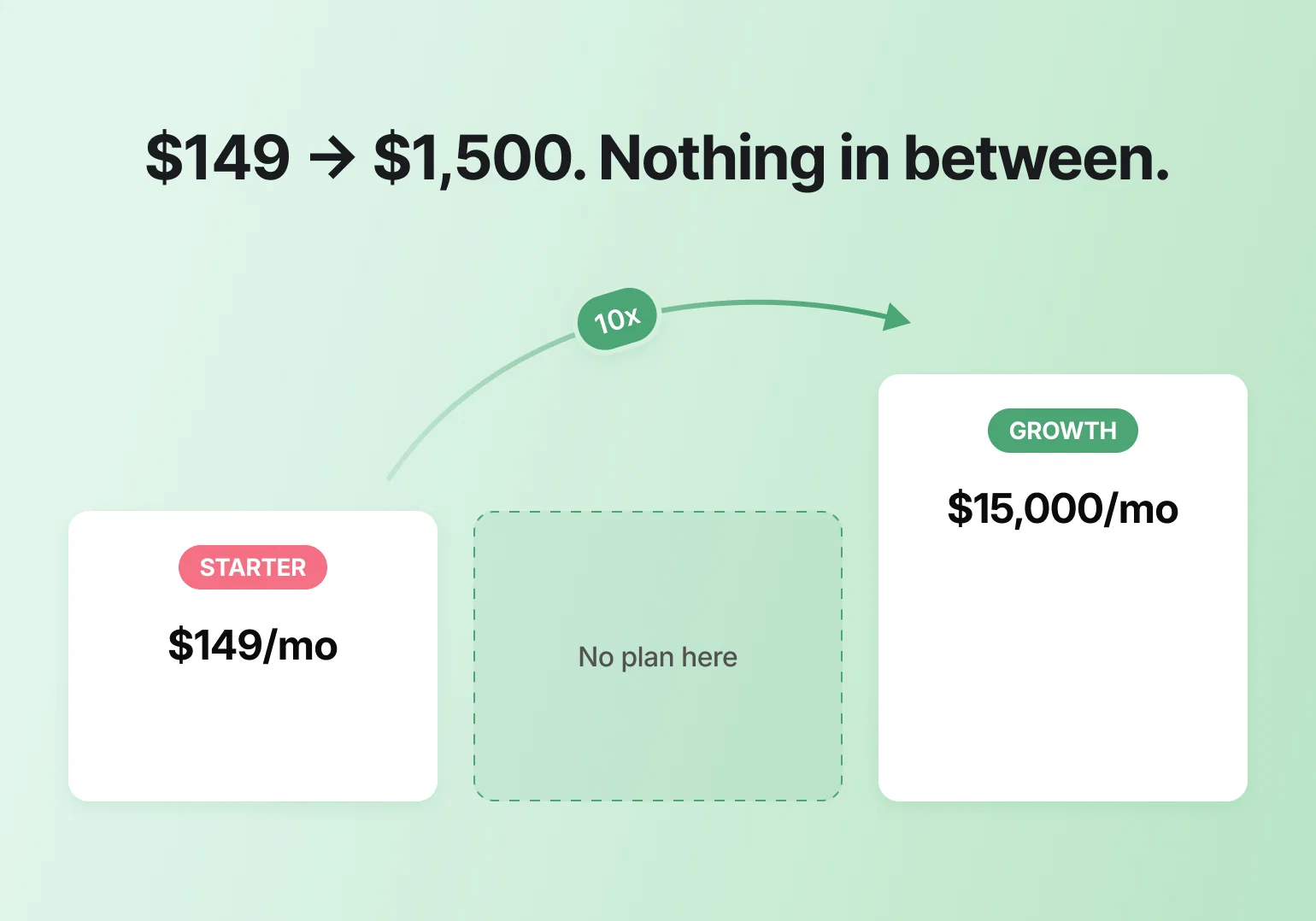
Bettermode's pricing has a hole in the middle. Starter is $149 a month and caps at 10,000 members. The next tier, Growth, is $1,500, and it's the first plan with full API and webhooks, a sandbox environment, sender email on your own domain, and OAuth2. There's no tier in between. That's a tenfold jump in one tier.
Maybe you're already on Bettermode and just hit that wall. Or maybe you're still comparing it against other options and want to know what you'd be signing up for. Either way, the price is only half of it. Bettermode is built as a customer community: a support, feedback, and knowledge layer added to a product you already sell. It does that job well. What it doesn't do, on any plan, is take payments, host courses, or ship a native mobile app. If your goal is to build and monetize a community, that's a second platform no matter which tier you pick.
That difference is how this list is organized. The first group is for teams building a community as the business: coaches, educators, membership operators, and SaaS teams that want members to pay, learn, and stay. The second group is for support and customer-success teams that measure a community by tickets deflected and customers retained. Decide which job you're hiring for, then read that group.
Why teams are leaving Bettermode
We asked our sales team what prospects say when they start looking for a Bettermode alternative. Four reasons come up again and again:
- The pricing floor moved. Bettermode retired its free plan in March 2026 and restructured its tiers. Starter runs $149/month and caps at 10,000 members. Full API and webhooks, a sandbox environment, sender email on your own domain, Ask AI, and OAuth2 all sit on Growth at $1,500/month. Nothing sits between the two.
- The feature ceiling is real. There's no native live streaming, and mobile is a responsive web app with notifications rather than a native iOS or Android app under your brand. Gamification tops out at a basic leaderboard. Automation depends on Zapier instead of anything native, and events are RSVP-only with no hosting built in.
- There's no path to monetization. Bettermode doesn't process payments on any plan, so there are no paywalls and no membership tiers. Teams that want to charge for access have to add a separate checkout entirely.
- Support complaints stack up. Capterra reviewers report slow ticket pickup and sitemap errors left unresolved for months. Buyers describe a platform that still has the rough edges of a newer entrant.
Here's how the three Bettermode tiers compare:
| Plan | Price | Member cap | Full API + webhooks | Sandbox | Own-domain sender email | OAuth2 | Ask AI |
|---|---|---|---|---|---|---|---|
| Starter | $149/mo, billed annually | 10,000 | Limited | No | No | No | No |
| Growth | $1,500/mo, billed annually | 25,000 | Yes | Yes | Yes | Yes | Yes |
| Premium | Sales-quoted | 100,000+ | Yes | Yes | Yes | Yes | Yes |
None of this means Bettermode is a bad product. It's good at what it's built for: case deflection and community-as-support-channel for a B2B SaaS team. It just means the buyers hitting this list are usually looking for something Bettermode was never designed to be.
Here are the seven platforms worth looking at, what each does well, where each falls short, and which one fits the way you actually want to build.
The 7 Bettermode alternatives at a glance
Group 1: Platforms to build a community business on
| Platform | Best fit | Native courses + payments | White-label / branded app | AI tools | Starting price |
|---|---|---|---|---|---|
| Circle | Creators, coaches, and community businesses that want one platform | Both, on every plan | Native iOS/Android app on every plan; Circle branding removed on Business; custom branded app on Circle Plus | Circle AI (all paid plans), AI Agents (Scale and up) | $89/mo, billed annually |
| Skool | Simple, gamified paid cohorts | Both | None | None documented | $9/mo Hobby; $99/mo Pro |
| Hivebrite | Alumni networks, associations, nonprofits | Memberships and fundraising; no full LMS | Branded app included (thinner than web) | None documented | $895/mo |
| Discourse | Public, searchable technical forums | No courses; Stripe subscriptions grant group access only | Full control when self-hosted | AI summaries, AI Bot, spam detection | Free (self-host or hosted Free tier); $100/mo Pro |
Group 2: Customer-community platforms for support and retention
| Platform | Best fit | Native courses + payments | White-label / branded app | AI tools | Starting price |
|---|---|---|---|---|---|
| Higher Logic Vanilla | Enterprise customer-support communities | Neither | No branded apps | AI Search Assistant, MCP Server (beta) | Sales-quoted |
| Khoros Communities | Enterprise case deflection at scale | Neither | No | AI-native moderation | Sales-quoted |
| Gainsight Customer Communities | Teams measuring community by retention | Neither | No | AI moderation, answer generation, translation | Sales-quoted |
Group 1: Platforms to build a community business on
These platforms are for teams building a community around a brand or business. The question here is what each one does once members arrive: charge them, teach them, keep them.
1. Circle: best all-in-one platform for building a digital business around your community
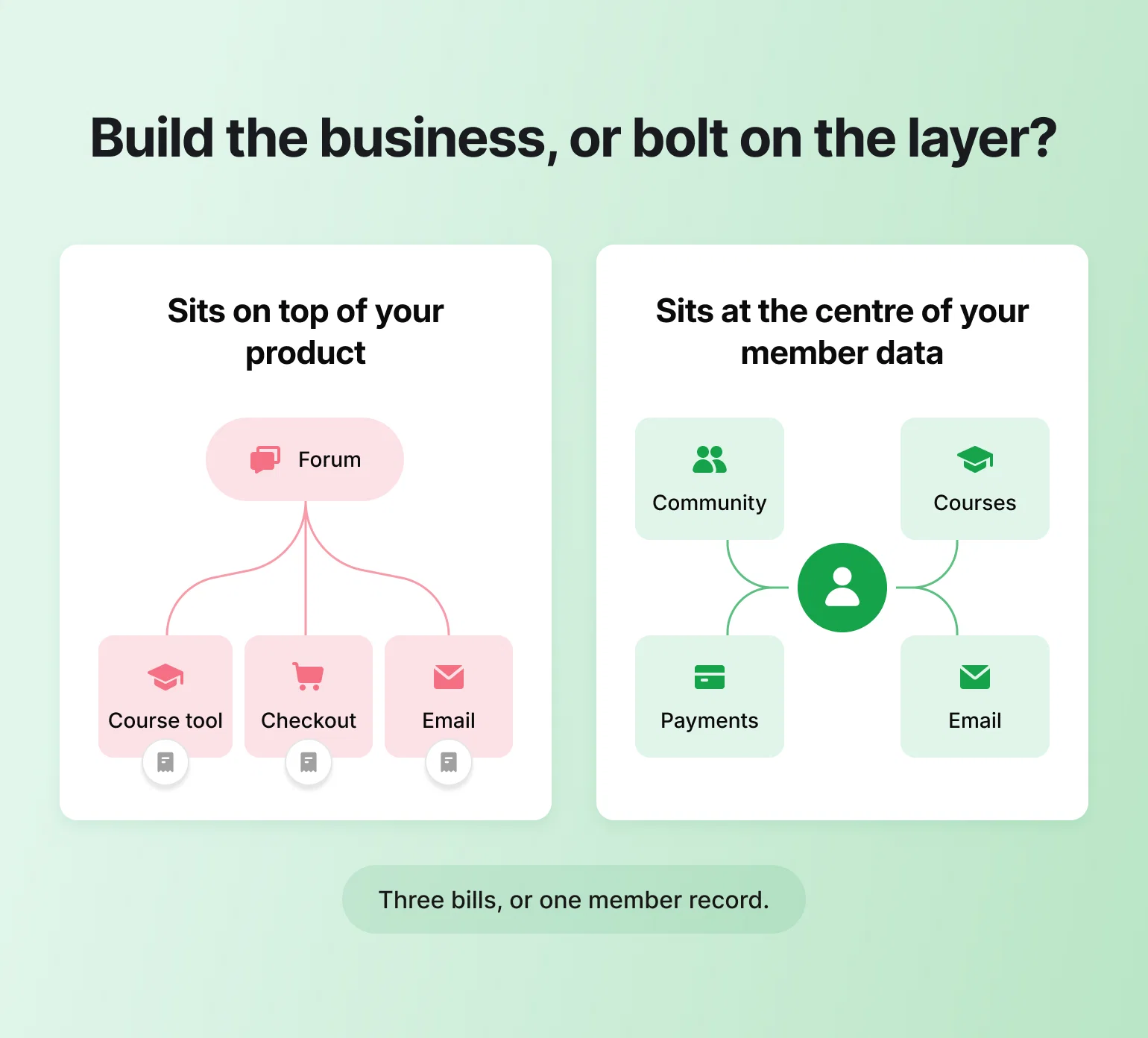
Circle is the modern platform for digital businesses, with community as the connective tissue. Courses, payments, email, events, and a website are built in, not added on. Because everything shares one member record, a new member joining a Space or replying in a discussion can trigger the next step automatically. There's no Zapier hop between tools, and a purchase happens inside the community instead of on a separate cart you reconcile later. Think of Circle as the center of gravity for the business: not every tool has to disappear, but the more of your audience, products, and data run through it, the easier the whole business is to see and grow.
If the worry is whether one platform can carry real scale, the Codecademy story is the counterexample. After evaluating more than 12 tools, it replaced five platforms with Circle and now runs nearly 100,000 members in one place, with 82% of learners reaching their goals.
Want the side-by-side? Our Circle vs Bettermode comparison breaks down the difference between adding a community layer to your stack and running more of your business in one place.
Best for: Coaches, educators, and community businesses selling memberships and courses who want community, payments, email, and a branded app in one place instead of four separate tools.
Pricing: Plans start at $89/month, flat regardless of member count.
- Professional, $89/mo. 2% transaction fee on top of Stripe.
- Business, $199/mo. 1% fee, Workflows, API access, Circle MCP, branded email notifications, and Circle branding removed.
- Scale, $419/mo. 1% fee, unlimited Workflows, AI Agents, and more Circle AI credits.
- Circle Plus, custom. 0.5% fee, a custom branded iOS/Android app, and custom SSO.
Transaction fees drop at each tier, so the true monthly cost depends on how much you process.
Why and where Circle wins
Bettermode is built to sit on top of a product you already sell. Circle is built to be the place you run the business, so the differences show up wherever money, members, and data meet.
Payments and paywalls
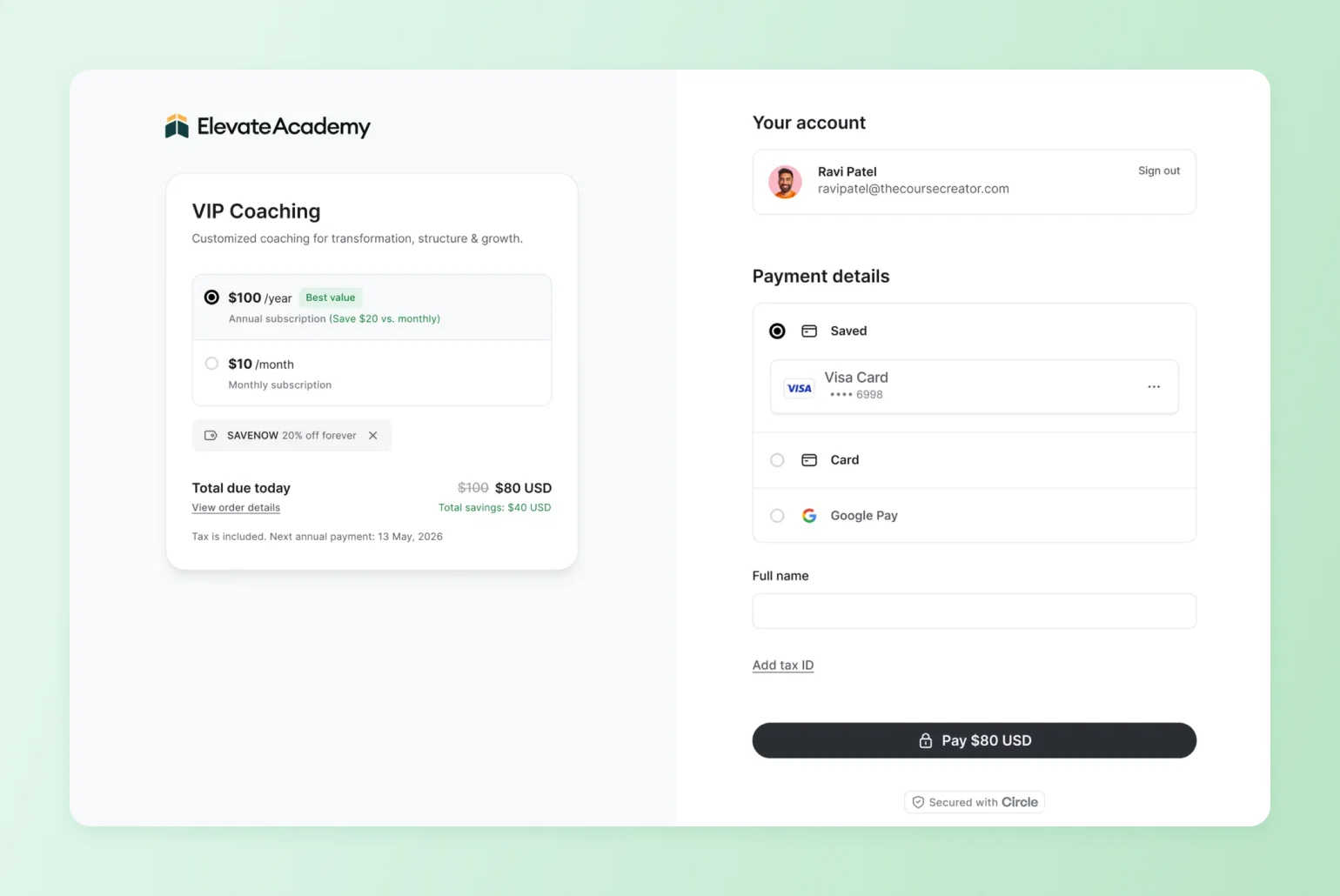
Bettermode has no native payment processing, no paywalls, no checkout flow, and no membership tiers. On Circle, payments run through Stripe and cover one-time purchases, memberships, recurring subscriptions, free trials, installments, Buy Now Pay Later, and six currencies (AUD, CAD, EUR, GBP, BRL, USD). The purchase happens inside the community, not on a separate cart you reconcile later.
Courses
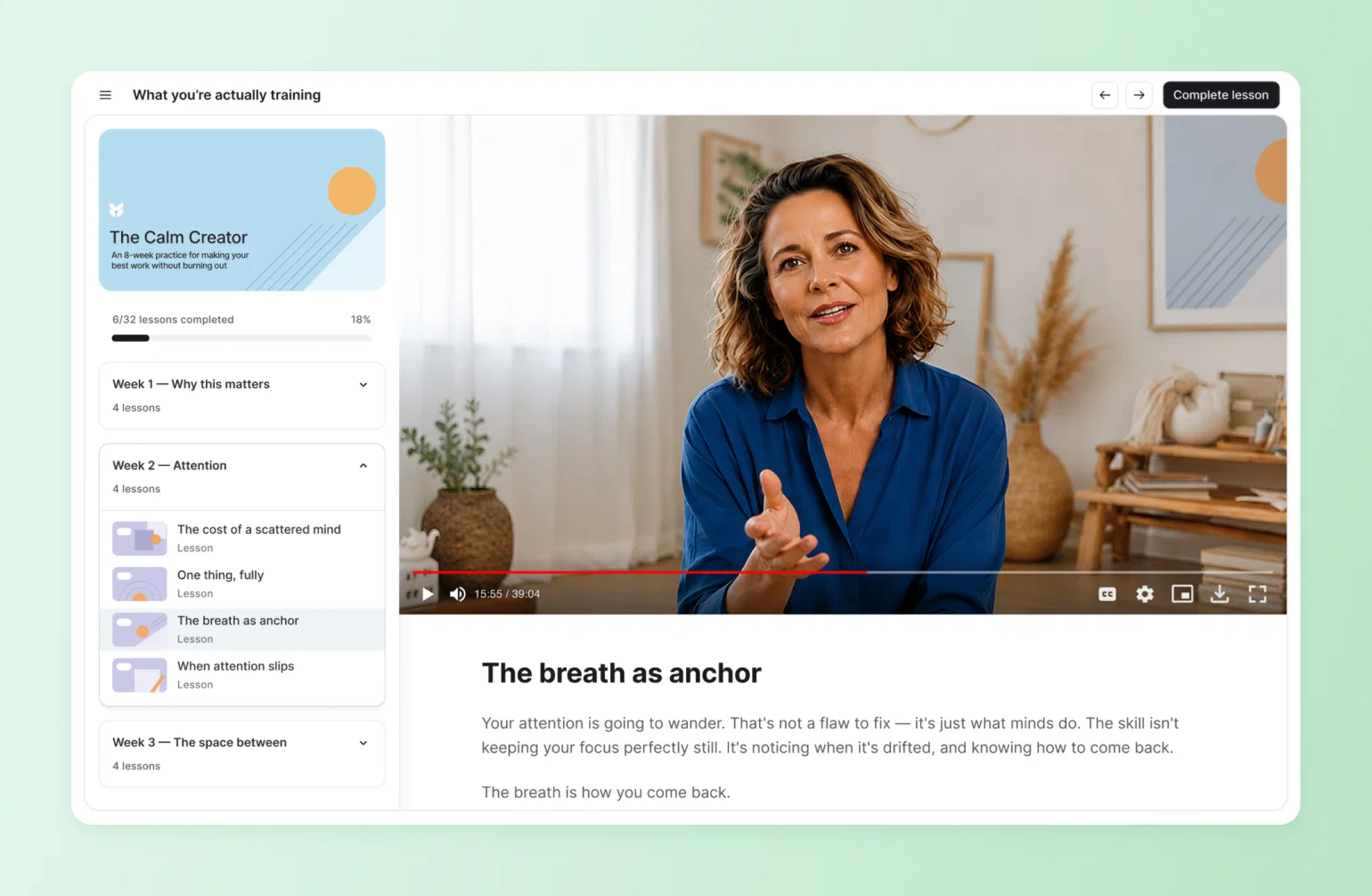
Courses are included on every paid plan, with modules, lessons, drip schedules, quizzes, certificates, and completion tracking. Members don't need a second login, and a lesson they finish can feed a discussion or trigger the next step.
One member record for email and data
Email broadcasts and sequences, a website builder, a unified CRM, and Circle Workflows all read the same member record. A segment can act on course progress or event attendance, not just email opens. The relationship doesn't reset when someone moves from subscriber to attendee, student, member, or customer. Segmentation and automation act on the whole member, not just whether they opened an email.
Mobile and embeds
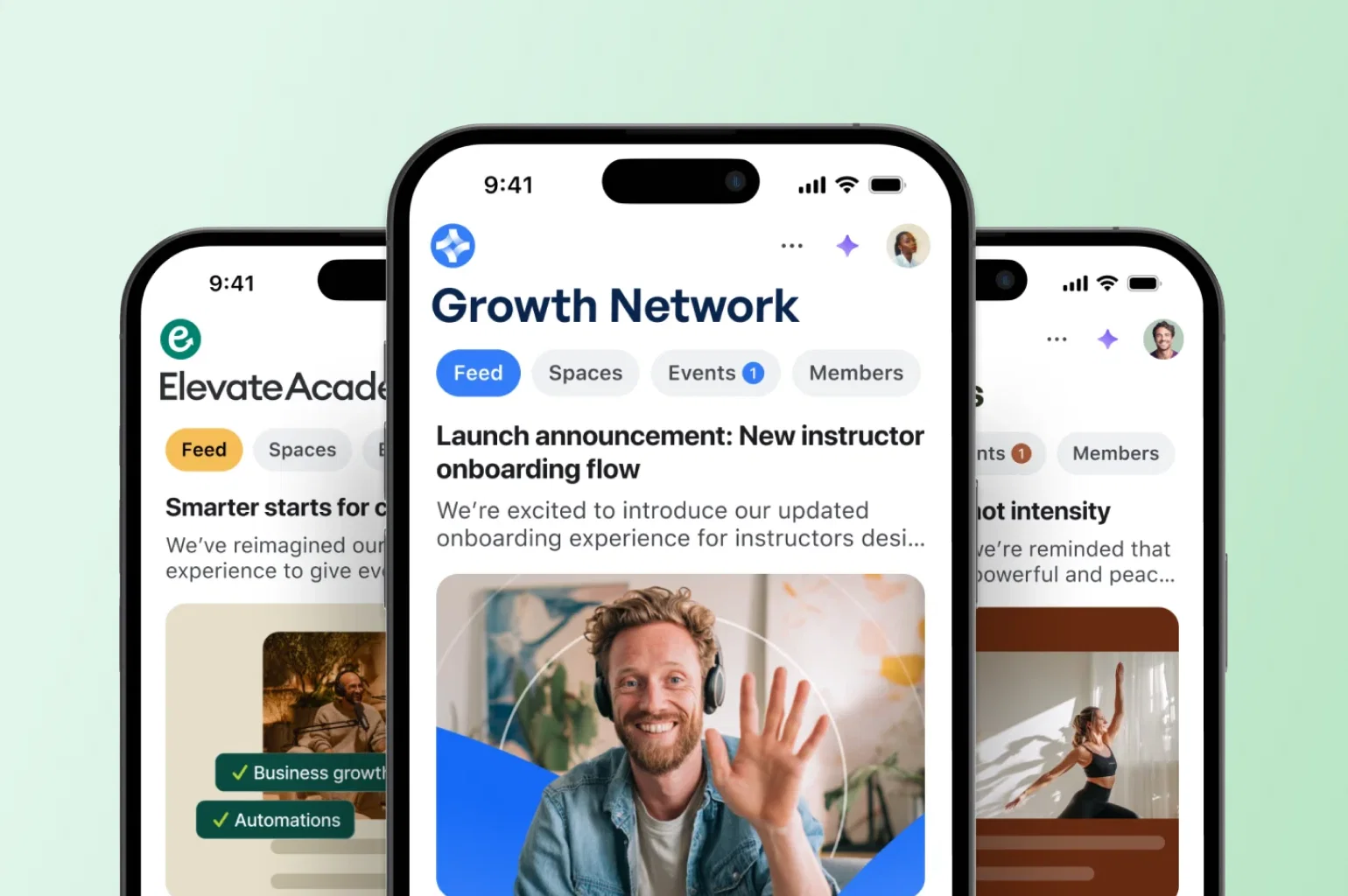
Bettermode gives you a responsive web app with notifications and an embed you can place inside your own website or app. Circle includes native iOS and Android apps with push notifications on every plan, and its Headless APIs let you embed community into your own product too. On Circle Plus, we'll also build a custom branded app under your own name, published to the app stores.
API, automation, and branding without a $1,500 tier
On Bettermode, full API and webhooks, a sandbox, own-domain sender email, and OAuth2 all sit on Growth at $1,500/month. On Circle, the Admin API, Headless Member API, Circle MCP, Workflows, branded email notifications, and Circle branding removal all land on Business at $199/month.
AI
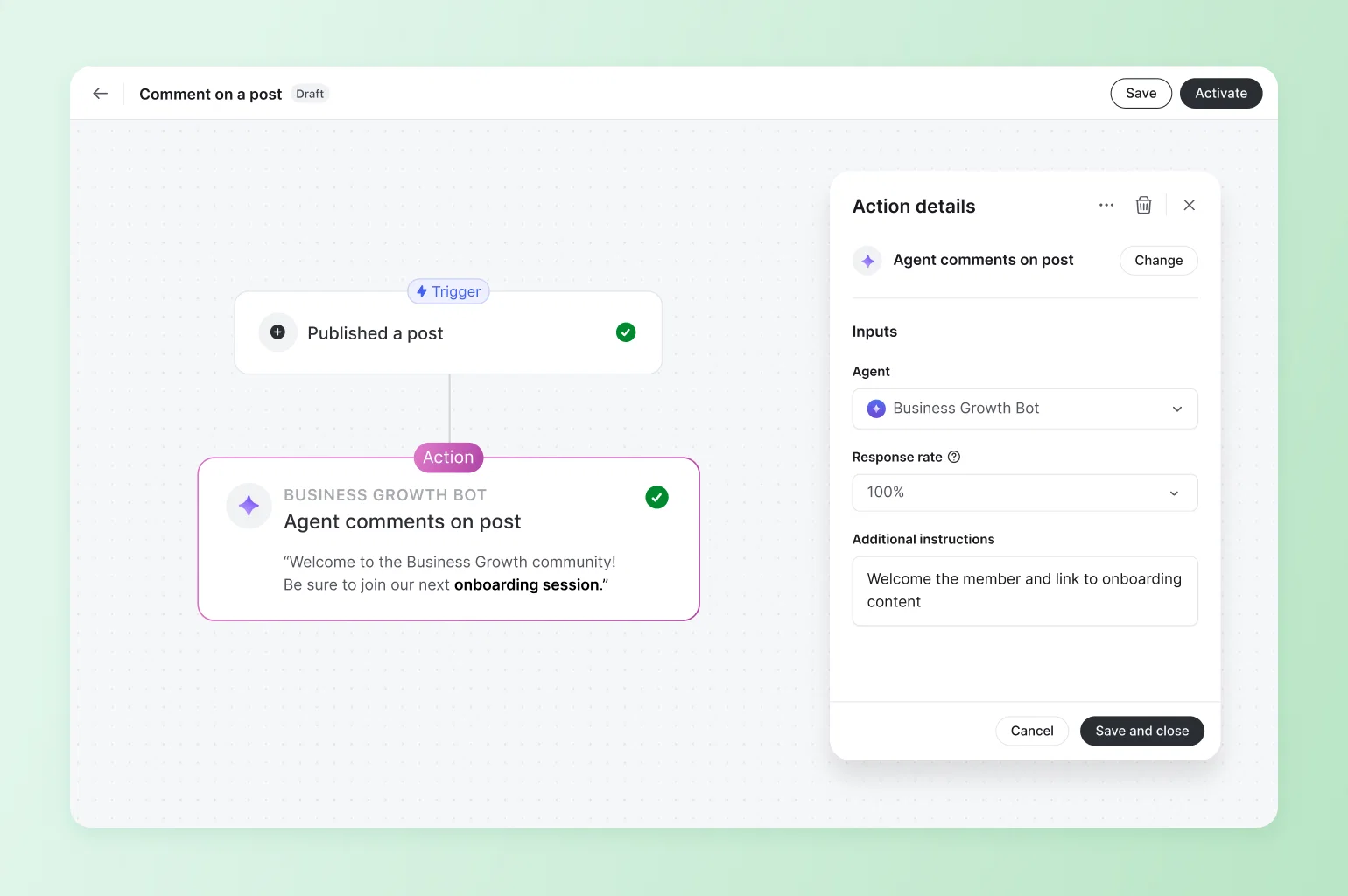
Circle AI is included on all paid plans. Describe the business in plain language and it proposes a structure, then builds it with your approval. It can also take action across Spaces, courses, paywalls, email, and workflows rather than just generating text. AI Agents are member-facing, trained on your Spaces and courses, and start on Scale.
Migration
Switching platforms is usually the hard part, so Circle handles the receiving end. Course migration is free for customers on Business annual and Circle Plus plans, and concierge payment and email migrations are available across all plans. Most migrations take one to two weeks.
Where Circle falls short
- Key features start above the entry plan. Workflows, the Admin and Headless Member APIs, and branding removal start on Business ($199/mo), not the $89 plan. AI Agents start on Scale.
- Predictive analytics aren't built in. Teams that lean heavily on predictive analytics may still want a dedicated BI tool alongside.
- More setup than a bare forum. Circle bundles community, courses, payments, and email in one place. Expect a little more configuration up front. That's the trade for not stitching four tools together.
Where Bettermode is still the better fit
If the job is peer-to-peer support inside a SaaS product you already sell, Bettermode was built for that. Circle isn't a ticketing system and won't replace a help desk queue.

Skip the $1,500 wall.
2. Skool: best for simple, gamified paid cohorts
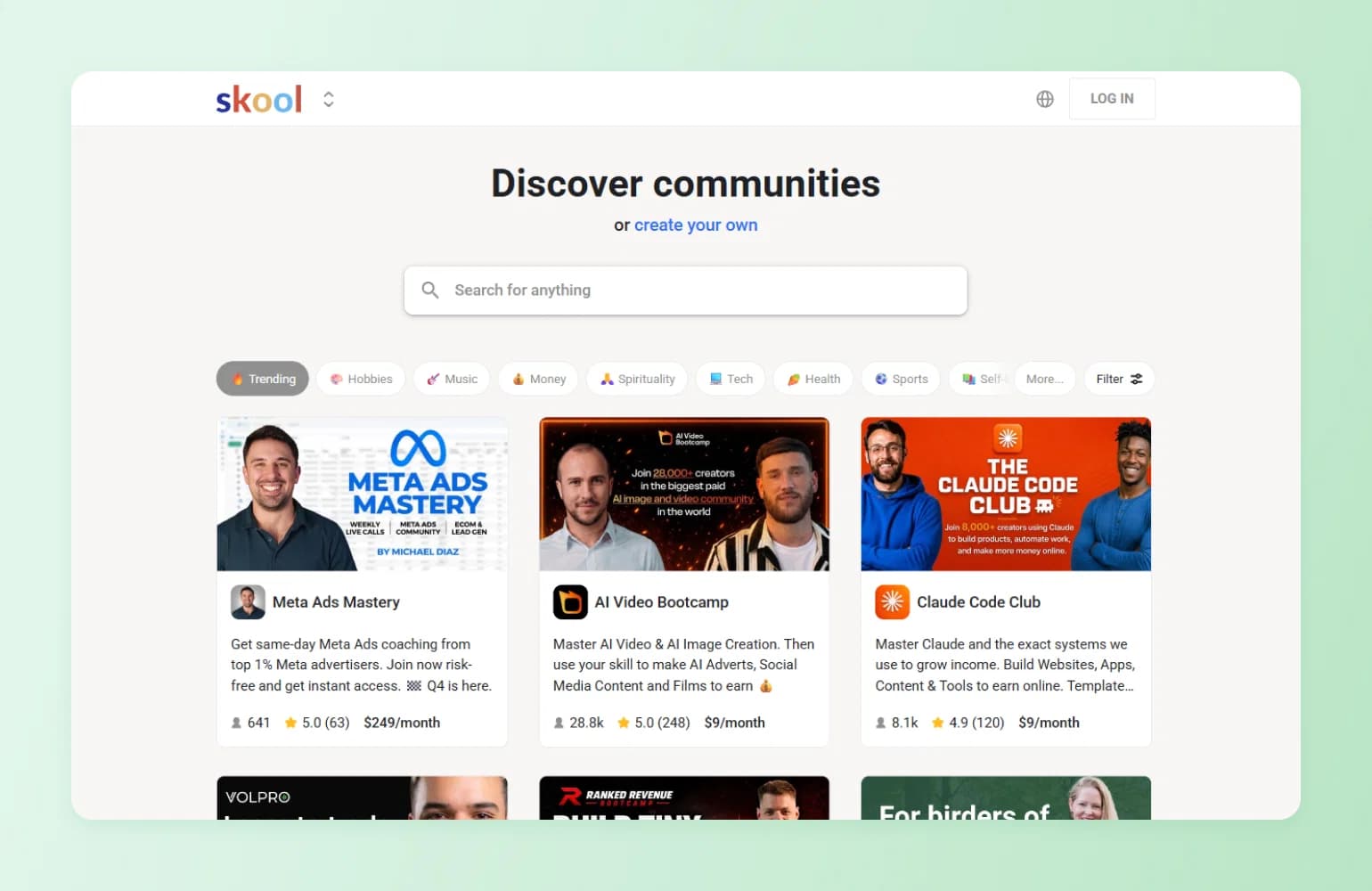
Skool's whole case is constraint. One layout, five tabs (Community feed, Classroom, Calendar, Leaderboard, Members with DMs), and gamification that works. That means 9 levels up to 33,015 points, a public leaderboard, and content locked behind specific levels. Unlimited members, courses, videos, and live calls on both plans, plus an iOS/Android app that's unbranded and has no admin functions on mobile.
Best for: Coaches running one paid cohort or membership who want the least possible setup and a public leaderboard doing the engagement work.
Pricing: Hobby $9/mo with a 10% transaction fee, Pro $99/mo with a 2.9% fee that rises to 3.9% above $900 per charge. Both carry a 14-day free trial. One community per Pro subscription, so multi-brand creators pay $99 each.
Where Skool falls short
- Branding stops at the surface. Settings covers a group icon and cover photo, plus a colour and a custom URL. Every Skool community shares the same layout and feel, so yours can't look like your brand.
- Integrations are thin and Pro-only. The Zapier connection carries two triggers and two actions, and it's unavailable on Hobby. There's no native email marketing and no automation builder, so nurturing a lead or automating onboarding happens somewhere else.
- Hobby gives you one admin. A second person helping run the community means upgrading to Pro. Neither plan documents AI features or operator SSO.
- Payments run through Skool's Stripe. You cannot use an existing Stripe account. Skool creates a new Stripe Express sub-account, processes every payment on its own merchant, and acts as merchant of record. Payouts land weekly, but the billing relationship with your members belongs to Skool.
- Trustpilot sits at 1.6/5. Across 34 reviews, the overwhelming majority are one-star, with complaints centered on cancellation friction and slow support response.
If you'll never need more than one paid cohort with a leaderboard, Skool's simplicity works in your favor. If you want branded checkout, Circle branding removed on Business, and workflows that automate onboarding and renewals, that's Circle's side of the trade. See the full Circle vs Skool comparison.
3. Hivebrite: best for alumni networks, associations, and nonprofits
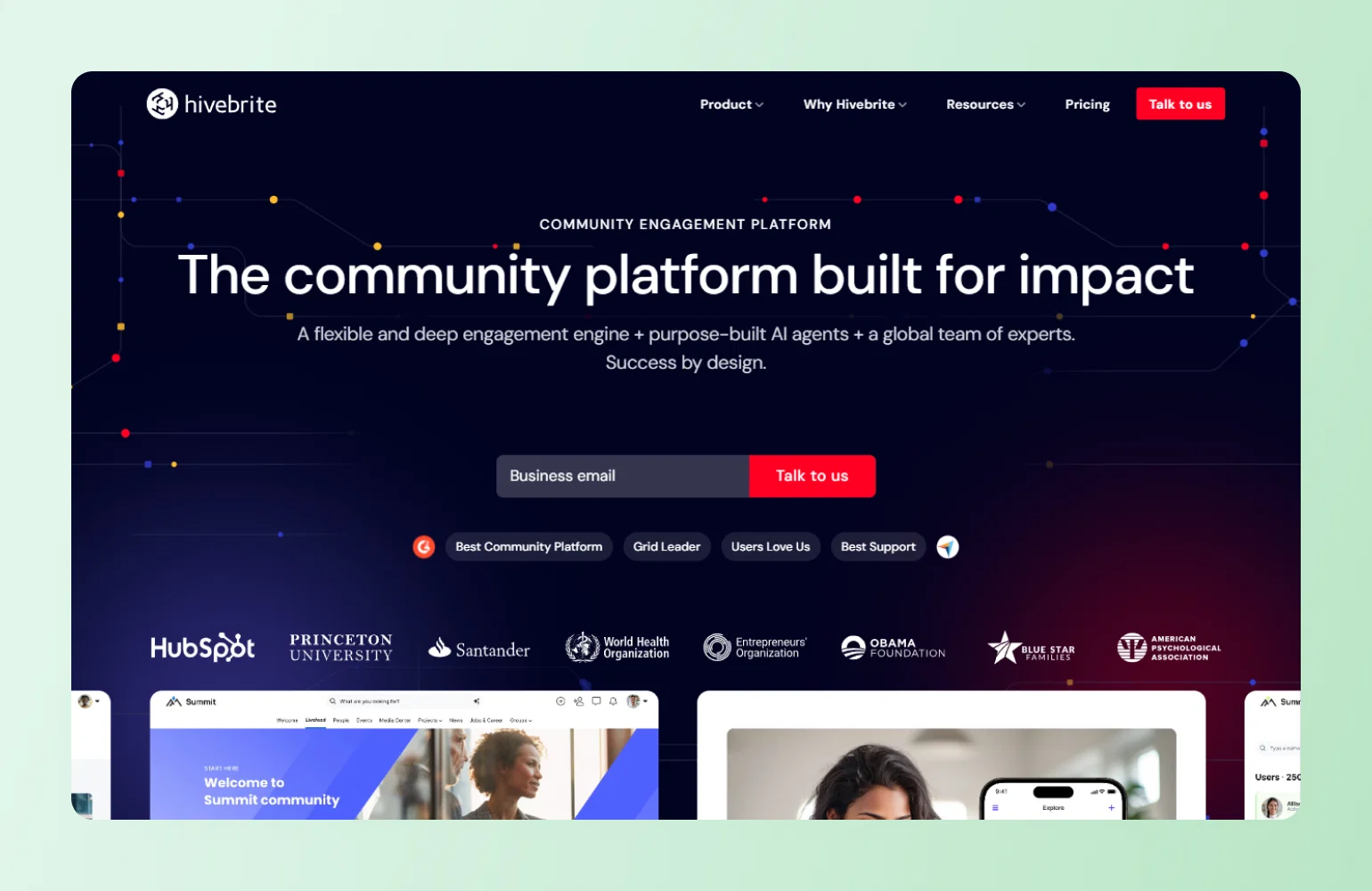
Hivebrite is a full community operating system built for institutional member networks. It handles a searchable directory, federated chapters, events with ticketing, fundraising, memberships with automated renewals, and a Salesforce integration, plus SSO and API access on custom plans.
Best for: Alumni offices, professional associations, and nonprofits that need multi-chapter structure, donation tooling, and a branded app, with a five-figure annual budget already approved.
Pricing: Focus starts at $8,000/year, billed annually, with unlimited members and one admin seat. A custom plan is priced after a discovery call. A branded mobile app, email campaigns, and WhatsApp are add-on channels at $2,300/year each. No free trial, no self-serve checkout.
Where Hivebrite falls short
- Admins face a learning curve. The member-facing experience is polished, but reviewers consistently flag a learning curve for administrators at the start, driven by how feature-rich the platform is.
- Courses lean light. Hivebrite's Journeys module builds guided pathways out of existing pages, news, and media with progress bars and completion tracking. There are no quizzes, assessments, or certificates, so serious course delivery still points elsewhere.
- Member-facing rough edges. Capterra reviewers flag clunky direct messaging and a group-discovery view that surfaces groups they have already joined.
- No self-serve path in. Focus lists at $8,000/year billed annually, but there's no checkout and no free trial. Getting started means booking a demo, and custom plans are priced after a discovery call.
If dues management and fundraising are the reason you're shopping, Hivebrite is purpose-built for you. If your members are also students, Circle usually fits better: courses, live events, and payments are native on the $89 plan, with published pricing instead of a sales call. Here's the Circle vs Hivebrite comparison.
4. Discourse: best for open-source, searchable technical forums
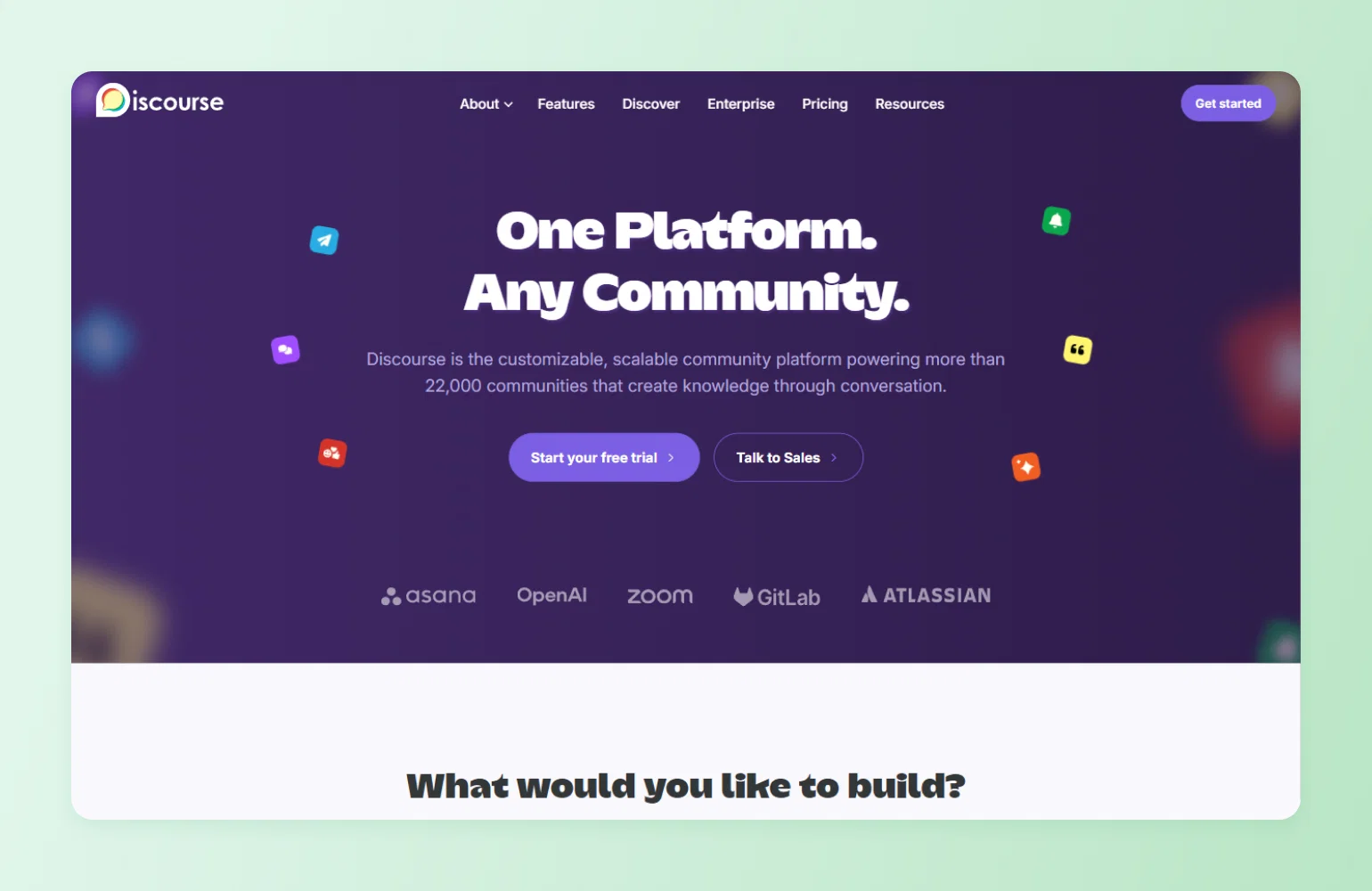
Discourse is open source, so you can self-host it without licensing fees, or run it on their hosted plans. Pricing is unusually transparent for this market. A genuine free hosted tier, added in August 2026, comes with unlimited members, unlimited chat, two staff seats, and a discourse.group subdomain. Pro adds a custom domain, custom themes, API and webhook access, and 15+ plugins. Business adds advanced reporting, automation, events, gamification, and SSO via OpenID and OAuth2.
Best for: Technical teams, developer communities, and open-source projects that want structured, Google-indexable discussions and full control of their data.
Pricing: Free to self-host; Pro $100/mo; Business $500/mo; Enterprise custom.
Where Discourse falls short
- No native courses or video library. Content depth is thin. Discourse is a forum with plugins around it, so anything structured you want to deliver gets built or bought elsewhere.
- Subscriptions sell entry, not products. Discourse Subscriptions charges members to join a group. It can't paywall a course, gate a video, or run a storefront, so selling a program still means a course tool and a checkout elsewhere.
- Self-hosting costs engineering time. You run the server, the Docker install, and the rebuilds after core changes. Most teams don't have that time spare.
- Migration help costs extra. Discourse moves your content for you on Business and Enterprise. On Free, Starter, and Pro, importing is your job.
Discourse is the strongest choice when you need searchable, long-lasting answers that can also rank in Google. Choose Circle when courses, payments, events, email, and member data need to stay on one system.
Group 2: Customer-community platforms for support and retention
These platforms measure a community by tickets deflected and customers retained. They're built to support a business that's already running, which is why they show up on shortlists next to Bettermode. If that's the job, this is the group to read. For the difference in plain terms, see our guide to the customer community.
What about Zendesk? Zendesk shows up on these shortlists too, but it's a ticketing suite first. Its community forums sit inside the help center as an add-on to the queue and unlocks on Suite Professional ($115/agent/mo, billed annually) and above. Bettermode itself connects to Zendesk rather than replacing it, so if your team runs support there, you'll likely keep it either way. Circle isn't a ticketing system and won't replace Zendesk's queue, but it can replace a separate forum layer.
5. Higher Logic Vanilla: best for enterprise customer communities built around case deflection
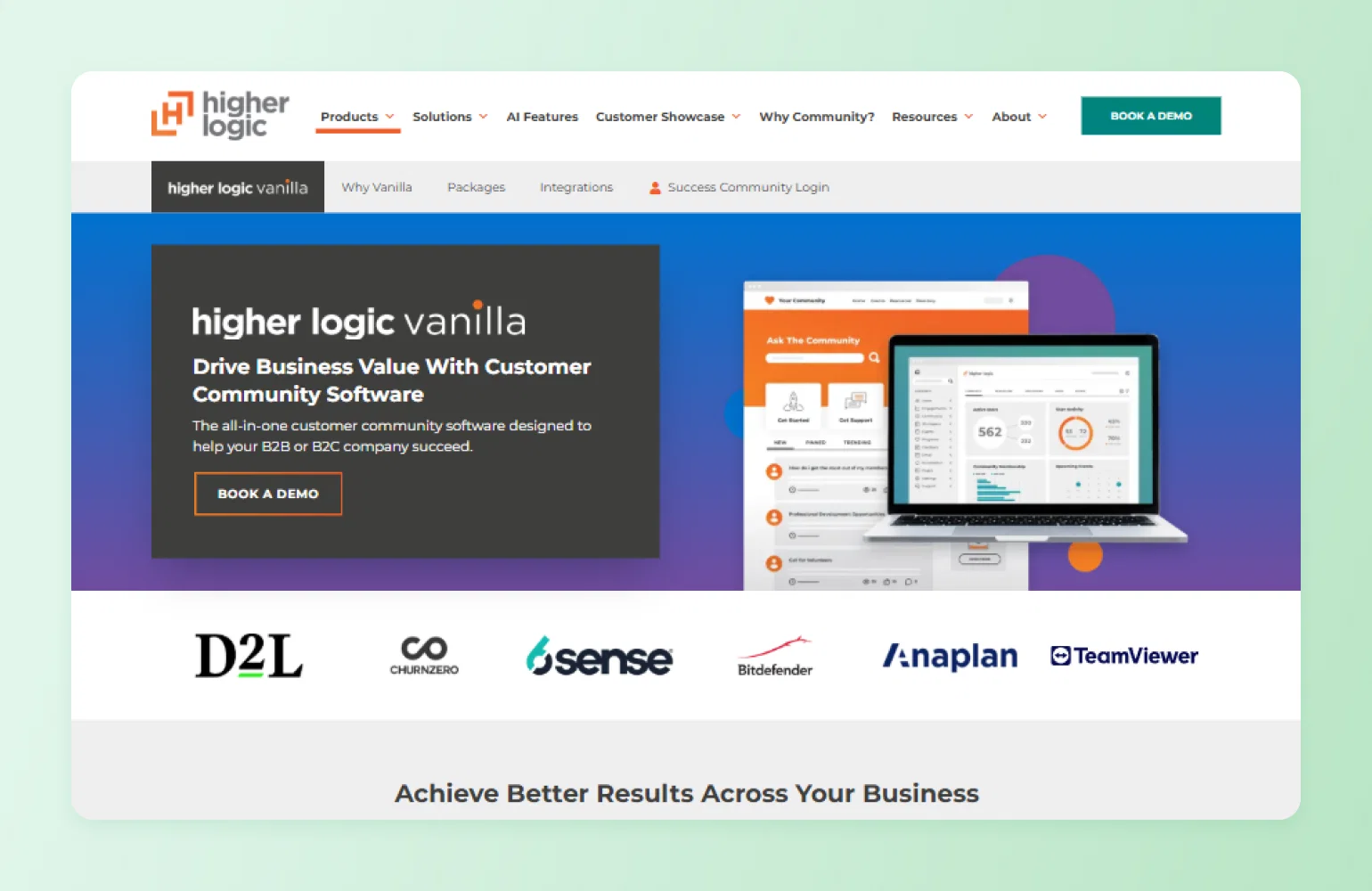
Vanilla is a peer-to-peer support community built around case deflection. Like Bettermode, Khoros, and Gainsight, it supports a business that already exists rather than being the place you build one. The core is a forum, knowledge base, Q&A, and ideation layer with document management, approval workflows, and access controls. It's wrapped in a reputation engine that rewards good content and helps automate moderation. Recent AI additions include an AI Search Assistant, a Web Crawler that pulls outside content into search, and an MCP Server currently in beta.
Best for: Enterprise SaaS support and customer-success teams that measure community by tickets deflected and need Salesforce sync, SSO, and multi-community governance on a multi-year contract.
Pricing: Sales-quoted only, with no public pricing and no free trial.
Where Higher Logic Vanilla falls short
- Entry is a sales conversation. Higher Logic publishes no pricing and offers no self-serve path in. Software directories sometimes list a trial, but buying starts with a demo.
- Moderation and search strain at scale. Reviewers running larger communities flag a spam filter with high false positives and post search that returns irrelevant results. There's no cap on quote and tag chains either.
- Reporting runs shallow. Reviewers say the native reporting stays limited, and that pulling clean data out means going through the API or a connected customer-success tool.
- Not a creator or coaching platform. No courses, no payments, no white-label apps.
If your large SaaS team is buying pure case deflection, Vanilla has the deeper tooling. If you want a modern community platform with published pricing, a free trial, and courses and payments built in alongside the forum, Circle is the fit. See the Circle vs Higher Logic breakdown.
6. Khoros Communities: best for enterprise case deflection and self-service at scale
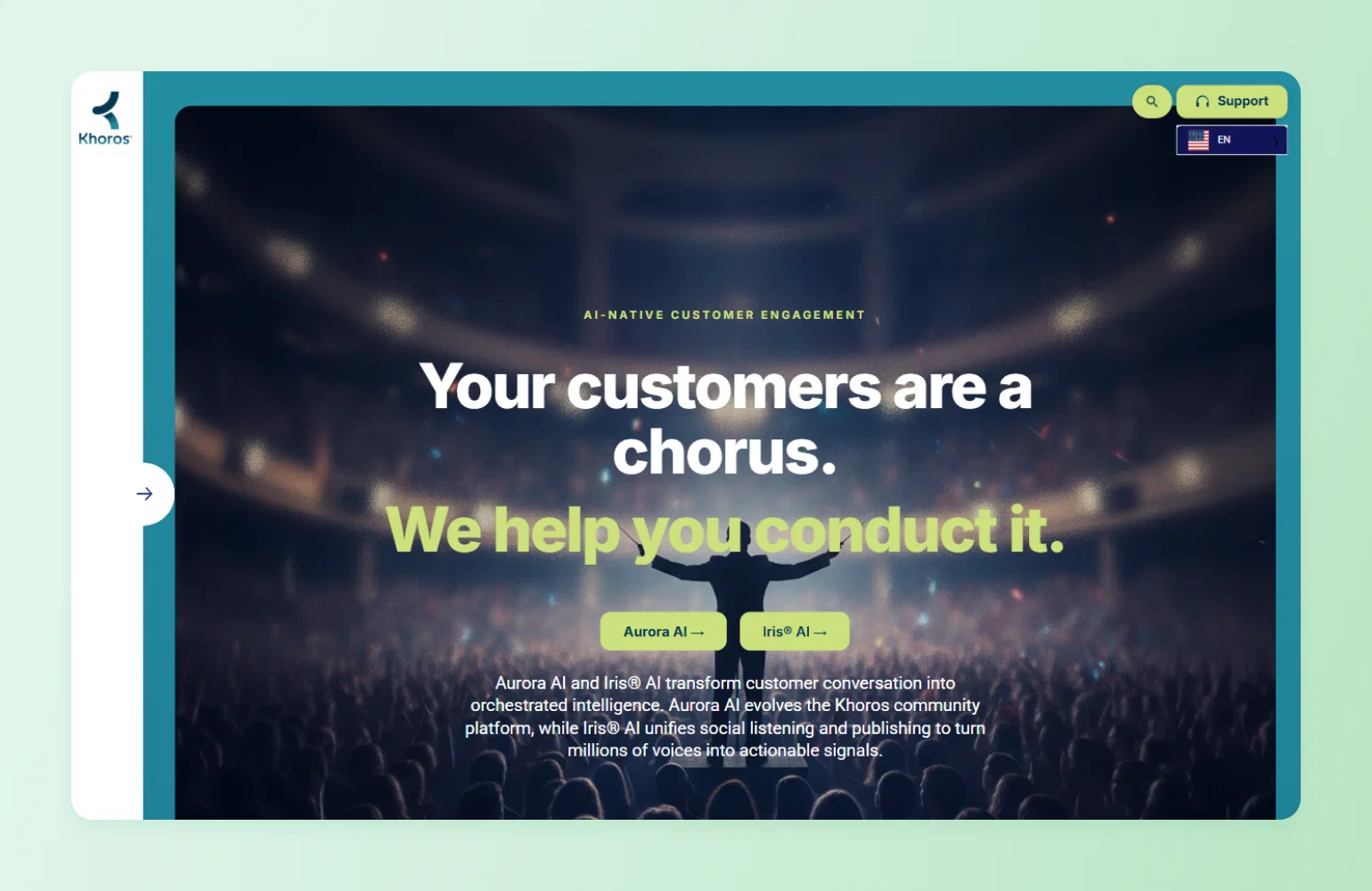
Khoros is built for the same job as Bettermode and Higher Logic: supporting an existing business, not building one. It focuses on case deflection and AI-native moderation at enterprise scale. That's why it shows up on shortlists next to Circle, even though it isn't built for creators.
Best for: Large enterprises that need AI-native moderation and self-service at serious scale, with the budget and procurement runway for a multi-year contract.
Pricing: Khoros doesn't publish pricing. It's sales-quoted only, with no self-serve tier and no free trial.
Where Khoros falls short
- No path to a monetized business. No courses, no memberships, no branded creator experience. Khoros exists to deflect support tickets, not to run a business on.
- Enterprise cost and complexity. Khoros sells on multi-year contracts, with premium support priced as a percentage of the contract and ongoing technical maintenance on top. Reviewers describe it as very technical, with requested changes moving slowly.
- Nothing is self-serve. Directories list the starting price as contact vendor, with no trial information published, so every evaluation starts with a sales conversation.
If you're an enterprise B2B team evaluating case-deflection platforms at scale, Khoros belongs on your shortlist. If you're trying to build and monetize a business around your community, it isn't built for that job. Circle is.
7. Gainsight Customer Communities: best for customer-success teams measuring community by retention
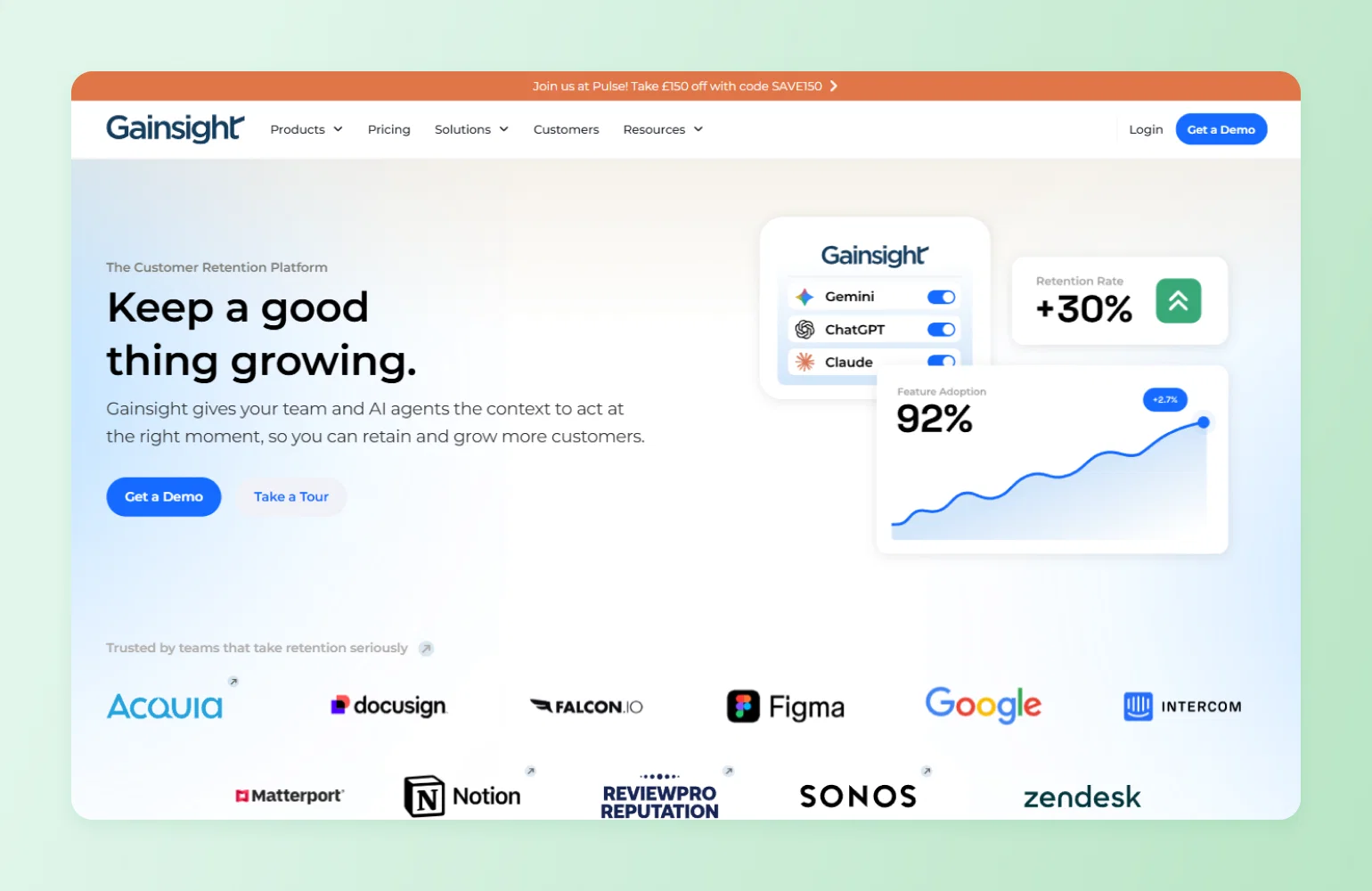
Gainsight Customer Communities runs branded forums, peer Q&A, a knowledge base, and an ideation module that lets product teams weigh feature requests by the revenue of the customers who voted. What the community produces is data for other teams: retention signals, adoption signals, product feedback. It isn't somewhere you sell anything.
Best for: Enterprise customer-success and support teams that want community feeding retention, adoption, and product-feedback data, especially if Gainsight CS, PX, or Skilljar are already in the stack.
Pricing: Gainsight doesn't publish pricing for Customer Communities.
Where Gainsight falls short
- There's no monetization layer. No courses, no memberships, no payments. Customer education lives in Skilljar, a separate Gainsight product, so selling anything means buying more of the stack.
- Built for retention, not revenue. The product answers to churn, adoption, and feature requests. It gets bought by teams keeping existing customers, not by anyone selling access to a community.
- Pricing is quote-only. Gainsight publishes no pricing for any of its products, and every line routes through a request-pricing flow.
Look at it if community is how you plan to retain the customers you already have. It isn't where you build a business around one.
Who Circle is built for (and who should look elsewhere)
Circle is a fit when you're building a digital business around your expertise and want to start with one offer, then add courses, memberships, events, and more without rebuilding your stack. Three examples from our customers:
- Community businesses and advocate programs. Miro runs three invite-only communities (Enterprise Advocates, Consultants, Creators) under one umbrella, with Circle's Open API feeding engagement data into its internal analytics. The community doubled in two years, member comments grew 3.5x, and its product managers now work in the community daily, so feedback shapes the roadmap.
- Education businesses at scale. After evaluating more than 12 tools, Codecademy replaced five platforms with Circle. It now has nearly 100,000 members and 82% of learners reaching their goals.
- Coaches and educators who need a paywall and course builder without a second login. Augment Business School ran courses on Thinkific and its community on Circle, then consolidated. Revenue grew 70x over three years, and the student base doubled from 3,000 to 6,000 within four months of migrating. 61% of members are monthly active, and 27% of active members use the branded app.
Tiago Forte, founder of Forte Labs, put it this way: "We've made over $3M on Circle over the last two years. It supported our live cohorts, self-paced courses, and a subscription-based membership."
If you're buying case deflection, support ticketing, account health scoring, or retention analytics for a large support team, the platforms in Group 2 have the deeper tooling. Circle isn't the pick there.
Circle branding comes off on Business, Scale adds AI Agents, and Circle Plus adds the custom branded app and custom SSO.
Maybe it was the missing course tool and checkout on Starter. Maybe it was the jump from $149 to $1,500 the first time you needed webhooks. Either way, if the goal is to build a digital business on your expertise and your community, that's the job Circle is built for.
Outgrew the $149 tier?
Bettermode alternatives FAQ
What is Bettermode used for?
Bettermode is a customer community platform for B2B SaaS companies, combining discussions, Q&A, a knowledge base, and events for marketing, customer success, and product teams. Its HubSpot, Zendesk, Salesforce, Intercom, and Jira integrations, along with API/webhooks and OAuth2/JWT, sit on the Growth plan and above. That's why it's usually evaluated as a support-and-feedback hub rather than a creator platform.
Is Bettermode any good?
It depends which review site you trust. Bettermode holds 4.7/5 from 117 verified G2 reviews but 1.5/5 on Trustpilot. G2 reviewers are verified software users, while Trustpilot skews toward people upset about the pricing change. Missing features tends to be the top complaint either way.
Does Bettermode have a free plan?
No. Bettermode retired its free plan in its 2026 pricing overhaul, a change longer-tenured customers still bring up. Among the alternatives here, Discourse offers a free self-hosting path, and Hivebrite offers neither a free plan nor a trial. Higher Logic Vanilla is sometimes listed with a free tier in software directories, but in practice entry is a sales conversation.
Does Bettermode have a mobile app?
No native iOS or Android app, despite years of promises to ship one. Among the alternatives, branding is what separates the apps. Mighty Networks includes a native app on every plan but white-labels only on Mighty Pro. Skool's app is unbranded with no admin functions on mobile, and Circle's branded iOS/Android app arrives on Circle Plus.
Does Bettermode embed in my website or app?
Yes. You can generate an embed for any part of the community and place it in your own site or mobile app, where it behaves like a native section rather than a link out. Circle's Headless APIs support embedding community into your own product too, and on Circle Plus we'll build a custom branded community app for you.
How hard is it to migrate off Bettermode?
Plan for developer time. Starter's API access is limited. Full API, webhooks, and sandbox environments only unlock on the $1,500/month Growth plan, and support for custom integrations is thin even after you pay for access. So the export is the harder half of the job. Circle covers the receiving end: course migration is free on Annual Business plans and above, and concierge payment and email migrations are available across all Circle plans.

Head of Performance Marketing
Marcus is the Head of Performance Marketing at Circle—and Circle's main demand gen nerd.