The 9 best newsletter platforms for creators in 2026
TL;DR
- Most newsletter platforms are built to get your words into an inbox, and stop there, leaving the harder work of turning readers into revenue to you.
- The platform you choose decides things you can't easily rebuild later: whether you own your list, how much of each dollar you keep, and whether the tool grows with you or forces a migration in a year.
- Circle is the strongest all-in-one pick, combining email with community, courses, events, and payments under one branded roof, so a newsletter becomes the front door to a real business.
You did the hard part. You showed up week after week, grew a list that opens and replies, and now you're ready to turn it into something bigger, a course, a membership, a paid tier. Then you hit the wall: your newsletter tool can't take payments, so you bolt on a checkout tool, then a course host, then somewhere for members to talk to each other. Three months later you're paying for four subscriptions, juggling four logins, and none of them share what they know about your members.
That's the trap most creators, coaches, and educators fall into, picking a newsletter platform for what they need this month instead of what they'll need when the business grows past the inbox. The platforms worth paying for help you reach the inbox, keep your list yours, and connect email to everything else you sell, then turn one-time readers into long-term members. Here are the nine best newsletter platforms for creators in 2026, what each one does well, where each falls short, and which fits the way you want to build.
Quick comparison: 9 newsletter platforms at a glance
| Feature | All-in-one platform | Native community + courses | Sell memberships, courses & events | Automation & segmentation depth | Pricing transparency | White-label branding |
|---|---|---|---|---|---|---|
| Circle | Yes: email, community, courses, events, payments, website | Yes: purpose-built Spaces, chat, native courses | Yes: native memberships, courses, and paid events | Acts on full member activity, not just email behavior | Flat plan, no per-contact escalation | Yes: full white-label on Circle Plus |
| Beehiiv | No: newsletter-first | No | Paid subscriptions only | Light: linear drips | Climbs with subscribers | Partial: branding removed on higher tier |
| Substack | No: publishing-first | No | Paid subscriptions only | None | 10% of subscription revenue | Limited |
| Kit | Partial: email + commerce | No | Digital products only | Email behavior only | Climbs steeply with list | Limited |
| MailerLite | No: email-first | No | Digital products only | Mid-tier | Low entry, limited depth | Partial: branding removed on paid plans |
| Mailchimp | Partial: email + basic marketing | No | Not built for it | Paywalled above entry tier | Bills unsubscribed contacts | Limited |
| ActiveCampaign | No: automation-first | No | Not built for it | Deep, but email-only data | Escalates 20–100% as list grows | Limited |
| Constant Contact | No: email-first | No | Not built for it | Limited | Bills on total contacts | Limited |
| Klaviyo | No: ecommerce email | No | Not built for it | Deep, but ecommerce-only data | Bills on active profiles | Limited |
1. Circle — best platform to turn a newsletter into a paid business
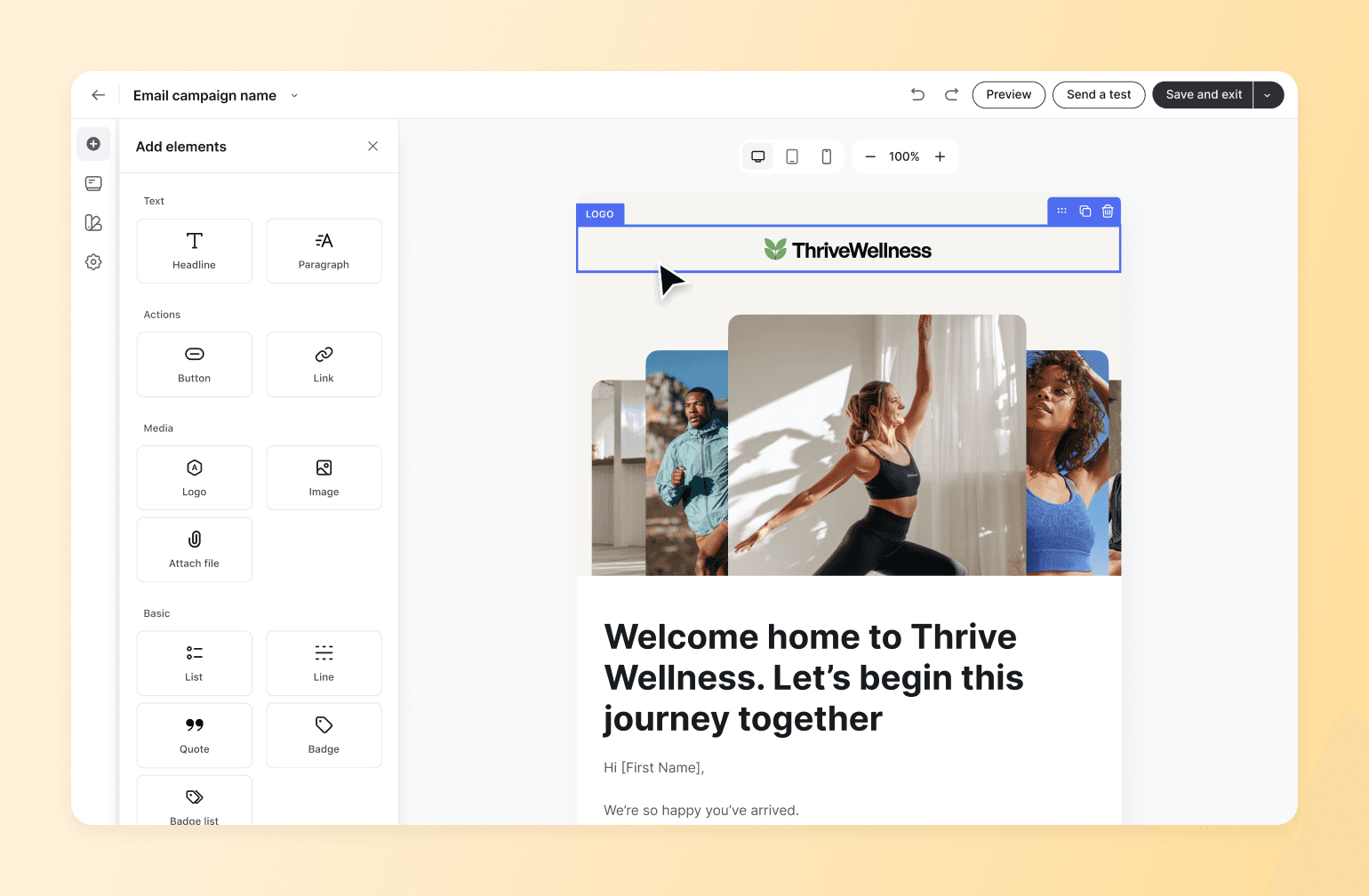
Circle is where a newsletter becomes a paid business. Readers subscribe, then join a community, come to your events, take your courses and pay you, all in one place. Send with Email Hub, engage readers in the community, and earn with paid tiers, courses, events, challenges, or products through a branded checkout. One home for your content, your list and your revenue.
Best for: Newsletter writers who want readers to become members, a real community around their work, and income beyond sponsors.
Pricing: Plans start at $89/month (billed annually). Email Hub is an add-on, billed monthly by subscribed contacts: free up to 100, $19/month up to 1,000 and $99/month at 10K.
Circle's stack for newsletter creators
- Write without starting from a blank page: Get a first draft down, rewrite a passage in a different tone, tighten the length, or stand up the paid tier and welcome sequence behind it, with Circle AI doing the operational build alongside you. Nothing ships without your say-so.
- Grow your list beyond the inbox: Send readers to a branded site and landing pages built from a prompt with the AI website builder, and open a public webinar or RSVP event where every guest becomes a lead you can email.
- Send and automate from one place: Send broadcasts and run automated sequences in Email Hub, with emails that trigger off what a member does, like joining, buying, or finishing a course. Plenty of tools automate; the difference here is what the triggers can see.
- Segment on the whole member, not just openers: Build segments and trigger workflows on course progress, purchases, event attendance, and community activity, not just email opens, because all of it lives on the same member record.
- Turn readers into paying members: Sell paid tiers, one-time purchases, subscriptions, installment plans and trials through branded checkout, then offer a post-checkout upsell the moment they buy. The money runs on the same system as the message, with no third-party cart to reconcile.
- Screen who joins: Take applications with forms for a cohort or a paid circle before readers pay.
- Let readers sell for you: Run an affiliate program so your best readers and partners bring in new subscribers and earn on every sale.
- Keep readers instead of losing them to the inbox: Give members a place to land after they open, where their peers are already talking. With chat, DMs, live events and gamification built in, they stay engaged between newsletters instead of reading once and disappearing.
- See what turns readers into payers: Track which editions, offers and paywalls convert free readers to paid, with analytics from the first visit to revenue.
- Run it from your AI tools: Connect the tools you already use through the MCP, so they can work with your list, members and content.
Why Circle stands out for newsletter creators
Every platform here can send an email. The difference is what happens after you hit send, and what the subscriber can become. On Circle, a reader can buy, apply or RSVP in one step, then join a community and take a course, all tied to the same record as the email.
Seth David's Nerd Enterprises shows what that looks like in practice. His weekly newsletter publishes through Email Hub as both a broadcast and a permanent community post, so each one lives on as searchable content his members and an AI Agent can reference, instead of disappearing into inboxes. That same newsletter sits next to his 30+ courses and his community on one system, and he converts 80% of trials to paid. Consolidating that stack also cut his costs: his total Circle bill runs just over $4,500 a year, a fraction of what the old patchwork of separate tools added up to.

Skip the four-tool juggle.
2. Beehiiv — best for newsletter-first creators focused on audience growth and ad revenue
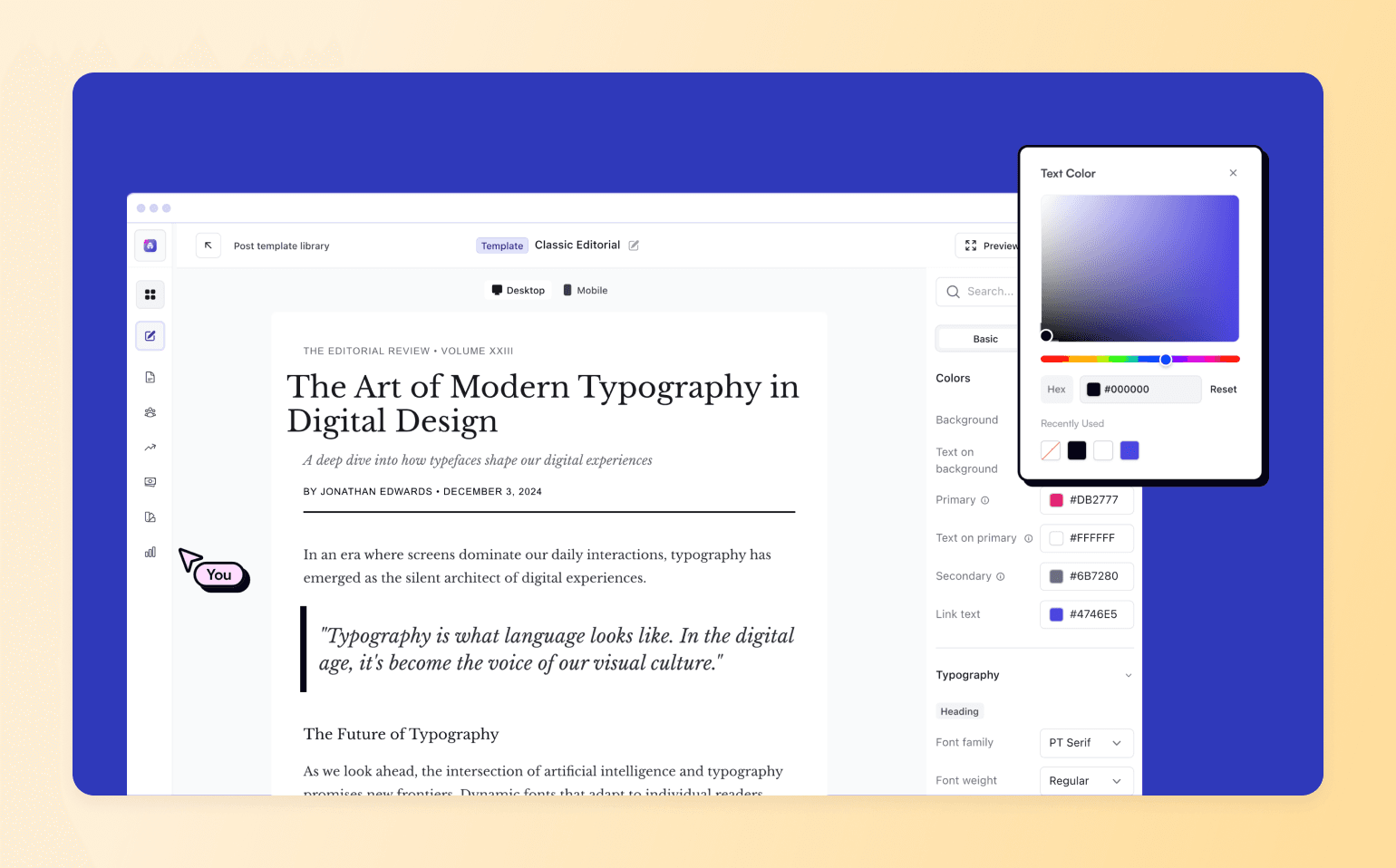
Beehiiv is a newsletter platform focused on audience growth and ad-based monetization. It includes a recommendation network, paid Boosts, a referral program, and a native ad network, with the newsletter itself as the core product.
Pricing: Free up to 2,500 subscribers; the paid Scale plan, which unlocks monetization tools like the ad network and paid subscriptions, starts at ~$42/month and rises with subscriber count.
Here's where Beehiiv falls short
- Monetization stops at subscriptions and ads: The platform is built to make money from paid subscriptions and sponsorships, with no native way to sell a course, run a membership program, or charge for anything beyond the newsletter itself. Readers who want more from you have nowhere to go but back to their inbox.
- Shallow automation depth: Publishing and growth are the strengths, but the automation runs to linear drip sequences without the conditional branching or tag-based logic a creator needs to nurture subscribers toward a sale, so anything past basic sequences hits a ceiling.
- Growth tied to the platform's network: Much of Beehiiv's growth advantage comes from its own recommendation network and Boosts marketplace, which means part of your audience growth is tied to staying on the platform.
Beehiiv is good at growing a newsletter and earning from subscriptions and ads. But that's where it stops: no course to sell, no membership to run, and limited automation to move a subscriber toward a purchase. Circle covers that next step: alongside the email, you can sell courses and memberships, take payments through your own checkout, and nurture members on automations that read their full activity, so a subscriber has somewhere to go beyond the next edition.
Beehiiv vs. Circle: See how Beehiiv stacks up.
3. Substack — best for writers building a paid readership with zero technical setup
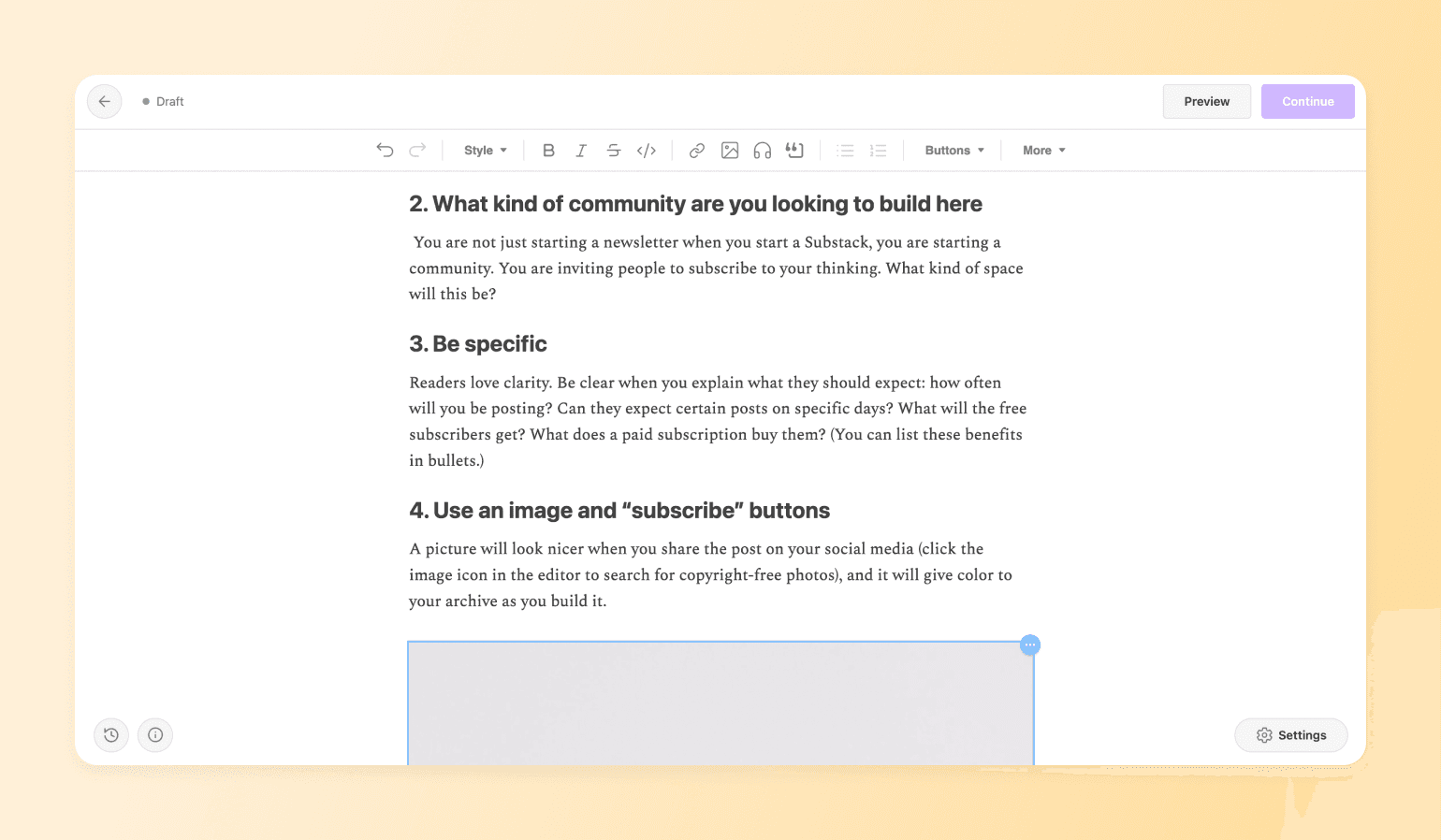
Substack is a publishing platform for writers and thought leaders. Monetization is optional: you can publish free indefinitely, and if you turn on paid subscriptions, Substack handles payments and hosting for a cut of the revenue. It's aimed at people who want to write and build an audience without managing a stack.
Pricing: Free to publish; no monthly fee, but Substack takes 10% of paid subscription revenue once you monetize.
Here's where Substack falls short
- A 10% cut once you monetize: The flat 10% of revenue keeps climbing in dollar terms as you grow, with no ceiling, so at scale it runs well above what most paid platforms charge per transaction.
- No automation or segmentation: There's no visual automation, no behavioral triggers, and no real segmentation, so sending the right offer to the right reader at the right moment isn't possible. Everyone effectively gets everything, beyond the free-versus-paid split.
- Limited ownership and branding: Design options are minimal, your publication lives inside Substack's branded experience, and the reader relationship runs through Substack's app and network, which limits how much the audience and brand are truly yours.
The trade-off with Substack is simplicity in exchange for a cut of your subscription revenue and a publication that lives inside Substack's brand rather than yours. The harder ceiling is conversion: the only thing behind the paywall is more of the same writing, so free subscribers don't have a strong reason to upgrade. Creators who move to Circle from Substack often describe the same situation — a large free list with a thin slice paying — and the reason is usually that there's nothing more to pay for. A paid tier, members-only spaces, courses, and events give free readers a real destination to belong to, all under your brand, and at scale a flat plan keeps more of each dollar than a 10% cut that climbs with every dollar earned.
Substack vs. Circle: See how Substack compares.
4. Kit — best for creators running automations across multiple offers and products
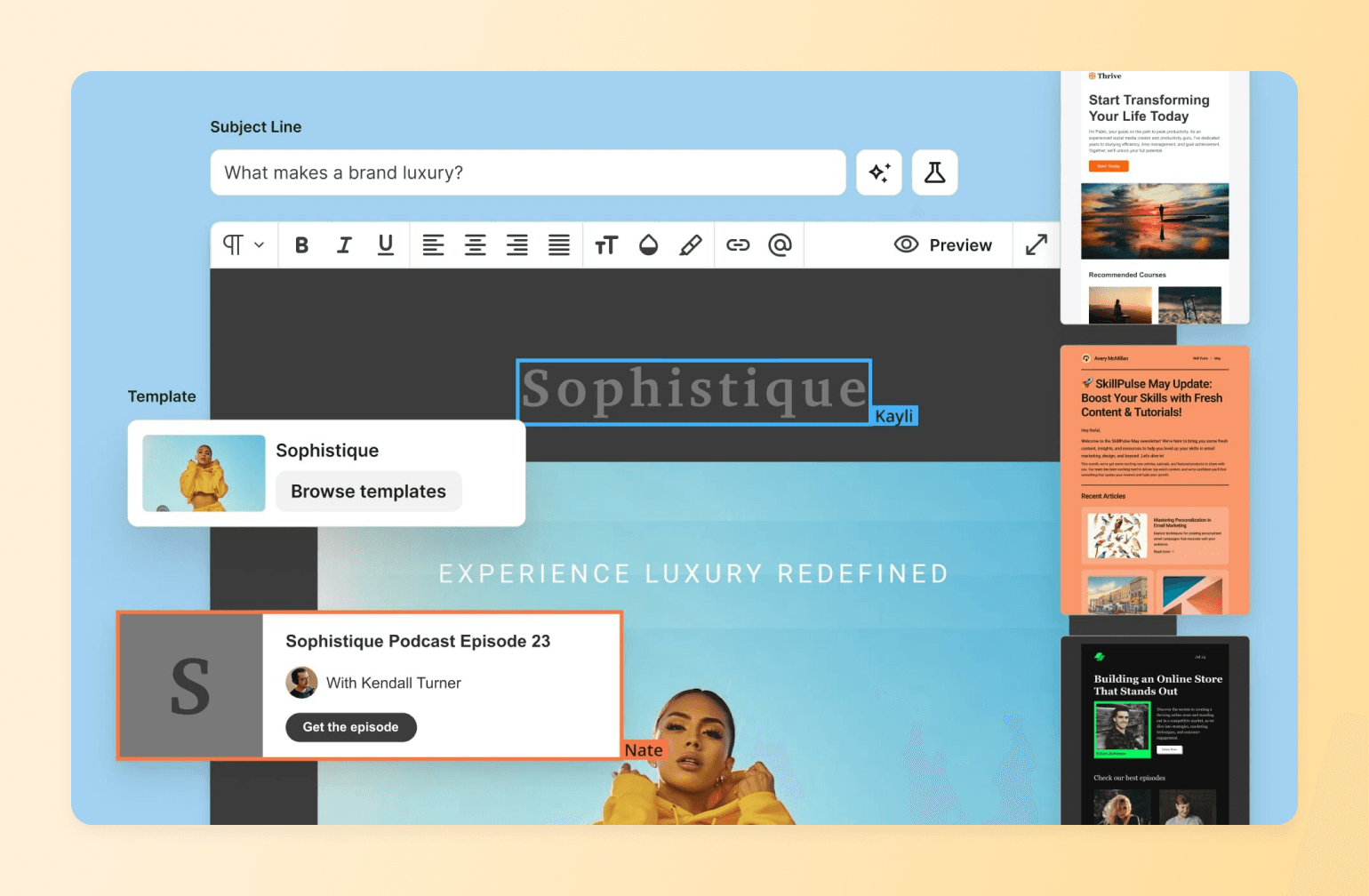
Kit (formerly ConvertKit) is an email marketing platform for creators. It centers on a visual automation builder, tag-based subscriber management, and built-in commerce tools for selling courses, coaching, and digital products to segments of a list.
Pricing: Free plan covering up to 10,000 subscribers; the paid Creator plan, which unlocks automations, sequences, and integrations, starts at $33/month (billed annually) and rises with subscriber count.
Here's where Kit falls short
- No place for members to stay: Digital products sell well here, but there's no native community, course delivery, or events layer, so the people who buy from you have nowhere to gather, learn together, or stick around between launches.
- Pricing climbs steeply with your list: The paid tiers scale sharply as your subscriber count grows, and a 2025 price increase pushed some long-time users to several times their old rate, so the affordable entry price doesn't stay affordable.
- Basic email templates: Email design is plain and text-focused, the template library is thin and the editor won't load custom fonts, so creators who want polished, visually designed newsletters find the options limiting.
Kit is strong at automation and selling digital products, but its tags and triggers only see email behavior — opens, clicks, purchases made through a Kit form. It doesn't know that someone finished your course, went quiet in the community, or renewed their membership, because that activity lives in a separate tool. Creators running email alongside a course platform or membership site find themselves manually managing the gap between systems, or buying a third tool to bridge it. The more a creator's business grows, the more that gap costs in time and in missed segmentation. Circle's automations act on the full member picture, all of it on the same system the email runs on, so it's one record instead of several.
5. MailerLite — best for budget-conscious creators who want clean email at the lowest cost
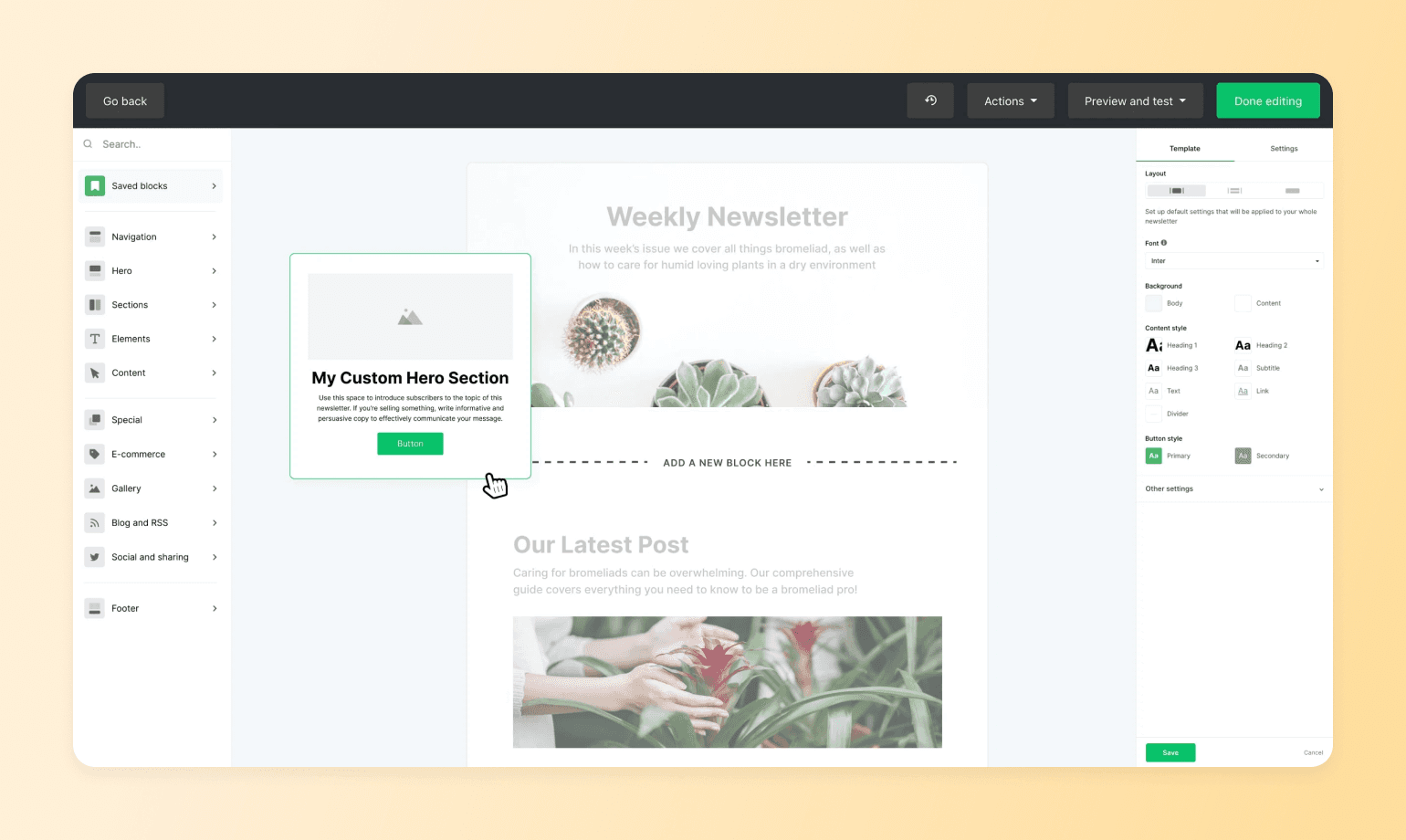
MailerLite is an email marketing tool aimed at the low-cost end of the market. It covers the core email functions, a drag-and-drop editor, automations, landing pages, and forms, with subscriber-based pricing that excludes unsubscribed and duplicate contacts.
Pricing: Free up to 500 subscribers; paid plans from ~$10/month, rising with subscriber count.
Here's where MailerLite falls short
- Thin on monetization: The sending side is handled well, but there's little for earning from your list, no native memberships, no course selling, and weaker commerce tools than creator-focused platforms, so monetizing means adding another tool.
- Depth caps out at the top end: There's no real built-in CRM and reporting stops at opens, clicks, and basic stats with no advanced attribution or ROI insight, so a business with more advanced needs tends to outgrow it.
- A stricter approval process: Accounts are manually reviewed before you can send, and the rules are strict enough that some creators get held up or knocked back, which can stall a launch you'd planned around.
MailerLite is genuinely cheap and easy, but the low price only covers email, so courses, payments, a community, and a membership site all become separate tools and separate bills. Circle folds those into one platform, which changes the comparison from a $10 email line item to the real cost of the four or five tools it would otherwise take to run the same business.
6. Mailchimp — best for small businesses that want one familiar tool for basic email
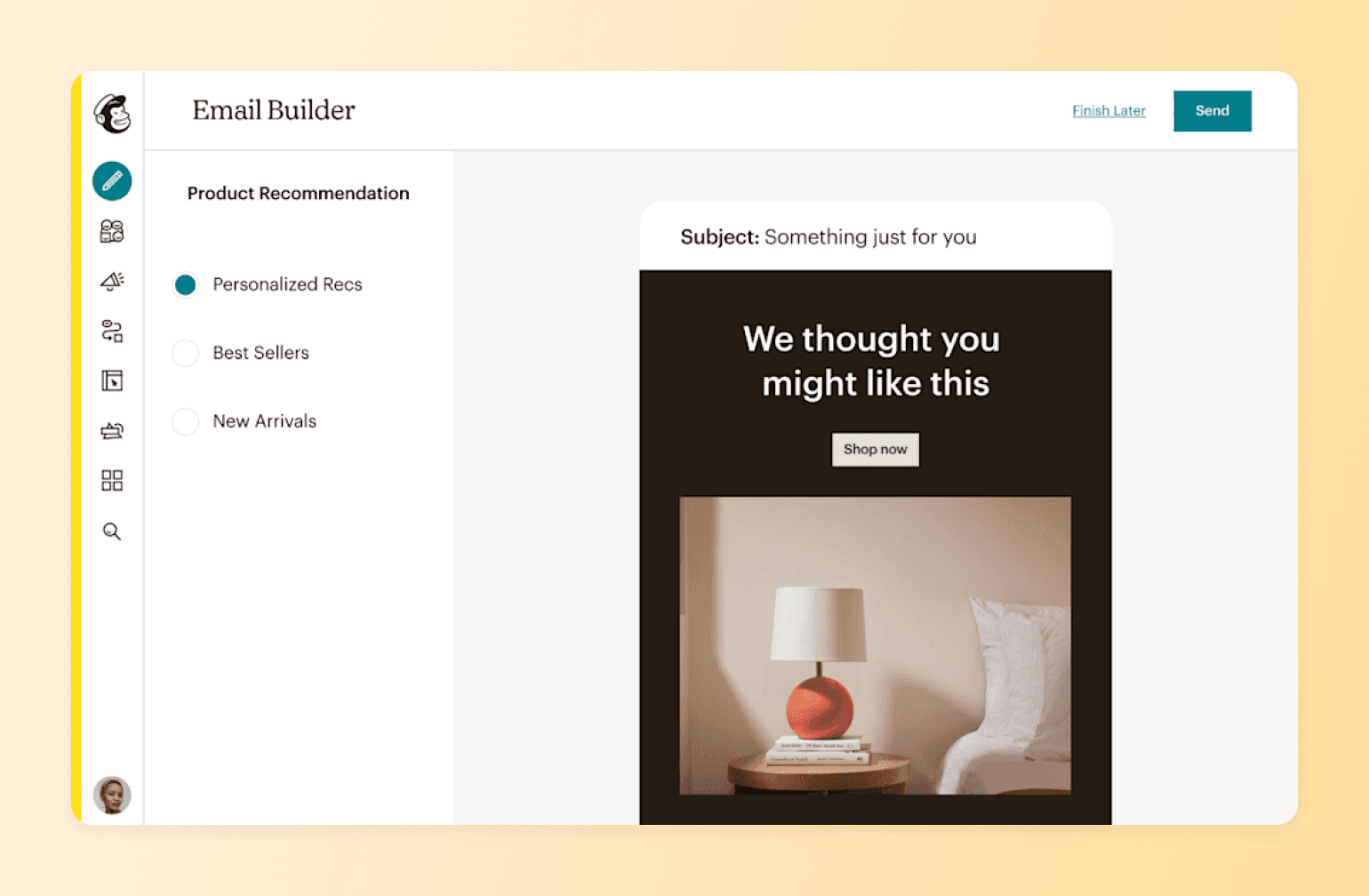
Mailchimp is a general-purpose email and marketing platform. Beyond email, it offers landing pages, basic websites, signup forms, and multichannel marketing, positioned for small businesses that want one tool covering several bases rather than a creator-specific workflow.
Pricing: Free up to 250 contacts; paid plans from $13/month, rising with contact count.
Here's where Mailchimp falls short
- Built for general marketing, not creators: It's aimed at small-business and ecommerce marketing, so the workflows center on campaigns and sales funnels rather than the memberships, courses, and member relationships a creator business runs on.
- Contact-based billing gets expensive: It counts subscribed, unsubscribed, and non-subscribed contacts toward your billable total, so you keep paying for people who left until you manually archive them, and cost is the most-flagged con as lists grow.
- A shrinking free plan and gated automation: The free plan now caps at 250 contacts with automation removed, so the features that make email worth sending sit behind a paid tier.
The deeper mismatch is what Mailchimp knows about the people on your list. Most creators using it describe the same setup: it's one of four, five, or six tools they're running alongside Zoom, Jotform, a course platform, and a website — none of which were designed to talk to each other. The tool gets used for a blast twice a year instead of weekly, because it lives in a separate tab from everything else. To Mailchimp, a subscriber is an email address, a few tags, and an open-rate history. It can't see whether someone finished your course, renewed their membership, showed up to the last event, or has gone quiet and is about to churn — because all of that lives in the separate tools bolted on around it. Circle holds it on one member record, so the same data that tells you who's engaged also decides who gets which email.
7. ActiveCampaign — best for marketing teams that need deep CRM logic and automation
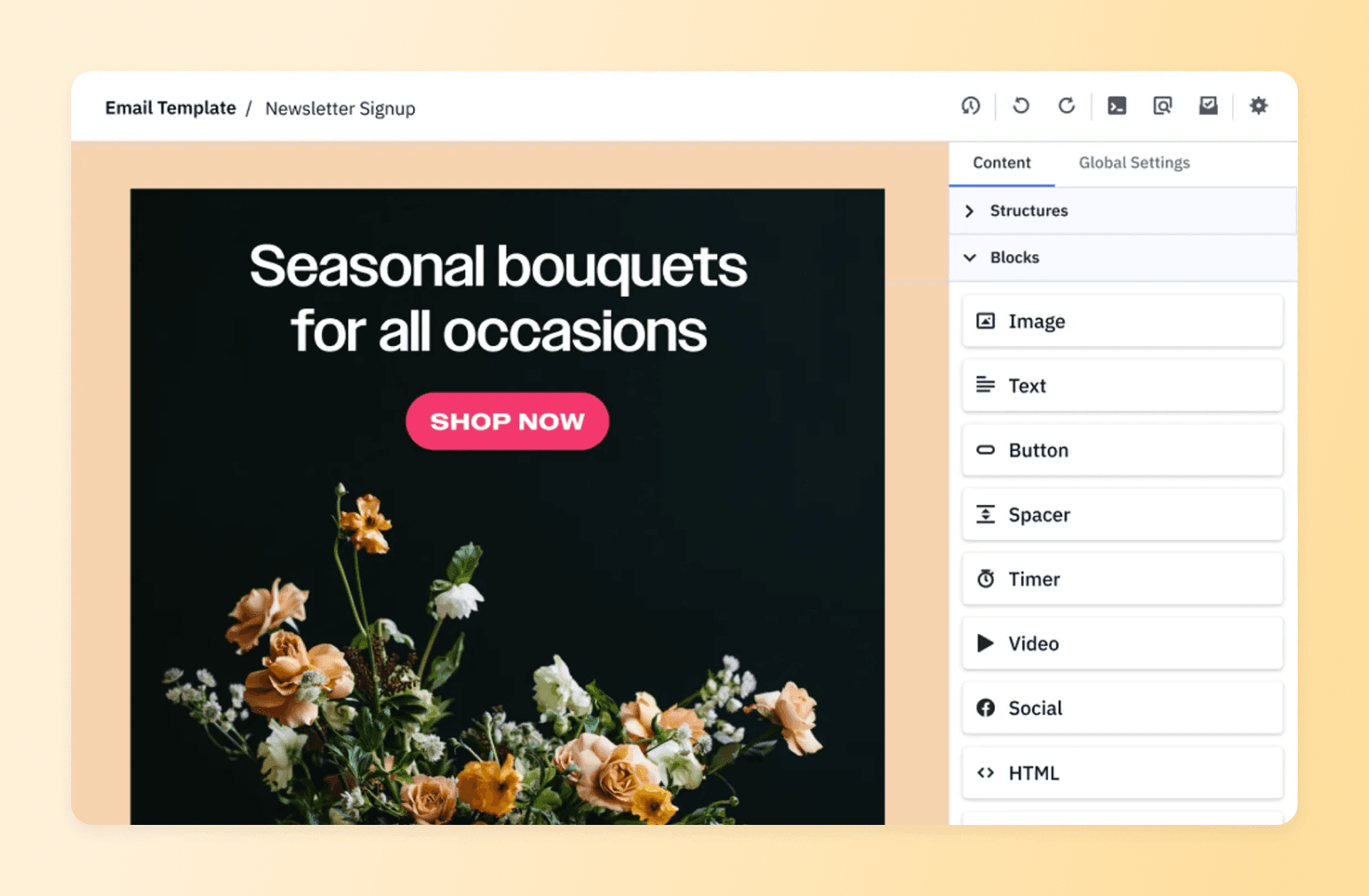
ActiveCampaign is a marketing-automation platform with a built-in sales CRM. Its core is a deep visual automation builder with behavioral triggers, branching logic, and segmentation, aimed at teams that want serious control over customer journeys across email and SMS.
Pricing: No free plan; paid plans from $15/month, rising with contact count.
Here's where ActiveCampaign falls short
- Complexity is the number-one complaint: The steep learning curve is cited in hundreds of reviews. The automation builder is powerful, but keeping it running becomes its own job, the kind where fixing one integration tends to break the next, and non-technical creators often feel lost.
- Pricing escalates aggressively: Price climbs of 20–100% as contact lists grow are widely documented, and a late-2025 change started charging for unsubscribed and bounced contacts, so the bill outruns what most plan for — and long-time users have described the increases as impossible to justify.
- No native commerce or community for creators: It works the contacts already on your list, there's no native way to sell a course, run a membership, or give buyers a place to gather, so a creator business still needs separate tools around it.
ActiveCampaign is the strongest pure automation engine on this list, and that power is the trade-off: you pay for it in setup time, ongoing maintenance, and a bill that climbs faster than your list. The pattern that comes up repeatedly from people who've been on it for a while is integration fragility — fixing one connection breaks the next, and a non-technical operator can spend a week troubleshooting a workflow that should have run itself. The late-2025 pricing change that started billing on unsubscribed and bounced contacts accelerated a lot of exit conversations. Its triggers also only ever see email and CRM data. Circle's automations run on a member's full activity across courses, events, payments, and community — and the course, membership, and checkout the automation points to are already built in, so there's nothing to wire together or maintain separately.
8. Constant Contact — best for nonprofits and member orgs that want simple email with strong support
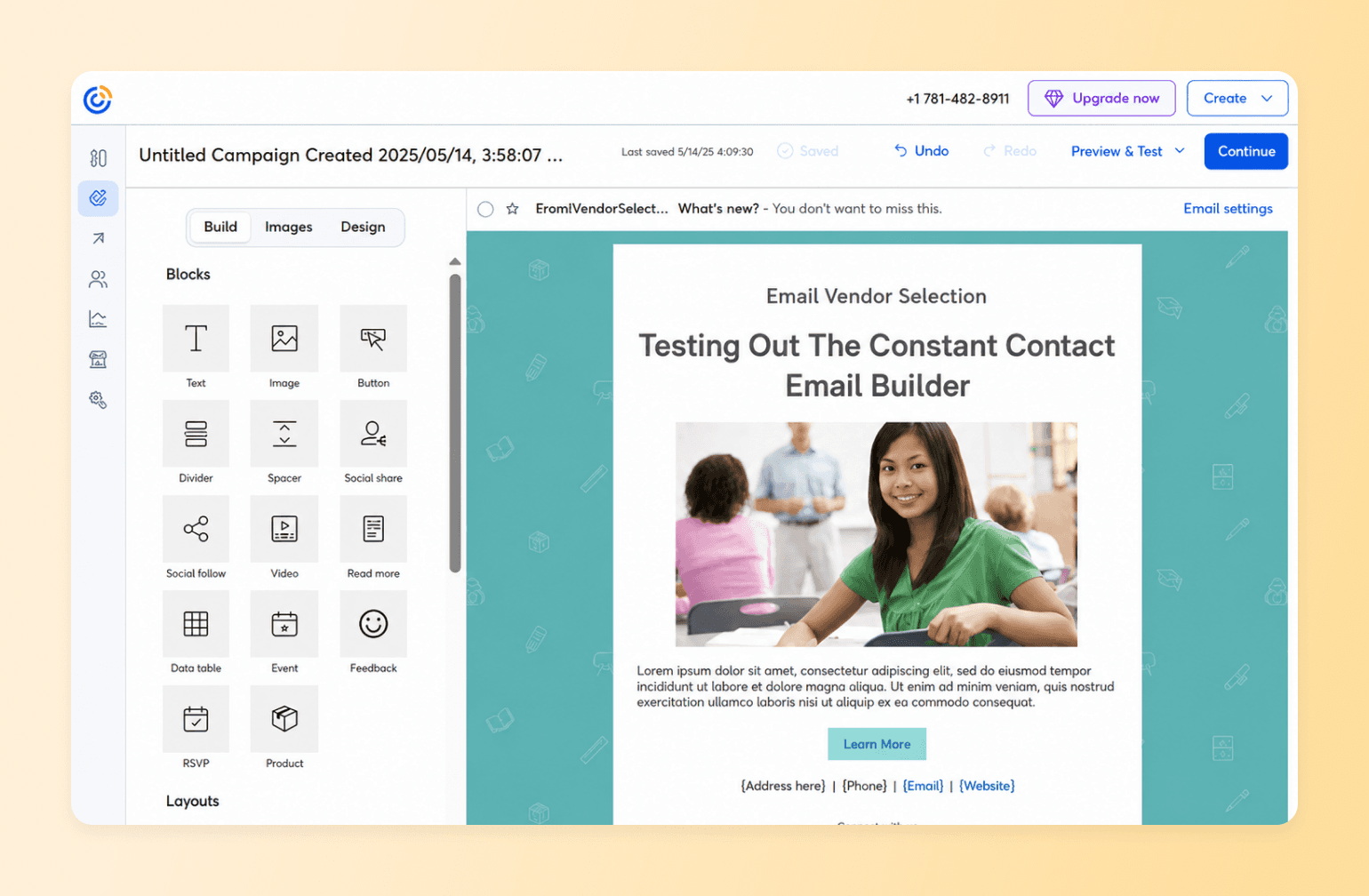
Constant Contact is one of the oldest email marketing platforms, built around ease of use and phone support. It covers campaigns, scheduling, basic automation, event invitations, and surveys, aimed at organizations that want simple, reliable email without much setup.
Pricing: No free plan; paid plans from ~$12/month, rising with contact count.
Here's where Constant Contact falls short
- Automation depth is limited: The automation can't branch on which link a contact clicked or trigger from external events, and complex behavioral journeys quickly hit a ceiling, so it suits a monthly newsletter more than a nurture funnel.
- Pricing climbs with your contact list: The contact-based model gets expensive as the list grows, and the cost is tied to contacts stored rather than emails sent, which stings if you email occasionally.
- Dated, limited templates: Design customization and template variety draw repeated criticism, the editor reads as clunky and the layouts are hard to make your own.
Constant Contact users describe a familiar pattern: every member action requires moving between platforms. Sign-up forms live in one tool, emails go through Constant Contact, events are managed somewhere else, and someone has to manually reconcile all of it — often across five or six systems with no shared logic between them. On calls, prospects describe this not as a Constant Contact failure specifically, but as the cumulative cost of a stack that was never designed to talk to each other. What those organizations are actually shopping for is a way out of that overhead entirely. Circle gives the email somewhere to land: the same announcement opens into a space where members can respond, RSVP, and talk to one another, so a send starts a conversation instead of ending in an inbox.
9. Klaviyo — best for ecommerce brands on Shopify that need purchase-driven segmentation
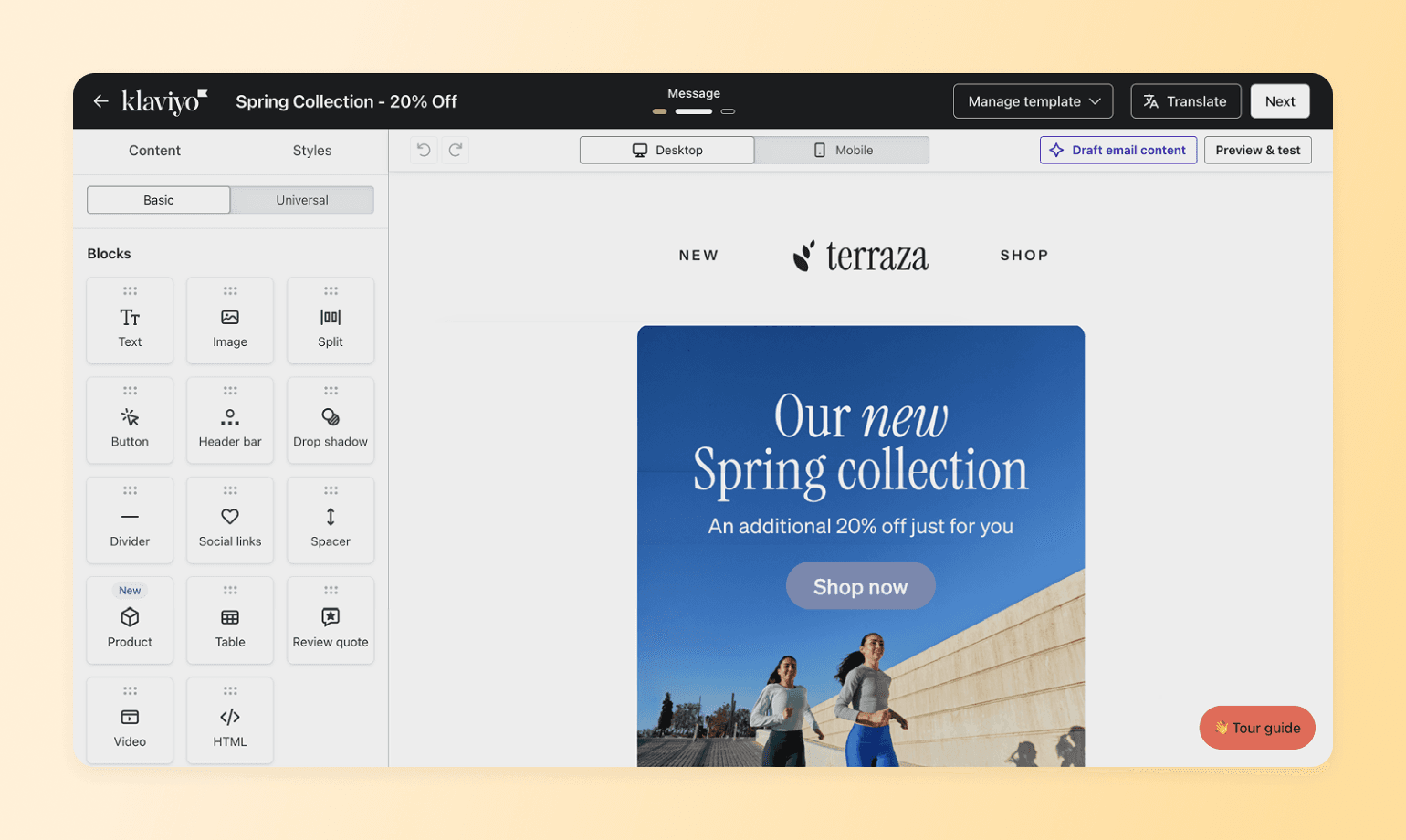
Klaviyo is an email and SMS platform built for ecommerce. Its strength is behavioral segmentation and automated flows driven by real-time purchase and browsing data, with a near-real-time Shopify integration that retail brands rely on.
Pricing: Free up to 500 contacts; paid plans bill by active profile, rising with list size.
Here's where Klaviyo falls short
- Built for retail, not creators: Klaviyo shines for Shopify stores but struggles to justify itself outside ecommerce, so a coach, educator, or community-led creator pays for power aimed at a different business.
- Active-profile billing escalates fast: The 2025 shift to active-profile pricing means you pay for stored contacts whether you email them or not, with bills jumping sharply as lists grow.
- A steep learning curve: Building complex segments and flows takes real time, and smaller teams without a dedicated email specialist rarely get full value from the platform.
Klaviyo is the best ecommerce email engine on this list, which is exactly why it's a poor fit for most creators, its depth is pointed at carts and catalogs, not courses and memberships. Its segmentation also runs on ecommerce data alone. Circle is purpose-built for a creator business. The member record behind your email holds course progress, event attendance, and community activity, so your segments and automations act on how someone engages with your work, not just what they bought.
What to look for before you commit
The feature lists above are easy to compare. The things that decide whether you'll still be happy in two years are harder to see on a pricing page, and they're the ones worth weighing before you pick. Start with a single question: what do you want your audience relationship to look like two years from now? A platform that fits a solo writer publishing essays is rarely the one that fits a coach selling programs, so choose for where you're headed, not just where you are today.
From there, three things matter more than the spec sheet:
- Real audience ownership: Your list is your most valuable asset, so check what truly leaves with you if you go. Most platforms export email addresses, but your archive, tags, action history, and payment relationships are often harder to recreate, and if your growth leans on a platform's own discovery network, part of your audience is effectively platform-owned even when the emails are yours.
- The growth tools built in: If you're starting cold, on-platform growth can do real early lifting, so look at what's included: recommendation networks where other newsletters surface yours, referral programs that reward subscribers for bringing in friends, paid acquisition like co-registration ads, and public discovery feeds. The trade-off is that growth which depends on the platform's network is growth you can't fully take with you.
- Room to grow without a migration: Switching platforms mid-growth costs you time, momentum, and sometimes subscribers, so the cheapest move is picking one you won't outgrow. If memberships, courses, or events are anywhere on your two-year roadmap, a tool that only sends email means rebuilding your stack the moment you add them.
None of these show up on a feature comparison, but they're what separates a platform you settle into from one you fight for a year and then leave.
Why Circle is the strongest pick for newsletter creators in 2026
Every platform here can send an email. The difference shows up after you hit send: whether a reader has anywhere to go, whether past newsletters stay findable instead of vanishing into inboxes, and whether a subscriber can become a paying member without you bolting on three more tools.
Circle is built for exactly that. Your newsletters stop disappearing into inboxes and become a searchable library, each one its own evergreen post with a discussion thread attached. Readers get a place to connect between newsletters through workshops, Q&As, and member discussions, not just a reply on a quiet Tuesday. And the subscriber-to-member path runs in one place: paid tiers, members-only spaces, coaching, and one-time or recurring purchases, all under your brand and tied to the same member record as the email. If all you need is a referral engine or a dead-simple send tool, Beehiiv or MailerLite will get you there faster — Circle is built for what comes after that.
The result across Circle customers is less tool fragmentation, more of each dollar kept, and a cleaner path from a one-time send to recurring membership revenue.
Turn your newsletter into a real business
Newsletter platform FAQ
What is the best newsletter platform for creators?
The best fit depends on what you're building. If all you'll ever do is write and send, a dedicated newsletter tool covers it. But most creators, coaches, and educators don't stop there, they add a paid membership, a course, a community, and that's where a single newsletter tool runs out of room and you start bolting on others. An all-in-one platform like Circle handles the newsletter and everything around it, email, courses, events, payments, and community in one place, on one set of member data, so the platform grows with the business instead of capping it.
How much does a newsletter platform cost?
Costs range from free plans with subscriber or feature limits to higher tiers that unlock advanced automation, analytics, and monetization. Some platforms charge a flat or subscriber-scaled monthly fee, while others (like Substack) take a percentage of your paid subscription revenue instead. Because most pricing scales with your list size, check the cost at the subscriber count you expect to hit in 12 months, not just where you are today. It also helps to weigh that cost against what the platform could earn you. Circle's community ROI calculator estimates that using real follower-to-member conversion and churn data from communities on the platform.
Is a free newsletter platform good enough to start?
A free plan is a fine place to start, but free tiers tend to gate the features you need to make money, paid subscriptions, advanced automation, and the segmentation that drives product sales. Several platforms have also trimmed their free plans recently, so check the current limits before you build around one. If monetization is on your roadmap within the next year, it's worth budgeting for a paid plan from the start, because the features behind the paywall are usually the ones that pay for it.
How do I know when I've outgrown my newsletter platform?
The signs are practical: you're paying for or working around features the platform doesn't support, you can't segment your list the way your business works, or fees are eating your revenue. If you're spending more time managing your stack than creating, the platform has become the bottleneck.
Can a newsletter platform replace my whole tool stack?
That's the real dividing line on this list. A dedicated email tool sends well but leaves courses, payments, community, and a website as separate subscriptions. An all-in-one platform like Circle runs the newsletter alongside courses, events, payments, and community on one member record, so consolidating isn't about killing one tool, it's about whether the next four live in the same place as your email.

Head of Performance Marketing
Marcus is the Head of Performance Marketing at Circle—and Circle's main demand gen nerd.