7 Best Skool alternatives for community builders in 2026
Skool has become one of the fastest ways to launch an online community. It’s simple. It’s affordable. And it gets you up and running fast, which is exactly what most creators need in the early days.
But for many founders, there’s a moment when things start to feel… a little tight.
You want to launch a second offer, create tiered memberships, run a high-ticket program, or build something more structured and professional. And suddenly, what once felt refreshingly simple starts to feel limiting.
If you’re feeling this way, it might be time to explore Skool alternatives. Not because Skool is broken, but because as your community grows into a real business, you need something more robust.
In this guide, we’ll break down the 7 best Skool alternatives in 2026, especially for founders running paid communities, coaching programs, or structured learning experiences. For each platform, we’ll cover:
- Key features
- Pros and cons
- Pricing
- What users actually say (the good and the not-so-good)
Why people are looking for Skool alternatives
Skool has earned its reputation for simplicity—and for good reason. If you’re just getting started, it does a lot right:
- Fast time-to-launch: You can set up a community in minutes.
- Simple interface: No steep learning curve.
- Predictable pricing: One flat monthly fee.
- Strong early engagement: Especially for small, active groups.
For solo creators validating an idea or launching their first paid community, that’s more than enough. But as your community grows, the same simplicity can start to create friction. At that point, a few common limitations start to surface:
It’s a bit too light for structured programs
Skool works well for simple courses, but once you move into more advanced programs, it starts to feel limiting. There’s little support for structured learning paths, segmentation, or deeper member management. As a result, it struggles to support certification programs, coaching cohorts, or multi-offer ecosystems.
Monetization is hard to scale
Skool supports basic subscriptions, but many community businesses need more flexibility as they grow. There’s no real support for tiered pricing, bundled offers, or multiple products within one ecosystem. That makes it harder to experiment with upsells or expand your revenue streams.
Limited brand control
As your community evolves into a premium experience, presentation starts to matter more. With Skool, customization options are limited, and most communities end up looking very similar. This can make it harder to create a distinct, professional brand. For high-ticket programs, “good enough” design often isn’t enough.
Migration feels risky
If you’ve already built your community on Skool, switching platforms isn’t a small decision. You likely have active discussions, course progress, and paying members who are used to how everything works. Moving platforms can feel like you’re putting all of that at risk, especially when it comes to preserving content, comments, and overall momentum.
So what are the alternatives that actually support where your community is headed next? Let’s take a look.
Members only
One issue, five minutes, every Tuesday. Read by +14,200 creators.
Top 7 Skool alternatives: A quick overview
| Platform | Best for | White-label | Courses | Events | Mobile app | Pricing | Scalability |
|---|---|---|---|---|---|---|---|
| Circle | Scaling community businesses | Yes, under the CirclePlus plan | Yes | Yes | Yes | Tiered, starting at $89/mo | High |
| Mighty Networks | Courses + events | Partial, through its branded app | Yes | Yes | Yes | Tiered, starting at $79/mo | Medium |
| Kajabi | Course-first businesses | Partial, through its branded app | Yes | Yes | Yes | Tiered, starting at $143/mo | Medium |
| Heartbeat | Interactive communities | Yes | Yes | Yes | Yes | Tiered, starting at $40/mo | Medium |
| Bettermode | Brand/customer communities | Yes | Limited | Can only embed streams | No native app | Tiered, starting at $399/mo | Medium |
| Discord | Free real-time communities | None | No | Informal | Yes | Free | Low |
| Slack | Professional communities | None | No | Basic | Yes | Per user, starting at $7.25/user/month | Low |
1. Circle — best Skool alternative for serious community businesses
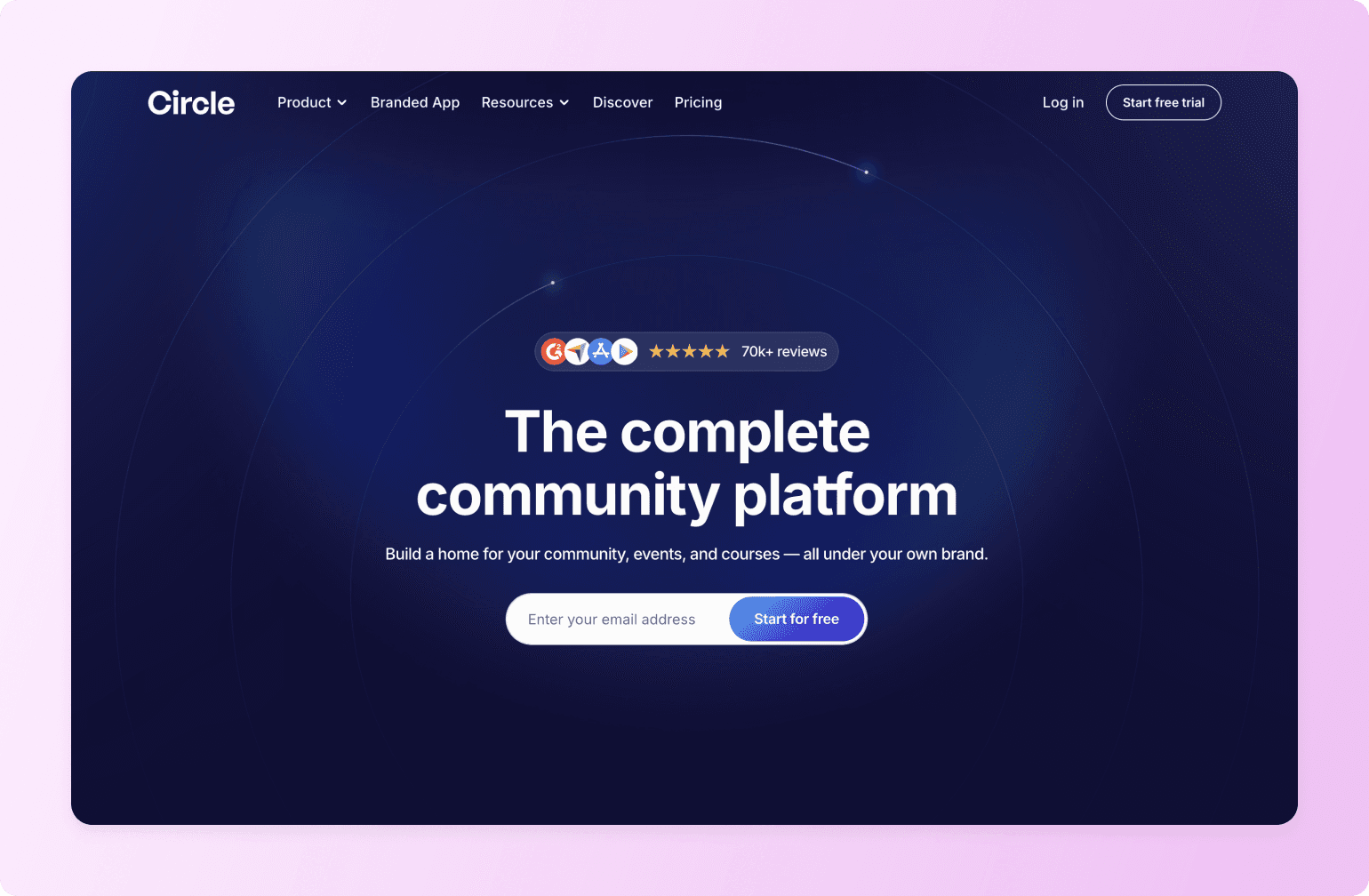
If Skool is built for getting started, Circle is built for what comes next. Circle is designed for creators, educators, and entrepreneurs who are turning their communities into real businesses. It brings together community, courses, events, and monetization into one platform, giving you the structure and flexibility that Skool starts to lack as you grow.
Circle has a clear upper hand over Skool when it comes to multi-product monetization and structured community experiences, making it easier to run memberships, courses, and cohorts in one place without things getting messy (or held together by workarounds). It also gives you full control over your brand and member experience, while Skool communities tend to look and feel the same.
Key features:
- Structured community spaces to organize discussions, chats, resources, and content in a way that's easy to navigate (not just one feed).
- Built-in course builder to create structured learning experiences with modules, drip scheduling, and cohort-based programs.
- Live events and streaming to host workshops, coaching calls, Q&As, and webinars directly inside your community.
- Flexible monetization tools allowing you to sell memberships, subscriptions, courses, and live experiences in one place.
- Advanced engagement tools, including direct messages, group chats, gamification (points, badges, leaderboards), and activity tracking.
- Branded experience, including a native community website builder and branded iOS and Android apps via CirclePlus.
- Analytics and insights to track engagement, retention, and revenue with built-in dashboards.
- Security and scalability, including role-based permissions, secure payments, and infrastructure designed to grow with your community.
Pricing:
Plans start at $89/month. All core plans include a 14-day free trial.
Ideal for:
Creators, educators, and entrepreneurs building scalable community businesses with multiple offers, structured programs, and a strong branded experience.
| Pros | Cons |
|---|---|
| Built for multi-product businesses. | Might not be the best option if you’re a budget-first creator. |
| All-in-one platform. | May take a bit longer to set up compared to Skool due to the depth of features and flexibility. |
| Strong engagement tools. | |
| Robust monetization options, including tiered memberships and courses. | |
| Migration support included (which makes switching a lot less painful). |
💬 Users say:
👍🏼 “We launched the BossMom+ app with Circle, and I couldn't be happier. I teach how to build communities, and hands down, Circle is my go-to. The best tools, the best support, just the best. I have been in communities built on Skool, Mighty, and others, and they just aren't built as well as Circle. It's very user-friendly. Easy to integrate with tools like Zapier...although with its new marketing feature, we don't have to do much integration. My community is using it daily, and we love how the notifications, leaderboard, and announcements keep everyone engaged. And they are always working to make it better. Don't go with any other platform. You can have it up and running in a day.” –
🤔 “It's difficult at times to navigate the admin and have a full understanding of connecting all the dots on the backend. They have many updates, which is great, but often makes it a challenge to stay up to date with everything.” – Verified review from G2
Circle vs. Skool: A quick feature comparison
| Circle | Skool |
|---|---|
| Structured community architecture | Simple gamified forums |
| Tiered growth scalability | Flat pricing |
| Full white-label + branded apps | Limited branding |
| Integrated courses + events + CRM | Basic courses |
| Deep engagement + revenue metrics | Minimal analytics |
We’ve made over $3M on Circle over the last two years. It supported our live cohorts, self-paced courses, virtual summits, a subscription-based membership, and our first in-person summit in LA. This is the power of a true ‘all-in-one’ platform.
👉 For a detailed breakdown, check out the Circle vs. Skool comparison.
2. Mighty Networks — best Skool alternative for network-oriented creators
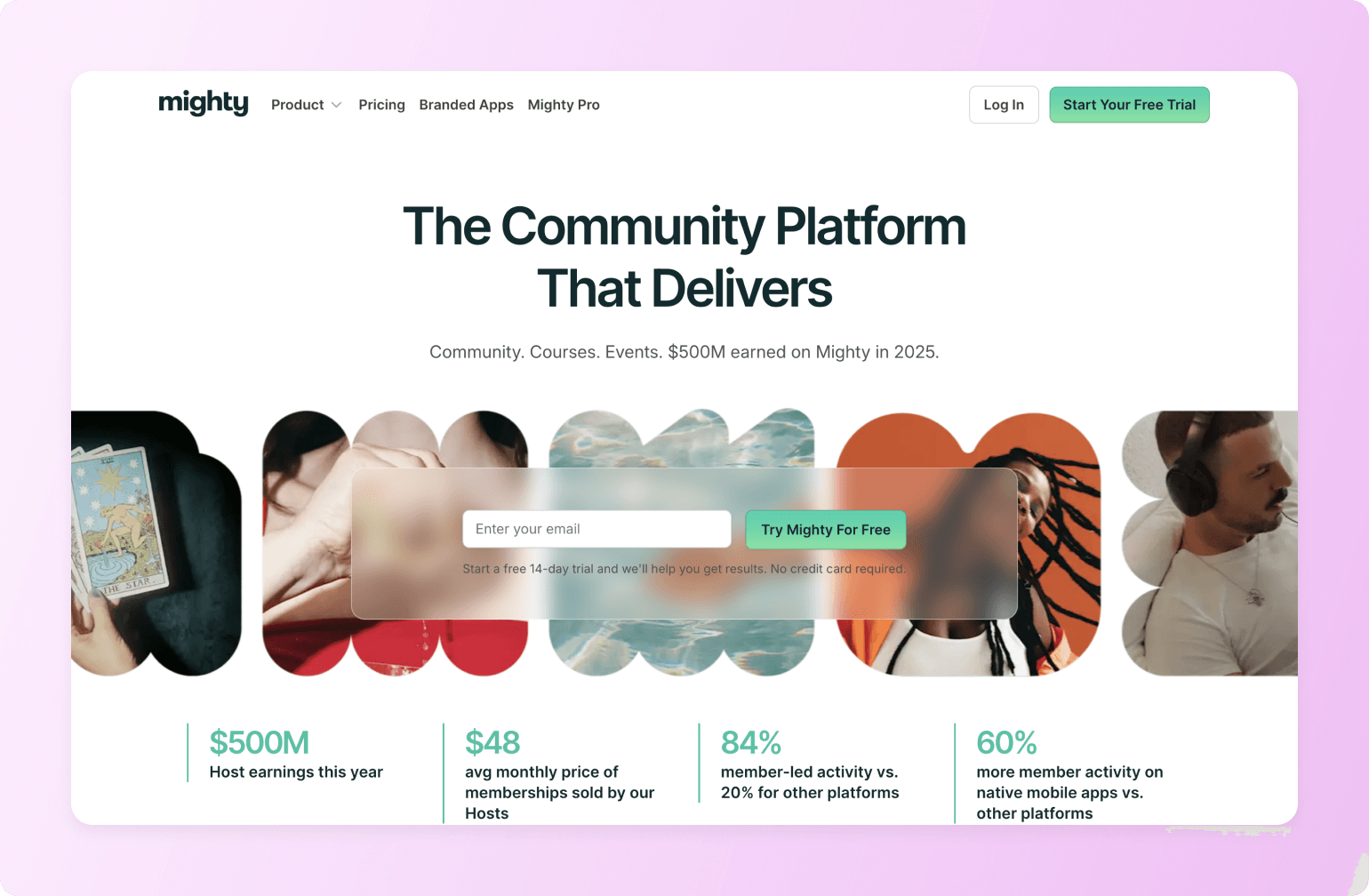
Mighty Networks is an alternative to Skool for creators who want to combine community, courses, and live experiences in one platform. It puts a heavy emphasis on member interaction and events, with features designed to keep people coming back regularly. Compared to Skool, it offers more flexibility and a stronger mobile experience.
That said, it still leans toward creator-led communities rather than fully structured community businesses.
Key features:
- Built-in courses and learning paths.
- Native live events and streaming.
- Mobile apps designed for engagement.
- Flexible community spaces.
Pricing:
A free 14-day trial available. Plans start at $79/month.
Ideal for:
Creators building communities that combine content, courses, and interaction.
| Pros | Cons |
|---|---|
| Strong focus on member engagement and interaction. | The interface can feel more complex than Skool. |
| Better mobile experience than most platforms. | Pricing can scale quickly as you unlock more advanced features. |
| Suitable for creators who want a hands-on, interactive community style. | Lack of customization options compared to other platforms on the market. |
💬 Users say:
👍🏼 “I really appreciate that this platform serves as an all-in-one community and course solution for our company. I also enjoy the layout of the modules and find the interface very intuitive to use. The app itself is visually appealing, which was a major selling point for us.” –
🤔 “The interface can feel a bit rigid when you’re trying to do more dynamic storytelling or brand-heavy design. We’d love more control over visual customization and landing page layouts without needing to code. Also, there have been some issues with email deliverability and user login friction—especially for community members who aren’t super tech-savvy.” –
Mighty vs. Circle: See how Mighty Networks stacks up.
3. Kajabi — best Skool alternative for course-first businesses

If you’re a creator with a passion for teaching others, Kajabi is a strong Skool alternative. The platform combines courses, coaching, memberships, and marketing into one system, making it especially effective for selling digital products at scale. Compared to Skool, it offers far more depth in email marketing and sales funnels, which are central to its value.
However, its community features aren’t the most robust on the market. While they work well as a supporting layer for your products, creators who want a highly interactive, community-first experience may find them a bit more limited.
Key features:
- Advanced course builder with structured programs.
- Built-in email marketing and automation.
- Sales funnels, landing pages, and checkout tools.
- Multiple product types (courses, coaching, memberships).
Pricing:
A free 30-day trial available. The entry-level plan will cost you $143/month.
Ideal for:
Creators building course businesses with a strong focus on marketing, funnels, and revenue growth.
| Pros | Cons |
|---|---|
| Well-suited for scaling knowledge-based businesses. | Higher starting price compared to most alternatives. |
| Strong monetization options, including subscriptions, one-time payments, plans, and automated tax calculations. | Underwhelming when it comes to community-first or interaction-heavy experiences. |
| Powerful sales funnels and conversion tools. |
💬 Users say:
👍🏼 “Kajabi is great for people like me who run online courses, have a following, and want to run an online community and sell products and courses. It has all the pieces I need in an integrated package!” –
🤔 “I've spent most of the day trying to resolve the issue I'm having with the platform. At first, I only received automated messages. I do everything they ask, and the problem still isn't resolved. I request assistance from a technician, it takes forever to connect, and on top of that, the chat closes because it took me five minutes to respond.” – Verified review from Trustpilot
Kajabi vs. Circle: See how Kajabi stacks up.
4. Heartbeat — best Skool alternative for flexible community setups
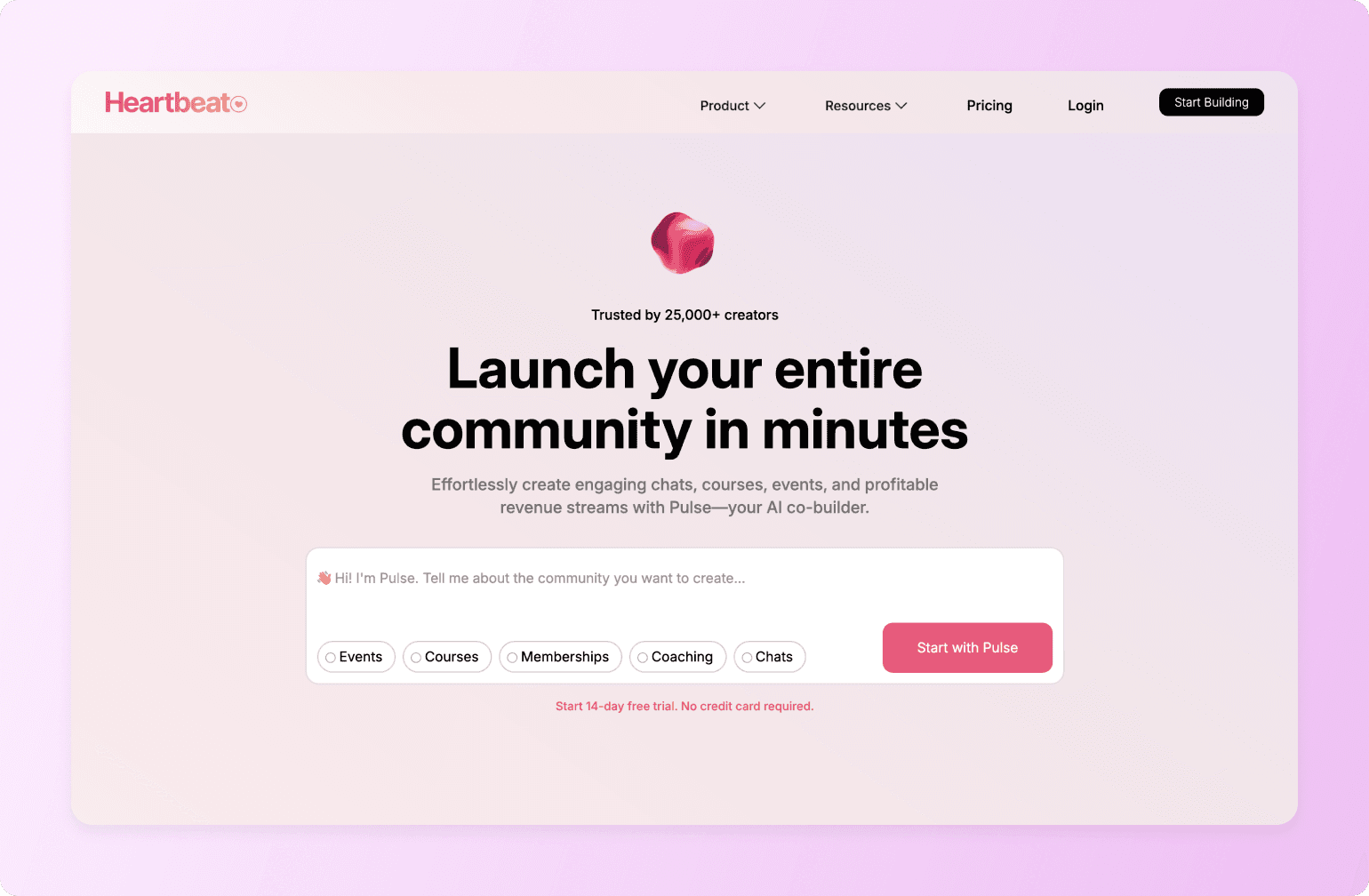
Heartbeat is a flexible platform that brings together community, courses, events, and monetization in one place. Compared to Skool, it gives you more ways to structure programs and run different types of offers (without being boxed into a single format). It also leans more into real-time interaction, with chats, events, and always-on spaces playing a bigger role in the overall experience.
Key features:
- Community-first courses with built-in discussions, assignments, and drip options.
- Flexible monetization with subscriptions, one-time payments, upsells, and affiliates.
- Built-in content library with documents, embeds, and searchable resources.
Pricing:
A free 14-day trial is available. Paid plans start at $40/month.
Ideal for:
Creators who want flexibility to combine courses, events, and multiple offers in one community.
| Pros | Cons |
|---|---|
| More flexible than Skool when it comes to structuring programs and offers. | The Starter plan is limited to 1,000 members. |
| Strong feature set even on lower-tier plans. | Community experience can feel closer to a chat-based feed, which may not suit all use cases. |
| Built-in automation and workflows that trigger actions based on member behavior. |
💬 Users say:
👍🏼 “This is an almost perfect platform. I've used Heartbeat for the last 2-3 years to host a community. The "course" element is excellent, much better than similar tools like Teachable or Thrivecart's course add-on. It's easy to publish courses, get homework/assignments from students, etc. If you just need a place to host courses and review student work, Heartbeat is excellent.” –
🤔 “It is 2026, and Heartbeat still doesn't support multi-language localization. I have been waiting for four years to use this platform in Spanish. It is deeply frustrating and disappointing that a project of this caliber continues to ignore the global market.” –
5. Bettermode — best Skool alternative for brand communities
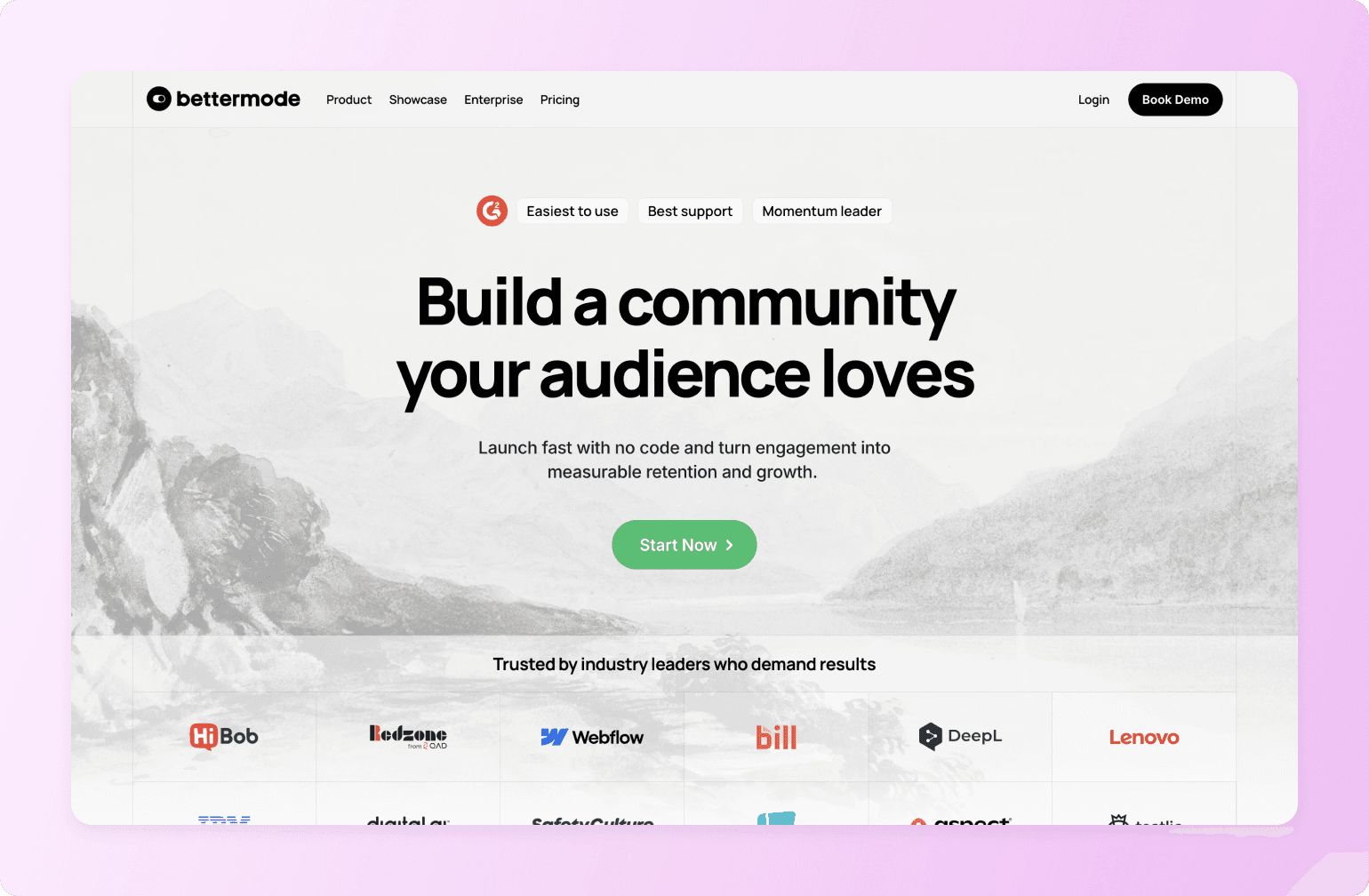
Next on the list of Skool’s competitors, we have Bettermode. It’s a platform for companies that want brand communities that integrate into their existing products or websites.
Unlike Skool, which is built for solo creators who want simplicity, Bettermode focuses on flexibility, structure, and control, making it a strong option for teams and organizations. It’s particularly well-suited for customer communities, product hubs, and support ecosystems.
Key features:
- No-code, drag-and-drop community builder.
- Advanced customization and white-labeling.
- Modular layout and flexible feature configuration.
- Integrations with tools like Slack, Notion, and more.
Pricing:
Plans start at $399/month.
Ideal for:
Companies building branded communities for customers or users.
| Pros | Cons |
|---|---|
| Designed for embedded communities within products or websites. | Less suited for fast launches compared to Skool. |
| Advanced user roles and permissions for teams. | Not built specifically for courses or structured learning experiences. |
| Scales well for large user bases and enterprise environments. |
💬 Users say:
👍🏼 “It's easy to set up and to maintain, anyone can get started without code. It took a while for me to understand the concept of building CMSs that are then applied to spaces/pages, but after I figured it out, it worked like a charm. Overall, there's minimal time spent on setting up the platform, so you can spend more time on creating content.” –
🤔 “The system is sluggish more frequently than I would like, but the features more than make up for this at the moment.” –
Bettermode vs. Circle: See how Bettermode stacks up.
6. Discord — best free Skool alternative
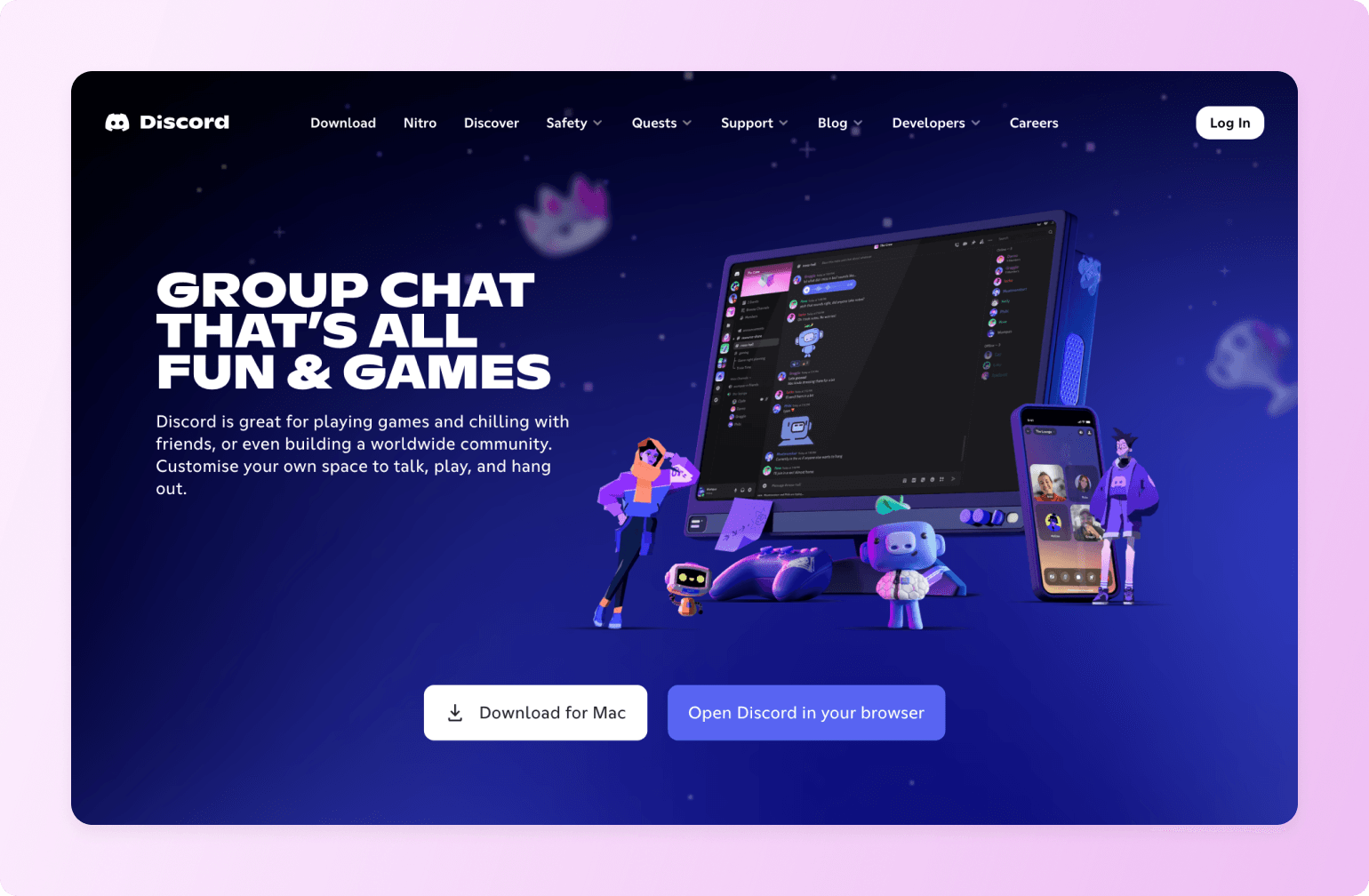
If you're on a tighter budget and not picky about the features and capabilities, Discord is one of the most popular Skool alternatives out there. It’s widely used for building free, real-time communities, with a strong focus on chat, voice, and ongoing interaction.
But just like Skool, there’s also a risk you’ll quickly outgrow Discord. Ultimately, it isn’t built specifically for creators who want to build a community business or sell courses.
Key features:
- Real-time chat with channels and reactions.
- Voice channels and video calls for live interaction.
- Bots and integrations for moderation, automation, and engagement.
- File sharing and direct messaging.
Pricing:
Discord is free to use, with optional paid upgrades (Discord Nitro).
Ideal for:
Gamers and hobbyists building free communities centered around real-time conversation.
| Pros | Cons |
|---|---|
| Great for real-time engagement and conversation. | No built-in tools for courses, monetization, or structured programs. |
| Many key features are free. | Can feel chaotic and hard to navigate as communities grow. |
| Works well for gaming, hobby, and interest-based communities. | Isn’t built for professional or high-ticket community experiences. |
💬 Users say:
👍🏼 “Feature-rich and lightweight with options to interact, such as text channels, voice rooms, etc. Great role-based access control for everything. Best voice chat with low latency, which can be easily used by anyone. Integrate bots for moderation, fun, etc.” –
🤔 “Discord has been very, very poor lately. Bad connection, and laggy for everyone I've asked so far.” –
Discord vs. Circle: See how Discord stacks up.
7. Slack — best Skool alternative for professional communities
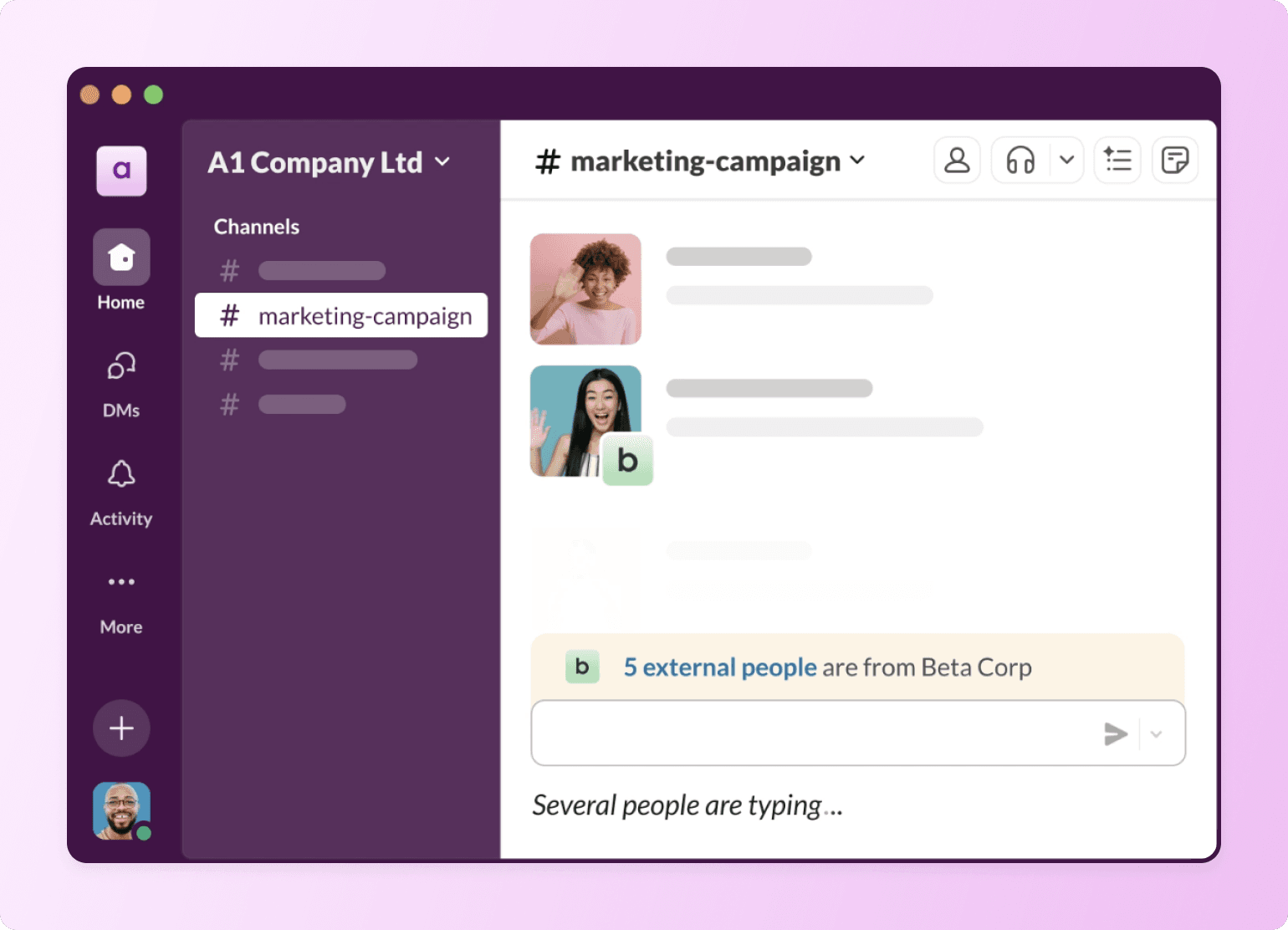
Last but not least, we have Slack. While it wasn’t originally built for communities, it’s become a popular option for professional groups and niche networks. At its core, Slack is a workplace communication tool—a really good and popular one.
However, it doesn’t offer built-in tools for monetization, structured content, or many of the features you’d expect from a conventional community platform. So while it works well for conversations, it can fall short if you’re trying to build something more intentional (or revenue-generating).
Key features:
- Channel-based discussions organized by topic or group.
- Threaded replies to keep conversations structured.
- Direct messages and small group chats.
- File sharing and collaboration within conversations.
Pricing:
There is a free plan. Paid plans start at $7.25/user/month.
Ideal for:
Professional and networking communities.
| Pros | Cons |
|---|---|
| Familiar and easy to adopt, especially for professional audiences. | No built-in tools for courses, monetization, or structured programs. |
| Powerful integrations with third-party tools. | Can lead to notification overload as activity increases. |
| Strong for peer-to-peer knowledge sharing and quick feedback loops. | Limited customization and branding options. |
💬 Users say:
👍🏼 “Great collaboration and community tool. I particularly like that you can build channels for certain topics.” –
🤔 “Slack's free version now limits you to 90 days of message history. After three months, your old messages are hidden unless you pay to upgrade. This can be a major pain for small teams or community groups who lose access to their own data.” –
💭 Thinking about moving on from Slack? You aren’t alone!
Many community builders hit a wall with Slack very quickly. Whether it’s disorganized content, limited structure, or no built-in monetization tools, there comes a point where you need something more purpose-built (and a lot less scrappy).
If you’re exploring what that next step looks like, it helps to see how others have made the move.
Take a look at how Modern Fertility made the switch from Slack to Circle, or watch how Everything Marketplaces transitioned smoothly when they hit 500+ members.
Slack vs. Circle: Discover how Slack measures up.
How to migrate from Skool to Circle
So, if you decide to move from Skool to Circle (we’ll welcome you with open arms 🤝), know that you won’t be doing it alone. Circle offers full migration support, so you don’t have to worry about losing your content, breaking your setup, or disrupting your community.
In practice, it looks like this:
Step 1: Tell us about your setup. Share a few details about your current Skool community, courses, and payments. This helps our team understand exactly what needs to be moved.
Step 2: Review your migration plan. Our team will walk you through the migration process, confirm timelines, and make sure everything is mapped correctly—from memberships to content structure.
Step 3: Let us handle the move. Once approved, Circle takes care of the migration for you. That includes transferring your members, subscriptions, courses, and core content, so your community stays intact.
You’ll be kept in the loop throughout the process, and when it’s done, everything is set up and ready to go—no messy rebuild required.
Which Skool alternative is right for you?
The right platform depends less on features—and more on where you are in your journey. Here’s a quick decision framework: 👇
- Validating an idea (pre-revenue or early traction) → Skool (fast, simple, gets you live quickly).
- Community founder scaling to $5K+/mo and beyond → Circle (more structure, more flexibility, built for growth).
- Building a course-heavy funnel → Kajabi (strong on marketing and sales systems).
- Enterprise brand or product-led community → Bettermode (built for large teams, embedded communities, and product ecosystems).
- Running a free, large-scale public community → Discord (great for real-time, high-volume interaction).
What’s your pick?
At some point, every community builder has to decide what they’re really building.
Is it just a place for conversations?
Or is it something more—an experience, a product, a business?
The tools you choose shape that outcome more than you think. Circle is built for the second path.
It gives you the flexibility to design your community the way you want, not the way a platform allows. You can evolve your offers, refine the experience, and grow without needing to rebuild everything later. If that’s the direction you’re heading, Circle is ready when you are.
Start your 14-day free trial of Circle today.
FAQs
Is Skool good for large organizations or professional communities?
Not really. Skool lacks the infrastructure that professional and organizational communities require: no SSO (Single Sign-On), no custom domain, no white-labeling, no API access, no advanced admin permissions, and no automated content moderation. Every community lives under the skool.com domain and looks nearly identical to every other Skool community.
It's also worth noting that Skool has no presence on G2 or Capterra — the primary B2B software review platforms — while platforms like Circle have hundreds of verified reviews on both. For teams who need to evaluate platforms through proper procurement processes, that third-party validation matters.
Does Skool have the analytics you need to grow?
Skool has improved its analytics since mid-2025, adding MRR tracking, conversion metrics, and retention data. But it still lacks course-level reporting — no watch time, no completion rates, no lesson-level drop-off data. If you're running paid courses and need to understand where students disengage, you'll hit a wall quickly.
Platforms like Circle offer member journey tracking, content performance analytics, payment reporting, and AI-powered Activity Scores that benchmark your community's engagement against comparable communities. The analytics gap is less about vanity metrics and more about having the data you need to make smart decisions about your content and offers.
Can you fully brand your community on Skool?
No. Every Skool community lives at skool.com/your-name with Skool's branding visible throughout. There's no custom domain, limited design customization, and no white-label option. Skool's mobile app is a shared generic app — members search "Skool" in the app store and see every community on the platform.
If brand presentation matters to your members or your positioning — especially for premium programs — that lack of control can undermine the experience you're trying to create. Platforms like Circle offer custom domains, full brand theming, and white-label branded mobile apps published under your own name.
What's better than Skool?
It depends on where you are in your journey. Skool excels at fast launches and simple community engagement. But if you've outgrown its single-feed structure, limited branding, or basic monetization, platforms like Circle, Kajabi, and Mighty Networks each offer more depth — Circle for scaling community businesses, Kajabi for course-first funnels, and Mighty Networks for creator-led experiences.
Is Circle better than Skool?
For serious community businesses, yes. Circle offers structured Spaces, advanced monetization, branded apps, native email marketing, and workflow automation — tools Skool doesn't provide. Skool is better for creators who want the simplest possible setup and are focused on early-stage engagement. The right choice depends on whether simplicity or scalability matters more to your business right now.
What's better, Skool or Patreon?
They serve different models. Skool is built for community-driven engagement with courses and gamification. Patreon is built for content subscriptions where fans support a creator's work. If your business is about building an active community where members interact, Skool is the better fit. If you're primarily publishing content for a subscriber audience, Patreon works well — though neither offers the depth of a full community platform like Circle.
Is Substack similar to Skool?
Not really. Substack is a newsletter and publishing platform — it's designed for writers building an audience through email. Skool is a community and course platform designed for real-time engagement, discussions, and structured learning. They're complementary rather than competitive: some creators use Substack for audience building and a community platform like Skool or Circle for deeper engagement.
Contributing Writer
Paulina Major writes about online courses, freelancing, and growth. She helps creators build, launch, and grow educational communities that thrive.