The creator's guide to choosing a newsletter platform
TL;DR
- The wrong newsletter platform costs you more than its monthly fee. You'll outgrow features within a year, and when you try to move, you'll have a hard time taking your full audience with you.
- If you already have an audience, growth tools matter less than retention and monetization—the people are there, you just need a platform that helps you keep them and turn them into revenue.
- A newsletter is for finding your people. A community is for keeping them. The creators building real businesses run both, deeply interconnected.
Members only
One issue, five minutes, every Tuesday. Read by +14,200 creators.
You're three months into sending your newsletter. Your list is growing, open rates look healthy, and you're starting to think about turning on paid subscriptions. Then you realize your platform takes a meaningful cut of every dollar you earn. Or your growth stalls because the built-in tools aren't strong enough for the way you want to expand.
The platform you pick today shapes how you earn, grow, and relate to your audience over time. This guide walks through what actually matters when you're choosing—how pricing works, what growth and analytics tools you'll have on hand, and the community layer most creators eventually need.
Think two years ahead, not two weeks
Start with one question: what do you want your audience relationship to look like in two years?
- If you want to publish essays and build a readership, you need a platform built for content delivery and discovery.
- If you want to sell courses, coaching, or digital products, you need one built for marketing automation and segmentation.
- If you want recurring membership revenue, you need payment infrastructure and a place for members to connect beyond the inbox.
These are different business models, and the platform you choose has to serve whichever one you're building—ideally all of them, since most creators end up running more than one over time. Pick something that can cover the full picture from day one, and you won't have to rebuild your stack when your business grows past the version you started with.
What actually matters when comparing newsletter platforms
The choices that really shape your business a year or two from now aren't about which platform has the longest specs page. They're about the things you can't easily rebuild later: whether your emails reach the inbox, whether you actually own your audience, and how much of every dollar you earn stays with you. Most creators only notice these once they're already stuck. Get them right at the start and everything else gets easier.
1. Deliverability
Most platforms quote a "delivery rate" in the high 90s, but that number usually just means the receiving mail server accepted the email. It doesn't tell you whether your subscriber actually saw it in their inbox or whether it landed in spam. Those are two different things, and the second one is what affects your open rates and revenue.
No one has reliable, independent inbox-placement data across the major creator platforms—so treating a "99% delivery rate" as proof your emails are reaching people is a mistake. What you can actually evaluate is whether the platform gives you the tools to protect your sender reputation over time: domain authentication (SPF, DKIM, DMARC), automatic list cleaning to remove unengaged or bounced subscribers, and clear visibility into spam complaints when they happen. Those are the levers that keep your emails landing in the inbox once you're past a few thousand subscribers.
2. Audience ownership
Your subscriber list is your most valuable business asset, so you need to be able to leave with your full list intact if your platform disappears, changes its terms, or raises prices beyond what you can afford.
Most platforms let you export your subscribers. The question is what else comes with you. On some platforms, you can export subscribers, but your archive, action history, tagging, payment relationships, and any discovery-driven growth may be harder to recreate.
Check data portability before you commit to a platform, not when you're already trying to leave. If your growth depends heavily on a platform's built-in discovery network, your audience is partially platform-owned, even if the email addresses technically belong to you.
3. Pricing
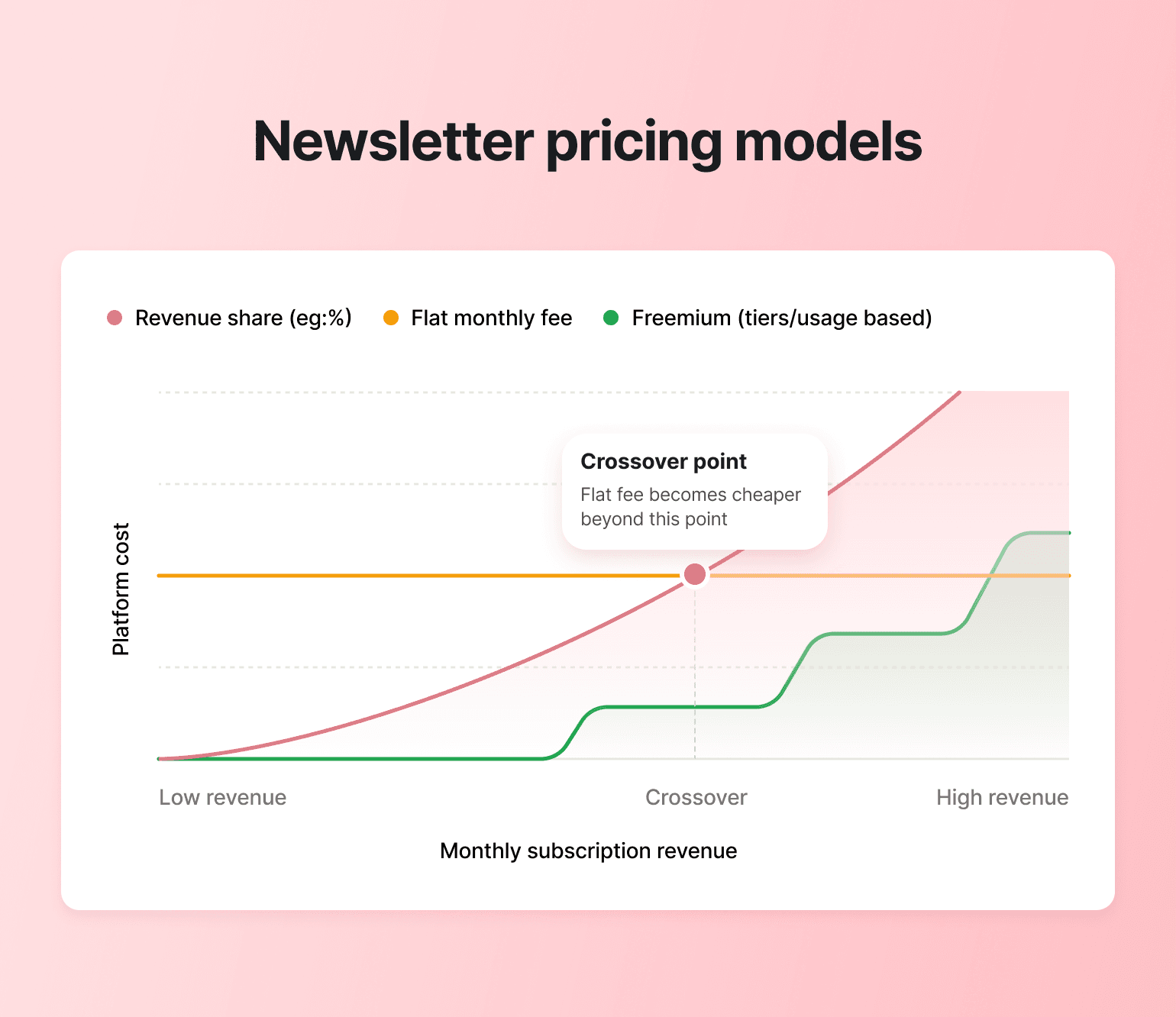
Three pricing models dominate the newsletter market, and the gap between them widens as your revenue grows:
- Revenue-share: No monthly fee, but the platform takes a percentage of every paid subscription you sell.
- Flat monthly fees: A fixed or subscriber-scaled monthly price, with no cut of your revenue.
- Freemium/tiered: A free plan up to a subscriber or feature limit, then subscriber-scaled monthly fees once you cross it.
If your newsletter is free, revenue-share looks unbeatable—you pay nothing. But the moment you turn on paid subscriptions, that flips. A percentage of every dollar you earn adds up quickly, and flat-fee platforms often come out cheaper, sooner than most creators expect.
Free tiers have the same trap. They're a fine place to start, but they tend to gate the features you actually need to make money: paid subscriptions, advanced automations, and the segmentation that drives product sales. If monetization is on your roadmap inside the next year, budget for a paid plan from day one—the features behind the paywall are usually the ones that pay for it.
3. Growth potential
Built-in growth infrastructure varies a lot from one platform to the next. The strongest setups bundle several mechanisms together:
- Recommendation networks: Other newsletters on the platform suggest yours to their readers (and vice versa) after signup or in their content—the biggest organic growth lever creator platforms offer.
- Paid acquisition tools: Boosts or co-registration ads that let you pay to put your signup form in front of subscribers of newsletters in your niche.
- Referral programs: Existing subscribers earn rewards for bringing in new ones, with the tracking and reward delivery handled inside the platform.
- Discovery feeds and directories: Public-facing pages that index every newsletter on the platform and surface yours to readers browsing by topic.
- Cross-promotion features: Swap recommendations or run shared campaigns with other creators on the same platform.
If you're starting cold, a strong recommendation network or directory listing can do real early lifting for your audience growth.
4. Monetization
A newsletter can earn in a few different ways, and the strongest platforms support more than one:
- Paid subscriptions: Monthly or annual fees for premium issues, archives, or subscriber-only sections. Predictable recurring revenue and the most common newsletter monetization model.
- Ad revenue and sponsorships: Paid placements inside your sends, sold either directly to brands or through a platform's native ad network. Strongest for media brands and large-scale operators; less important for most creators.
- Affiliate revenue: Commissions from products or tools you recommend in your newsletter. Low effort, but capped unless you have real scale or trust.
- Digital products: One-off sales of templates, guides, or workshops promoted to your list. A good entry product before paid subscriptions.
- Courses and coaching: Higher-ticket offers sold through your newsletter and delivered elsewhere—or, ideally, in the same platform so members don't bounce between tools.
The platforms worth shortlisting are the ones that cover the models you'll actually use, with a single branded checkout, automated access control, and segmentation that lets you sell the right offer to the right subscriber at the right moment.
5. Segmentation and analytics
Raw subscriber counts tell you almost nothing about your business health. Knowing who opened, who clicked, who churned, and which segments convert to paid: that's what drives revenue decisions.
More advanced platforms offer behavioral segmentation and stronger monetization analytics, others add subscriber scoring and deeper analytics only on higher tiers. Completely free (or freemium) options usually need to be supplemented for anything beyond basic analytics.
For coaches and educators selling programs, this gap is especially costly. You need to know which subscribers are most engaged, which have purchased before, and how different segments convert. That intelligence is invisible on platforms that only show you aggregate open rates.
Choose a newsletter platform based on your business goals
Different creators need different things from a newsletter platform:
- Solo writers: Want simplicity and built-in discovery. They do well on platforms designed for publishing and audience growth.
- Media brands and newsletter operators: Focused on growth and ad revenue. They fit platforms with native ad and recommendation infrastructure.
- Coaches, educators, and digital product creators: Need stronger automation and product-selling workflows—and integrations (or native functionality) for their other offers.
- Community builders: Need something more—no pure newsletter platform supports the discussions, live events, or member-to-member connections that turn an email list into a recurring membership business.
Pick the one that fits where you're headed, not just where you are. Switching mid-growth is always disruptive—you lose time, momentum, and sometimes subscribers—so the best insurance is choosing a platform you can grow on from day one.
Pair your newsletter with a community to build a business
A newsletter brings people in. A community keeps them. With email, you send and your subscribers read, and—if you're lucky, you get a reply on a quiet Tuesday. That's where it ends. There's no room for members to talk to each other, ask questions in public, or build the kind of shared identity that turns readers into paying members who stick around. For coaches and educators especially, that ceiling shows up in what you can charge and how long anyone stays.
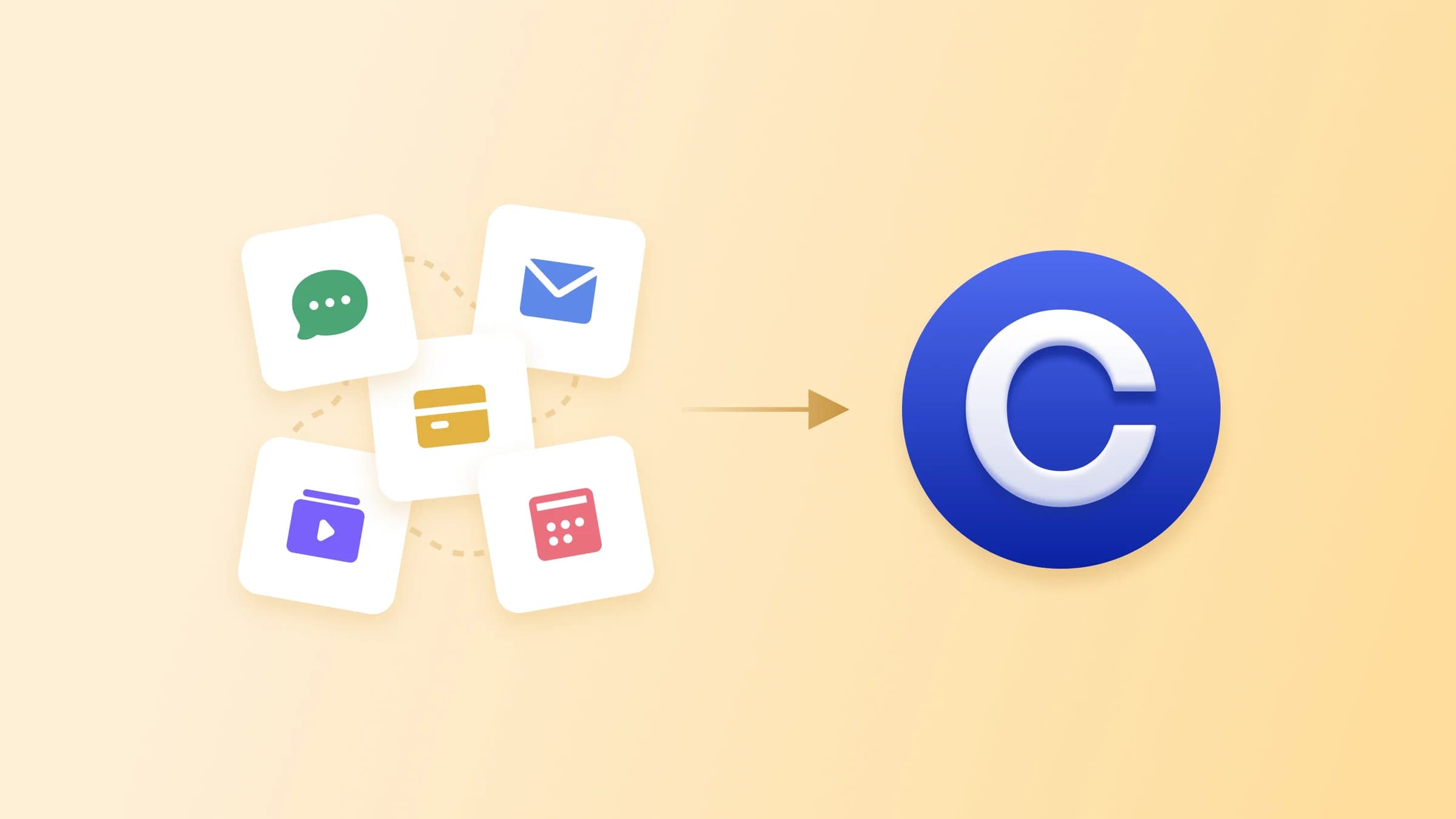
That's why more creators are bringing their newsletter, their courses, their conversations, and their events into the same place. Seth David of Nerd Enterprises is a good example. He used to run a stack of separate tools for community, courses, and email, and the costs kept climbing—north of $12,000 a year. After consolidating onto Circle, everything runs in one place. His weekly newsletter publishes through Email Hub as both a broadcast and a permanent community post. His courses live next to the discussions. And coaching, courses, and community together now bring in $37K or more a month.
Turn your newsletter into a business that pays you back
Your newsletter is a great place to find your people. It's not the place to keep them longterm. The creators building real businesses pair their newsletter with a community layer where members talk, learn, and pay to stay.
Circle brings discussions, courses, events, payments, and Email Hub into one branded home, so every send pulls people back into a business they want to be part of—not just an inbox they're hoping to reach.
Start your 14-day free trial and see what your newsletter can become.
Newsletter platform FAQs
How big does my newsletter need to be before paid subscriptions make sense?
There's no magic number, but most creators who turn on paid tiers do it once they have a few hundred engaged subscribers and a clear sense of what their audience would pay for beyond the free issue. Engagement matters more than list size. Look at the signals that actually predict willingness to pay: reply rates, forwards, click-throughs on links, and unprompted questions like "is there a paid version?" or "do you offer coaching?" If a meaningful slice of your list is doing those things week over week, you have a paying audience waiting to be asked.
Should I send from my own domain or use the platform's sending domain?
Always send from your own domain once you're past the experimentation stage. It protects your sender reputation, makes your list portable if you ever switch platforms, and keeps your brand consistent in subscribers' inboxes. Most platforms walk you through setting up SPF, DKIM, and DMARC records—do it early, before deliverability becomes a problem you have to dig out of.
What's a healthy open rate to aim for?
Open rates vary by niche, list age, and how you acquired subscribers, so industry benchmarks are mostly noise. A more useful target: your own trend line. If your open rate is climbing or holding steady as your list grows, you're in good shape. If it's dropping, that's a signal to clean your list, review your subject lines, and check whether new signups are actually expecting your content.
Can I run paid ads in my newsletter without a sponsorship platform?
Yes, especially once you have a few thousand engaged subscribers. Brands in your niche will often pay for direct placements if you reach out, and you keep 100% of the revenue instead of splitting it with an ad network. The trade-off is sales work: you're now sourcing sponsors, writing copy, and chasing invoices. Platforms with native ad networks are easier; direct deals usually pay more.
How do I know if I've outgrown my current platform?
The clearest signs are practical, not emotional. You're paying for or hacking around features the platform doesn't support, you can't segment your list the way your business actually works, your revenue is being eaten by fees, or you're sending people to three different tools to buy from you. If you're spending more time managing the stack than creating, the platform is the bottleneck.
Community Content Marketer
Arina is Circle’s community content marketer, sharing insights on community growth, GTM strategy, and storytelling for solopreneurs.