TL;DR
- In a community business, a lead is anyone who's raised their hand — free members, waitlist signups, course-only buyers, social followers — and each type needs different follow-up.
- There are four types of AI lead nurturing tools to know, and most creators end up combining two or three.
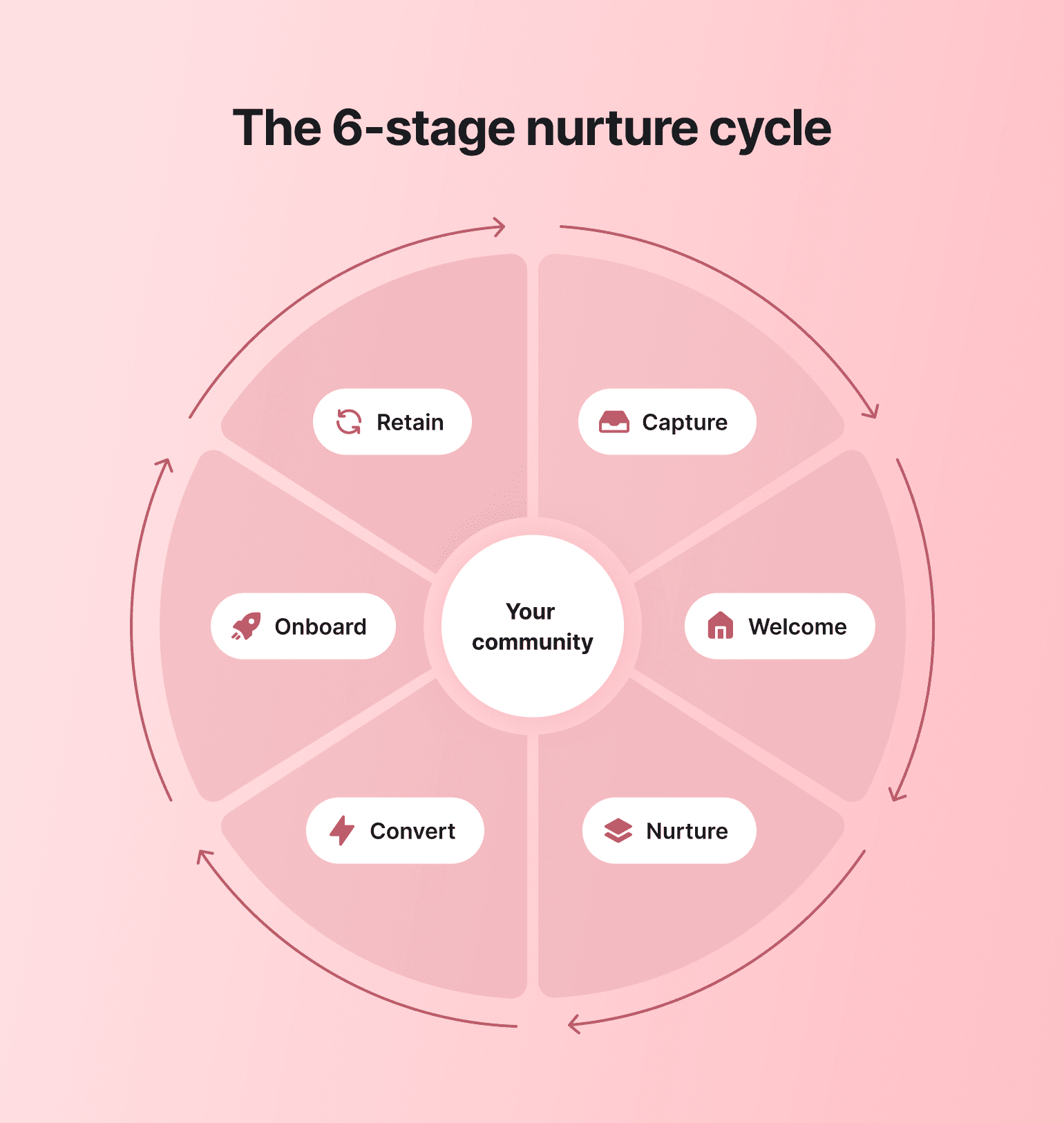
- A six-stage automation path (capture, welcome, value-led nurture, conversion, onboarding, and retention) is what turns those leads into paying members who stick around.
Members only
One issue, five minutes, every Tuesday. Read by +14,200 creators.
It's Monday morning, and you're staring at a dashboard that should feel like a win: 4,000 email subscribers, 600 free community members, and a 200-person waitlist from your last launch.
But only eleven people bought. Somewhere in that list are a group of prospects who watched every minute of your webinar, refreshed your pricing page twice last night, and are one nudge away from saying yes. Yet they just got the same generic "welcome to the community!" email as someone who grabbed a freebie six months ago and hasn't opened a message since.
AI-led nurturing lets you expand your member base from multiple sources without growing your team or spending more of your precious time and energy. It tracks what each person does (within your funnel), scores how close they are to buying, and adjusts your follow-up to match.
Below, you'll find how it works, what to use at every budget, and the path from cold lead to paying member. Before any of that works, though, you need to be clear on who you're nurturing.
What counts as a lead in a community business
A lead is anyone who has shown interest in your community or your offer but hasn't yet joined your community as a member, even if they've already bought a one-time product or signed up for a freebie. Leads include far more people than just your email subscribers.
They can be free community members browsing your public communities, waitlist signups from an upcoming launch, or social followers who've engaged with your content but haven't given you their email yet.
Free members and course students are often warmer leads because they've already opted in and, in some cases, bought from you before. Social followers are a different story, because an algorithm change or account suspension can cut off your access to them overnight.
That's where AI lead nurturing earns its keep.
What AI-led nurturing means for your community
AI lead nurturing is a follow-up automation that responds to each person's behavior in real time, rather than pushing everyone through the same fixed workflow or automation.
For example, a traditional drip campaign sends your welcome sequence to a webinar attendee and a casual freebie downloader the same thing, in the same order.
An AI nurturing platform notices when the webinar attendee watched your free workshop more than once, visited your pricing page, and asked a question in your chatbot, then sends them a targeted membership offer right away. The casual downloader keeps getting educational content, with occasional upsells, because their intent is lower than that of someone who’s spent an hour with your team on a webinar and browsed money pages on your site.
The tool works from the same list, but each person gets a different treatment based on what they've actually done. The function that makes that possible is lead scoring.
How AI scores and segments your leads
Lead scoring assigns a number to each contact based on their behavior, then groups those contacts into cold, warm, and hot tiers so you can answer one question fast: who should I focus on right now?
The two main approaches that set this automation are rule-based scoring (you set the point values) and predictive scoring (the system learns them), and both feed into that simple cold-warm-hot segmentation.
Behavioral signals worth tracking
The signals that matter most to most community businesses are the ones tied to buying intent:
- Email opens and clicks,
- Content consumption in your free community, courses, or events,
- Pricing page visits, and
- Checkout abandonment.
If you feed those into your AI (or just access via Circle MCP), you can quickly whip up a practical scoring system that only gets smarter with time.
Rule-based vs. predictive scoring
Rule-based scoring is where most creators start because you control the inputs. You define which actions earn points: opening an email, clicking a sales link, downloading a template, attending a webinar, or visiting your pricing page. Points can be set to expire, so scores reflect recent behavior rather than stale activity from months ago.
Predictive scoring takes it further by using machine learning to find patterns you wouldn't spot manually. The system looks at behavioral data across its entire database to identify which signals actually predict conversion, then assigns scores using that model.
Segmenting cold, warm, and hot leads
Segment your audience into three tiers—cold, warm, and hot—based on how they've engaged, and match your follow-up to each group.
Cold leads downloaded a freebie and never opened a follow-up email. They know you exist but haven't engaged in any real way. Focus on education and trust-building.
Warm leads have opened multiple emails, attended a free webinar, or engaged with your content regularly. They understand your offer and are weighing whether it's right for them. Focus on case studies, testimonials, and transformation stories.
Hot leads have visited your pricing page, finished a free course, or joined a waitlist. They're close to a decision. Focus on direct offers and clear calls to action. Scoring tells you who to talk to next — your tool stack decides how that conversation happens.
The four types of AI lead nurturing tools
There are four types of tools for AI lead nurturing: email platforms, AI chatbots, CRMs with marketing automation, and AI agent or workflow tools. Each fits a different stage of the nurture path, and most creators combine two or three as they grow.
AI-powered email platforms
Most nurture stacks start with an email platform, and the best ones add behavioral triggers and send-time delivery on top of standard broadcasts.
For community-based businesses, Circle's Email Hub sends behavior-triggered automations based on what members actually do inside your community: joining a space, finishing a course, attending an event, or going quiet. Because the email tool and the community sit on the same platform, there's no integration to break and no data to sync.
AI chatbots and conversational tools
Chatbots and DM automation handle the conversations you can't personally be in, on social platforms and on your site. Social DM tools (like ManyChat) can follow up from comment or keyword triggers, which helps turn social followers into email subscribers, while AI chatbots that live on your site answer common questions from your knowledge base at any hour, all over the world.
CRM and marketing automation platforms
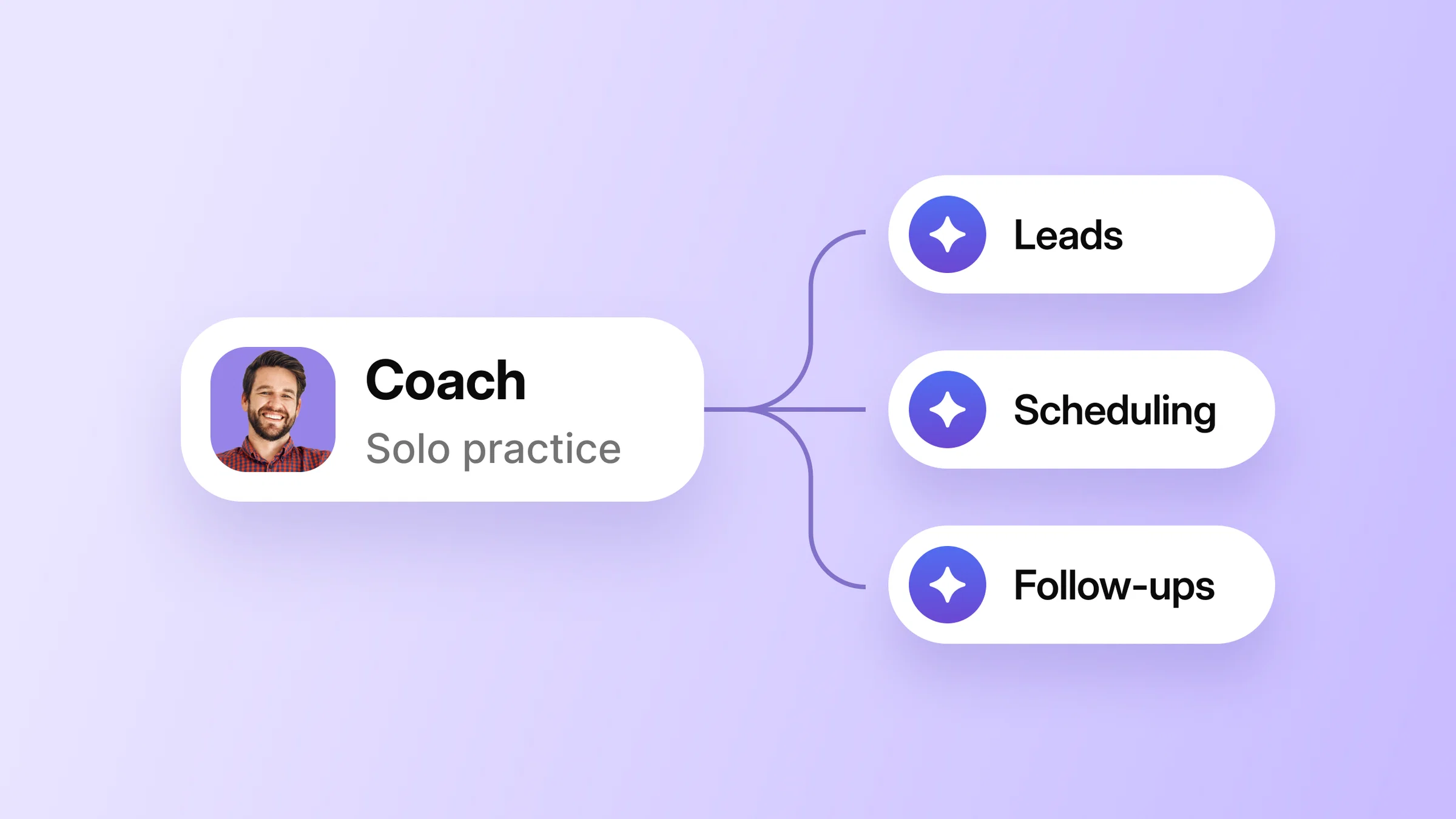
A CRM is where lead scoring, pipeline tracking, and workflow automation come together, which is worth its weight in gold when you have more leads than you can keep straight in your head. For coaches running more advanced funnels, platforms that combine email, scheduling, events, and funnel building can save time and sanity.
AI agent and workflow tools
Workflow tools and AI agents are masters of handling the in-between work: passing data between platforms, qualifying leads, and answering questions without your involvement.
For example, when a free member finishes a course module in one platform, an automation connector (like Zapier) can trigger an upgrade email sequence in another. No-code AI agent tools can also handle lead qualification and follow-up without custom development.
Circle's AI Agents, AI Copilot, AI Workflows, and MCP work together to bring this directly into your community, handling onboarding questions, member support, and lead qualification around the clock without a separate connector or custom build. But tools alone won't move someone from curious to paying. You need a solid process to identify good leads, hook them with something valuable, and then convert them into paying members.
The six-stage customer journey to convert leads
A working customer journey has six stages: capture, welcome, value-led nurture, conversion, onboarding, and long-term retention. Each stage has specific touchpoints that nudge leads toward becoming paying members.
Stage 1: Ccapture and deliver
Before you can nurture anyone, you need a way to capture their contact information. The most common method is offering a lead magnet—a free, valuable resource (like a guide, template, mini-course, or workshop) that people receive in exchange for their email address. Other capture points include waitlist signups, free community memberships, webinar registrations, or gated content. Whatever the format, the goal is the same: give someone something genuinely useful so they're willing to share their contact information and opt into hearing more from you.
Send the lead magnet in the first email rather than holding it back for a second send.
Stage 2: Wwelcome, then build trust
The first email often does double duty as the delivery email, so treat it as more than a receipt. Use it to establish your authority, clarify what the member will get going forward, and build anticipation for the next email.
The Roofing & Solar Reform Alliance takes this idea further on the in-product side. Founder Adam Bensman built an application-only community where a guided onboarding course auto-loads the first time a new member opens the branded app, so trust-building starts the moment someone signs in.
Stage 3: Nnurture with value
Spend the next two to three weeks sending short, value-first emails that match the problem each lead opted in to solve. Mix quick-win tactics, personal stories, member case studies, and FAQ emails that handle objections before they form.
Buyers often need repeated touchpoints before they're ready to purchase, so this run plus a launch sequence gives you a reasonable baseline for staying visible long enough to matter.
What matters more here is matching the sequence to the entry point. Someone who downloaded a pricing template has different questions than someone who signed up for a webinar on content strategy, so a dedicated, short sequence for each lead magnet will outperform a single generic flow. Using AI for these nurture sequences is a great way to beat the “blank page problem” if you don’t know where to start—and then edit in your voice, POV, and real stories.
Stage 4: Convert
This is the moment the nurture work pays off—where a warm relationship turns into a paying member. Once a lead's score crosses your "hot" threshold, move them into a sales sequence. Layer in social proof, address objections directly, and add urgency around enrollment deadlines.
Stage 5: Onboard
The instant someone buys, automated onboarding should welcome the new member, grant community access, and point them to their first engagement.
Once new members are in the door, the work shifts to keeping them supported as they find their footing within your community. Seth David of Nerd Enterprises is a good example of what that looks like in practice. After moving a fragmented stack into Circle, he uses an AI Agent called "Sandy" to field member questions the moment they come up, so new members get consistent, immediate answers as they settle in—without Seth having to be on call himself.
Stage 6: Retain and re-engage
After the initial nurture window closes, your job splits into two parts: keep non-buyers warm and bring cold members back before they churn.
For leads who don't convert, keep sending value and occasionally reintroduce offers. For members who go quiet, run a short re-engagement series and remove anyone who still doesn't come back. A smaller, engaged list tends to outperform a larger, stale one (and your deliverability will benefit from a clean, engaged list as well!).
Even with the right nurture sequences in place, there are a few sneaky mistakes that founders often make that hurt them in the long run.
Five mistakes that hurt lead conversion
Most lead-nurturing problems trace back to five repeat offenders: one-size-fits-all sequences, over-automation, calendar-based timing, dirty data, and "set it and forget it" thinking. Each one is fixable without rebuilding your stack.
1. Sending everyone the same sequence
A coach who sends an identical welcome series to a high-intent sales-page visitor and a casual freebie downloader doesn't serve either well. Segment when people first opt-in (usually, a form of some sort) by where they came from and what they wanted to get (lead source). Even basic segmentation by where someone came from will improve your email results.
2. Over-automating and removing the human
Use automation for logistics: welcome sequences, reminders and content delivery. Keep high-stakes moments human: sales conversations, objection handling (see: all the conversations you’ve ever had with people interested in your offers), and community conflicts. Build a threshold-based handoff so that when a lead crosses a score threshold, the sequence pauses and flags them for a personal reply. (Or just use Circle’s built-in flag system for AI Agents.)
3. Running calendar-based sequences (when you need a behavior trigger)
If a lead visits your sales page repeatedly but your sequence keeps sending educational emails before mentioning the offer, you've missed the moment. Swap time-based delays for behavioral triggers where it counts—like pricing page visits, webinar attendance, or checkout abandonment. This tends to be one of the higher-impact changes you can make to an existing nurture system.
4. Letting messy data power your automations
Duplicate contacts, missing tags, and failed integrations mean that members who have already purchased keep receiving "upgrade now" emails. Audit your data flows regularly and set up suppression logic (ie. move purchasers to a new list, or tag) so purchasers drop out of sales sequences right away. The best way to keep this simple as a solo operator is to use one tool that has insights and analytics about every step of your customer journey, like Circle.
5. Setting up sequences once and never revisiting them
Review performance regularly. If one message in your welcome sequence shows a sharp drop in opens compared to the previous email, something is pushing people away. And it’s your job to figure out what. Test subject lines and calls to action, and adjust so your content matches where leads actually are.
If you avoid these five (common) mistakes, you're already ahead of most creators trying to grow a paid community.
Turn AI lead nurturing into a thriving community
The creators winning at lead nurturing aren't the ones with the most tools. They're the ones whose email, community, and onboarding systems talk to each other, so a hot lead never gets a generic email and a cold subscriber never gets a sales pitch they're not ready for. You don't need another platform stitched to the side of what you already run. You need one place where the signals, the sequences, and the membership live together.
Start with behavioral triggers, a simple cold-to-hot scoring model, and a clear path from first opt-in to paid member — then let the system do the follow-up you'd never have time to do by hand.
Turn more leads into paying members with your 14-day free trial of Circle now.
AI lead nurturing FAQs
How is AI lead nurturing different from a regular drip campaign?
A drip campaign sends prewritten emails on a fixed schedule, regardless of what the recipient does. AI-led nurturing tracks what each subscriber does and routes them into different sequences based on their actions. Someone who visits your pricing page twice gets a different message than someone who hasn't opened an email in weeks.
What tools do I need for AI lead nurturing as a solo creator?
At a minimum, you want an email platform with behavioral triggers and automation. As you grow into running a community or course, adding aplatform like Circle that integrates email, community, and payments reduces the integration points where leads tend to get lost.
How do I know which leads are ready to buy?
Watch three behaviors: email engagement, content consumption, and buying signals, such as visits to your pricing or sales page. Leads showing all three are hot and are good candidates for a direct offer or personal outreach.
What is the biggest mistake creators make with lead nurturing?
Treating every lead the same. Sending identical sequences to a cold subscriber who downloaded a freebie months ago and a hot lead who just watched your full webinar and visited your pricing page wastes your best opportunities. Even a simple three-tier segmentation system based on a few behavioral signals can lift your conversion rate.

Head of Product Marketing
JK Sparks is Circle's Head of Product Marketing, shaping the positioning, messaging, and go-to-market strategy behind the company's biggest product launches.