7 proven ways to make money from your newsletter
TL;DR
- Monetize your newsletter with paid subscriptions, memberships and communities, sponsorships, affiliate marketing, digital products, events, and paid referrals.
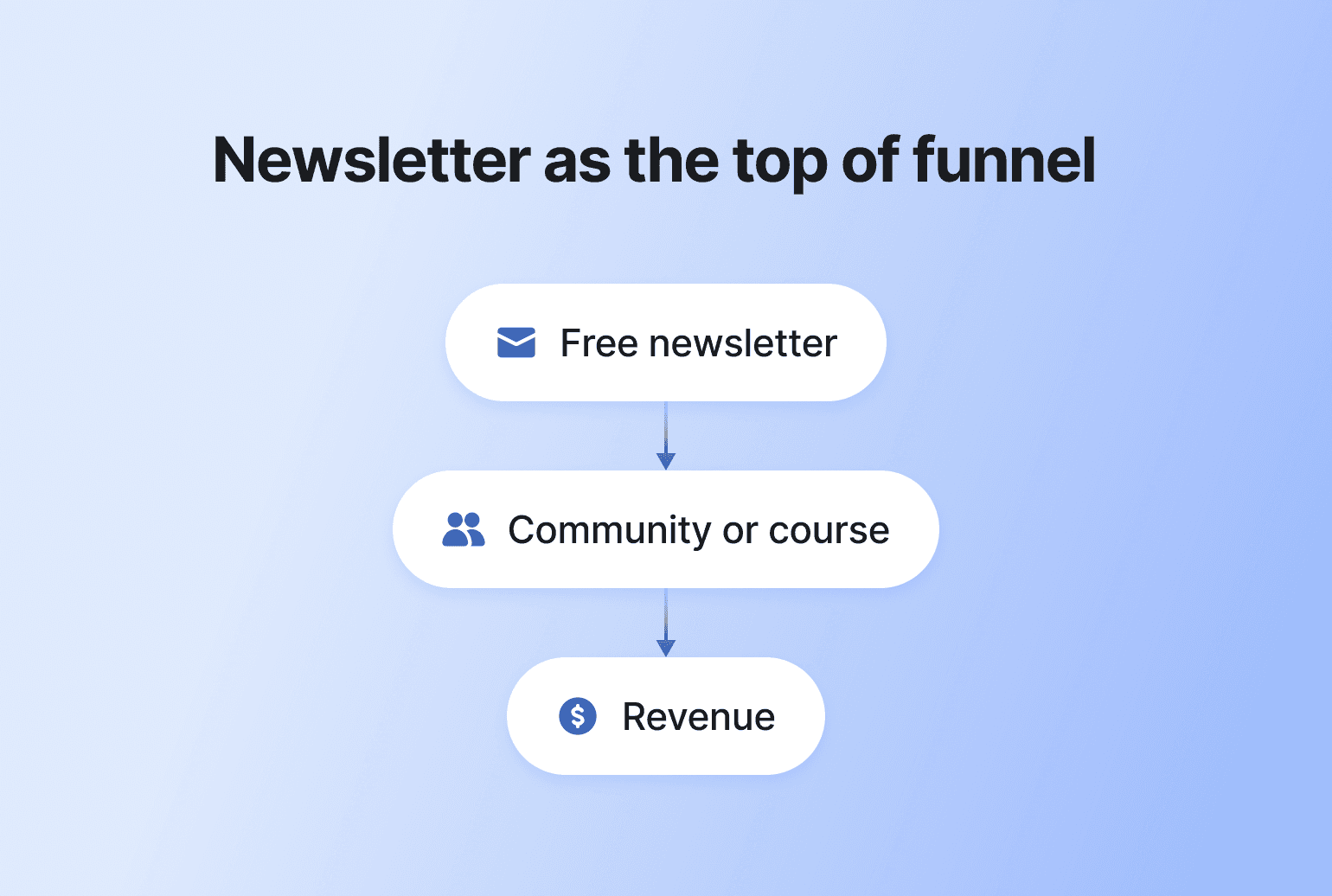
- The biggest payoff usually comes from treating the newsletter as a pipeline into paid communities, courses, and coaching.
- Learn the five-step approach expert creators use—audience, platform, content, automation, and revenue per subscriber—to put these methods into action.
Members only
One issue, five minutes, every Tuesday. Read by +14,200 creators.
You've got subscribers, and you're sending newsletters consistently. People are opening, reading, and even replying to your emails. But the newsletter itself isn't paying you back—and you're starting to wonder if it ever will. You're not alone.
Turning readers into revenue is one of the hardest leaps creators make. The difference between a newsletter that earns and one that stagnates isn't list size—it's the approach behind it. Here are seven proven methods, along with the playbook to make them work.
1. Paid subscriptions where you charge for your best stuff
The simplest version of paid subscriptions is a paywalled newsletter: free issues build trust and reach, while premium issues sit behind a monthly or annual fee.
Free issues make the case for upgrading by showing the depth that lives behind the paywall, whether that's deeper analysis, exclusive interviews, or subscriber-only threads.
Ben Thompson's Stratechery is the classic example: a free weekly article that draws readers in, plus a paid daily update and full archive that's reportedly built a multi-million-dollar business on subscriptions alone.
2. Memberships and paid communities that turn readers into regular paying customers
Memberships get readers to pay to “belong”. For many coaches and educators, that's the play that pays off the most: getting one-time readers into a community you own.
Anne-Laure Le Cunff built her Ness Labs newsletter first, then launched a paid community on Circle after readers kept replying that they felt lonely and disconnected during lockdown. She turned a newsletter for knowledge workers into a mindful productivity community she's now run as a living laboratory for five years.
The practical goal is to make it easy for newsletter readers to become paying members without extra handoffs. And the real work is to keep email, checkout, and the member experience connected in one place. That shortens the distance between "I'm interested" and "I'm in."
Our Community Launch Guide walks through the audience-to-community arc in detail.
3. Sponsorships as a steady income
With sponsorships, you get paid for access to the audience you've built and nurtured. They work best as a layer alongside the bigger plays, not in place of them.
Sponsorships can still produce meaningful income at modest list sizes when open rates are strong—for example, Justin Welsh charges $2,500 per mention in his newsletter, the Saturday Solopreneur.
Only 18% of Circle creators earn revenue from advertising or sponsorships, yet operators who do it well, like Jay Clouse with his Creator Science newsletter, pull in around $100K annually. That's the role sponsorships play best—steady “extra” money in the background while your bigger offers do the heavy lifting.
You don't need a massive list to start. Even smaller lists with strong open rates can generate steady monthly sponsor revenue at a weekly frequency. Flat-rate pricing works well for smaller lists, while CPM pricing becomes practical as demand grows.
Custom content sponsorships go beyond a standard ad slot and command a multiple of the price. The three formats worth knowing:
- Dedicated send: A full email built around one sponsor: their product, their angle, your voice. Best for launches or high-intent offers.
- Branded deep dive: A long-form piece where the sponsor's product anchors a topic your readers already care about. Reads like your regular content with a clear partner.
- Integrated placement: A native mention woven into a regular issue—a tool you'd reference anyway, framed as a sponsor. Lowest lift, highest frequency.
Most creators unlock these once advertiser demand is consistent.
4. Affiliate marketing that doesn't hurt trust
Instead of getting paid to feature a brand, affiliate marketing gets you a small cut every time a reader (or member) buys something on your recommendation. That only works in the long term when you're selective about what you promote.
The math gets better with every issue you send: recommend tools you actually use, earn a cut when subscribers buy, and let the revenue stack up over time. The catch is that affiliate income drops off as products and partnerships shift, so treat it as supplemental income and protect subscriber trust above any single payout.
For example, Dave Gerhardt grew Exit Five into a 6,000+-member B2B marketing community in part by being selective about affiliate promotions. He endorsed only tools his audience would genuinely benefit from, so every recommendation reinforced trust rather than eroding it.
That's the principle that makes affiliate income last. Only point your audience toward products or tools you'd genuinely vouch for—your subscribers' trust is worth more than any single commission.
5. Digital products and courses where most of the money lives
Affiliates earn you a cut of someone else's product. But the bigger payday comes from selling your own products.
Newsletter readers who already trust you are usually the easiest crowd to sell digital products to—and courses, templates, and cohort programs land best when they live inside the same community where readers already engage with you.
Tim Slade started The eLearning Designer's Academy as a single course in 2020 and grew it to 11,000+ members by layering cohort programs, private workshops, and gated content onto his free content.
There's a bigger lesson in how Tim built it. Courses land better when they aren't isolated in a standalone course player. The same place readers already read your newsletter, ask questions, and connect with peers becomes the place they learn—turning isolated study into a shared experience that drives accountability and engagement.
6. Events your audience will pay to attend
Many mature newsletter businesses end up running events as a core revenue stream.
Nieman Lab documents the pattern across media companies (which creators are, usually on a smaller scale to start), and creators we work with see it play out the same way. When your audience already trusts your writing, they'll show up live to learn from you in real time, ask questions, and connect with peers who share their goals.
But don’t worry: events don't need to be massive to be profitable. A modestly priced workshop with a few dozen attendees can become a reliable monthly revenue stream and a way to warm people up for your bigger offers.
Felippe Nardi proved it with Inside the Show, a community teaching educators and professionals how to run unforgettable virtual presentations. His entire business hinges on one-week launch events with no replays—make-or-break moments where missed sessions mean lost revenue.
Running events inside the same community where members already live makes a real difference. With Circle's Events & Live Streaming, branded event pages, RSVPs, calendar invites, automated reminders, and push notifications all run in one place.
7. Paid referrals you set once and forget
Paid referrals are a lowest-effort, always-on layer to other monetization methods—the kind of revenue that runs in the background while you focus on bigger plays.
You recommend complementary newsletters during signup flows, welcome sequences, or inside issues, and earn a few dollars per referred subscriber with virtually no ongoing maintenance. Stack it under your welcome sequence, and every new subscriber becomes a small bit of revenue from day one.
That's the seven methods: now here's the playbook to make them work.
The 5-step playbook to monetize your newsletter
Define your audience tightly, choose the right platform, demonstrate expertise weekly, automate the subscriber-to-member path, and measure revenue per subscriber rather than list size.
These are five steps that stack the newsletter monetization methods above into a single, repeatable engine—one that turns cold readers into paying members without requiring constant new launches.
Step 1 — Get specific about who you're for
Newsletters that try to serve everyone struggle to serve anyone deeply. Define your newsletter's value as a single job it performs for readers.
- "Help me land more brand deals."
- "Tell me how to become a better parent."
- "Explain it to me like I’m five: what is crypto?"
One job, done better than anyone else. The tighter the niche, the easier every part of monetization gets—your sponsors know exactly who they're reaching, your courses solve real problems for your students, and your community knows exactly why they’re there and how their lives are going to transform
Step 2 — Pick a platform that doesn't fight you
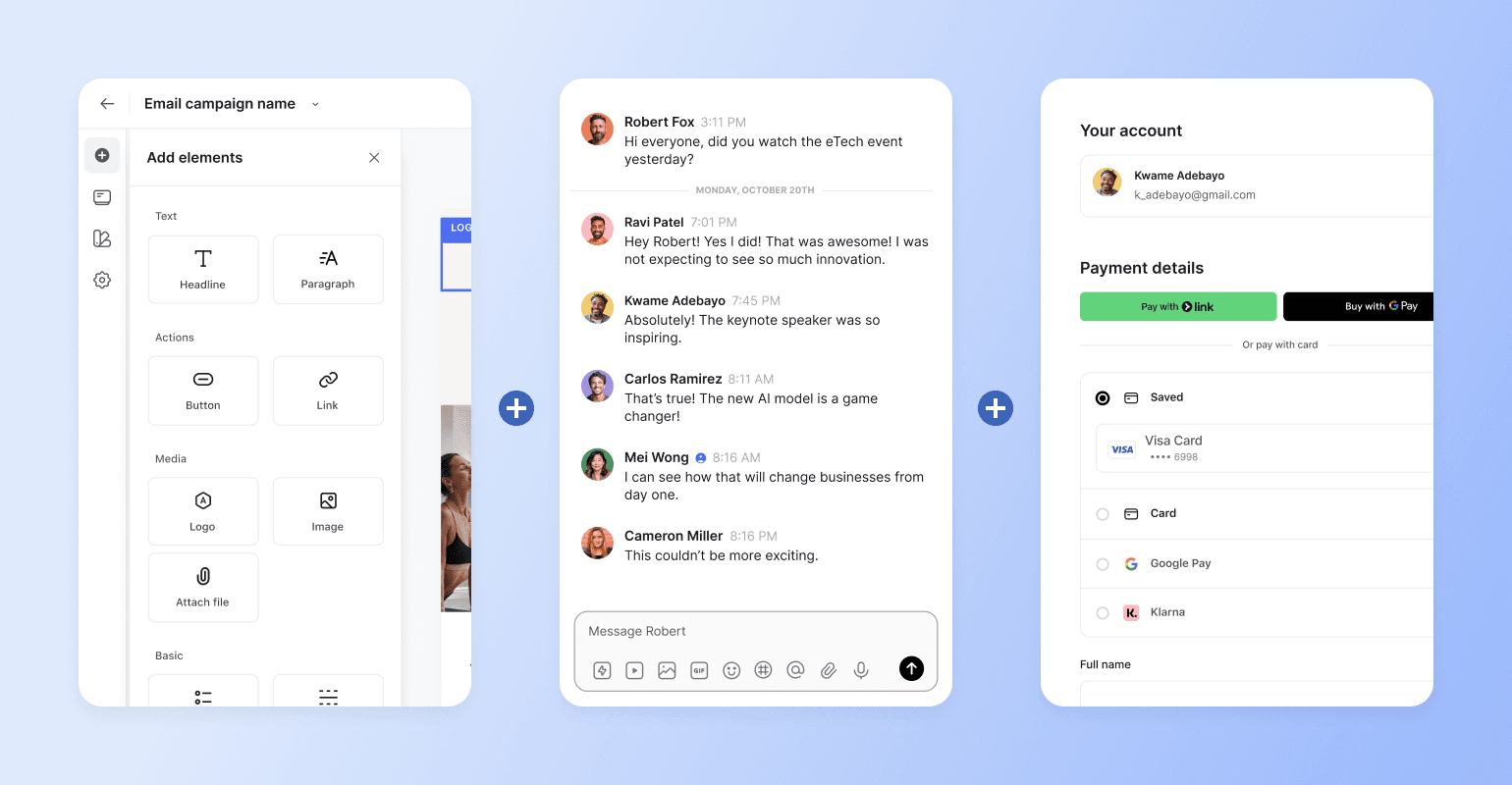
If you're building a newsletter-to-community funnel—the path coaches and educators take—you need email, payments, and community in one place. Because you don't need another tool—you need a platform to power your vision.
Running your newsletter through one tool, payments through another, and community through a third creates a fragmented experience that loses people at every handoff (and loses continuity in metrics for you).
Circle serves as a true all-in-one community platform by consolidating your entire creator business—email, website, courses, events, payments, CRM, and community spaces—into a single, white-labeled environment.
Every email links directly to gated content, events, and courses, creating a comprehensive experience and world for your readers.
Step 3 — Show your work every week
For coaches and educators, the most effective content model is demonstrating expertise. Find public examples of your core deliverable, write weekly emails breaking down what's working and what you'd improve, and include your unique and clear point of view.
- A relationship counselor might analyze couples' arguments from films.
- A performance coach might break down interviews with athletes.
- A copywriter might dissect sales pages.
You're showing subscribers how you think—which is exactly what they'll pay for in your courses, community, or coaching.
Step 4 — Let your welcome sequence do the heavy lifting
Build your welcome sequence first—it runs continuously, turning new subscribers into members without manual effort. A common mistake is writing welcome emails about yourself instead of the subscriber. Lead with their problems, demonstrate your approach through client stories and frameworks, and include a clear call to action.
Aim for an 80/20 ratio—mostly value, with the occasional offer layered in. When your email tool is connected to your community, you can trigger sequences based on what members do—course progress, event RSVPs, new access opt-ins, and other actions—so your automations get smarter as members engage.
AI Agents on Circle take onboarding further—welcoming new members, answering FAQs, and surfacing the right resource at the right moment without adding headcount. Pair them with our AI Workflows to auto-comment on posts, flag content for moderation, and send personalized DMs when members do specific things in the community.
Step 5 — Watch revenue per subscriber, not list size
The metric that matters for newsletter monetization isn't your list size—it's revenue per member. Tracking what each subscriber is actually worth tells you whether your prices and offers are doing real work—and which of the seven methods are actually doing the lifting.
A 2,000-subscriber list earning $20 per member annually outperforms a 20,000-subscriber list earning $1—same effort, ten times the revenue, and far easier to keep happy. The numbers in this article align with that pattern: Tiago, Tim, and Anne-Laure all built a value ladder of memberships, events, courses, and cohorts rather than list size.
Use Circle’s Community ROI Calculator to model how much your current audience could be worth as paying members, and focus on the revenue your list generates.
Monetize your newsletter in one platform
Newsletter monetization isn't about picking one method but about building a unified approach where your free content builds trust, and your paid offers deliver value.
The key is using a reliable one-stack platform. Circle keeps the entire journey—from newsletter to payment to community—connected.
Start your 14-day free trial of Circle to see how it works.
Making money from your newsletter FAQs
How many subscribers do you need to start monetizing a newsletter?
You don't need a massive list. Even a few thousand subscribers with a strong open rate can generate steady sponsorship and affiliate income. Memberships and courses scale with engagement, not raw numbers. Start where you are—monetization scales with the system, not the headcount.
How much can a newsletter realistically earn?
The range is wide. On the supplemental side, Jay Clouse pulls in around $100K a year from sponsorships alone. On the direct-revenue side, Tim Slade grew The eLearning Designer's Academy to 11,000+ members, and Tiago Forte cleared $3M in two years across subscriptions, cohorts, and self-paced courses on Circle. The ceiling has more to do with how directly your audience can buy from you than with list size—the creators in this article who sell their own work usually outpace the ones relying on commissions or sponsor money.
Should my newsletter be free or paid?
It depends on what your newsletter is meant to do. A free newsletter tends to feed paid offers downstream—courses, communities, coaching—where margins and retention can be stronger. A paid newsletter generally caps top-of-funnel growth and asks each issue to justify the subscription on its own. Paid often makes sense when the content itself is the product. In most other cases, creators keep the newsletter free and monetize what it leads to.
What's the fastest newsletter monetization method to set up?
Paid recommendations and affiliate links are usually the quickest to launch. Both can run inside a welcome sequence within an afternoon, earning a few dollars per referred subscriber or a commission per sale, with no audience size threshold required. They generally aren't the highest-revenue methods, but they're the lowest-effort. Layered under higher-value offers like memberships or courses, they can generate baseline revenue from day one while the bigger plays mature.
Community Content Marketer
Arina is Circle’s community content marketer, sharing insights on community growth, GTM strategy, and storytelling for solopreneurs.