🫰🏼Vibes-based pricing vs. straight facts

Oct 27, 2026 6 mins read
The 11x price gap hiding in your niche
A real estate course sells for $1,776. A parenting course sells for $160. Here’s why that gap exists — and how to find your actual number.

Every price tag you’ve ever set (or seen) was basically a guess wearing a decision’s clothes.
You picked a number, watched to see if anyone flinched, and then you told yourself it was ‘strategy’.
Luckily, we have our head of payments, Sam, and our product marketer, Aurora, who are just as curious and data-driven as me. (Ok, probably more data-driven than me.) As part of their work, they went into Circle’s data warehouse to dig in to this question:
Is there actually a “right” price for your niche, or is everyone just guessing in the dark together?
Unsurprising TLDR: Is there a right price? No. But some niches get away with charging a lot more than others, and the gap between them is bigger than you’d think.
The premium niches
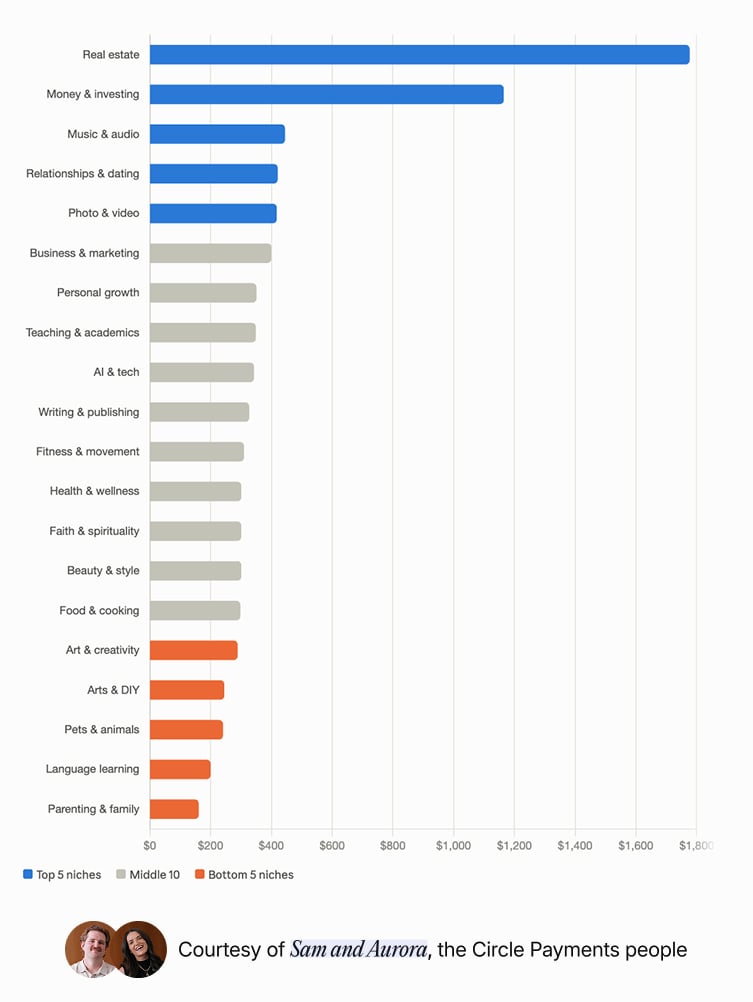
We pulled pricing off 72,505 real, active paywalls across 14,691 Circles (note: this isn’t meant to represent all businesses on Circle, but meant to give you a sense of scale).
A real estate course sells for a median of $1,776, and money & investing courses go for $1,164 — but these aren’t necessarily the niches with the best teachers.
Google actually has a term for this: YMYL, Your Money or Your Life. Pages about health, finance, and safety get held to a stricter bar because a wrong answer does real damage. The same logic seems to apply to how entrepreneurs set prices. Some niches are expensive because getting it wrong costs real money, while paying someone to get it right feels cheap by comparison.
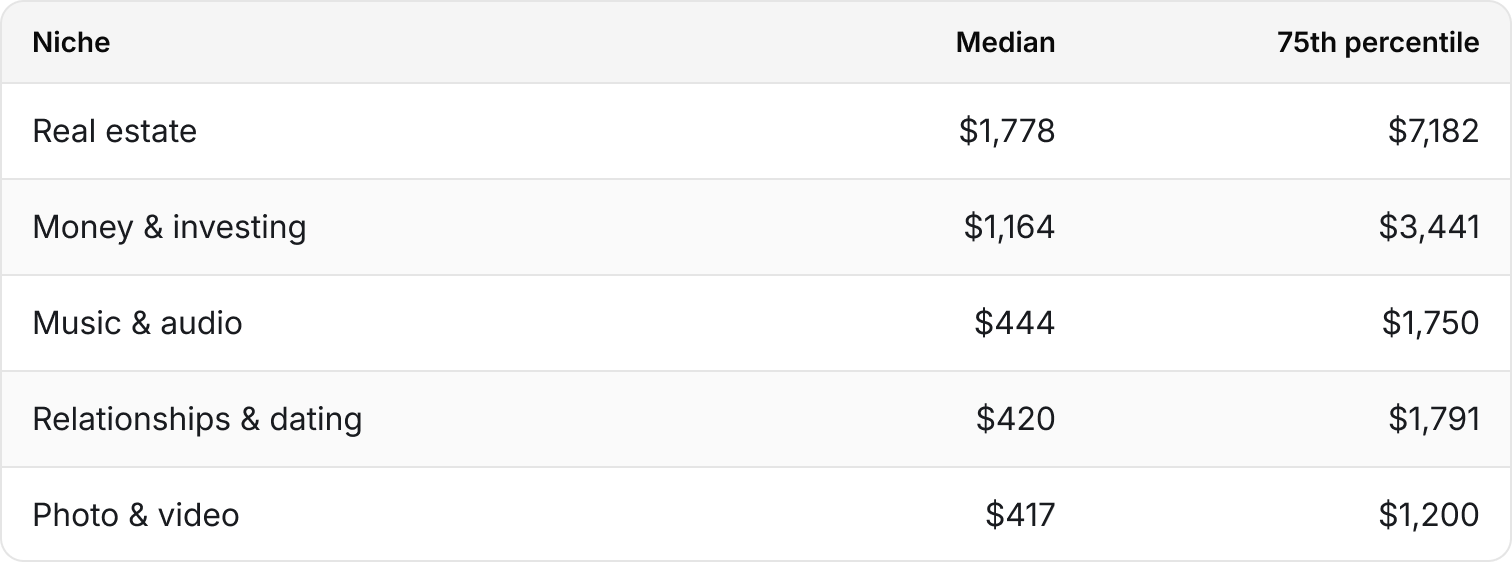
🤫 Steal this: if your audience has real money on the line when they get something wrong, you’re allowed to price like it — and the 75th percentile column is your proof it’s already being paid.
The bargain niches
On the other end, parenting courses sell for a median of $160, and even the top quarter only reaches $500. Language learning sits at $199 median, topping out at $543 for the 75th percentile. That’s the real tell: in real estate, the ceiling for an average creator sits above where even the best-charging parenting creators ever land.
Yet Good Inside, Dr. Becky Kennedy’s parenting community, is proof that low ticket price doesn’t mean low ceiling. It’s grown to 100,000+ parents, up 176% year-over-year, after moving away from selling individual courses entirely and building a membership instead.
Parents don’t need a $1,776 course. They need somewhere to admit they’re struggling at 2am and have another parent actually answer. That’s a different product than a real estate course promising a return on investment, and it gets built differently: not by charging more per person, but by making staying worth it for way more people.
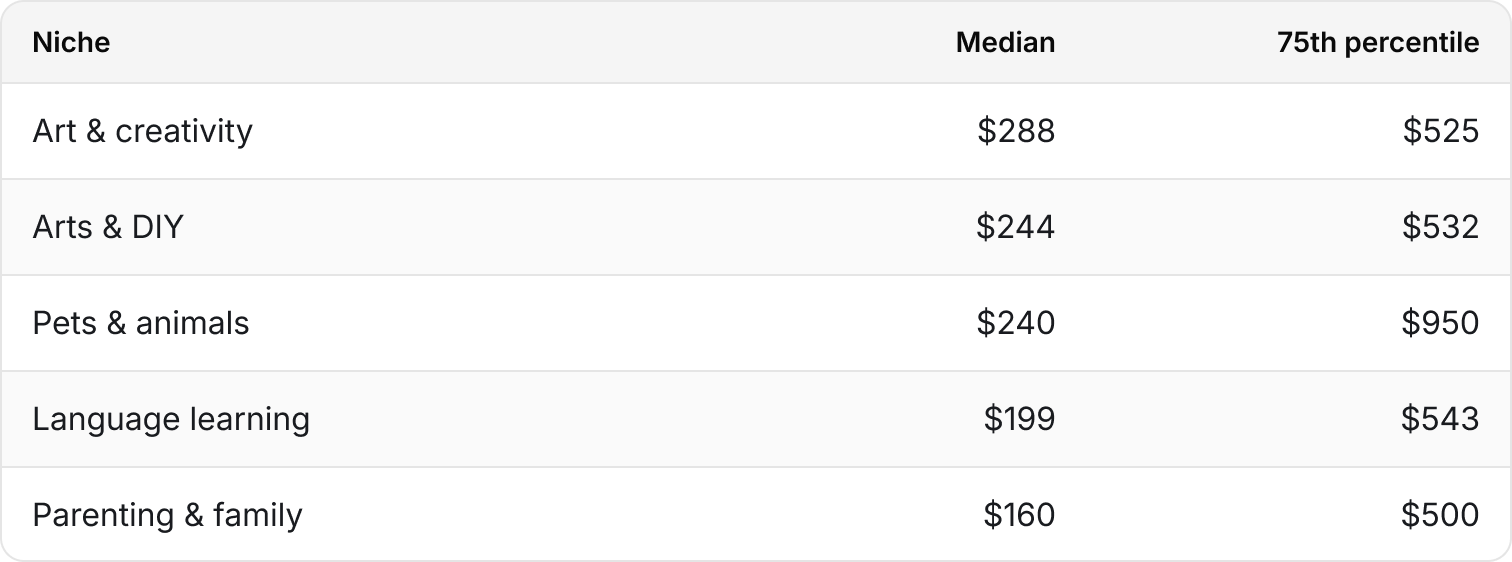
🤫 Steal this: if your niche can’t charge real-estate prices, don’t. Charge what the niche will bear and go build Good Inside’s version of scale instead—aka, what’s the real cost of your audience getting this wrong without you?
What they have in common
Niche can often set your ceiling, but it doesn’t set your actual price: that part’s still on you. This pattern holds hardest for recurring or high-commitment products. Real estate is #1 of 20 niches across courses, community, membership, and group coaching, with parenting near the bottom in all four. It mostly disappears on cheap, one-time buys. For example, parenting digital downloads actually outprice real estate’s, $58 versus $50, because (almost) nobody’s measuring ROI against a $20 PDF.
Most of us are pricing off a feeling: what felt right, what a friend in a similar niche charges, what didn’t feel too awkward to type into a Stripe field at 11pm. Not off any real signal from people who’ve actually sold this exact thing to this exact kind of audience.
That’s why Sam and Aurora built the pricing calculator. Tell it your niche, your audience size, your revenue, how much proof you’ve got, and it runs your answers against this same dataset and hands you back an actual number.
Where does your price actually sit right now, vibes-based guess or validated proof? Hit reply and tell me. I read every one.
1 follow, 1 read, 1 watch
👉 Adrian Per is “such a genuine spirit”, says Madison from our events team. Not only did he crush it as our second cohost of the Sincerely dinners, (which look like this, by the way 💁🏽♀️), but he’s a creative with a mission who also pays it forward by giving back to underserved communities. No brainer follow.
📖 Jay Clouse earned $700k last year through… trust? Obvious to marketers, but not always to creators, or new founders. Once you start a business, trust becomes a big deal to win, and expensive to lose.
💻 Fix your first 30 seconds on YouTube — thanks to Colin & Samir’s “creator support” line helping Zoe Unlimited nail her hooks. If you’re making videos for social, you’ll want to hear what the pros have to say. The first 30 is a make or break moment.
Sincerely LA, in headlines
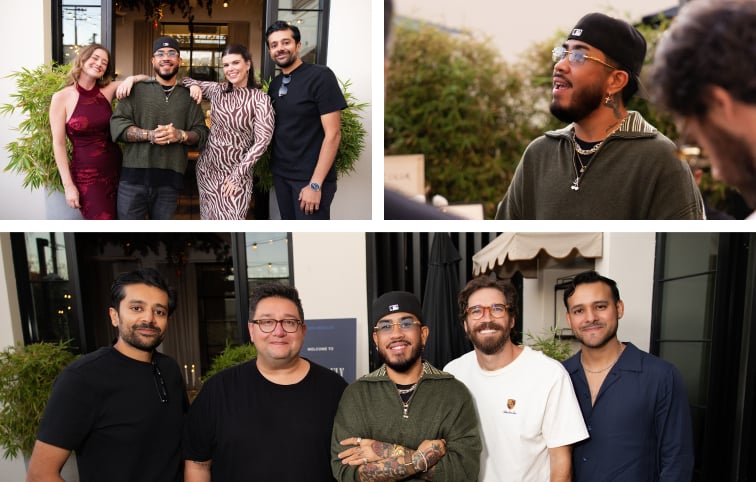
The second Sincerely dinner is officially in the books. We brought 18 creators and industry people into one room in LA, co-hosted with Adrian Per, and invited Melyssa Griffin, Danielle Leslie, Colin and Samir, JT Barnett, Cat Goetze, and Ray Hughes to the room (nbd).
One attendee said it beat every industry event he’d been to in the last year. The live portrait artist was the finishing move, with several people calling it “the best party favor they’d walked away with” in a while.
NYC is coming up next in December. If you have a question you’d want answered by the world’s top creators… what would it be? Should we add it to our asks?
|
Your turn What should we ask creators at our next Sincerely dinner? Button not working? Answer here instead. |
Next issue: I used to be able to describe my job in one sentence. Now I can’t, and neither can most people I talk to, creator economy or not. Next week I’m digging into ‘illegible careers’: what they are, why we’re all confused, and what Google Trends can tell us about what happened in 2025.
Hit reply if you’ve got a career that doesn’t make sense on paper anymore. I want to hear it.
|

 Arina,


