I've been to events so cool they feel cold

Read time: 4 minutes
Editor’s Note: The Circle newsletter is back, baby! Stay aboard for notes on building communities people don't want to leave, from the team behind the platform creators and brands use to run them.
You’ve probably been to the world’s most generic launch party, held in your friendly neighbourhood hotel-slash-conference-center. Someone wearing a steamed polo handed you a branded lanyard (“I was just thinking about how I needed a lanyard the other day,” thought no one ever.) You came, you saw, you wiped it from your memory.
For Eclipse, (see: the biggest release in Circle's history) we needed the complete opposite of “forgettable”.
We needed a moody, intimate bar in the East Village.
A jazz trio playing saxophone covers straight off your teenage playlists.
A calligrapher gold-foiling guests' names onto sunglass cases, one by one (for the eclipse, duh).
And Madison, our event choreographer, in a coffee shop the week before, handwriting a thank-you note for every single person who'd walk through the door.
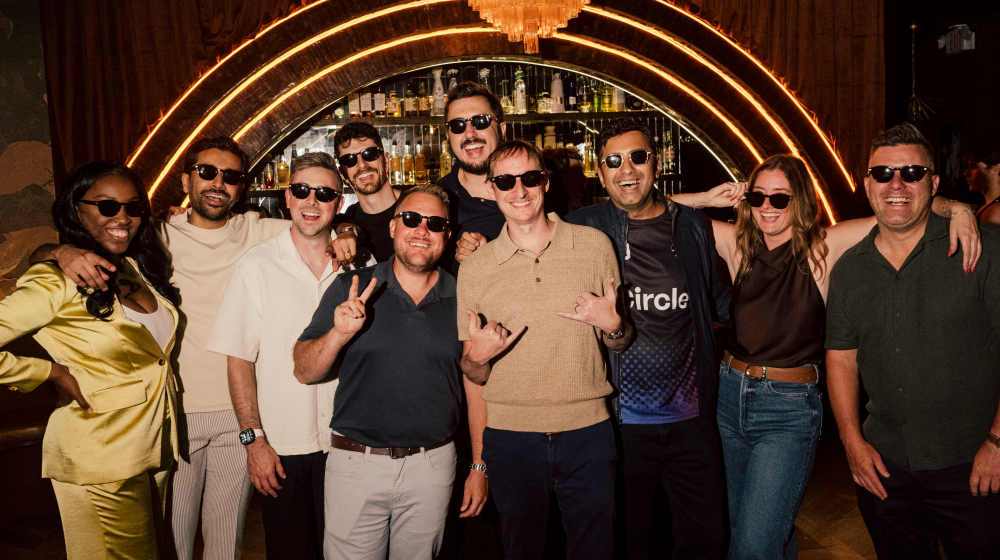
Image: Circle team celebrating Eclipse in East Village, NYC.
None of it was an accident. There were a million, tiny, intentional decisions, before and during, that stacked up to build the vibe of the room.
“I was planning with one thought: everyone who walks in should feel like they belong,” she said. “You should walk away feeling like a VIP.”
And because I’d gotten to watch Madison’s “vibe building” up close, I asked her how exactly she turns a guest list into a room full of people who don't want to leave. Here’s what she said:
How to create an experience worth talking about, IRL or URL
1. “Host mode” means you set the energy. A great host asks “How do I want people to feel?” because they know that most of us walk into an event worrying, “What are people thinking about me?” That starting place is so powerful because when you're the facilitator, you control the cadence of the night.
When the band took a break and the room went quiet, Madison pulled them back on early. By the end she was working the floor with water bottles in hand. TL;DR: You get to set the tone about how we treat each other here.
2. Adopt a stranger. Nobody should leave the way they walked in: alone. Madison’s move, even mid-conversation is — "oh my gosh, hold on, you have to meet this person" — and then she physically walks you over and kicks off the thread. It worked so well that two different event pros at the party (one who'd run 1,000+ events) pulled her aside to ask if she'd come to train their teams to do it. Another just said, "we need our own Madison."
So: when you spot someone standing by themselves? That person is now your responsibility.
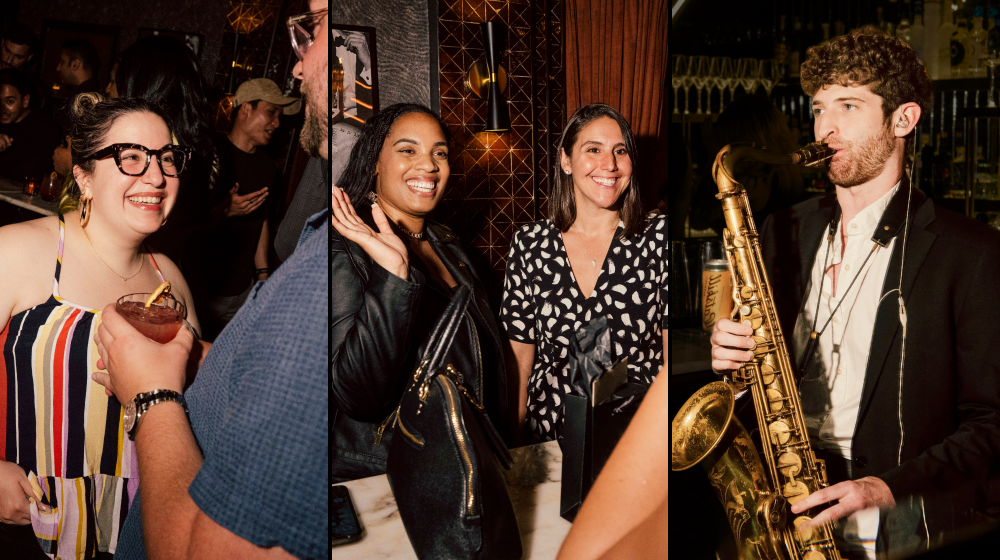
Image: Audrey Saccone, founder of Lucky No. 12, a marketing and product studio for creators; Jerrica Long, strategist at Creator Match; and Sarah Rothenburg, co-founder of Porchlight, a community strategy studio, and the saxophonist from the Kingsland Jazz Trio.
3. Use nostalgia (not enough people do). It's Madison's "number one secret sauce — the most powerful and underrated feeling people don't use enough." The T-Pain covers were chosen because they land for people who were in college in the late 2000s (if you know you know). The handwritten cards were meant to feel like a birthday note from your grandmother. Because when you tap into that core memory, you don’t just relax people, you help them feel more connected to everyone else in the room.
4. Do the homework. Then read the room. Making a stranger feel seen in 30 seconds is 3 parts prep, and 2 parts energy. The prep: a guest doc with every attendee's headshot, what they're building, and who they should meet — so if someone had just launched a podcast or landed a big collab, Madison and the team walked in with an instant "in."
The improv is "a positive, event-host version of 'see something, say something'." If she loves your laugh, your coat, the drink in your hand —she just doles out the compliment right then and there.
The same instinct (plan first, improvise during) is even more important for the flow of the night. Even though Madison had some short remarks planned that night, she cut them in the moment because the room had gone intimate. Any speech would've felt like "last call" and people would've started reaching for their coats.
TL;DR: Plan every minute. Then, trust your read of the room over a strict run-of-show.
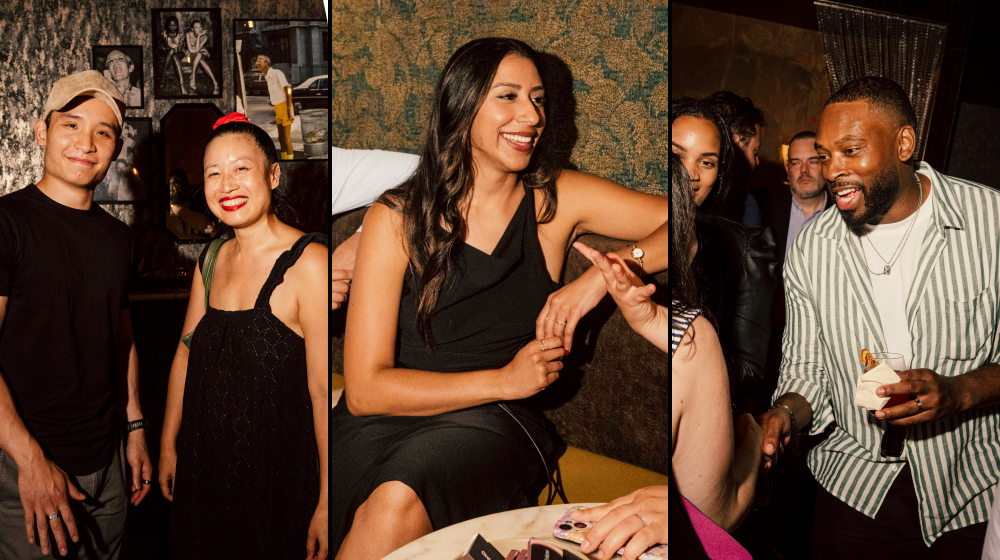
Image: Andrew Yeung, founder, Fibe startup community and Jenny Nguyen, founder of Hello Human agency; Ankita Shah, founder of the Corporate Clinician community, and Brandon Smithwrick, founder of Content to Commas, a creatorpreneur content agency.
It all came down to something pretty simple: don't try to be cool. Be warm, instead. Be welcoming. Celebrate together with the people we value. "I've been to brand events that are so ‘cool’, they feel cold," Madison told me. Guests who were used to LA and New York rooms where everyone's dressing down your status said this one felt different.
And it worked. Guests came up to hug Madison and thank her on the way out, and the "best launch I've been to" notes kept landing in our collective DMs for days. Two attendees asked to partner on their own events just to learn how she'd done it. (Want the two-minute version of the vibe? Here's the reel.)
That's the whole bet — and it's not just for parties. And you don’t need a calligrapher to nail it: the same moves work in a 12-person Zoom, a Circle community, or a Tuesday-night meetup just as well. Warmth is the entry fee for trust, and trust is what holds a community together, online or off. The launch party was our proof of concept. Eclipse — AI, Studios, Discover — is the product built on the same belief.
We're so glad you're here. We mean that.
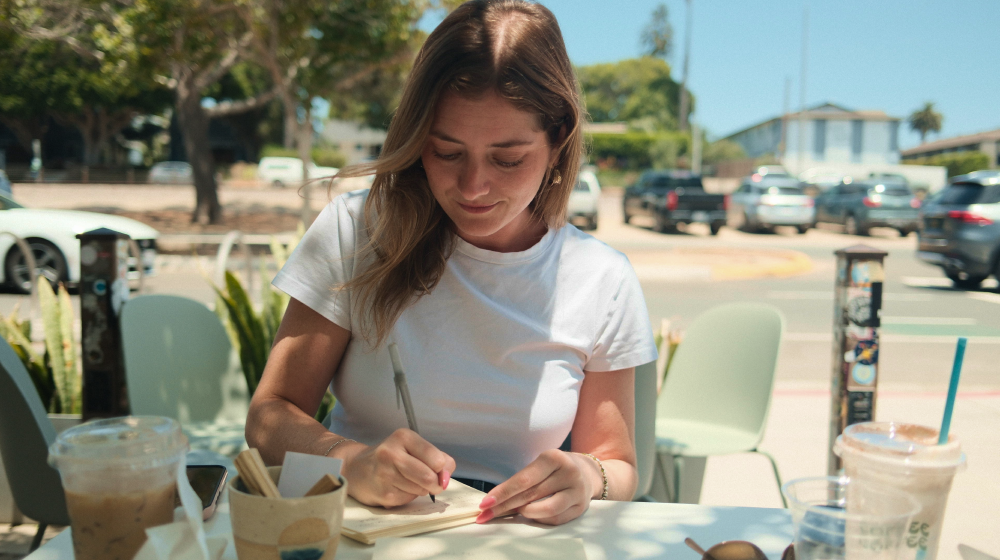
Image: Brand experiences manager, Madison, hand-writing 100+ thank you notes.
Why events are the cheat code
Communities that run regular events have 4x the monthly active members of ones that don't (internal Circle data) — yet only 11% do it consistently. The ones that do see active membership jump from 11% to 34%.
Try this: put one recurring event on the calendar before you touch your content plan.
Something I'd text you
Tim Ferriss just said AI has killed educational nonfiction. Tim sits with the question every expert is quietly dodging: if AI can write it, why would anyone pay you for it?. His answer didn’t shock us, to say the least. But we’re glad someone is saying it out loud.
Next issue: Communities are becoming real financial assets. Gesche Haas just sold Dreamers & Doers — the community she built on Circle — to one of her own members, for seven figures. We're digging into what makes a community acquirable, and why these exits aren't just a venture-capital thing anymore.
Otherwise: what's the warmest room you've ever been in — and what made it that way?
Hit reply. I read every response.
Arina Kharlamova
Editor, Circle Newsletter
P.S. If anything in this newsletter made you curious about Circle, like, *ahem* Eclipse — now’s the perfect time to start a free trial.
P.P.S. One more thing: give people something worth keeping. A tactile memory. That’s what the sunglass cases were — intentional, high-quality, and meant to be carried away and into your real life.
 Arina,


