
Codecademy consolidates five platforms and nearly 100,000 learners on Circle


Overview
Codecademy’s Head of Community, Jonathan Truong, knew his team couldn’t improve what they couldn’t measure. With learners scattered across five platforms and no unified way to track engagement, retention, or completion, he evaluated more than 12 tools before consolidating everything on Circle. The result: a seamless, branded community approaching 100,000 members where 82% of learners achieve their goals.
“You have to have the right platform in place for the vision of where you want your community to go. When I counted all the criteria I needed as a serious community builder, it was very obvious to me that Circle was the best choice.”
Before
A million members, five platforms, no single source of truth
Codecademy has been teaching people to code since 2011. Founded by Zach Sims, the platform pioneered in-browser coding and has since served more than 50 million users across 150 countries. Its learners range from marketers picking up Python to full-stack engineers sharpening their skills to hobbyists coding for fun.
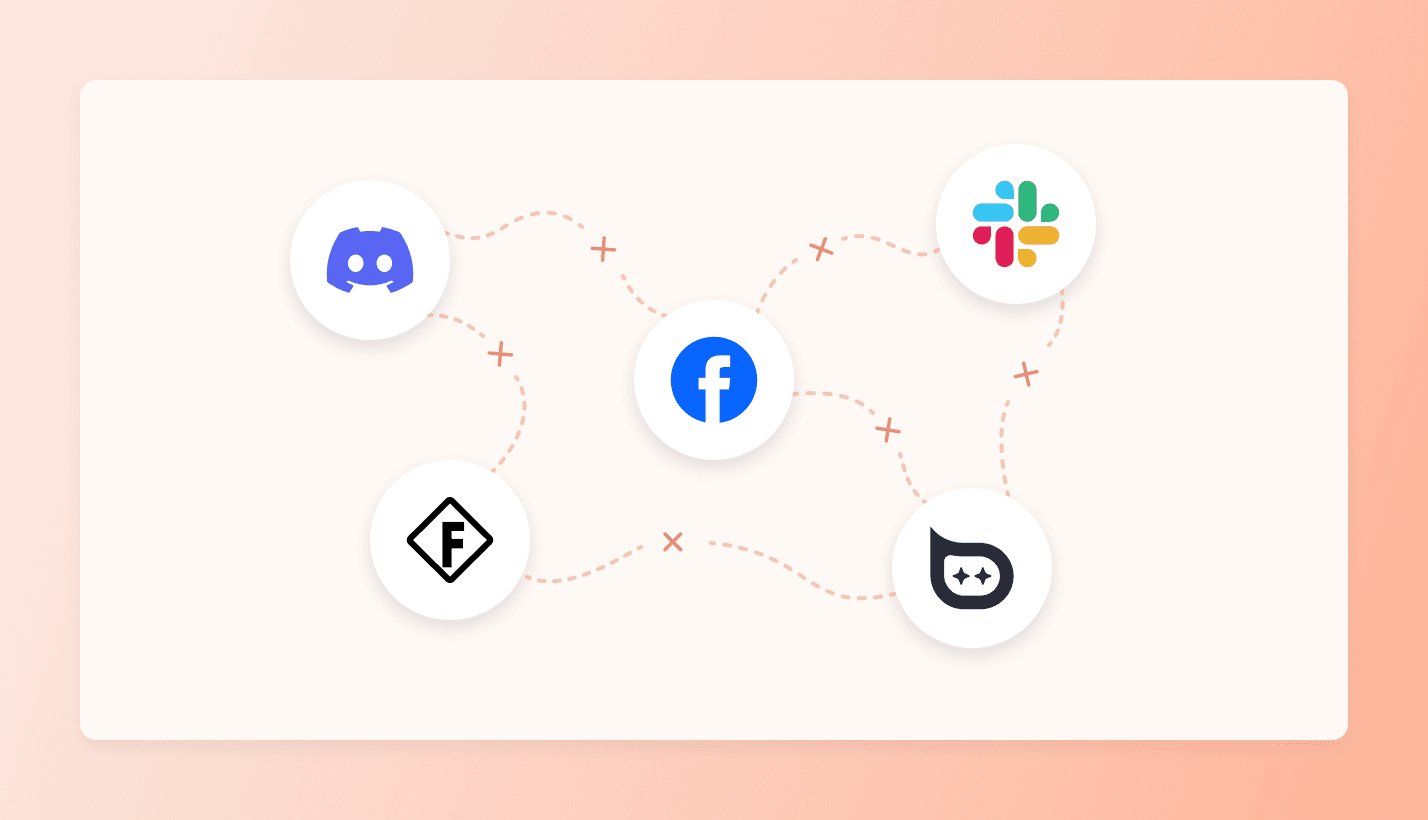
Community had been part of the story almost from the start. Forums launched in 2012, and over the following decade the team layered on a Facebook group, a Discord server, an event platform called Bevy, and a separate discussion tool. By the time Jonathan Truong joined as Head of Community in May 2022, learners were spread across all five. “When I arrived, we had more than a million members across five different platforms,” he says. “My job was to bring that all together and make the experience better.”
Each platform had strengths, but none could serve the full picture. Events lived in one place, discussions in another, and there was no shared data layer connecting any of it. Jonathan could see the community was valuable, but he couldn’t see how valuable — and that was the problem.
Challenge
You can’t improve what you can’t measure
The fragmentation wasn’t just confusing for learners — it made it nearly impossible to understand the community’s real impact. “Every time I’d reference the community, people would ask, ‘Which community are you referring to?’” Jonathan recalls. And when he tried to pull metrics, the picture only got murkier. “The metrics on each platform were like comparing apples to oranges to cars to tennis balls. It took a lot of time to demonstrate impact.”
Not every platform offered open APIs, so pulling data was manual and inconsistent. Without a unified view of engagement, retention, and adoption, the team couldn’t connect community activity to business outcomes like course completion or resubscription rates. Jonathan’s advice to other community leaders facing the same problem is direct:
“A lot of community professionals struggle to show business impact. And I’d argue it’s because they don’t have the right platform in place.”
Solution
Twelve platforms evaluated, one clear winner
Jonathan did his homework. He evaluated more than 12 platforms, scoring each on cost, scalability, user experience, modernization, and support. The stakes were real — Codecademy’s learners come to the platform because they want meaningful change in their lives, whether that’s picking up AI skills to stay competitive or breaking into tech from a non-technical career. “Choosing the right platform is paramount to our learners’ success,” Jonathan says. “I needed something intuitive and modern, but also reliable — something where I could show leadership, look, we’re having real impact on the business.”
Before committing, he built a test community on Circle and invited his most engaged super users to try it. “They said, absolutely — it’s intuitive, it feels modern, and it’s easy to use,” he recalls. When he ran an internal roadshow to get product and marketing teams on board, the reaction was just as fast. “I told our internal teams it was like if Discord and Notion had a baby. And immediately, they got it.”
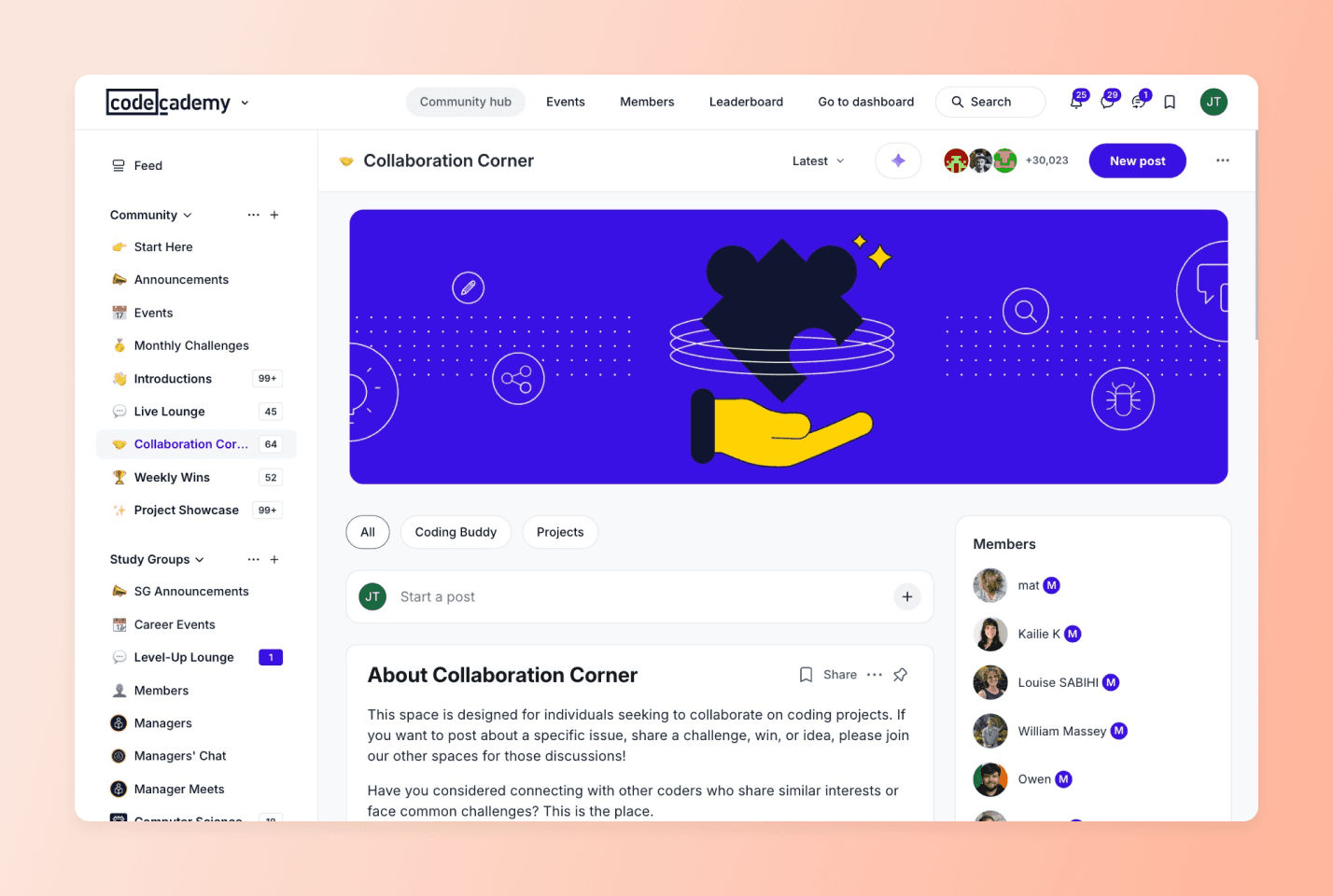
The migration happened platform by platform — starting with events, then aligning each move with contract renewal dates. On Circle, Jonathan built out the community around clubs, study groups, and a space called Collaboration Corner where learners find coding partners, build projects, and get career support. He connected Circle’s API to Codecademy’s dashboard so events appear natively in the product. And the white-label customization meant learners often don’t realize they’ve left the Codecademy experience.
“People often don’t even know they’re in a Circle community — it just feels like part of the Codecademy experience.”
Key features powering the community:
✓ Workflows to automatically re-engage inactive learners
✓ Events integrated via API into the Codecademy dashboard
✓ Discussions organized around 30+ clubs and study groups
✓ Analytics providing unified data across the full learner journey
Transformation
Unified data, stronger outcomes, and a learner who moved countries
With everything on one platform, Jonathan finally had the visibility he’d been building toward. Engagement, retention, adoption — all tracked in one place. And for the first time, the team could draw clear lines between community participation and learner outcomes. Community members were more likely to complete coursework and resubscribe to Codecademy compared to those who weren’t engaged.
“Circle has significantly increased our engagement and completion rates — by such a meaningful margin that leadership has invested more into community than ever before”
The community also started producing outcomes no course platform could deliver alone. Collaboration Corner became one of the most popular spaces, generating dozens of posts daily. “We’ve seen projects get built, people land jobs, people become friends,” Jonathan says. “It seems simple, but it’s had an enormous impact.”
One story captures it well. Grace, a full-stack developer and Code Crew super user, spent years leading weekly coding sessions through the community’s Tokyo club. When she decided to move back to the UK, she put her community leadership experience on her resume and listed Jonathan as a reference.
“She put her Code Crew experience — helping people on Circle, testing the platform — right on her resume. And she landed the job. She's now the lead developer at the University of Glasgow.”
Looking ahead, Jonathan and the Codecademy team see even more opportunity to embed the community fully into their product so learners can experience it all from day one. "The Codecademy community turns solo practice into shared growth," Jonathan says. "That's what we're building toward — where support, accountability, and inspiration turn practice into real progress."