Top 10 ways to monetize a community in 2026
TL;DR
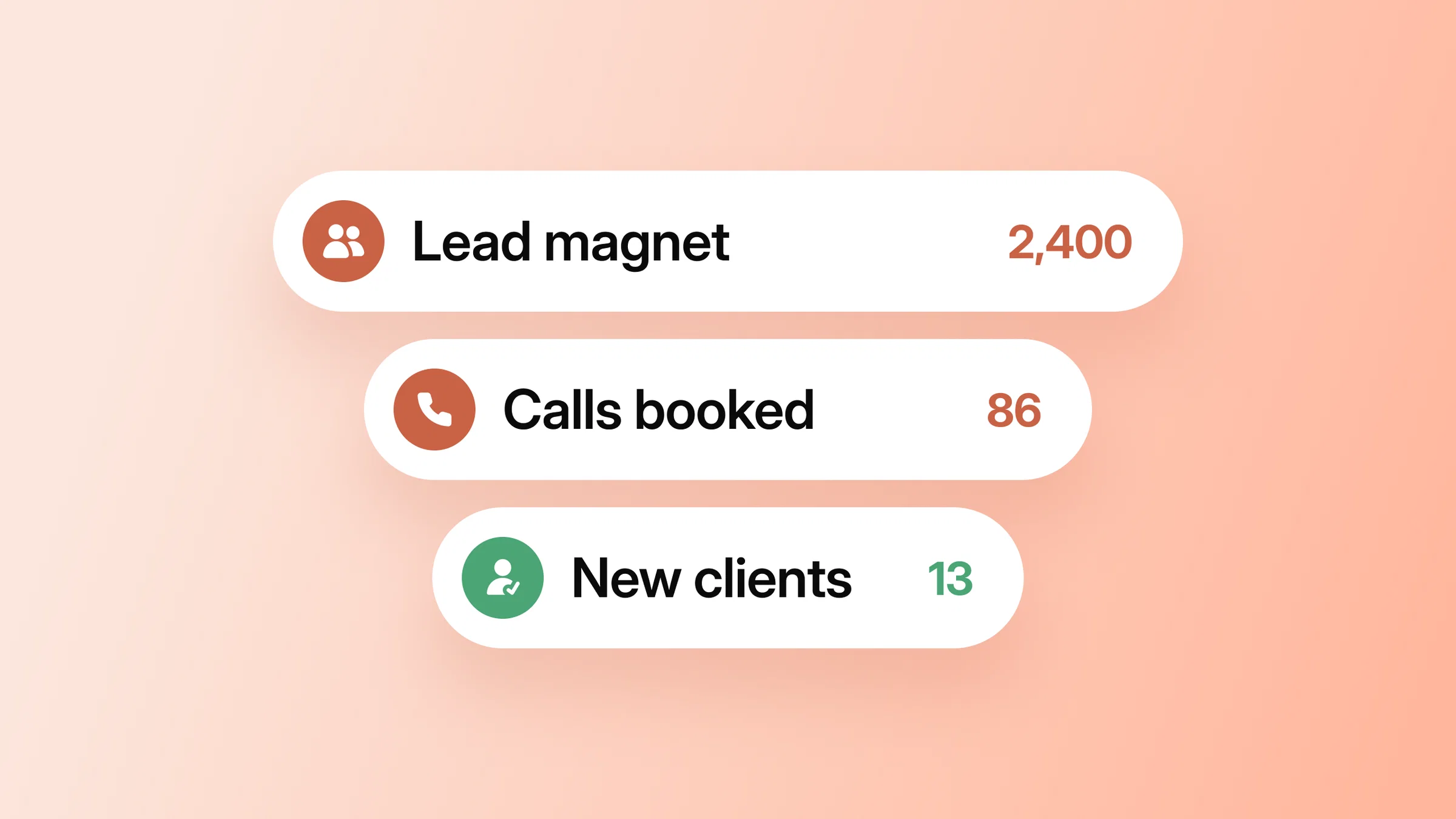
- The real money is in recurring membership, not one-off sales. Exit Five reached $1M a year and SPI around $700K once they switched from sporadic launches to a community members pay to stay in.
- Don't bet everything on one revenue stream. The communities that earn most layer a few — memberships, courses, coaching, events — all pointed at the same result for members.
- A big audience isn't the point. Most six-figure communities run on just a few hundred paying members, because what people pay for is the result they get, not the size of the crowd.
Members only
One issue, five minutes, every Tuesday. Read by +14,200 creators.
No two communities are alike, but they all share the same mission—bringing together people with a shared interest, passion, or goal. As a community builder, you’re creating content and connections that keep current members engaged, and hopefully attracts new members.
Wherever you are in your community-building journey, you’ve likely invested time, money, and energy. A lot of time, money, and energy. You’ll eventually (probably now, since you’re reading this) reach a point when a voice inside your head says, “I think it’s time to monetize this.”
😬 Monetizing your community can be a scary proposition. We get it. You’ve built something from the ground up that people care about, and making money from it might feel strange.
Don’t panic. You’re not the first community builder to face this hurdle and you won’t be the last. The good news is there are more ways than ever to monetize your community in a way that matches your community’s brand and values.
In this post, we’re going to talk about what community monetization is, look at the reasons now is the time to monetize your community, and give you real-world examples from community builders who’ve done it right without scaring off members.
What is community monetization?
Before we get into the “why” and “how” of community monetization, let’s define the what. Community monetization is how you transform the attention, engagement, and trust you have built with your members into a sustainable business model.
This isn’t selling a product to a random group of customers. You’re facilitating a space where the value in connection, knowledge, and growth is high enough that members are willing to pay for it.
🃏 Like The Joker said in 2008’s The Dark Knight—“If you're good at something, never do it for free.”
Why monetize your community?
It’s easy to look at a community with thousands of members and think that’s what success looks like. The reality is that the success of a community isn’t defined by how many members are signed up. Success is defined by the results your members achieve, and the data shows that sustainable revenue follows real impact.
How do we know? We asked the experts and analyzed the data to create our 2026 Community Trends Report.
Our team surveyed 750+ community builders—from solo creators and influencers to entrepreneurs and businesses—to understand what is actually working in today’s landscape. That’s just the start. We overlaid this survey data with product insights from over 18,000 Circle communities to see how these trends are playing out in real time. Finally, we gathered first-hand insights from 12 industry experts to validate what we found.
👉🏼 You can read the full 2026 Community Trends Report here. It’s a must-read for any community manager looking to grow and monetize their communities.
What we learned signals a massive shift. While engagement is still important, the most successful communities are now optimizing for member transformation and quality.
Here’s what the data is telling us:
- Transformation drives growth: 69% of respondents now say that member transformation—helping members achieve specific goals, mindset shifts, or skill mastery—is their most important strategy for growth and retention. When you charge for your community, you are better equipped to provide the hands-on support required to deliver these results.
- Quality over quantity: 39% of community builders are actively de-prioritizing member growth in 2026. Why? Because focusing on a smaller, higher-quality group allows creators to offer enhanced service levels that members want to pay for.
- The velvet rope builds trust: 12% of builders plan to strictly cap their membership numbers to foster emotional safety and exclusivity.
When should you monetize your community?
The biggest mistake in community monetization is charging before there is value. If you charge membership for a gym with no equipment, no one is coming in to work on their fitness goals. The same goes for communities. Successful monetization usually happens after a group is already active and engaged.
So, how do you know when the vibes are right to start monetizing your community? The short answer is that it’s different for each community. It all comes down to what we talked about with having value in your community:
- Day 1 (The Velvet Rope Strategy): You can monetize immediately if you already have a strong reputation or "pre-sold" trust like a strong social following or newsletter. This can work well for investing or career pivot communities where members want a higher barrier to entry to get a curated, high-quality peer group.
- Later (The Freemium Upsell): If you are building from scratch, wait until you hit critical mass. This can be when you start to notice super members who contribute as much value as you do, or when the community becomes so active that moderation feels like a full-time job.
⚠️ Never take a community that has been 100% free and suddenly announce, "Starting Monday, everyone must pay to stay." This not only destroys trust, it breaks the spirit of what you’re building.
Our recommendation: Use the "Grandfather Method." Tell your existing members they get to stay for free as a reward for being founding members. Your new community membership fee only applies to new people joining after a specific date. Or, keep your general space free for everyone, but lock new, premium features (like courses or coaching calls) behind paid membership.
5 behaviors that signal it's time to monetize
Whichever path you take, the green light isn’t a follower count—it’s behavior. Here are the five signals that tell you it's time.
- You have a consistently engaged core of members. We're talking about people who post, respond, and show up week after week.
- Members spend meaningful time per session. When people stay long enough to read, reply, and contribute, your community is becoming part of their routine.
- People are referring others without being asked. When members stake their reputation on recommending your community, they're signaling the kind of value that supports a paid offer.
- Members are explicitly asking for more. Requests for exclusive content, deeper access, or premium events are the clearest demand signal you'll get. If organic requests haven't surfaced, survey your members directly.
- Engagement spans multiple formats. Members who attend live events, post in discussions and consume resources are demonstrating the routine commitment that usually precedes a willingness to pay.
Together, those signals show that members are building a habit around your community.
How much can you earn from a monetized community?
At this point, we’ve hopefully got you day dreaming about quitting your day job. But before you send in that resignation letter, let’s talk dollars and sense. With the right community and content, there’s a lot of potential to build a viable business (or at least a solid side hustle).
- Exit Five generated $1 million in bootstrapped revenue in 2023 by centralizing 6,000+ members after moving off "rented land" like Facebook, allowing him to control the brand and pricing..
- Smart Passive Income brings in roughly $700,000 annually by pivoting from sporadic course launches to recurring memberships. Founder Pat Flynn's goal was stability: instead of constantly hunting for new leads, he focused on serving existing "Pro" members.
- Income School maintains seven-figure revenue with 1,000+ members, but their earnings are boosted by efficiency. Founder Ricky Kesler realized their old "patchwork" of plugins was bleeding money. Consolidating to a single app saved them $12,000/year on video hosting alone, proving profit isn’t just what you earn, it’s what you save.
🧮 You don't need a massive audience to build a meaningful business—you just need the right model. See exactly what’s possible for your brand by running the numbers on our Community ROI Calculator.
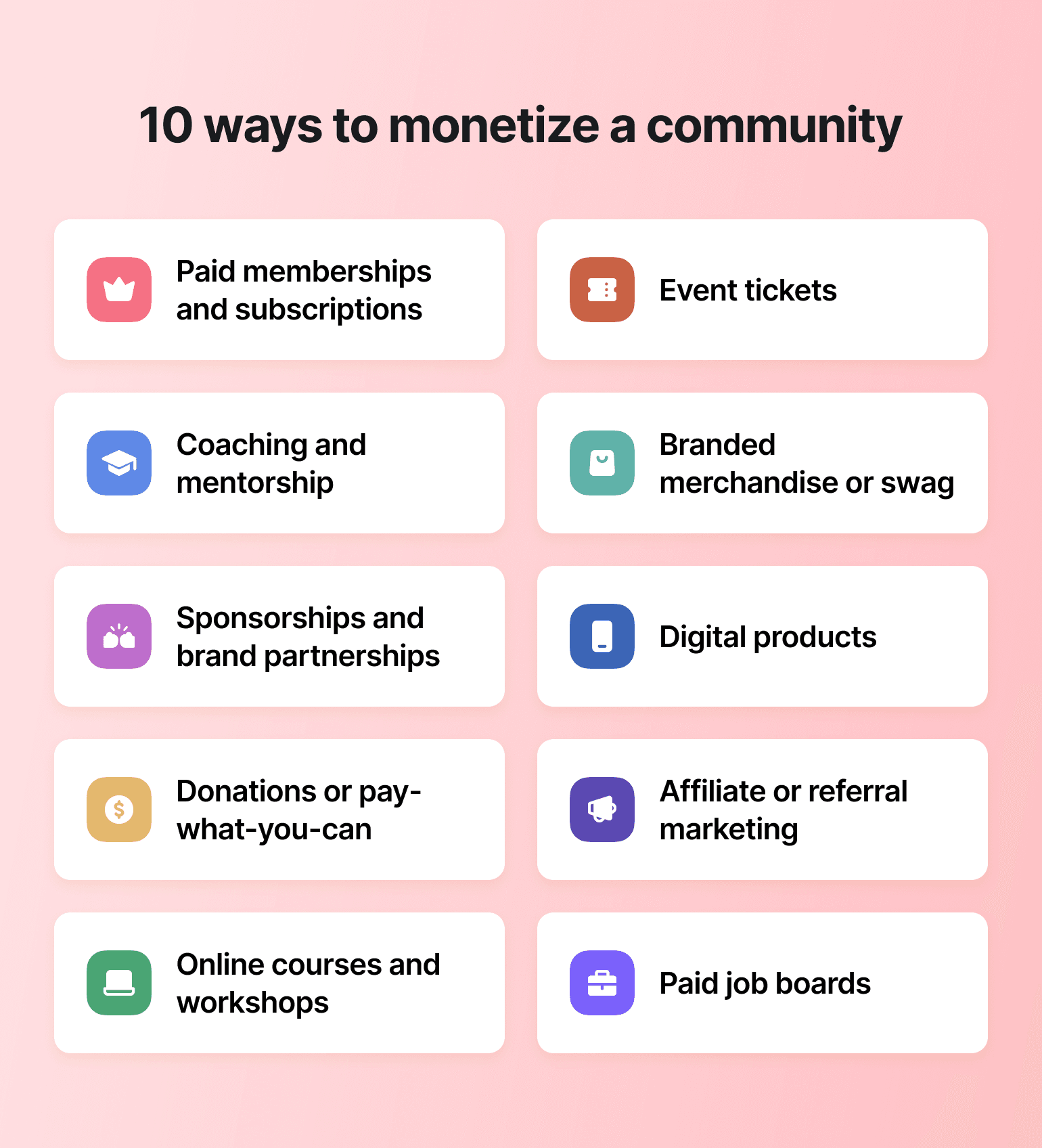
10 proven ways to monetize your community
If you’ve made it this far, you’re either convinced it’s time to monetize, or we’ve at least piqued your interest. The good news is that there are many ways to monetize your community, and you don’t have to limit yourself to one, either.
1. Paid memberships and subscriptions
Paid memberships remain the bread and butter of monetization, but the primary driver for conversion has shifted. More content is out, personal growth is in. Today, the most successful paid tiers are designed around helping members achieve specific goals, mindset shifts, or skill mastery.
So, how do you move members from free to paid? Smart Passive Income’s Pat Flynn, suggests that the most effective marketing isn't about positioning yourself as the authority. Instead, it's showcasing the success of your members.
Your members are the heroes of the story. When you talk about their transformation—whether it's in a 60-second short or a long-form podcast episode—you don't even need a funnel. Our role is to facilitate those moments where people can find results, and find each other.
This aligns with a broader trend where community is no longer just a post-purchase destination. With 48% of community builders reporting that members engage with their community before they buy, the most effective strategy is often to offer a free tier or public event to show the value, then upsell to a paid membership that delivers the deep transformation and hands-on support members crave.
Using tiers to provide more value in your paid membership
Members don't drift up your tiers on their own—each move has its own trigger you can engineer:
- Stranger to free member: New people join when there's a single, obvious entry point. Put the link everywhere your audience already pays attention, make the promise specific, and require just one click to join.
- Free member to engaged participant: Most new members lurk until something pulls them in. A simple welcome sequence fixes that—send a DM when they join, point them to one clear first action, and nudge them if they go quiet in week one. The goal is their first post, which is what turns a visitor into a regular.
- Engaged member to paying member: People upgrade when they see a transformation they can't get for free. Make the gap visible with a paid-tier preview, then add a reason to act now—a founding-member price with a real deadline and proof from a current member.
- Paid member to premium customer: The top tier sells when a member hits a result and wants the next level. Don't wait for them to ask—run quarterly check-ins, watch for upgrade signals, and invite the right members directly.
The throughline: design each stage deliberately rather than hoping members find their own way up.
2. Coaching and mentorship program
With growth being the big driver for members converting from free to paid, offering coaching and mentorship opportunities as part of a paid membership or as paid add-ons for free members is one of the top strategies we’re seeing across Circle community builders. These options can include:
- 1:1 coaching. If you want to run a marathon, you find yourself a coach. The same goes for your members looking to improve their skill sets or make a significant life change. Dedicated coaching helps create accountability and is a great way to demonstrate the value of your community through testimonials or word-of-mouth.
- Flexible group coaching. Coaching doesn’t have to be 1:1, either. Group coaching can help take multiple community members on a shared improvement journey.
- AI coaches: A new frontier in mentorship is the use of AI agents. Rather than replacing the coach, builders are using AI "learning companions" to provide instant feedback, help students stay motivated, and make sure they get better results between live sessions.
Real-world example: English Like a Native's "Ben, Study Buddy"
Anna Tyrie, founder of English Like a Native (and The Conversation Club) needed a way to provide personalized support to language learners at different levels without being available 24/7. Her solution was Ben, an AI study companion that answers vocabulary questions, checks grammar, suggests exercises based on course progress, and offers pronunciation tips.
The key was in the training. Anna curated Ben's knowledge engine with transcripts from all 45 video lessons, a custom PDF with 2,000+ vocabulary words, common error patterns, and complete conversation practice dialogues — then gave Ben instructions to respond conversationally and suggest specific lessons when members struggled.
With Ben available around the clock, members get instant feedback and personalized support on their own time. And Anna can focus her live teaching on advanced concepts instead of repetitive questions.
👉🏼 Want to build something similar? Circle's AI agents let you create a custom study buddy, coach, or support companion for your community in minutes — no coding required.
3. Sponsorships and brand partnerships
Depending on the nature of your business, brand partnerships can be a very lucrative way to monetize your community. With transformation being the driver of community growth these days, sponsorships and brand partnerships can help build deeper trust with your members if (IF) those partners are trusted too.
Here are 4 sponsorship and brand partnership ideas to inspire you:
- Co-created micro-challenges: Instead of a standard webinar, partner with a brand to host a short, goal-oriented challenge. This aligns with the 50% of builders prioritizing "lighter" engagement.
- Sponsored "scholarships" or grants: Partner with a brand to remove financial barriers for your members. This positions the sponsor as a supporter of your community's success rather than just an advertiser.
- Curated toolkits: Move beyond generic affiliate links. Work with a partner to create a custom, pre-configured setup exclusively for your members.
- Go unplugged: With members craving "less screen time and more real time", physical product partnerships are regaining value.
💡Tip: Members are looking for "honest, unpolished voices" and recommendations they can trust. Frame your partners as vetted solutions that cut through the noise, rather than advertisers buying attention.
4. Donations or pay-what-you-can
Similar to paid communities, opting for a donation or pay-what-you-can model allows people to pay for their community membership. But, instead of having a very rigid, set price, they have the flexibility to choose what they pay.
This model isn’t always the ideal monetization option, but it can still be effective. Particularly if you have a very devoted, tight knit membership who clearly sees the value your community brings to their lives. One great example of a pay-what-you-can model is Mila Clarke’s community, the Glucose Guide.
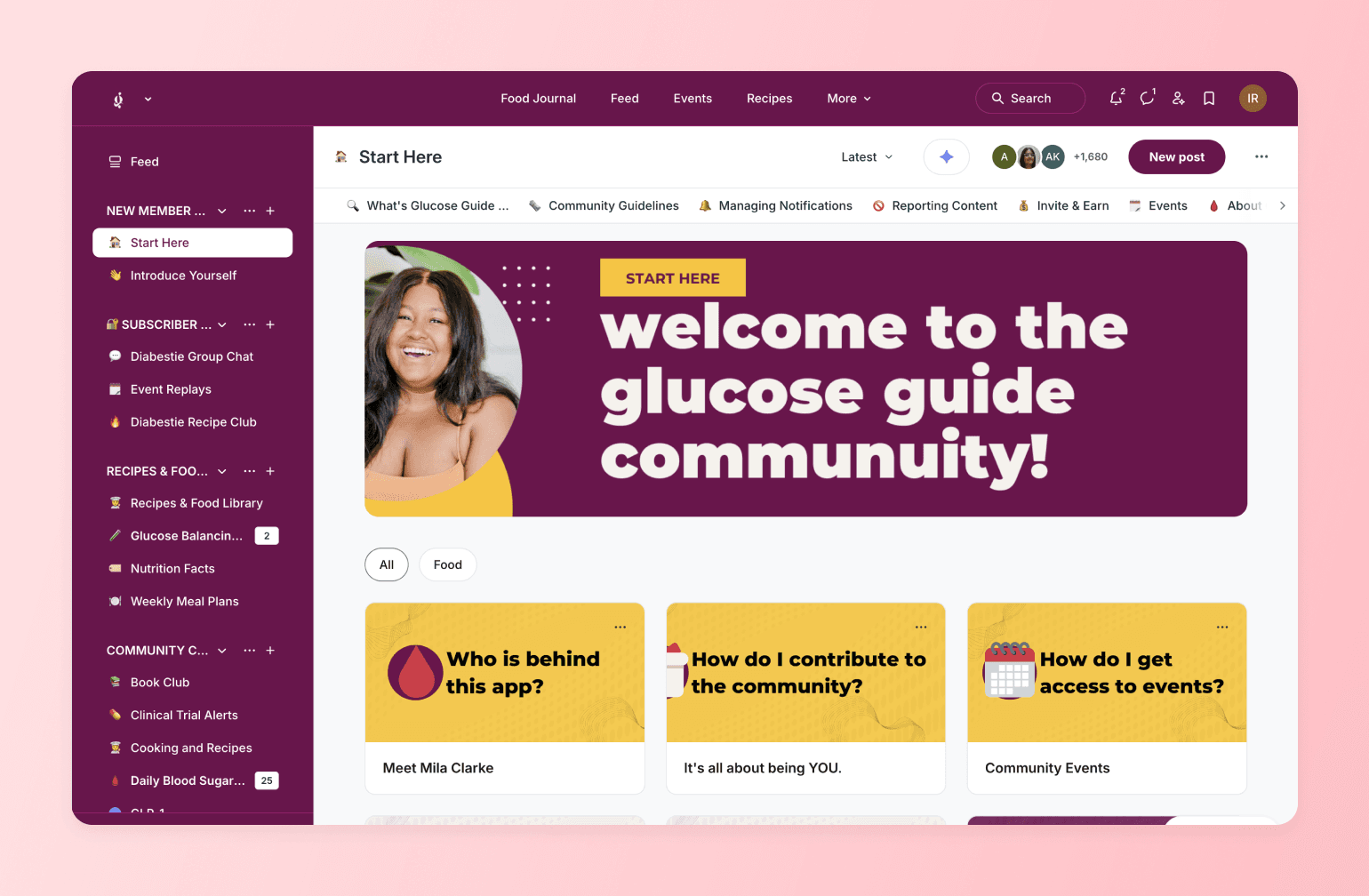
Mila’s community is run on paid brand partnerships and member donations. Most of the content in her community is free to access, but to join and become a member (and get access to some private areas in the community), people have to pay-what-they-can. Member subscriptions start at $1 a week, $5-$50 a month, or $100 for a one time all-access fee.
You can learn more about the Glucose Guide community here!
5. Online courses and workshops
We all understand the value of learning, and community members see that value when you offer courses or workshops in your community that help them achieve their goals. In our 2026 Community Trends Report, community builders told us that 54% of members cited "skill mastery" as a key outcome of their experience.
The best part about this monetization strategy is that you can tailor how you deliver it to the different ways your community learns best:
- Micro-learning: More than half of the community builders we spoke with break complex topics into bite-sized content that members can consume in under 15 minutes.
- Live courses. AKA “synchronous learning,” live courses are great for your tech-savvy community members with flexible schedules for when they can sign in.
- In-person courses. Communities that get together IRL can often build stronger bonds and connections in your digital community. And like live courses, you can record them as pre-recorded content for members who couldn’t make it in person.
- Peer-learning cohorts: Test small, time-bound pilot groups where members learn together, creating accountability and deep connection without the need for endless video calls.
💡 Learn how to create your first online course here, step-by-micro-step.
6. Event tickets
Events remain a powerful way to monetize, but the strategy has shifted. In 2026, success isn't packing the calendar with live sessions to drive engagement metrics. Members are looking for curated, high-value experiences that respect their time.
- Focus on "real" connection: In a world of AI-generated noise, members are willing to pay for "unmistakably human" experiences. Consider hosting intimate, high-ticket workshops or retreats where the goal is deep emotional safety, connection, and tactical, real-world takeaways.
- Go hybrid and async: You don't need everyone in the room at the same time to drive revenue. Look at selling "event passes" that include access to a live session plus a private async discussion thread, bite-sized summaries, and recordings for those who can't make it live.
- Quality over quantity: A significant 21% of builders plan to reduce their event programming in 2026. By hosting fewer, higher-impact events, you can create a sense of scarcity and premium value that justifies a ticket price.
7. Branded merchandise and community swag
Nothing says value like a good hoodie. Or a tote bag. Or a branded Stanley mug. Merch promotes your brand to potential new members and gives your existing members a sense of belonging they can carry around with them.
If you have die-hard fans, selling branded merch is a great avenue to increase revenue—but to truly maximize Member LTV (Lifetime Value), you should treat merch as a tool for identity and celebration:
- Badges of belonging: With 67% of members joining or staying specifically because of "shared identity and values", merchandise becomes a powerful signal. It allows members to physically wear their values and signal to others, "I am part of this movement."
- Member engagement. If you’re tracking the most engaged members in your community, a great way to show them you value their dedication is to give out branded swag when certain milestones are hit!
- Milestones for transformation: Consider using merch to celebrate wins. Instead of just selling a t-shirt, offer exclusive "graduation gear" or other physical rewards unlocked only when a member achieves a specific goal or mastery level. This reinforces the progress they have made.
By shifting your mindset from swag to symbolism, you can turn physical goods into powerful retention tools.
Real-world example: Web Designer Pro's swag-powered growth
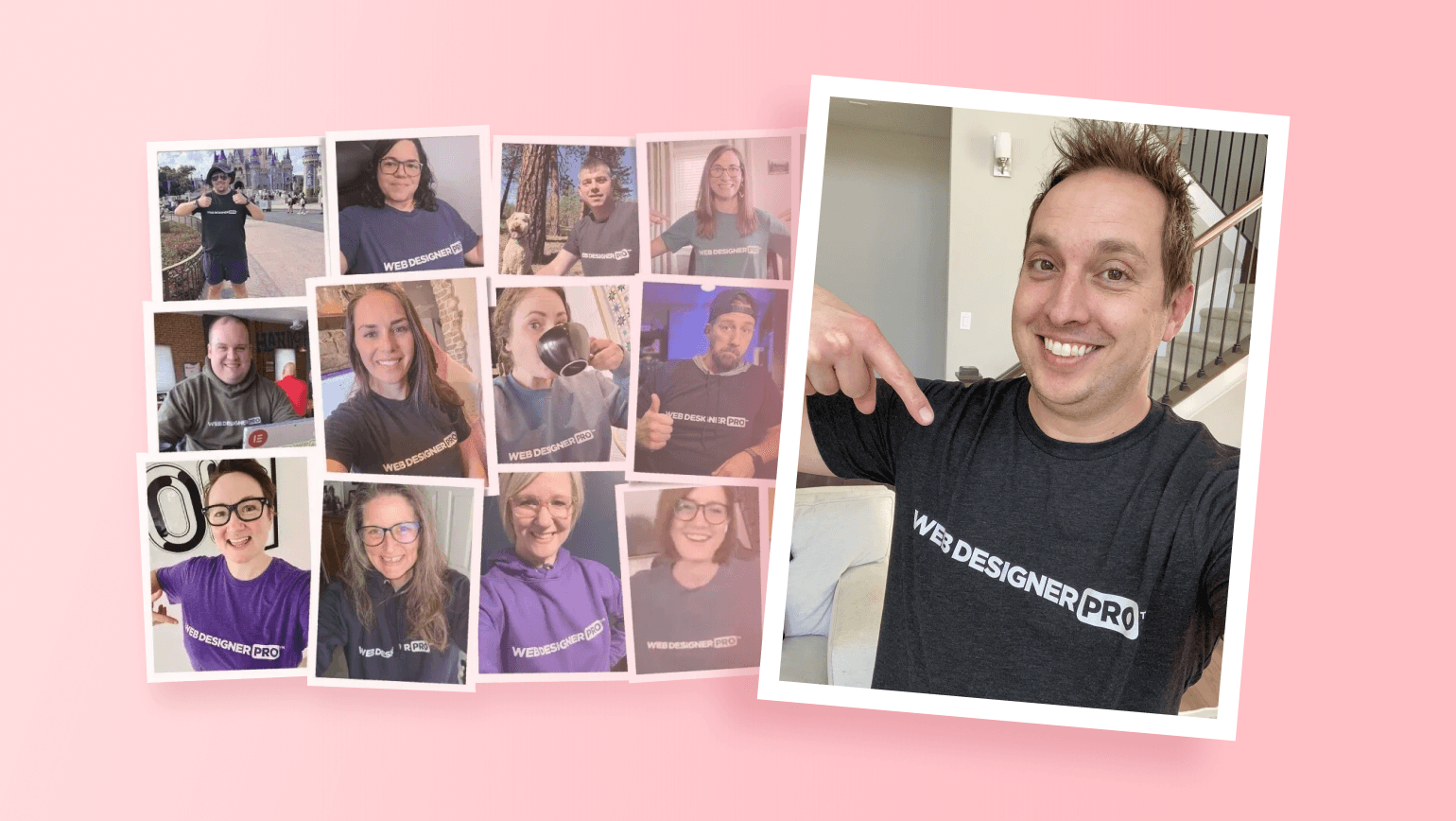
Josh Hall, founder of Web Designer Pro, leaned into branded merch as both a retention and acquisition tool. "It helps that the brand looks cool on a shirt and is really recognizable," he says. In one standout case, a member landed a $5,000 website project just by wearing her Pro shirt to the vet.
Beyond apparel, Josh gives members shareable assets like anniversary graphics, website badges that signal credibility, and an affiliate program that turns members into recruiters. The result is merch that doesn't just generate revenue — it builds pride, visibility, and a reason to stay.
8. Digital products
When it comes to monetization, offering digital products is a strategy with a potentially higher margin than any other. Digital products allow you to provide value to your community with something they can use in their everyday lives, whether it’s a time management checklist or a list of prompts to use with generative AI tools. Here are a few examples of digital products that community creators offer today:
- Templates and productivity tools. Marie Poulin's Notion Mastery templates are pre-built productivity systems that help users manage tasks, notes, and projects in one place. Whether it's Notion dashboards, Airtable workflows, or Google Sheets trackers, templates that save time are consistently strong sellers.
- Ebooks, guides, and playbooks. Downloadable PDFs packed with strategies or step-by-step instructions for a specific outcome. These work especially well when paired with a community membership — the ebook gets people in the door, and the community keeps them engaged.
- Budget and planning spreadsheets. Creator Danica Nelson built various budget templates for travel, business, and personal finance tracking. Any community where members are working toward a financial or organizational goal can offer spreadsheets as a low-cost, high-value add-on.
- Photo and design presets. Photographer communities often include Adobe Lightroom presets as part of a paid membership. These presets help up-and-coming photographers improve their skills — and they'll often share their progress on social, leading to more membership signups.
- Craft patterns and creative assets. Cheyenne Anstice created The Wholeness Shop, where she sells beading patterns and courses that help makers find flow, confidence, and creative fulfillment through the meditative art of beadwork. Patterns, design files, and creative assets work across any maker or artist community.
- Travel itineraries. Many travel influencers sell downloadable itineraries highlighting optimal routes, recommended restaurants and attractions by location, and packing checklists. These are easy to produce and easy to sell as standalone add-ons.
- Custom GPTs and AI prompt packs. Pete Boyle created a $1 digital product — a bundle of custom GPTs for marketers — and made $4,069 in just 10 days through upsells and consulting gigs. AI tool bundles and prompt libraries are a fast-growing category across business, marketing, and creative communities.
- Subscription resource libraries. SwipeFiles by Corey Haines is a resource library for marketers supported by a membership — subscribers get ongoing access to a growing collection of templates, worksheets, and tools. This model turns digital products into recurring revenue.
Real-world example: The Public Health Club's digital product engine
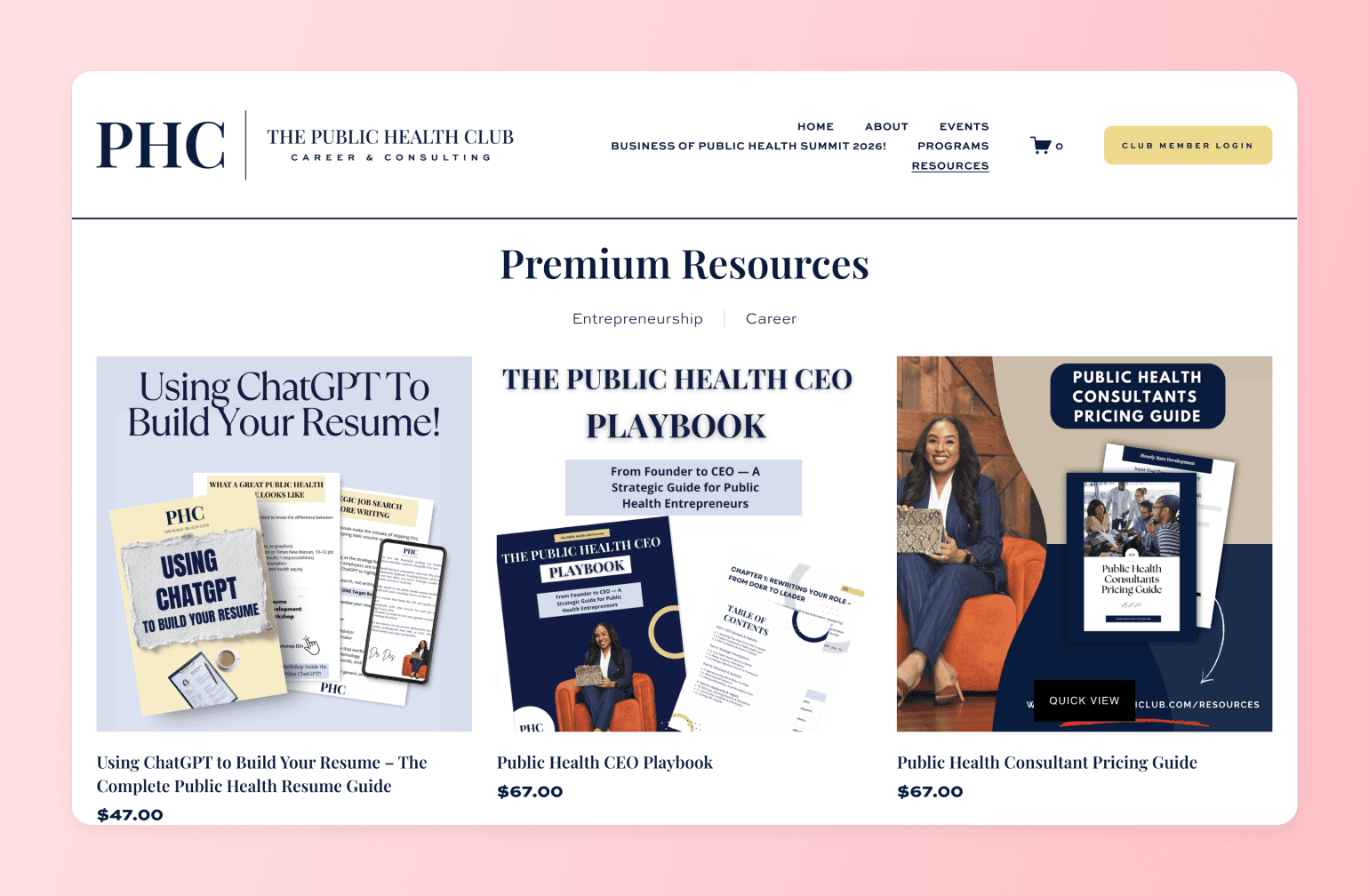
Dr. Des, founder of The Public Health Club, built a clever system around digital products. Each month, she releases a brand-new resource exclusively for community members — free during that month only. Afterward, it goes into her online store and is sold separately. This approach reduced churn by 5% (members stay to avoid paying for resources later), built a growing catalog of products for future offers, and gave her a built-in feedback loop to refine her marketing before each resource hits the store.
9. Affiliate marketing and referral programs
It’s 2026 and you can’t scroll without being inundated with a tsunami of AI-generated slop and "fake" reviews. We’re all feeling overwhelmed and struggling to know what is real, and your members are tuning out ads and turning to communities to ask, "Who do I trust?"
You’ve done the work to build trust, and affiliate marketing has evolved from a simple revenue stream into a crucial service for your members.
👉🏼 Just in case you don’t know: Affiliate marketing is sharing links to products or services in exchange for a commission.
This makes your role as a curator more valuable than ever. By vetting tools and resources that genuinely help your members achieve their goals, you are acting as a trusted filter in a world of uncertainty (and not knowing if something is cake.)
10. Paid job boards and career centers
For many members, the ultimate transformation isn't just learning a new skill, it's landing a new role. Community builders told us that almost 45% of members reported experiencing career growth as a direct result of their community participation.
Creating a dedicated job board or career center allows you to monetize this demand directly while solving a major problem for the industry. In a world where AI tools are spamming general job sites with thousands of applications, employers and talent alike are desperate for a filter.
💁🏽 Your community provides that filter.
By curating high-quality roles and vetting candidates through your existing membership, you create a high-trust environment that is worth paying for.
- Monetize both sides: You can include access to the job board as a perk of your premium membership tiers for job seekers, while simultaneously charging companies a fee to post their listings to your highly qualified audience.
- Beyond the listing: Don't just post links. Enhance this revenue stream by offering "career sprints" or resume review workshops—paid add-ons that help members prepare for the opportunities you are sharing.
How to choose the right monetization strategy for your community?
With so many options, it can be tempting to throw everything at the wall and see what sticks. But the most successful community builders in 2026 aren't just adding more "stuff" to sell, they are designing intentional business models that fit their members' lives.
As Jocelyn Hsu, Head of Community at Hint Health, reminds us: "Your customers are different. Your product is different. Focus on building a community unique to your specific audience and needs".
Here is a simple framework to help you decide which path is right for you:
- Start with the transformation, not the tactic. Before you pick a price point or a format, ask yourself: What result are my members trying to achieve?
- Respect your members' time (and energy). In a world of digital overwhelm, "more value" doesn't mean "more hours online." Choose a monetization strategy that fits your members' capacity.
- Experiment before you commit. You don't need a perfect "master plan" to start charging. Try selling a single workshop, a one-off digital guide, or a limited-time coaching sprint. See what members are willing to pay for, gather honest feedback, and then build the full program.
- Check your own capacity. Be realistic about what you can sustain.
The "right" community pricing strategy is the one that delivers the best results for your members while keeping your own business sustainable.
5 best practices for sustainable community monetization
Knowing how to monetize your community is just the start. Putting these strategies into action means taking a little bit of risk. But as the saying goes, “No risk. No reward.”
Before we get into best practices, there’s one thing you need to know. None of these strategies will work unless you’re already demonstrating value to your audience. Launching a new community with paid access will be met with the sound of crickets. Tammie Bennet, Founder of The Show Up Society, uses her podcast to connect with people and help convert them to a paid membership.
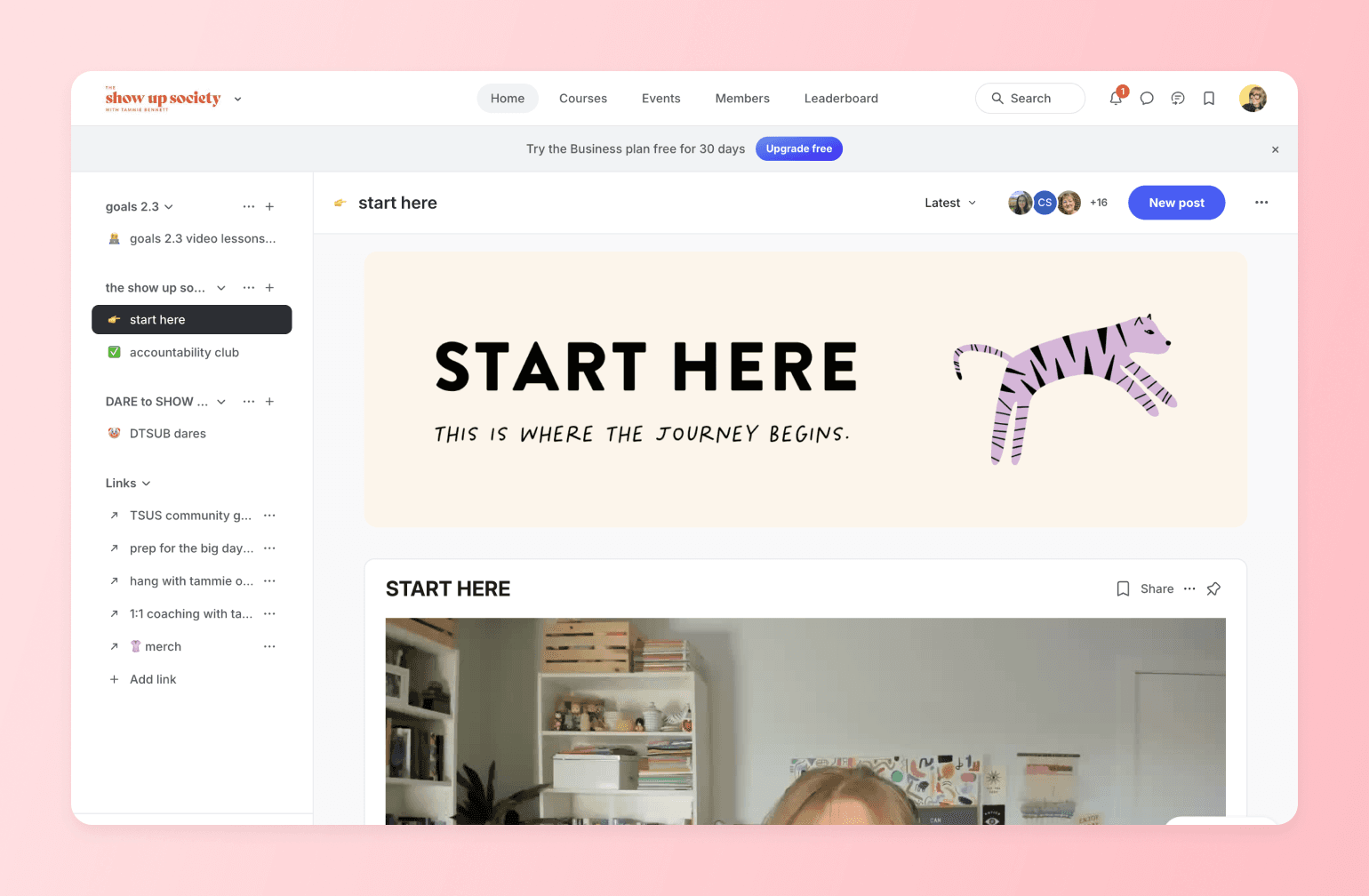
“After listening to a few episodes, they become very familiar with my coaching style, so they know whether or not they are a good fit for my community,” says Tammy.
Investing in high-quality content is key. It’s a preview of what awaits people once they become members, and it helps filter out people who aren’t interested in what you’re offering.
Give your audience value and allow them to experience wins along their free journey with you. Then they will know that the solutions you are offering are legitimate and will trust that paying you to help them will give them even better results.
1. Know your worth
You started on the community-building path because you knew you had something to offer. But determining the value of your time and insight is often the hardest part. In 2026, the data is clear: the path to sustainability isn't about getting more members at a low price—it's about serving fewer members at a higher level.
As Rachel Starr, founder of coCreator Society, notes, builders are "charging more and offering a higher level of service in return" because earning trust today requires more "handholding" and a human touch.
Monetization is no longer just a business model—it is the mechanism that allows you to provide the high-value, transformative experiences members are craving.
People I’m working with are moving away from chasing bigger member numbers. They’re charging more and offering a higher level of service in return.
2. Experiment with your pricing model
Every community monetization strategy has an almost infinite number of pricing models. A monthly paid membership might work well for one community, while it falls flat with another.
Don’t worry. You might not get it right on the first go, and that’s okay. Every business experiments with pricing to see what customers are willing to pay. Everyone laughed when Netflix announced they were launching a paid streaming service. Today, you’re probably paying for 17 of them.
Monthly subscriptions can be a great way to monetize your community because they have a limited commitment time frame for your members. But that’ll bite you since your members have a monthly reminder asking if they still get value from your community.
Annual or lifetime memberships require more work to convert but can create a higher sense of value and reduce community churn. You just need to make sure that you can commit to providing your members with value for a very long time!
3. Build with your members, not just for them
Going back to our report, the communities that see the highest engagement are the ones that have ditched the "perfect plan" in favor of honest feedback and frequent iteration.
👩🏽🔬 How do they do it? It’s simple. They treat their community as a laboratory.
Instead of guessing what events to host, 43% of community builders now pilot new initiatives in small groups or short timeframes before rolling them out to everyone. By testing concepts—whether it’s a new workshop format or a guest speaker series—they’re able to deliver exactly what members want (and have the bandwidth for) before committing to a full schedule.
Glo Atanmo, Founder of The Life Leap, suggests that this mindset shift removes the pressure to be perfect:
If you treat your creator business as an experiment, you can take away all the anxiety of having to be perfect and get everything correct. Because all it takes is getting an experiment right once.
Listening closely and tweaking your approach based on real feedback helps you build a culture where members feel ownership over the experience.
Start monetizing your community with Circle
Monetizing your community doesn’t have to be scary—unless you’re running some kind of horror-themed community. Then it probably should be. Anyway…
When you’re ready to monetize, remember to:
- Show the value of your community (via community marketing) on free channels like social media, newsletters, and in-person events.
- Be transparent and open about what your community offers.
- Know what your time and content are worth—and charge accordingly.
- You don’t have to choose one model! Many communities combine multiple monetization tactics to further increase their revenue.
Community pros choose Circle.
👉🏼 When you’re ready to monetize your community, Circle is here to help. Start your free 14-day trial today to see why community masterminds like Mandy Ellis, Kelsey Rowell, and more choose Circle.
FAQs about community monetization
What's the best Discord alternative for non-gaming communities?
It depends on what your community needs. For creators, educators, and membership businesses that need monetization, courses, events, and professional branding in one place, Circle is the strongest all-in-one option. For workplace teams that rely on Microsoft 365, Teams is the natural fit. For privacy-first messaging, Signal stands out with end-to-end encryption. And for free, discussion-based communities, Reddit and Facebook Groups offer low-barrier starting points—though neither supports monetization or structured content.
Can you actually monetize a community on Discord?
Discord offers Server Subscriptions, but with significant limitations: Discord takes a 10% platform cut (plus up to 30% on iOS), restricts creators to a few paid tiers, requires US-based banking, and doesn’t support one-time payments, coupon codes, or custom checkout flows. If you’re using a third-party tool like Patreon to manage payments, Discord can’t automatically revoke channel access when someone cancels—so you may end up with non-paying members in your paid spaces. For communities that want built-in payments, tiered memberships, and automatic access control without workarounds, platforms like Circle handle monetization natively.
Why are people leaving Discord in 2026?
Three things are driving the current wave of migration. First, Discord’s “teen-by-default” age verification policy—announced in February 2026 and delayed to the second half of the year after significant backlash—requires some users to submit ID or facial age estimation to access certain features. Second, a third-party vendor breach in October 2025 exposed tens of thousands of government IDs that had been submitted for verification, raising trust concerns. Third, many community builders are simply outgrowing Discord’s chat-first model and looking for platforms with better monetization, structured content, and professional branding.
What's Discord's new age-verification policy?
In February 2026, Discord announced a global rollout of “teen-by-default” settings that restrict certain actions—like accessing age-gated servers, changing content filters, or speaking on stages—until users complete an age-assurance step. Discord says most people won’t need to upload an ID or do a face scan, as it plans to use an age-inference model first. When additional confirmation is needed, options include on-device facial age estimation or ID verification through vendor partners. The rollout was originally planned for early March 2026 but has been delayed to the second half of 2026 after widespread user backlash and privacy concerns.
Is it worth switching from Discord if it's already working for my community?
Discord working “fine” and Discord being the right long-term platform are two different things. Many community builders hit a point where they need to monetize, deliver structured content like courses, control their branding, or see real engagement analytics—and that’s when a chat app starts holding them back. It’s less about Discord being broken and more about your community outgrowing what a chat tool was designed for. If you’re at that stage, purpose-built platforms like Circle are designed to scale with you—combining community, courses, events, and payments in one place.
Will I lose my members if I switch from Discord to another platform?
Some attrition is normal—experienced community managers report that 40–70% of active members move over initially, with the rest joining over 1–3 months if you keep a redirect in your old Discord server. The key is a clear migration plan: give members advance notice, explain what’s better about the new platform, run a parallel period where both are active, and offer a strong onboarding experience on the other side. Platforms like Circle offer guided onboarding and migration support to help reduce friction and keep momentum during the transition.
Can I export my community data from Discord?
Discord’s official data request returns only your personal messages in JSON format and can take up to 30 days to process. There’s no server-wide export for full channel histories, and member email addresses are never accessible—all member relationships are mediated through Discord’s infrastructure. Third-party tools like DiscordChatExporter exist but technically violate Discord’s terms of service. In practice, most successful community migrations start with a clean slate on the new platform rather than trying to port over old chat history.
Can I run online courses or structured learning on Discord?
Not natively. Discord has no built-in course modules, drip content, progress tracking, quizzes, or certificates—and it isn’t designed for structured, sequential learning. You can approximate a course with channels and pinned messages, but there’s no way to gate content by completion, track learner progress, or deliver cohort-based experiences. If courses are central to your community business, you’ll need either a separate LMS bolted on or an all-in-one platform like Circle that combines community discussion with a native course builder.
What's the best free Discord alternative?
For privacy-focused messaging, Signal is free and fully encrypted. Telegram supports large groups up to 200,000 members at no cost. Reddit offers free, topic-based discussion communities. Facebook Groups provide free group management with built-in discovery. And TeamSpeak is free for self-hosted voice chat. The tradeoff with all free options is that you’ll hit limitations around monetization, branding, structured content, or analytics as your community grows. If you need those capabilities, paid platforms like Circle, Slack, or Discourse offer more complete toolsets.
What's the difference between Discord and Slack?
Discord is built for community chat, especially real-time conversation, voice channels, and casual, always-on spaces. Meanwhile, Slack is built for workplace communication, with deeper business integrations (think Google Drive, Jira, and internal workflows) and a more “work tools” default experience. In short: choose Discord for informal group chat and voice hangouts; choose Slack when you need team ops, integrations, and work-first collaboration.
Can I migrate my existing Discord community to Circle?
Yes. Most teams recreate their Discord channel structure as Circle Spaces, then bring members over with a clear invite and onboarding flow. Since Discord doesn’t offer server-wide data export, migrations typically start fresh on Circle rather than porting old chat history—which most communities find is actually a cleaner experience. Circle offers guided onboarding support to help you plan the transition, reduce member confusion, and maintain engagement momentum during the move.
Is Discord safe for communities with teenagers or minors?
Discord has been under increasing scrutiny for child safety. A 2025 lawsuit from New Jersey’s Attorney General alleged that Discord’s DM feature failed to adequately protect minors from harmful content. The 2026 age-verification policy is Discord’s response, but it has raised its own privacy concerns—particularly after the October 2025 breach that exposed tens of thousands of government IDs submitted for verification. If your community includes minors, look for platforms with stronger built-in moderation controls, verified identity options, and compliance-ready features rather than relying on Discord’s evolving policies.
Contributing Writer
Alex writes in-depth guides on community tools, engagement rituals, and automation—helping community builders scale with clarity and confidence.