Membership sites 101: What they are, how they work, and why you need one
TL;DR
- A membership site delivers ongoing value, turning your expertise into predictable, recurring revenue and replacing the feast-or-famine cycle of one-off launches.
- Members stay for outcomes with the most successful membership sites, blending courses, community, content, and coaching.
- Learn how to define your niche, price, market, and scale a membership site, even without a massive audience.
Members only
One issue, five minutes, every Tuesday. Read by +14,200 creators.
When Bonnie Christine started her pattern design business in 2010, she didn't plan to launch a membership for aspiring creatives. She just wanted to do something that made her heart sing.
Flash forward 16+ years, and her offer funnel ends with an exclusive VIP membership for graduates of her courses. Today, her membership site serves 17,000+ aspiring surface pattern designers worldwide, generating predictable revenue while she sleeps.
From the first member to predictable revenue, this is the playbook of creating membership sites.
What is a membership site?
A membership site offers exclusive content, services, or community access to members who pay a one-time or recurring fee for ongoing benefits. It often has two components:
- An internal membership platform, where you store all your content, such as the content library, forms, events, and courses for member access.
- An external membership website, which is the marketing side, including your sales and membership pages, and signup flows.
Membership sites work differently because the community is the product. Members aren't buying content; they're paying for results and a place that keeps delivering them. Members get access to an entire world: community, live events, evolving content, and direct connection with the people running it. They stay because the community, the resources, and the access give them a reason to come back month after month.
Benefits of building a membership site
The biggest benefit of a membership site is simple: predictable, compounding income that grows through deeper relationships and automated operations. Pat Flynn launched SPI Pro on Circle in 2020. Four years later, his community generates $700K+ a year, 58% of his total revenue, and it's still growing year over year. It's the result of six things working together:
- Recurring revenue: Subscriptions provide predictable monthly or yearly income.
- Scalability potential: You can add more paying members without substantially raising costs or effort.
- Building valuable customer relationships: Engagement is one of the biggest value-adds of a membership, so members stay longer and become more loyal.
- Content monetization opportunities: Videos, podcasts, and PDFs can be repurposed, updated, and resold as part of the membership.
- Automated business operations: Using a solid membership site platform helps you automate tasks like billing, content drip schedules, and community moderation.
- Brand ownership: Unlike Facebook Groups or Discord, every touchpoint on your membership site—the site, the emails, even a branded mobile app in your members' pockets—carries your brand.
These benefits compound. It's why so many creators, coaches, and educators build their entire business around a membership. But how you capture them depends on the type of membership you build.
Types of membership sites
A membership site can take many forms, but most fall into one of four categories. The type you choose shapes your content strategy, your pricing, and what keeps members coming back. The membership site examples below show what each model looks like in practice.
1. Course-based memberships
These deliver educational content in structured modules. Members pay a recurring fee for ongoing access to a growing course library, or a one-time fee for a specific program. The value compounds as new material, cohorts, and live teaching sessions get added over time.
A great example is Felippe Nardi's Inside The Show, a cohort-based course and community that teaches creators how to run engaging live virtual experiences.
2. Community-based memberships
The community itself becomes the product, with conversations, accountability, and connection doing the heavy lifting on retention.
Building a Second Brain's community shows how members share personal productivity breakthroughs, support each other's systems, and push one another to get better.
3. Content library memberships
Content library memberships provide a growing archive of specialized assets: stock images, templates, swipe files, research papers, workout plans, videos, and more. Members pay for access to a library that would cost far more to build on their own.
Seth David's Talk Nerdy to Me is a membership that unlocks 30+ courses on accounting and business software, all housed in a single content library, accessible anytime.
4. Coaching and mastermind memberships
Coaching and mastermind memberships center on direct access to an expert or a curated peer group. Members pay for coaching calls, hot seats, group masterminds, and personalized feedback.
This is the highest-touch, highest-price model, and it's where many coaches and consultants find their most predictable revenue. Just like Sarah Turner's Write Your Way to Freedom—a copywriting mastermind with over 6,000 members, offering weekly coaching, small peer groups, and expert mentorship.
Every model works. These membership site examples prove that the difference between the ones that stall and the ones that scale comes down to how you build, price, and launch it.
How to start a membership site
You need a clear idea of who you're serving, what they need, and a platform that doesn't make you duct-tape five tools together.
1. Define your niche and ideal member
Start with who, not what. The tighter your niche, the easier everything else becomes—pricing, content, and marketing all get simpler when you know exactly who you're talking to. Ask yourself: what transformation do your members want, and what expertise do you bring that gets them there?
"Business advice for entrepreneurs" competes with everyone. "Pricing strategy for freelance designers" owns a room. If you're still narrowing down your focus, our Launch Your Community guide walks through the process step by step to get you set up in under 5 days.
2. Choose your membership model
Pick the model that matches your strengths and your members' expectations. If you're a coach, a mastermind or a group coaching model might be the best fit. If you're sitting on a library of educational content, a course-based or content library model is the natural starting point. You can always layer in new elements later.
Start with one—course-based, community, coaching, or content library—and layer in more as you grow.
3. Pick a community platform
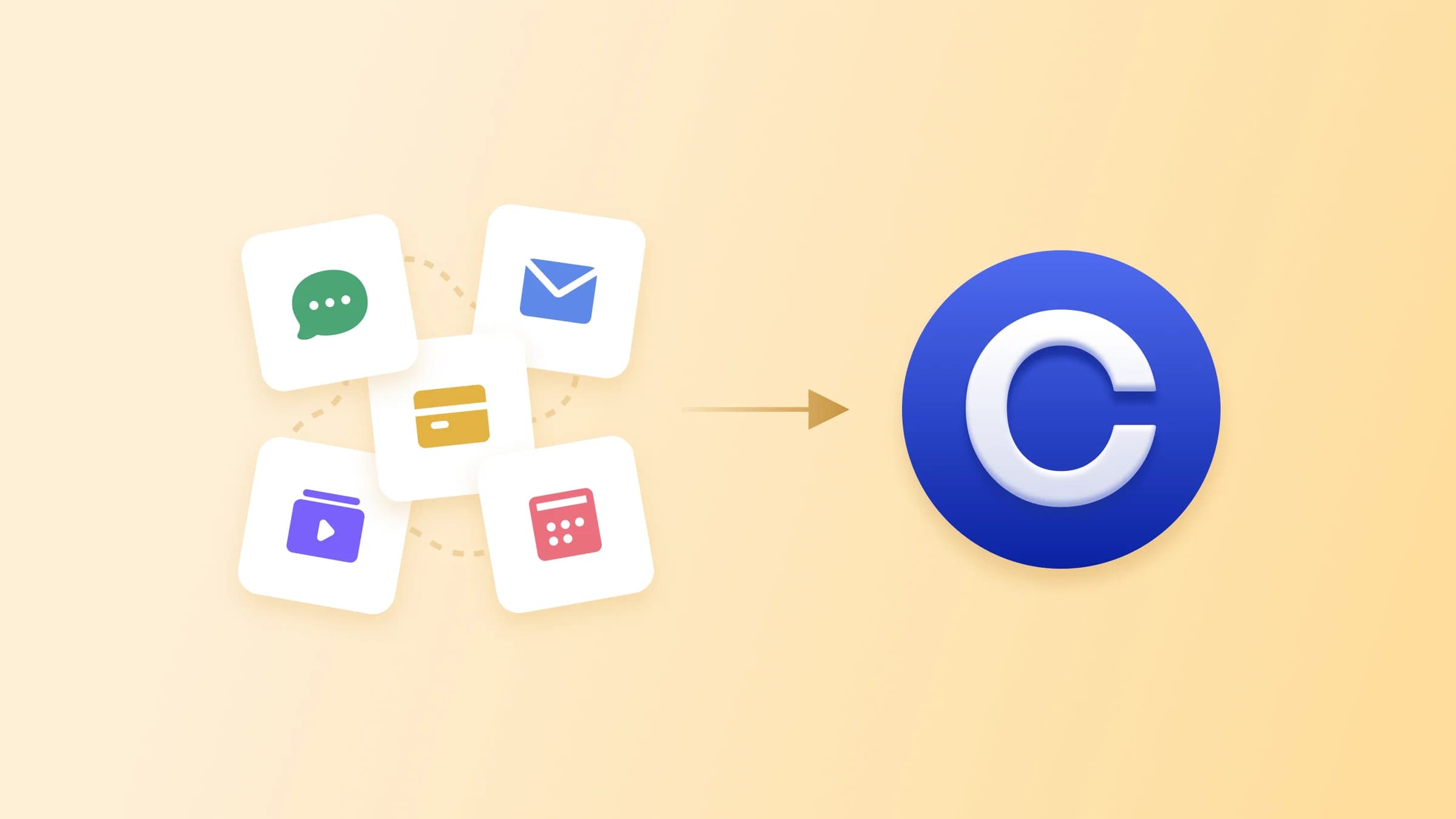
Your platform choice determines how much time you spend building versus how much time you spend actually serving members. Look for a community platform that handles community, content, and payments in one place. The best member sites consolidate everything below under one platform.
Member management
Members who engage in their first week are far more likely to stick around, so don't leave onboarding to chance.
A good platform shows you who's active, who's drifting, and who never got started — then helps you do something about it. Customize onboarding by member type, use access groups to keep the right content in front of the right people, and set up automated check-ins so you're not manually chasing everyone down.
Then layer in retention strategies with automated check-ins, behavior-based email sequences, and engagement tracking to catch warning signs before someone hits "cancel."
Content delivery systems
Your members need a clear path to the content they're paying for without having to hunt through a cluttered interface. Look for a platform that lets you build and organize courses by format and purpose and with structured modules. Also, consider a platform that runs live events with built-in video, all without sending members to a separate platform.
Community engagement tools
A membership site without active discussion is just a content library with a login. Your platform should support threaded discussions, personalized feeds, smart member recommendations, and moderation tools. Gamification makes participation visible and rewarding.
Payment processing
Having payments directly on your membership pages builds trust and reduces checkout friction. Look for native support for recurring subscriptions, one-time purchases, free trials, coupons, and automated access control.
Analytics and tracking
You need one place where community activity, email engagement, and payment history live together—not three dashboards stitched together with screenshots.
Full-funnel dashboards cover member activity, email performance, website traffic, and revenue in one view, helping you scale, track signups, revenue, engagement trends, and where members drop off, then act on it. Ideally, the platform should utilize AI agents to automate processes.
Circle gives you all of this under one roof. Every plan includes community, courses, events, payments, and a built-in Website Builder.
4. Build your structure and core offering
Don't try to launch with everything. Start with one signature resource—a course, a content library, or a structured community—and build around it.
Create your foundation
Organize your membership site by purpose, so members know exactly where to go from day one: one area for discussion, one for courses and one for live events. Orient new members immediately with a getting-started guide or onboarding checklist.
Resist the urge to overcomplicate your structure before you have the members to fill it—start lean, watch where people gravitate, and expand as your community tells you it needs more.
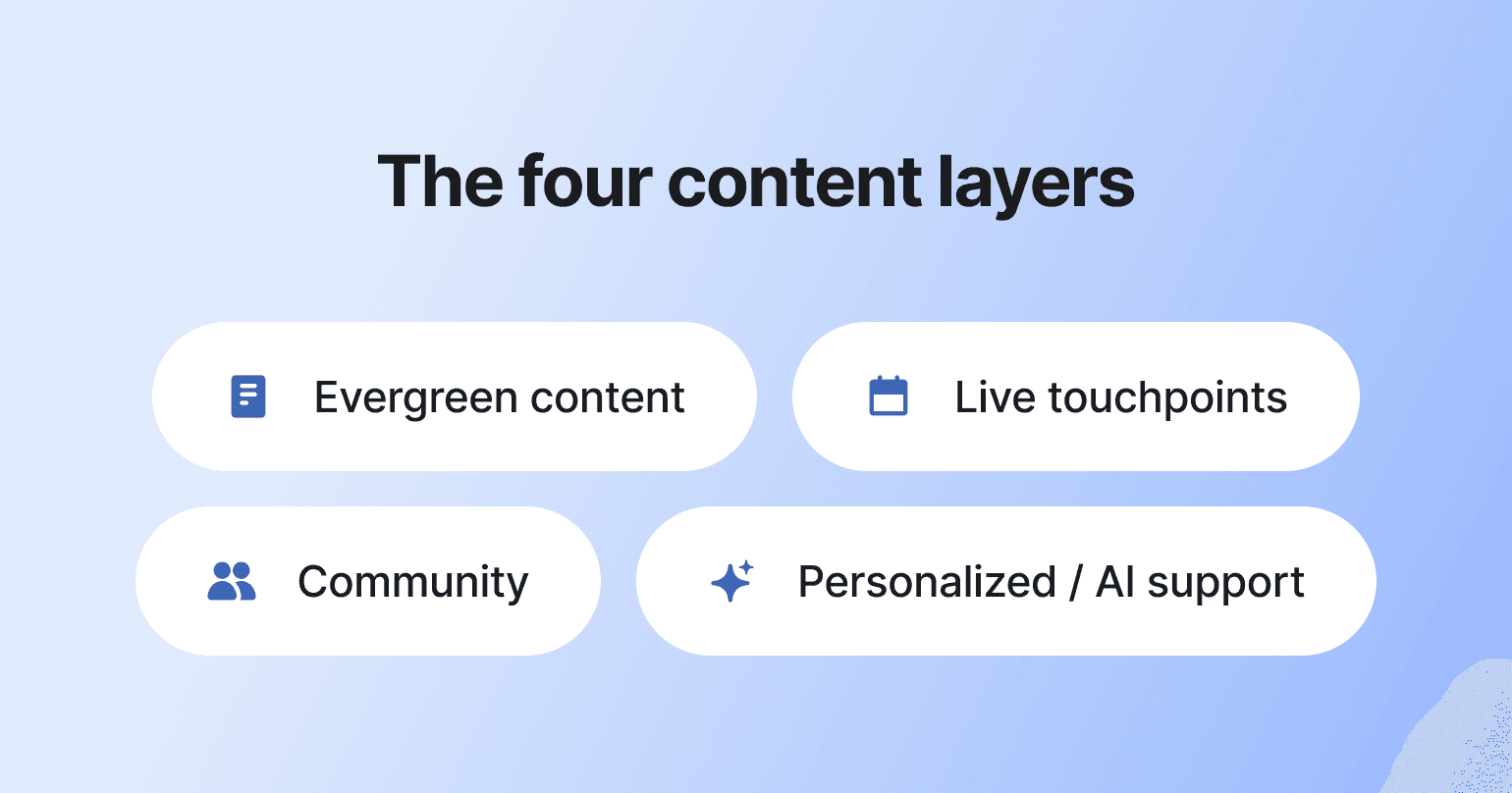
With your structure in place, the next question is what goes inside it. The best memberships layer four things.
-
Evergreen content that compounds
Courses, tutorials, templates, and resource libraries that stay valuable over time. Build it once, update it as needed, and let it work in the background. This is the foundation of your membership: content that new members discover on day one and existing members reference for months.
-
Live touchpoints that create urgency
Weekly Q&As, monthly workshops, guest expert sessions, or office hours. Live events give members a reason to show up this week, not "someday." They create a feeling of access that recorded content can't match.
-
Community and connection
Discussion spaces, accountability groups, member directories, and direct messaging. This is the layer that makes a membership site feel alive between content drops. When members build relationships with each other, they're paying for the network and your expertise.
-
Personalized and automated support
As your membership grows, you can't personally answer every question. This is where AI becomes a real advantage. AI tools can be trained on your courses, posts, and resources to onboard new members, answer common questions, and provide coaching that reflects your methodology.
For simpler automation, consider workflows that let you set up onboarding sequences, re-engagement nudges, and member management triggers without touching AI at all.
6. Set up payments
The right price isn't about what you think people will pay; it's about what the outcome is worth to your members. Here's the pricing logic behind memberships that sustain a real business.
Anchor to outcomes, not hours
If your membership creates a transformation that helps someone land clients, grow a business, or master a skill worth thousands of dollars, a $29/month price tag undersells the value and attracts members who aren't serious. Price based on what your members gain, what your competitors charge, and what’s affordable for your site. Our Community ROI Calculator can help you model the math.
Keep your pricing tiers simple
Two to three tiers is the sweet spot. A common structure: a core membership with full community and content access, and a premium tier that adds group coaching, live calls, or VIP access. Every additional tier adds decision friction, especially when members can see what they're missing.
The most effective approach is making premium spaces visible but locked, so members know exactly what they'd get by upgrading. That visibility is the upsell. You don't need a sales page when the community itself shows them what's behind the gate.
Use trials and founding offers strategically
A 7-or 14-day free trial lets potential members experience the community before committing. This reduces signup friction without devaluing your membership in the long term. Ensure your membership site natively supports free trials, founding rates, and flexible pricing.
7. Launch
A great membership site with no marketing strategy is just a well-organized secret. Once you've built your site, you need a repeatable system for getting the right people through the door.
Lead with free value
Give potential members a taste of what's inside your membership site for free. For example, host a free workshop, distribute a mini-course or a downloadable resource, or open a free, but limited, community space.
Free value can show the quality of your membership before asking anyone to pay. It builds trust and qualifies leads simultaneously.
Build an email list from day one
Use lead capture forms, free resources, and webinar registrations to build a list of people who are interested in what you offer. Then nurture them with a welcome sequence that tells your story, delivers value, and introduces the membership.
Turn members into your best marketing channel
Happy members refer new ones. Make it easy: set up an affiliate program, encourage member testimonials, and create shareable moments inside the community. When someone joins because a friend told them to, they're already warmer than any ad could make them. 88% of people trust recommendations from someone they know more than they do ads.
Develop a membership funnel strategy
Build a membership funnel that runs continuously, using organic social for awareness, email for nurture, and a free trial or founding offer for conversion. The communities that grow steadily are the ones with a system, not just a launch date.
Common challenges and solutions for memberships
Even the best member sites hit walls. Knowing what's coming helps you plan for it instead of scrambling.
Keeping members engaged
Some members lose interest, others get busy, and a few simply outgrow what you offer. The fix: identify the one or two content types your members engage with most and establish a consistent cadence around them, and reward active participation with gamification features.
Keeping your members happy is like keeping a good friend around—it takes way less effort than making a new one from scratch! In fact, it can cost five to seven times more to bring in a new member than to keep an existing one engaged.
The secret? Give them what they love, consistently. When people feel seen, valued, and entertained, they stick around. So, instead of chasing new faces, focus on making your current members feel like longtime friends—they’ll reward you with loyalty (and maybe even bring more friends along).
Creating content without burning out
Pumping out new content every week gets exhausting fast, but it doesn't have to work that way. Repurpose existing material into new formats, invite guest experts, encourage member-led events, and run Q&A sessions. Let the community do some of the heavy lifting.
Solving technical problems
Creators aren't always technical people, and wrestling with infrastructure probably isn't why you got into this. Circle handles the technical side—hosting, payments, email delivery, mobile apps, and AI—so you can focus on your content and member experience.
Build your membership site on Circle
Bonnie Christine started with pattern design and built a thriving membership around it. If you're a coach, educator, or creator, you already have what she had—expertise and knowledge.
The difference between income that resets every month and income that compounds is the membership site you build around what you already know.
Circle brings your community, courses, events, payments, and website under one roof, under your own brand. You don't need another tool. You need one community platform to build a community that grows with you.
Want to stop starting from zero every month? Start your free 14-day trial of Circle now!
Membership site FAQs
Here are the questions we most often hear from creators exploring or launching their first membership site.
How much does it cost to start a membership site?
Costs vary depending on your platform and tools. Many creators launch with minimal upfront investment and scale their costs as their membership grows. Circle pricing plans start at $89/month (billed annually) and include community, courses, events, and payments across all tiers.
What's the best platform for a membership site?
The best membership site platform is one that handles community, content, payments, and your public-facing website all in one place. The biggest decision is whether you'll stitch together separate tools—one for courses, one for community, one for email, one for payments—or use a Circle membership that does it all under one roof.
Can I run a membership site as a solo creator?
Yes. Many of the communities on Circle are run by solo creators or small teams of six or fewer. Circle pricing plans are built for this—every tier includes community, courses, events, and payments, so you're not paying for five separate tools.
What are the best examples of membership sites?
Top examples from Circle include The Hyve Hamptons (a female-founders community), ExecFrontline (an aerospace executives' network), Deep Time Walk Community (global facilitator training), and Sell Your Smarts (a creator membership). Models range from skill-teaching and group coaching to hybrid community sites combining courses, content, and networking.
Community Content Marketer
Arina is Circle’s community content marketer, sharing insights on community growth, GTM strategy, and storytelling for solopreneurs.