The complete guide to build (and grow) your thriving community in 2026
TL;DR
- Before you launch your online community: nail your purpose, member persona, and a price that reflects the transformation you deliver.
- Start with 10–20 members, not 200. Exit Five, SPI, and the eLearning Designer's Academy all scaled from a tight founding group.
- Pick one recurring format and run it consistently. Five formats abandoned quickly beats nothing every time.
- The first 30 days decide whether a member stays. Onboarding is your biggest retention lever.
- Track three numbers: active members, who's posting, and how many stay. Each one tells you what to do next.
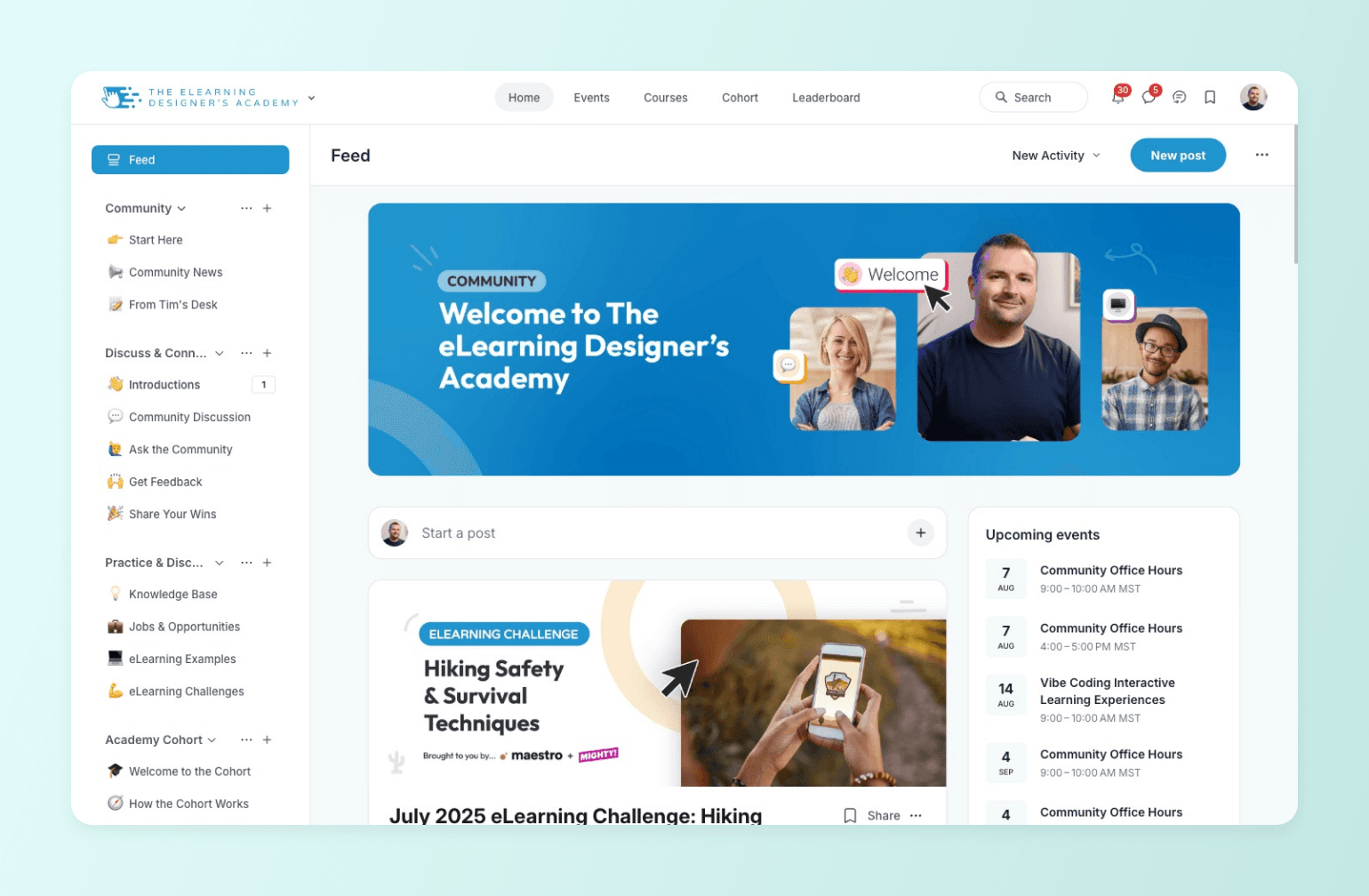
✍️ Tim Slade launched what he thought was a simple add-on for his elearning course in 2020. Five years later, 11,000 instructional designers call his Academy their professional home.
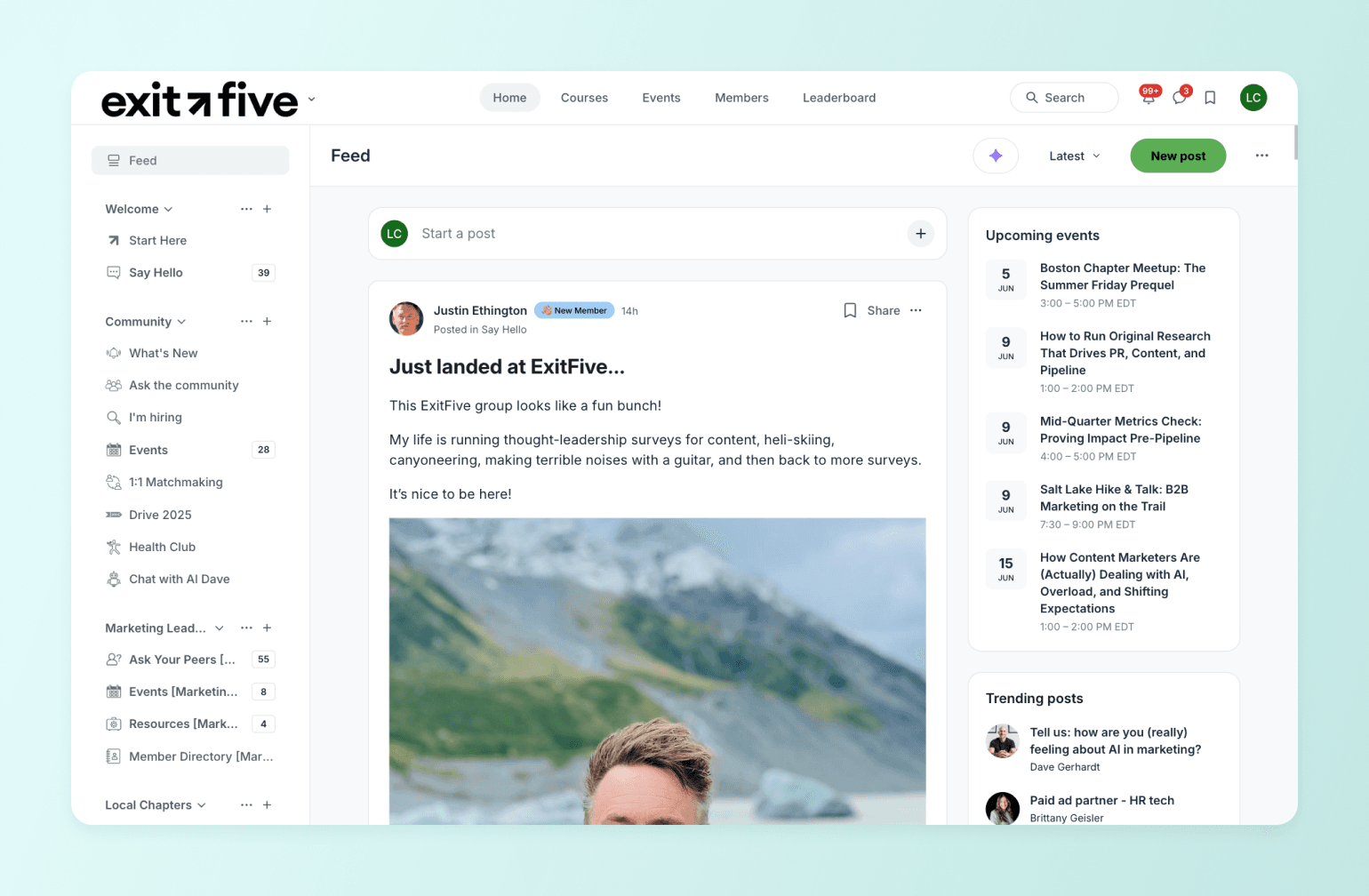
🌃 Dave Gerhardt started a Patreon for B2B marketers who wanted something better than LinkedIn. What became Exit Five now generates $1M+ in annual revenue and hosts 30+ in-person events a year.
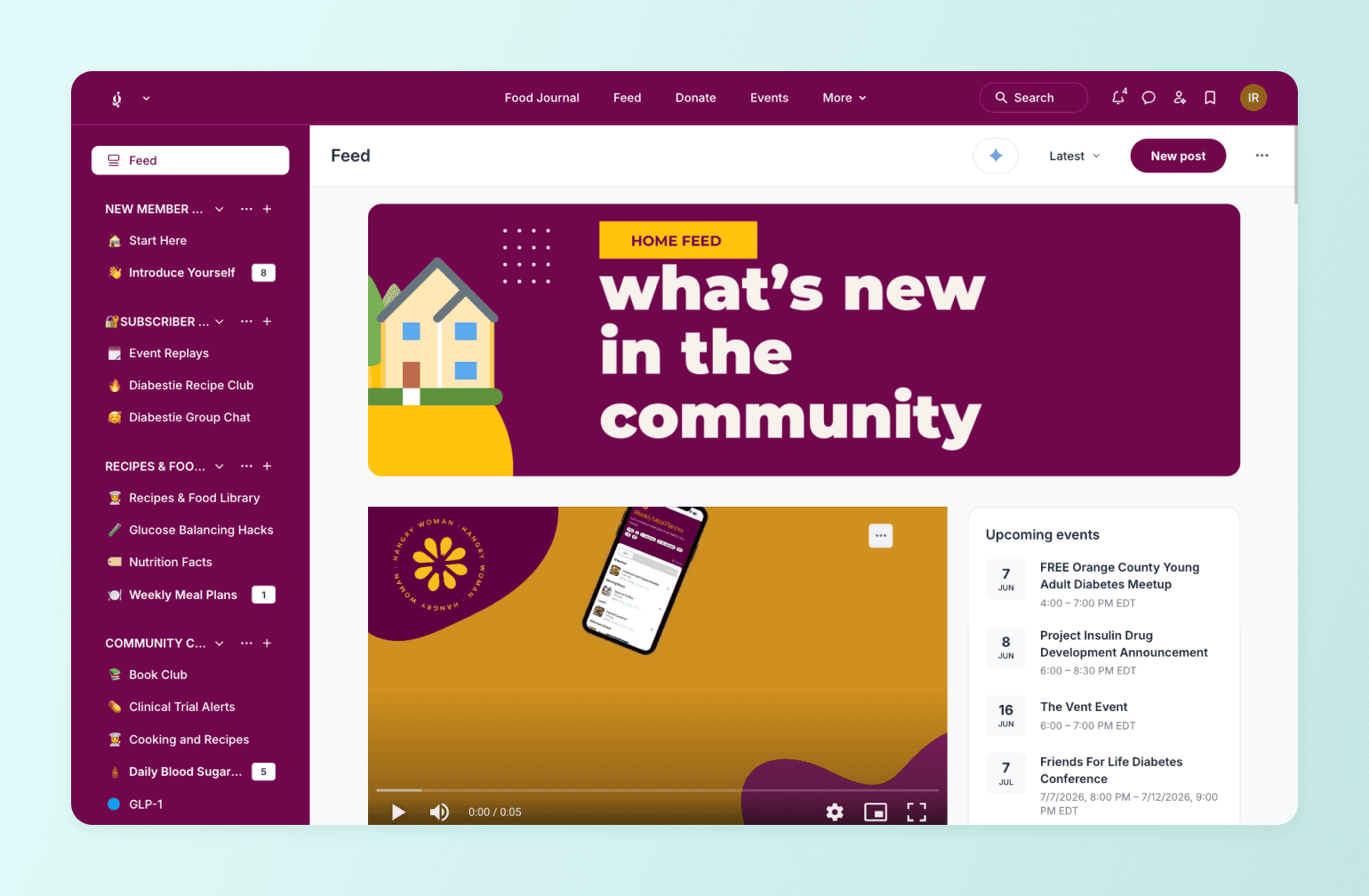
🧑⚕️ Mila Clarke built Glucose Guide so people with diabetes could get support navigating daily life — not just a diagnosis. Over 2,000 members manage their condition together, and she runs the whole thing herself.
These aren't random gatherings — they're communities where individual aspirations become collective transformations.
But here's the thing: Building a community isn't just about bringing people together. It's about creating an environment where members master new skills, shift their mindset, and reach goals they once thought impossible.
In 2026, that matters more than ever. In a hyper-connected yet oddly isolated world, a well-built community can deepen customer relationships, generate consistent membership revenue, and position you as a go-to voice in your space — all while building a business model that compounds over time.
Through our work with 20,000+ community builders and 15 million of their members, we've identified what separates thriving communities from those that fizzle out. Whether you're a creator, coach, or business, this guide walks you through every step.
Members only
One issue, five minutes, every Tuesday. Read by +14,200 creators.
What does community building look like in 2026?
The community landscape has transformed dramatically since the global shift to digital-first connection post-COVID.
While massive, general-interest groups (see: social media) once dominated, 2026's most successful communities are built around focused niches with concrete value delivery–whether that's skill development, professional networking, or specific transformations in people's phases of life (career, family, health, etc).
We're seeing recommendations from micro-communities become as trustworthy as personal ones. The technology has evolved too, with AI-enhanced engagement tools and comprehensive platforms making it easier than ever to launch and scale a community.
(Ahem.)
These shifts are showing up in the data. According to Circle's 2026 Community Trends Report — based on surveys of 750+ community builders and data from 18,000+ communities — the craving for unmistakably human experiences is now one of the primary drivers of community growth, as AI-generated content floods every other channel.
And 57% of community builders say evolving member expectations are reshaping their strategy, while 45% report signs of member burnout — audiences are disengaging from always-on content environments and seeking spaces that feel intentional and worth their sustained attention.
Members' expectations have matured alongside these changes. They now look for
- Smaller, more intimate communities with micro-learning moments that don't overwhelm
- Multi-modal engagement (from text to video) that supports different types of people
- Async-first communication that respects varied schedules, and
- Peer-led programming that positions community leaders as facilitators rather than sole knowledge providers.
While this raises the bar for quality, it also creates an unprecedented opportunity for new community builders who can craft focused, value-driven spaces that members are genuinely excited to be part of.
What makes a successful community?
At its core, community building is the art of creating spaces where people connect, grow, and transform together. But what separates thriving communities from those that fizzle out? Let's break down the essential elements.
Core elements of successful communities
Every thriving community shares four fundamental pillars:
- Clear purpose and vision: Your community needs a compelling "why" that resonates with members and guides every decision you make. Whether it's helping freelancers land better clients or supporting new parents, this purpose becomes your north star. For example, Exit Five's purpose has never wavered: it's the place for people who work in B2B marketing to get better at their jobs and find their people. That clarity is why the community has grown 2x year-over-year since joining Circle and now hosts 30+ in-person member events annually.
- Defined value proposition: Members should understand exactly what they'll gain from participating. This could be skill development, networking opportunities, or emotional support—but it must be crystal clear. Glucose Guide's Mila Clarke makes her value proposition concrete: members get expert-led coaching, peer support, and a food tracking tool — all in one app. The result of the value clarity was a 34% increase in live group coaching attendance and 300+ signups on the first day of her app launch.
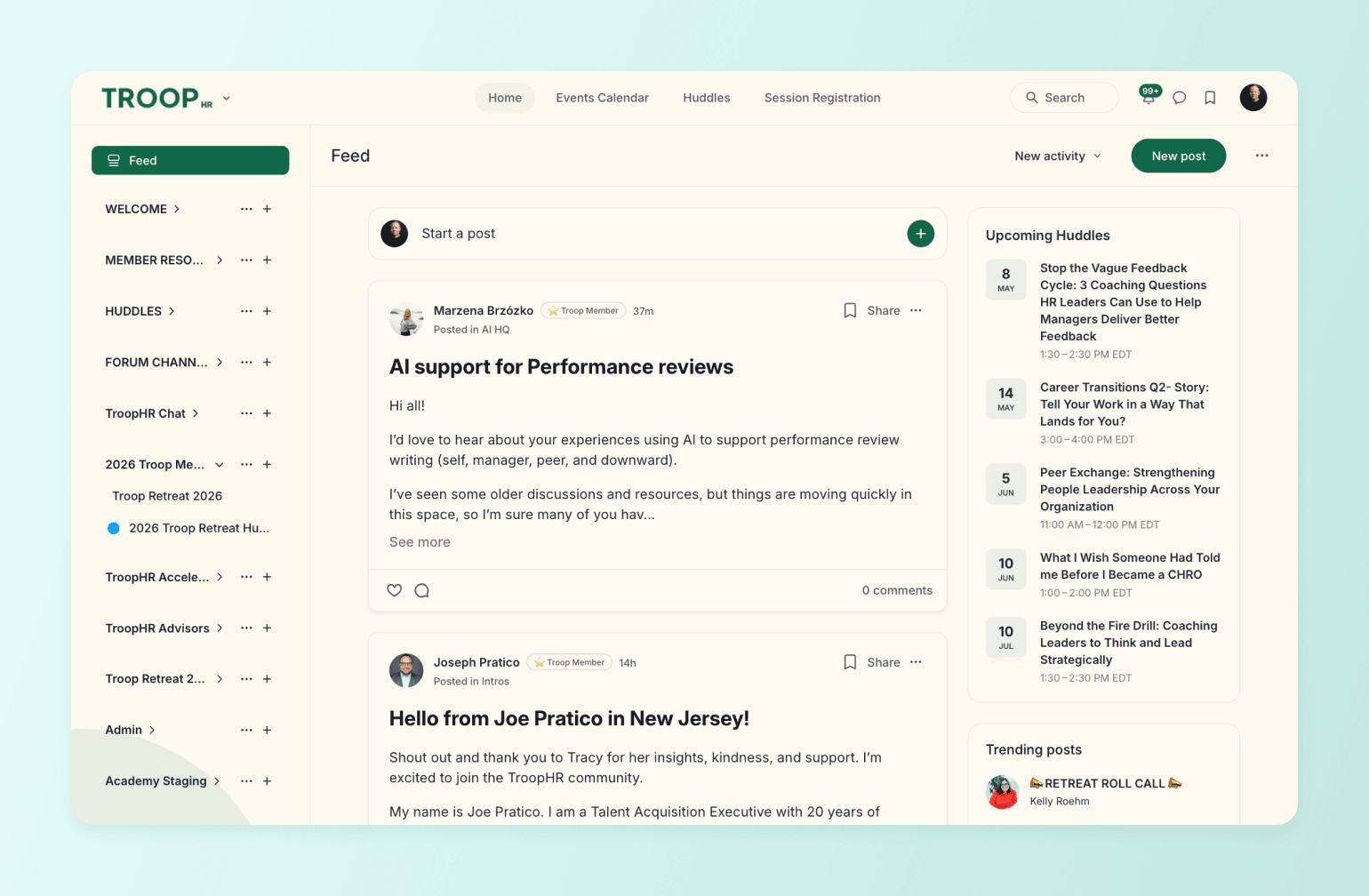
- Engaged member base: Success isn't about size—it's about engagement. A small group of active, passionate members creates more value than thousands of passive participants. TroopHR has never chased scale. They serve a specific persona — HR professionals seeking peer development — and that focus is why engagement stays high even as membership grows.
- Sustainable business model: Whether through memberships, courses, or other revenue streams, your community needs a viable way to support itself and grow. Pat Flynn rebuilt SPI entirely around the community after COVID collapsed his course launch revenue. Community now drives 58% of SPI's total revenue.
Types of communities that work in 2025
Different business goals require different community models. Here are the most successful formats we're seeing:
Paid membership communities: Perfect for creators and experts who want to build recurring revenue while delivering ongoing value. Members pay monthly or annually for access to exclusive content, events, and connections — which is exactly the move Dave Gerhardt made with Exit Five, turning a Patreon side project into a full membership business with 43% year-over-year revenue growth.
Cohort-based communities: Ideal for educational experiences where members progress together through a structured program. Think writing workshops or business accelerators. SPI's shift from self-paced courses to cohort accelerators pushed completion rates from the industry's typical 5–15% to 40%.
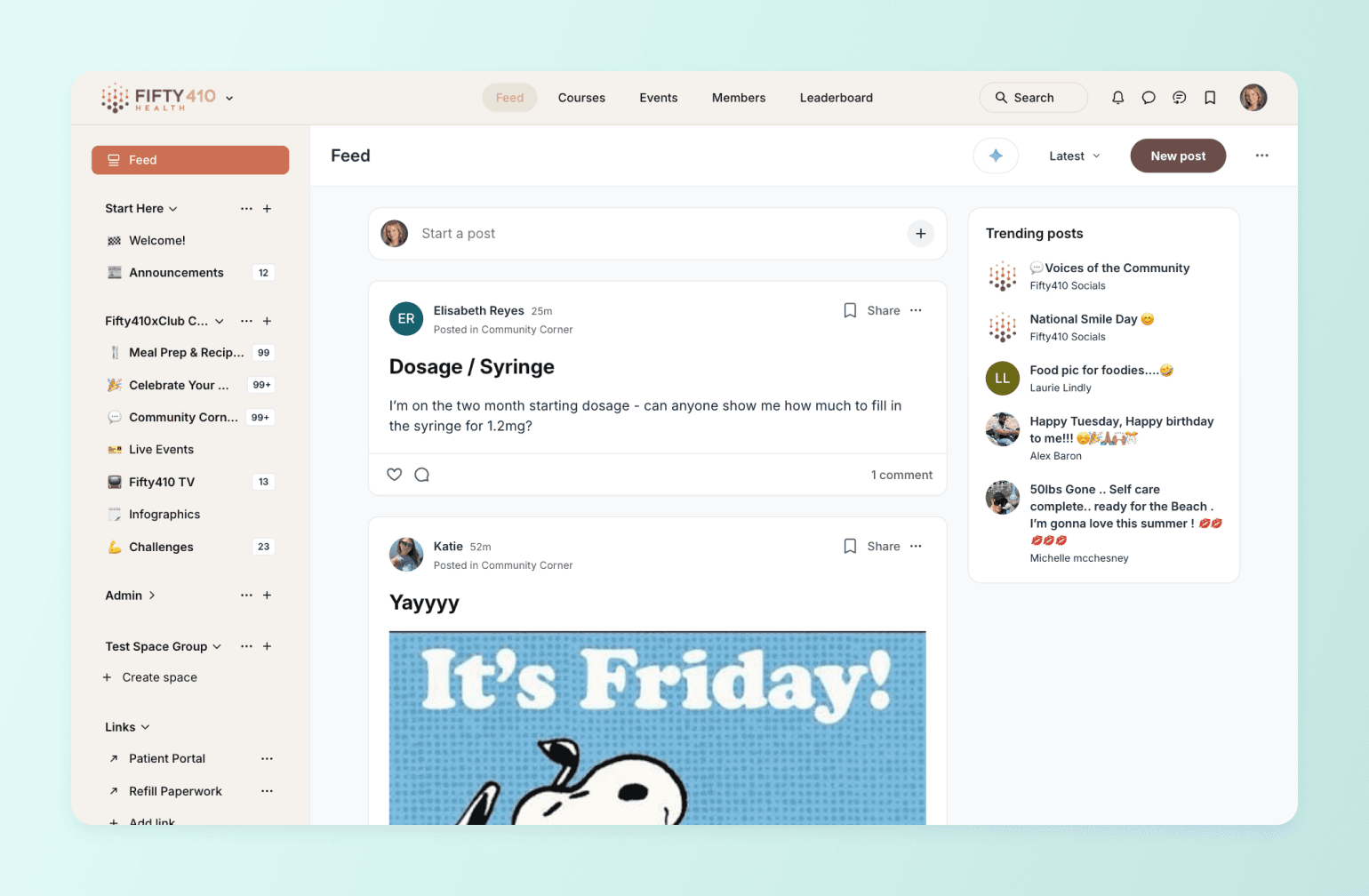
Product-centric communities: Built around existing products or services, these communities enhance the customer experience and increase retention. Tech companies often use this model effectively. Fifty410, a telehealth GLP-1 clinic, built their entire patient care model around community — with 40,000+ members, 80%+ of engagement happening on mobile, and a 5.5% lift in comments after launching their branded app.
Learning communities: Focused on skill development and knowledge sharing, these communities combine educational content with peer support. The eLearning Designer's Academy started as a course add-on and grew to 11,000+ members — all without Tim Slade ever planning to build a community.
Support communities: Centered around shared challenges or experiences, these communities provide emotional support and practical advice via coaching, courses, and participation. Glucose Guide serves 2,000+ people managing diabetes with a pay-what-you-can model that Mila runs entirely by herself.
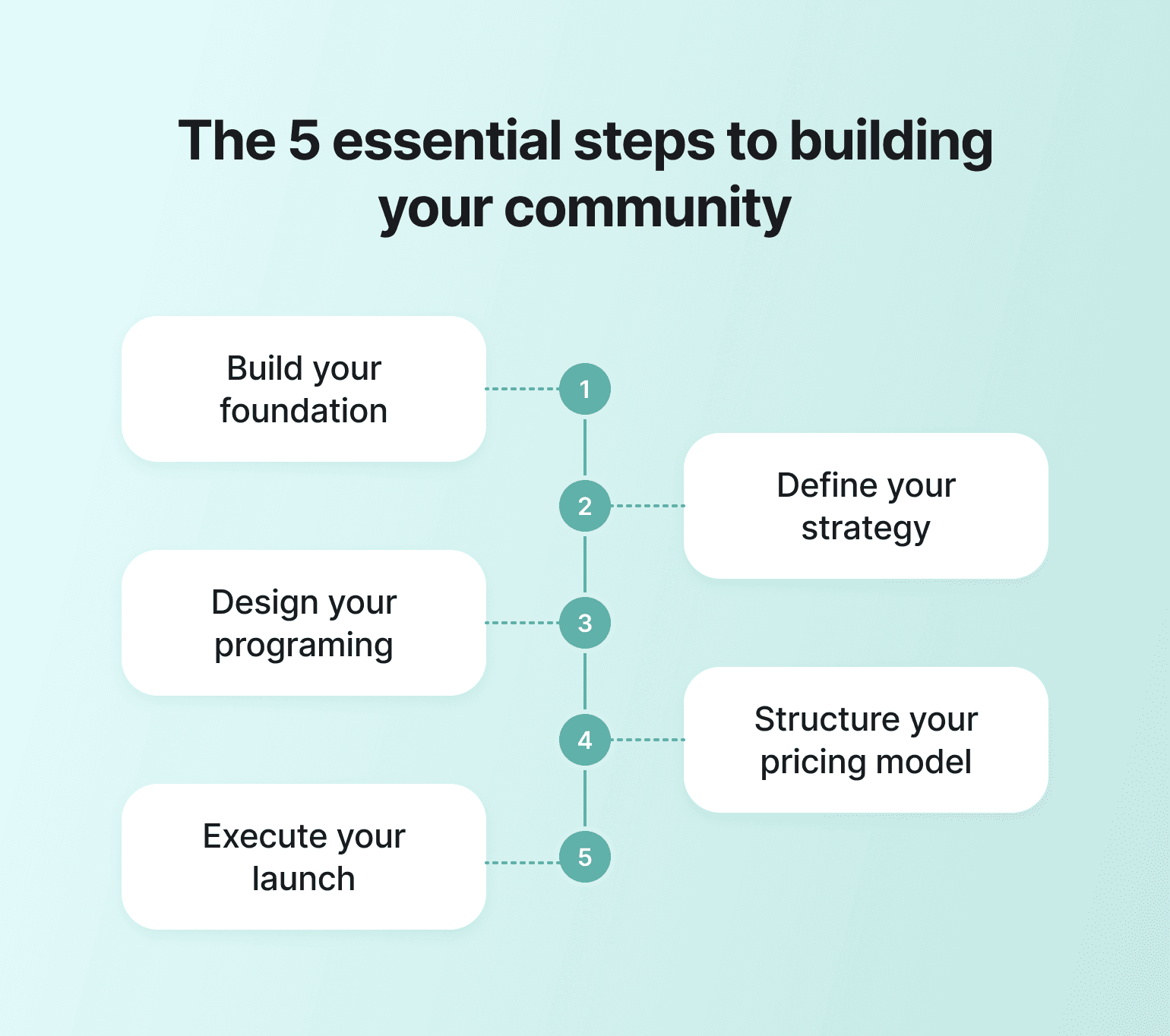
The 5 essential steps to building your community
Step 1: Build your foundation
Before you create your first community space, you need to lay groundwork that will support sustainable growth:
- Define your community's purpose by identifying the transformation you'll help members achieve
- Create a value proposition that clearly communicates your community's benefits
- Understand how your community integrates with your existing business
- Set realistic time commitments you can maintain long-term
Step 2: Define your strategy
Success comes from being intentional about who you serve and how you serve them:
- Create detailed member personas that capture your ideal participants
- Map out specific pain points your community will solve
- Choose the community business model that best fits your goals
- Establish clear guidelines that foster the right culture
Step 3: Design your programming
Your community's programming creates the structure members need to achieve their goals:
Your core value pillars are a way to build an event and programming strategy around the ways you want to show up and offer value to your community:
- Help: Q&A spaces, expert sessions
- Action: Challenges, accountability systems
- Learning: Resource libraries, workshops
- Connection: Networking events, peer matching
Creating signature experiences like hot seats, workshops, or accountability groups helps keep members engaged and achieving results.
Step 4: Structure your pricing model
Turn your community into a sustainable business:
- Choose between subscription, pay-per-access, or hybrid pricing
- Set clear revenue goals that support your business
- Develop an offer funnel that converts and retains members
- Create multiple revenue streams through additional products or services
There's no single right answer — and the data backs this up. Circle's guide to pricing a paid community, built from 55 real builder examples, shows everything from $27 entry-level programs to $9,000 annual masterminds. The most consistent regret across those builders wasn't pricing too high or low — it was poor onboarding, which disguises itself as a pricing problem: members churn, and you assume your price is wrong, when what actually failed was activation.
Step 5: Execute your launch
Start small and scale thoughtfully:
- Begin with an alpha test (10-20 members)
- Move to beta launch with founding members
- Open to the public with refined offerings
- Grow through member advocacy
Best practices for community building
Success leaves clues–and those clues are thriving communities who can’t process membership applications fast enough.
Here are the practices we've seen work consistently across thousands of communities:
Start small and focused
- Begin with 10-20 highly engaged members
- Focus on quality interactions over member count
- Let your founding members help shape the community
Tim Slade didn't even plan to start a community. He was launching a course for elearning designers and added a discussion space as an afterthought. Five years and 11,000 members later, that afterthought is now the whole business — cohort programs, live workshops, and a fully consolidated platform.
Prioritize member experience
- Create clear onboarding processes
- Design engagement rituals that members look forward to
- Build connections between members, not just with you
- Foster meaningful conversations through thoughtful prompts
- Pick tools for your community tech stack that simplify your (and your members) lives
Gather and use feedback
- Regularly collect member input through surveys and discussions
- Iterate based on what's working (and what isn't)
- Stay transparent about changes and developments
- Empower members to contribute to the community's evolution
5 Common community-building mistakes
Learn from others' experiences and sidestep these typical pitfalls:
⛔️ Mistake #1: Trying to serve everyone. Instead: Define your niche and serve them exceptionally well.
⛔️ Mistake #2: Overwhelming members with content. Instead: Focus on quality interactions and meaningful engagement.
⛔️ Mistake #3: Neglecting community guidelines. Instead: Create and enforce clear standards from day one.
⛔️ Mistake #4: Starting too big too fast. Instead: Begin with a core group and scale gradually.
⛔️ Mistake #5: Undervaluing your offering. Instead: Price based on the transformation you provide.
Finding the right signature gathering for your community isn’t an overnight process. No one gets it right the first time, so don’t be afraid to tweak things along the way. The key is to stay flexible and keep refining until you discover what truly resonates with your members.
How to grow your community after launch
You've done the hard part: defined the purpose, brought in your first members, and started the community. Now the work shifts. Growth isn't more signups on top of what you've built. It's getting the members you have to stay, achieve results, and bring their peers with them. That comes down to two things you can start the day after launch: onboarding that gets new members to a quick win, and recurring formats that give them a reason to come back.
Make onboarding count from day one
In a community, members are part of the product, so when one leaves, the experience gets worse for everyone who stays. Your onboarding should show new members the fastest path to what they came for and encourage them to stay.
Pat Flynn's SPI community shows what that's worth. Course completion was weak because students were learning alone, so Pat replaced self-paced courses with cohort-based accelerators where members move through the program together, with accountability built in from day one. Cohort completion hit 40%, against the 5–15% typical of self-paced courses, and community now drives 58% of SPI's revenue.
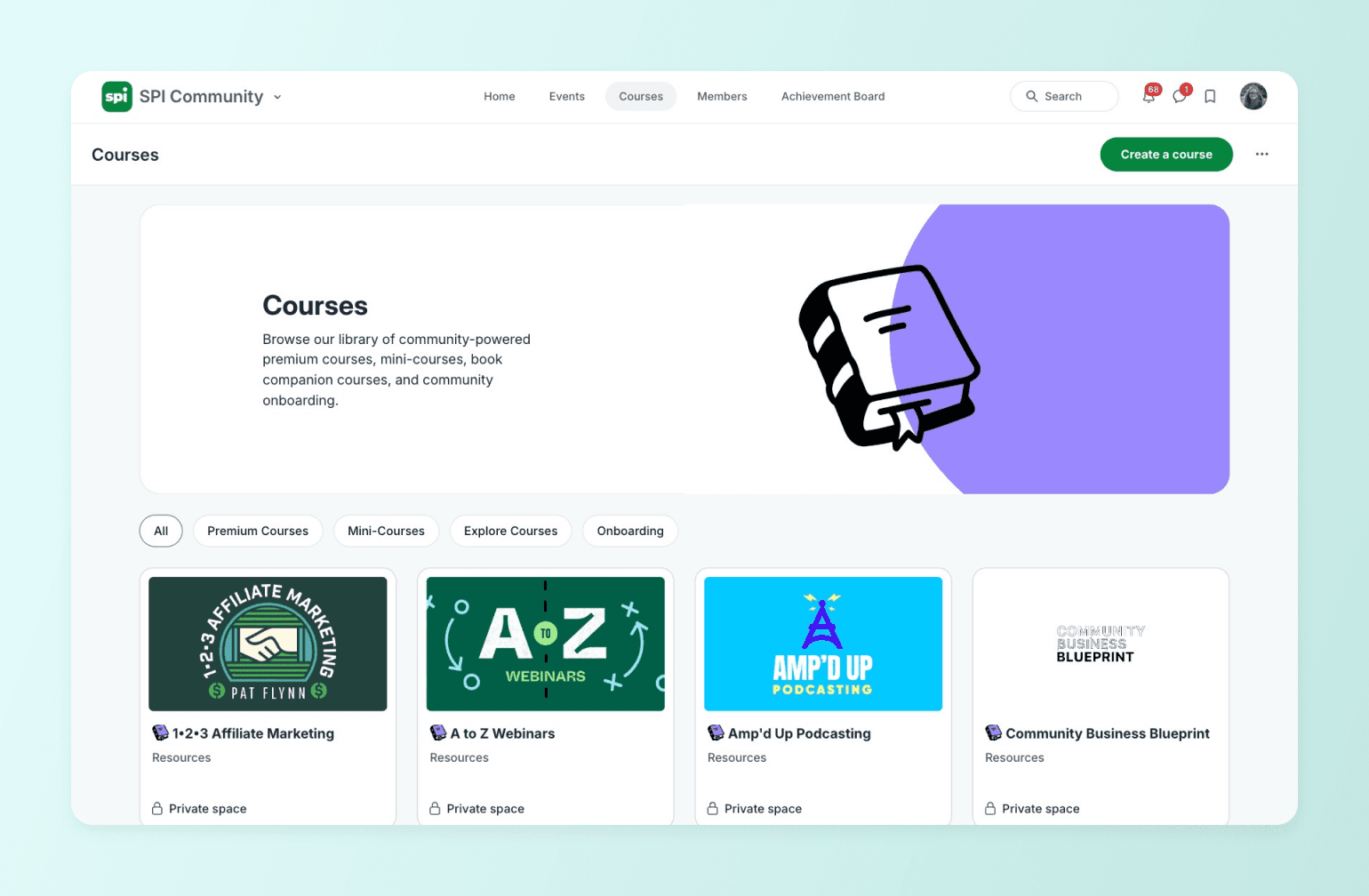
You don't have to run that playbook by hand. Workflows handle the predictable moments—welcome messages, follow-ups, reminders triggered by a member's tags, role, or activity—so you can focus on the two that automation can't: matching each new member to one specific person working toward the same goal, and a personal check-in around the 30-to-60-day mark, before a quiet member drifts for good.
Build engagement habits that bring people back
A recurring format is what brings people back week after week. The common mistake is launching five at once and quietly dropping all of them when they become overwhelming—one format, run consistently for months, beats a packed calendar of one-offs every time. Three that reliably build a habit:
- Weekly themed threads: A named prompt on the same day each week. "Teardown Tuesdays," where the group reviews a member's landing page, beats "share something interesting"—the name becomes shorthand and the specificity lowers the barrier to posting.
- Topic-led office hours: A session built around one defined subject, not an open AMA. Naming the topic gives members permission to show up with a question that fits.
- Hot seat sessions: One member brings a real challenge and the group works it through—quick check-in, a short concept, one or two members applying it, everyone leaving with a next step. The value is peer-to-peer, so it doesn't depend on you making new content every week.
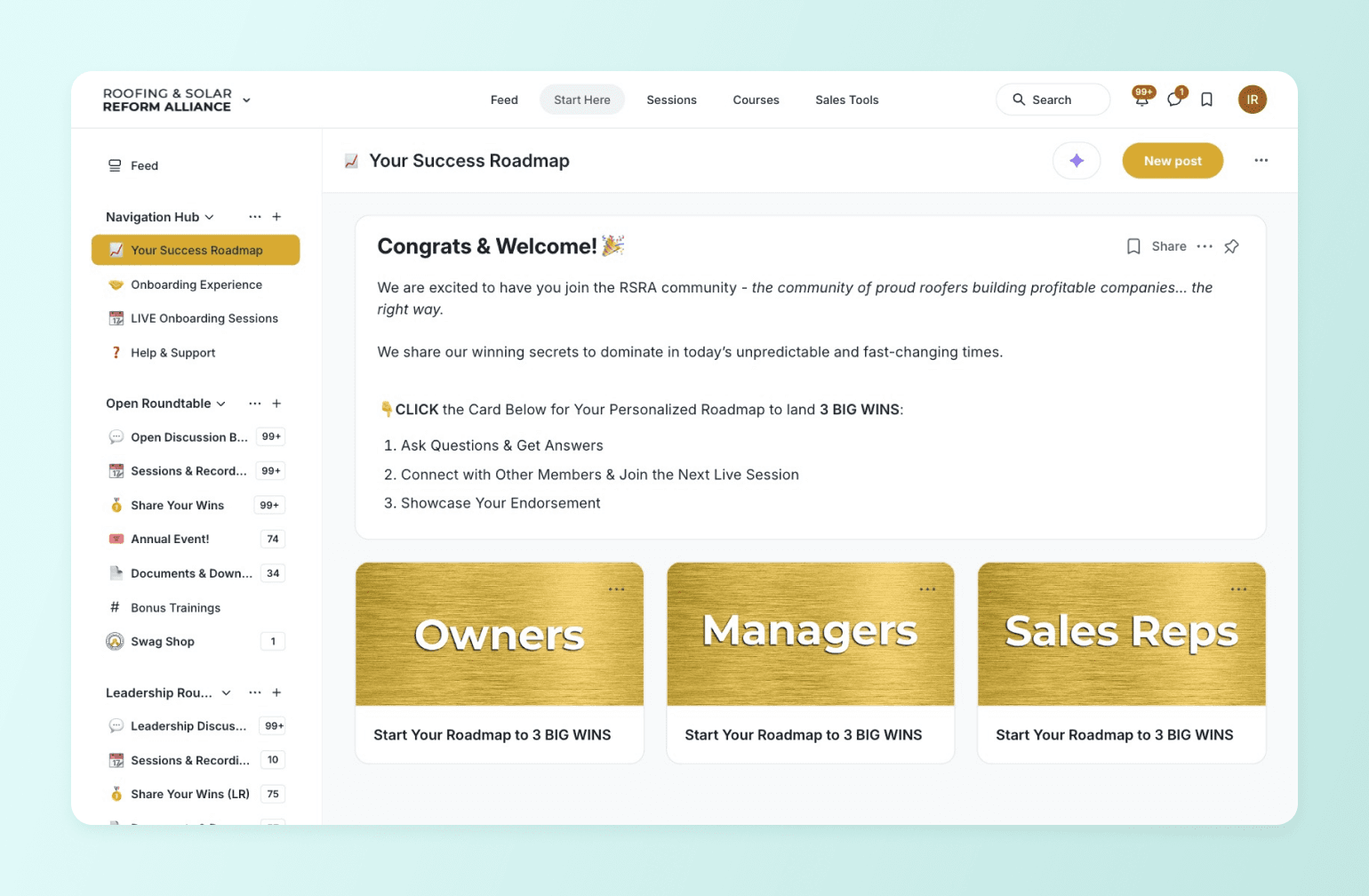
The loop is the same underneath all three: you post the prompt, members respond, and you highlight the best contribution. That public recognition is what gets people back the following week. From there, your most engaged members become your best growth channel—Adam Bensman's Roofing & Solar Alliance grew to 2,800+ members across 44 states partly because members display RSRA's badge on their trucks and sites, winning deals and pulling in stronger peers.
Know which numbers to watch
A few numbers tell you more than a full dashboard, because each one points to a lever you can actually pull. The share of members active each month and your contributor rate read engagement; monthly churn and net new MRR read retention; cohort retention shows you where members drop off—early churn means an onboarding gap, mid-term churn means an engagement one.
Our community growth strategies piece breaks down the playbook behind each.
Because membership, engagement, and payment data all live in one place, Circle's analytics dashboards read these from a single source rather than stitching them together across tools—so the number you act on reflects what members actually did. For most membership businesses, new signups no longer outrun churn on their own. Retention is the growth lever now.
Your community business starts here
Building a community and growing one are two halves of the same system: purpose defines who belongs, your launch gets the first members in, and onboarding, recurring formats, and member referrals turn that group into something that compounds. Circle gives you the infrastructure to run all of it from one place—onboarding sequences, engagement programming, email, payments, and the analytics to see what's actually working—without stitching together five disconnected tools.
Want to build an exceptional community? Start your 14-day free trial of Circle now.
Building and growing community FAQs
How long does it take to grow an online community?
Growth timelines vary widely, but expect to spend the first few months building density with a small group before seeing compounding effects. Communities are built one person at a time—focus on your first core group before optimizing for scale.
How should I price my paid community?
Most community builders undercharge. Look at what established creators in your niche charge, and price based on the outcome members get, not your cost to deliver it. Start higher than feels comfortable; you can always grandfather early members if you adjust later.
That said, price anchoring works in both directions — one founder found that a $159–$249/year price actually made prospects suspicious, because it felt too low to be credible. The right price is one that reflects the outcome you deliver and matches what your specific audience expects to pay for that transformation. Competitor pricing in your niche is a useful anchor.
Do I need a big email list or social following before starting a paid community?
No. You need the right 20 to 50 people, not a big audience. A small group with a shared, specific problem will give you better feedback, higher retention, and stronger word-of-mouth than a larger pool of loose followers. Many founders launch successful paid communities before they hit four-figure email lists.
Should I start with a free or paid community?
A free tier can work well as a top-of-funnel tool, but your paid tier should justify the price on its own through courses, access, or tools members can't get elsewhere. Free-to-paid transitions convert engaged free members at meaningful rates when the paid tier offers clearly enumerable value.
What do I do if my community has gone quiet?
Don't add more programming. Quiet usually means a relevance or activation problem, not a content gap. DM the members who joined most recently and ask what they were hoping for, then check whether your recurring formats are actually running on schedule. Reviving a quiet community is almost always about going narrower and more consistent, not broader.
Head of Community & Customer Education
Mathilde leads community and education at Circle. She builds vibrant SaaS communities and creates world-class learning experiences at Circle Academy.