A step-by-step digital product launch guide for creators
TL;DR
- Successful launches are the result of six connected steps done right: validation, choosing where to sell, sales setup, marketing, launch day, and post-purchase experience.
- Follow the six steps in order, and you turn one-time buyers into repeat customers — without starting from scratch with every launch.
- See real numbers from real creators, including Julie Solomon ($53K+ from one $49 mini-course) and Pete Boyle ($4,069 in 10 days from a $1 product).
Members only
One issue, five minutes, every Tuesday. Read by +14,200 creators.
You did it. You finished creating your digital product.
We know how much brainpower, caffeine, and possibly a minor identity crisis went into this thing. But now comes the million-dollar question: will you make money from it?
Launching a digital product needs a solid plan, a marketing strategy, and a focused sales approach behind it.
This guide walks through every stage of a successful launch, helping you turn your digital product into real revenue. Let's get to work.
Step 1: Validate your digital product launch idea
The most common reason digital product launches fail is that creators launch something nobody wants. Here's the four-step process to do it validate your product:
- Research what's already selling in your niche. Browse marketplaces like Gumroad and Etsy. Study bestseller lists. Read reviews to find gaps, complaints, and unmet needs. If creators are charging for it, demand exists.
- Test demand with a small experiment. Run a pre-launch offer, a beta version at a discount, or a free download that solves a slice of the bigger problem. Track who signs up and who pays; paying customers are the clearest signal of real interest.
- Build an email list while you validate. Even 100 engaged readers can fund your first launch. Talk to those people: ask what they struggle with and what they would pay to solve.
- Package your product as it matters. Your product's packaging is part of the product. Decide what format fits the promise — PDF workbook, video course, Notion template, live cohort, or a bundle of all four — and match it to how your buyer learns. Then sweat the craft: proofread every word, test every link, and use consistent fonts and clean visuals. Polish is what separates a product people recommend from one they quietly delete.
Got real buyers lined up? Now let's figure out where to sell to them.
Step 2: Choose where to sell your digital product
Digital products live in one of two places: a marketplace or a self-hosted platform. Each comes with its own trade-offs around control, audience, fees, and scalability.
- Digital marketplaces are third-party platforms where you can list and sell your product alongside thousands of others.
- Self-hosted platforms give you full control over how your product is sold, delivered, and experienced.
Here's how they compare:
| Criteria | Marketplace | Self-hosted platforms |
|---|---|---|
| Set up time and tech skills | Fast setup with minimal technical effort | Requires more setup and platform customization |
| Audience | Some organic visibility through the platform, but requires optimized listings and additional marketing efforts | You must generate your own traffic through marketing efforts |
| Branding | Limited; product pages follow platform templates | Full brand control across landing pages, content, and user experience |
| Customer data ownership | Somewhat restricted, depending on platform | Full access to all customer data and communication channels |
| Pricing flexibility | Set within platform rules; some restrictions on minimums or bundles | Total control over pricing models, offers, and discounts |
| Fee structure | Typically includes transaction fees, listing fees, or platform commissions | Usually just payment processor fees (e.g., Stripe); some platforms have a subscription fee |
| Sales and upsell potential | Dependent on platform flexibility, but usually quite limited | Full control over the ability to create funnels, bundles, subscriptions, and memberships |
| Content hosting | Often limited to simple files or downloads | Can host full courses, communities, drip content, and more |
| SEO and discoverability | Platform SEO may help products get discovered | You control your SEO, but you have to invest in it in order for it to make an impact |
| Support expectations | Buyers expect limited interaction | Buyers may expect onboarding, updates, or direct support |
| Long-term scalability | More limiting; harder to grow into a brand | Highly scalable; ideal for creators building a full digital business |
| Best for | Beginners testing ideas, casual sellers, or low-cost downloads | Creators building a brand, community, or recurring revenue stream |
Select your platform, then build the system by turning clicks into paid customers.
Step 3: Set up pricing, payments, and delivery
Four things need to be locked in before you launch your product: your pricing strategy, payment setup, delivery flow, and legal basics. Here's how to handle each one:
1. Choose your pricing strategy
How you price tells a story. Early-bird discounts reward fast movers. Premium pricing signals authority. A waitlist with perks warms up leads. Match the strategy below to what you want your launch to achieve:
| Strategy | Best for | Risk |
|---|---|---|
| Early-bird pricing | Fast sales, FOMO, engagement | Might anchor your product as "budget" if the full price feels like a jump |
| Premium positioning | Establishing authority and attracting high-intent buyers | Slower sales upfront, may need extra effort to prove the value |
| Waitlist with perks | Growing your list before launch, warming up leads | Risk of losing steam if you don't follow up fast or often enough before launch |
2. Set up your payment processing
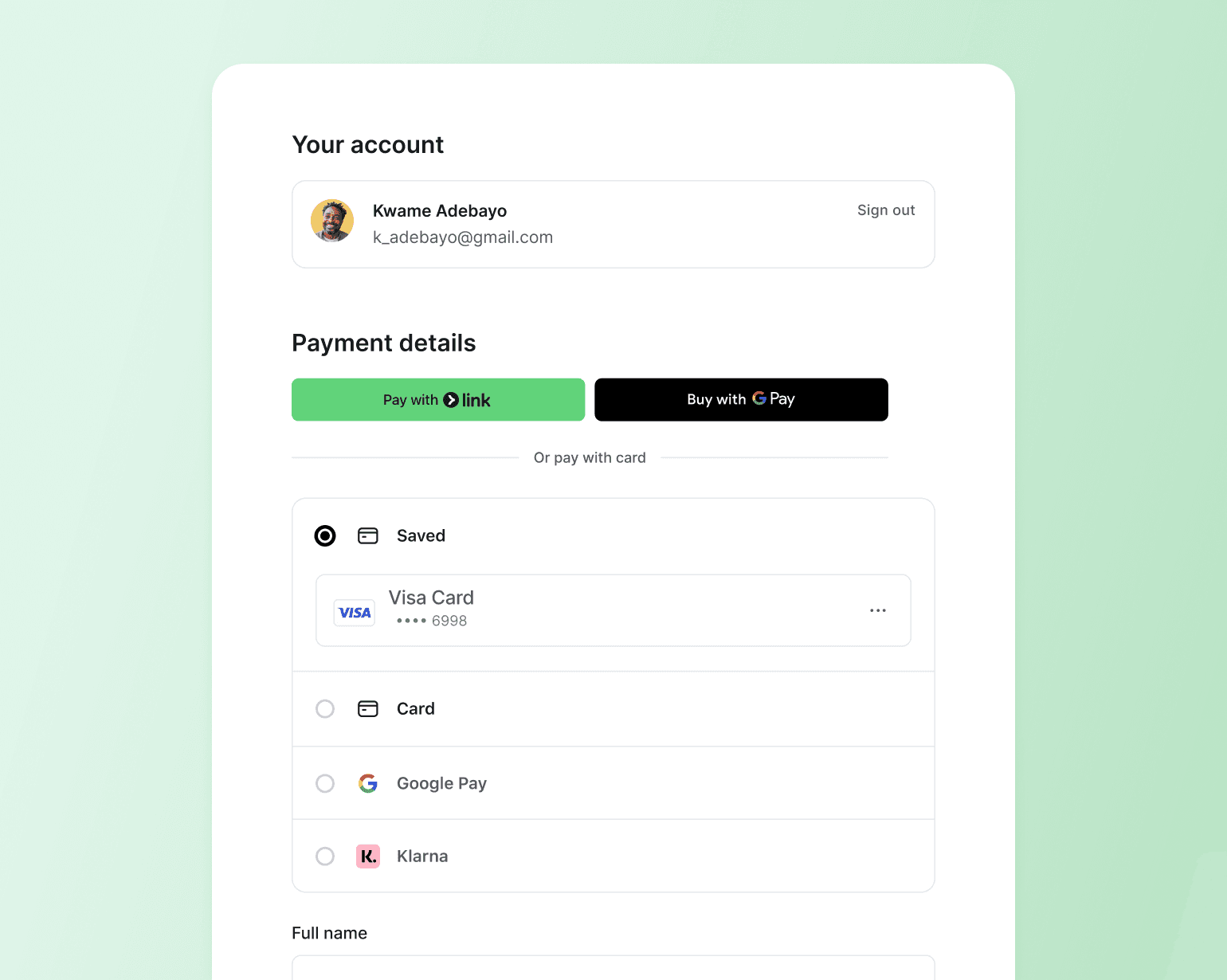
Most platforms handle payments through integrations with Stripe and PayPal, so accepting payments globally is rarely the hard part. The real decision is how you charge: one-time purchase, monthly subscription, tiered access, or installments.
If your product lives alongside a community, Circle's Paywalls handle all four pricing models and let you gate specific content, Spaces, or the whole community. Payments run on Stripe in dozens of currencies, with Apple Pay, Google Pay, and Buy Now, Pay Later built in.
3. Automate product delivery
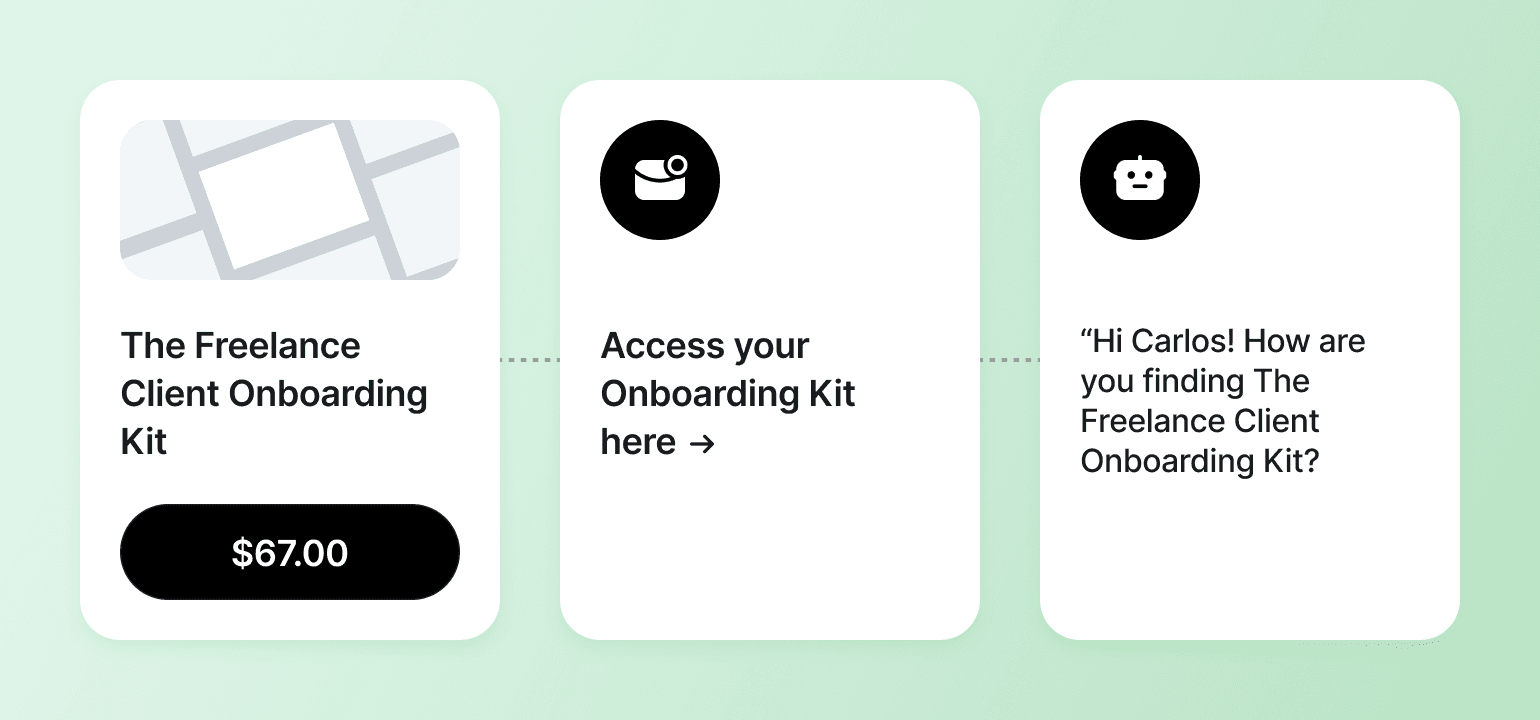
The moment someone buys, they should receive what they paid for. The delivery might be an automated email with a download link, or instant access to a course or community Space. Either way, the fewer manual steps after checkout, the easier it is to scale.
Tools like Circle's Workflows automate multi-step delivery, from enrollment to welcome email to Space access, so you are not manually onboarding every buyer.
4. Cover your legal bases
Skipping the legal setup can put both you and your customers at risk. A few key policies can go a long way in protecting your business and building trust:
- Terms of service: Outline exactly what buyers get, how your product can be used, and your refund policies.
- Copyright notice: Claim ownership of your work across all assets (PDFs, videos, slides). This gives you legal ground if someone copies or redistributes your product.
- Privacy policy: Required if you collect email addresses or payment information. Be transparent about how you store and use customer data.
- GDPR compliance: If you sell to EU-based customers—which, as a global, online business, it’s likely you will at some point—you must follow the EU’s data protection rules.
Systems in place, legal squared away — time to bring the buyers.
Step 4: Market your product and build momentum like a pro
A digital product launch strategy is two jobs in one: build the always-on channels that bring in readers year-round, then use those channels to create focused buzz in the weeks before launch.
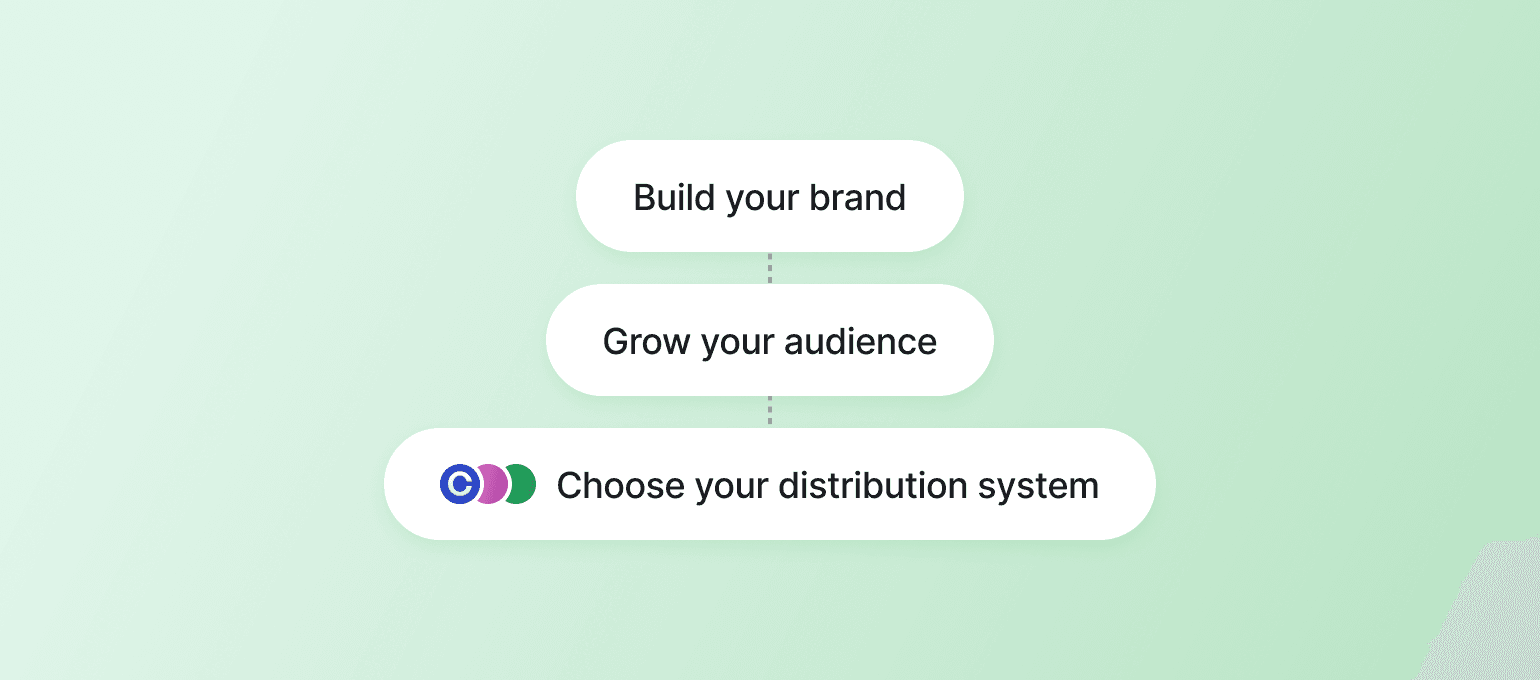
Establish your brand, audience, and distribution
Three foundations need to be in place to start promoting your product:
- A brand: Your brand is your reputation in shorthand. It tells people what you do, who you serve, and why they should care — all before they've clicked. If that's unclear or inconsistent, nobody buys. Not sure where to begin? Learn how Maya Elious built a $4 million coaching business by mastering the power of branding.
- An audience: Who's going to buy your product? Ideally, you created it after talking to your people, testing ideas, and validating demand. No audience yet? Focus on credibility and connection before making the ask. Meet Dan Koe and how he built a $5M business through audience-first content for real-world inspiration.
- A distribution platform: A digital product can't sell if no one sees it. Whether it's a marketplace, your website, a newsletter, social media, or paid ads, you need a reliable way to put your product in front of the right people. Start with the channels you already have, then grow from there. The goal isn't to be everywhere — it's to be effective where it counts.
Build your always-on marketing channels
Mix and match a few of the channels below. Build them once, run them forever, and plug your launch into them when it's time.
Content marketing and SEO
Content brings in people who don't know you yet, long after you hit publish. Think blog posts, tutorials, YouTube videos, and podcasts. Optimize each piece for search, so your ideal customers can actually find it.
When done well, SEO drives organic traffic that converts into email subscribers, and with the right follow-up, those subscribers become customers.
Take Julie Solomon, who built a powerful offer flywheel by targeting search terms her ideal customers were already Googling. Her $49 evergreen mini-course Instantly Influence generated over $53,000 and brought in 4,000+ new email subscribers in a single year, all from content that keeps ranking.
Social media strategies
Social media works for launches when you already have an audience there. Your followers already know, like, and trust you. Marketers call the dynamic the Know-Like-Trust factor, and it makes offering your product feel organic.
If you're starting from scratch, Pete Boyle, founder of Growth Models, tapped into other people's audiences instead. He created a $1 digital product and posted value-first content about it in four Facebook groups where his ideal customers already spent time. In just 10 days, Pete made $4,069 in revenue through upsells and consulting gigs.
Email marketing
Your email list is where trust is built, and buyers are made, one piece of great advice at a time. An email list is also an asset you own, unlike your Instagram following.
Take Jay Clouse, founder of Creator Science. He grew his newsletter from 9,000 to over 60,000 subscribers in two years, and now runs an $800k-a-year business with email as the engine. As Jay puts it: "If there's one hill I will die on, it's that all creators should include email as part of their creative platform."
Paid advertising
Paid ads on Meta, LinkedIn, and Google can get you in front of new audiences fast. But don't run ads straight to your product because Cold traffic rarely converts from a brand they just discovered.
This is backed by Circle's 2026 Community Trends Report, in which 67% of community builders said their members joined or stayed because of shared identity and values, not discovery. Ads can start the conversation, but trust is what closes it.
Instead, promote a free lead magnet, get people onto your email list, and pitch the paid offer once trust is built.
Influencer and affiliate marketing
Borrow someone else's audience. Partner with micro-influencers who already have your ideal customer's attention, or set up an affiliate program where customers earn commission for sharing your product.
Amy Porterfield built a $100M business in part thanks to a powerhouse affiliate strategy, with past students and partners promoting her flagship Digital Course Academy for commission.
Build pre-launch buzz
Don't wait until launch day to start selling. A pre-launch campaign that includes dropping hints, sharing behind-the-scenes content, or running a waitlist, warms up your audience so launch day doesn't start from zero.
Take Cami Farey, who pre-sold her DIY web design course before a single module was built. Starting with just under 500 people on her email list, she made 19 pre-sale sales — a "nice cash injection" that doubled as product validation. She then used live feedback from those founding members to restructure her modules, so the first real launch shipped a course her buyers had already helped shape.
Build a pre-launch community space
A pre-launch community space turns passive readers into active participants. Your members can ask questions, share wins, and show up on launch day already invested. Give your audience a place to gather before you open the doors.
A dedicated Space inside Circle does more than a static page ever could. Post your outcome statement, the single result your product delivers for buyers. Add one clear call to action: join the waitlist or request early access. Drop in social proof from beta testers, early buyers, or pilot students — and let the early enthusiasm compound into launch-day sales.
Step 5: What to do on launch day
Launch day is a sprint. Here's the four-step playbook to run it like a pro:
- Email your list first. Before you post anywhere else, your subscribers should hear from you. They earned early access by giving you their attention, so reward them with first dibs, an exclusive discount, or a launch-day bonus.
- Post across every active channel. Social, community, podcast, partner newsletters — everywhere your audience already pays attention. Keep the message consistent and point every link back to the same sales page.
- Respond to every comment, DM, and question within 24 hours. Fast replies build trust and close sales. The people asking questions on launch day are often the ones closest to buying.
- Monitor your checkout. Test the payment flow yourself the moment the doors open. Fix broken links, failed emails, or delivery errors the instant you spot them. Small technical issues kill more launches than bad offers.
A digital product launch demands your full attention.
Step 6: After your digital product launch
First sales are rolling in, but your work isn't done. What happens next — onboarding, feedback loops, and community — is what turns buyers into repeat customers.
Nail your onboarding process
A good onboarding flow is the difference between a buyer who sticks and one who never opens the product.
Don't assume they'll figure it out — send a welcome email, offer a quickstart guide, and show them exactly how to get value in the first session.
Build in feedback loops
Real feedback, whether positive or critical, is one of your best product inputs. Expect both once you start selling, and don't take the tough notes personally. Use the criticism as one input of many to make your product better.
The easiest way to create a feedback loop? Add your email to the product delivery page with a simple note: "Drop me a line if you run into any issues."
If you collect customer emails at checkout, send a quick check-in a few days after purchase. Ask how things are going.
Turn buyers into community members
Turning buyers into community members is how you build a sustainable digital product business instead of chasing one-off sales.
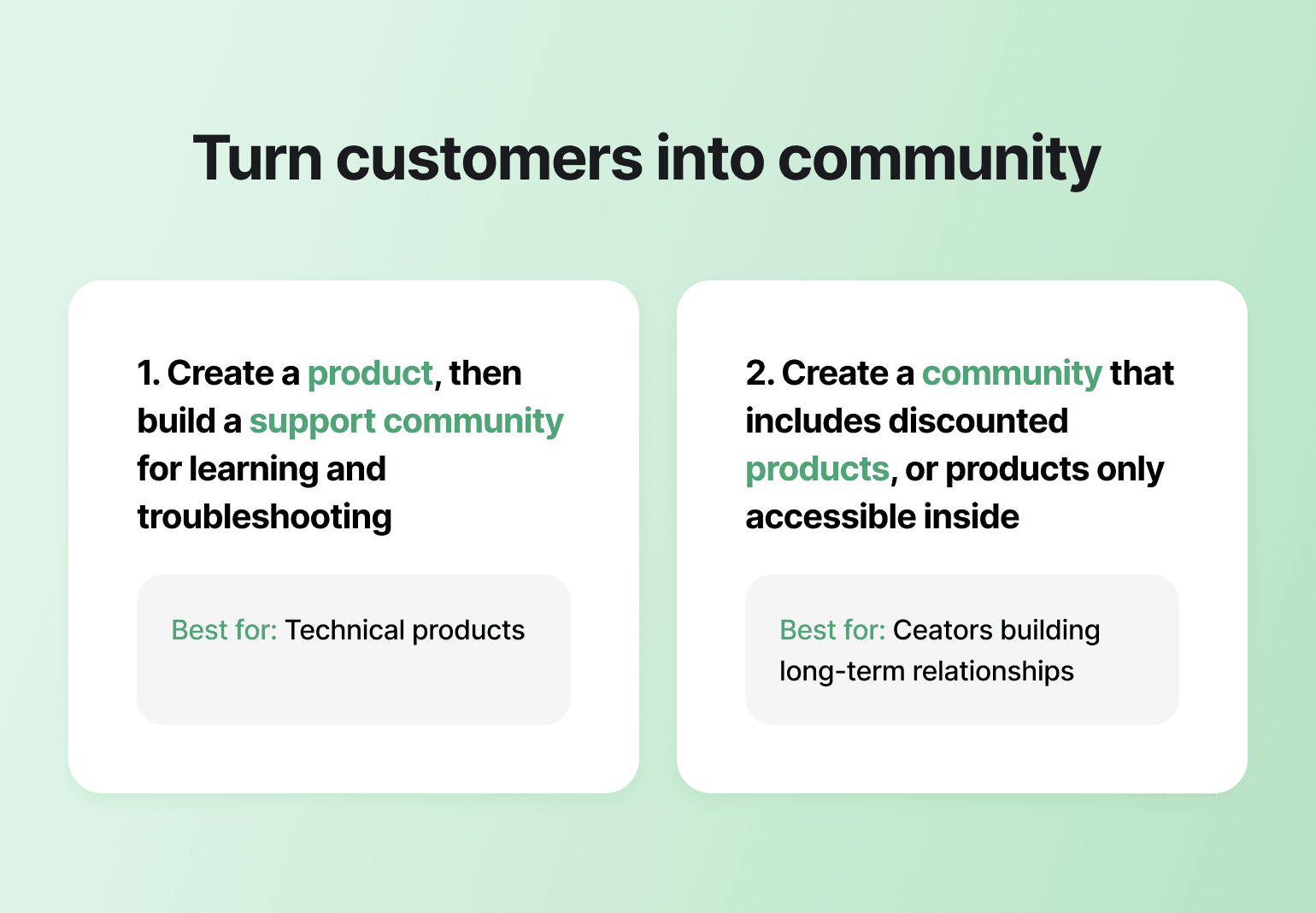
Invite buyers into a dedicated Space where they can ask questions, share wins, troubleshoot, and connect with other members using your product. Or flip the model: build the community first, then sell products inside it.
Dr. Des runs The Public Health Club using the community-first model. Each month, she releases a new digital resource on her community space, free for members that month and available in her store afterward. The model reduced her churn by 5%, built a growing product catalog, and turned every resource into a test case for her next offer.
Outside Shore Music runs the opposite play. Founder Marc Sabatella uses his flagship course, Mastering MuseScore 4, as the hook that pulls members into the wider community, where peer interaction, Q&A, and ongoing support take place. Evergreen digital products feed community growth, and the community keeps members paying.
In both models, the goal is the same: a shared space that creates relationships beyond the transaction. Circle makes it easy to bring your courses, content, events, and members into one branded space, with one-time purchases, subscriptions, drip lessons, and live workshops all running under your brand.
Ready to build a repeatable digital product sales system?
One-off launches are exhausting. You need repeatable processes to help you make the next sale easier than the first.
Circle gives you everything you need to run them under one roof: sell your product with built-in paywalls, deliver it through automated workflows, warm up buyers in a pre-launch space, and turn them into an engaged community that fuels your next launch. No duct-taped stack required.
Start your free 14-day trial today!
Digital product launches FAQ
How long should a digital product launch take?
Most creators run a 5–10-day launch window, with a 2–4-week pre-launch warm-up beforehand. Shorter windows create urgency and protect your energy; longer ones risk losing momentum.
Do I need a website to launch a digital product?
No, but you need a home for it. A community platform like Circle can host both alongside your product, email capture, and buyer onboarding in one place. Skip the full website build until you've validated demand.
What should I do if my launch flops?
Don't panic, and don't discount your way out of it. Review the data: where did traffic drop off, who opened but didn't buy, and what objections came up in replies? Most "failed" launches are fixable with clearer messaging, better targeting, or a stronger offer, not a lower price.
Contributing Writer
Paulina Major writes about online courses, freelancing, and growth. She helps creators build, launch, and grow educational communities that thrive.